
Black Gold

I love to look at historical photos and was fascinated by the pervasive documentation of how little human respect there was (and still is) for our planet.

Whether it was harming the environment by tearing up the earth to find gold in 1848 which caused irreversible damage or pillaging and plundering the ground for oil, it’s tragic to see that we don’t seem to have learned much about co-existing in harmony with nature without polluting and destroying our world.

I remember when my parents would drive up to Los Angeles to visit relatives and I’d see a few oil derricks along the way, but nothing like this.
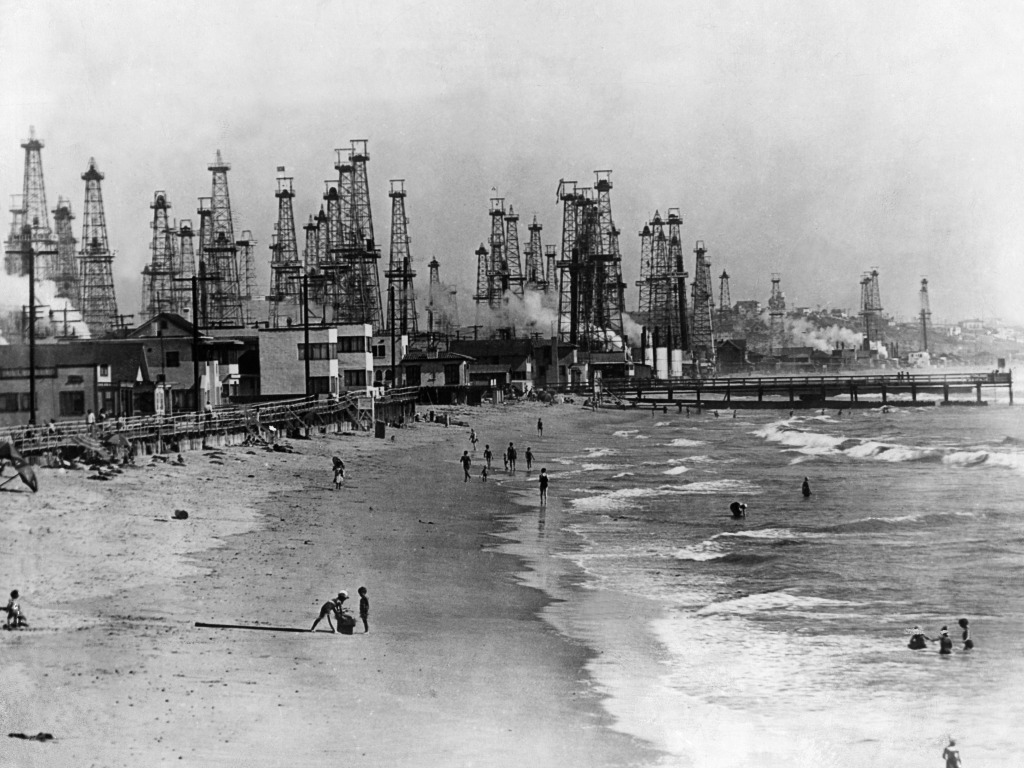
Venice Beach 1920

Though conventional oil reserves have dwindled, oil drilling in the Los Angeles area remains. Oil rigs dot the city but are often hidden from sight through the use of tall fences, clandestine structures, or by drilling in LA’s low-income neighborhoods.

This is how Los Angeles Times described the Venice Beach–Del Rey oil field in 1930: Today oil derricks stand like trees in a forest… . Steam pile drivers roar on many a vacant lot… . One hundred and eighty permits to drill for oil have been given and twenty-five more are in procedure… . If this fever continues, as it gives every indication of doing, one reasonably may expect to see virtually the entire water-front line of private properties from Washington street to Sixty-sixth avenue or Playa del Rey dotted with a line of oil derricks.

Signal Hill oil field, Long Beach, 1937

Apparently, petroleum had already been in use by Native Americans for about 13,000 years. They relied on oil primarily as a lubricant but also as a sealant to waterproof canoes.
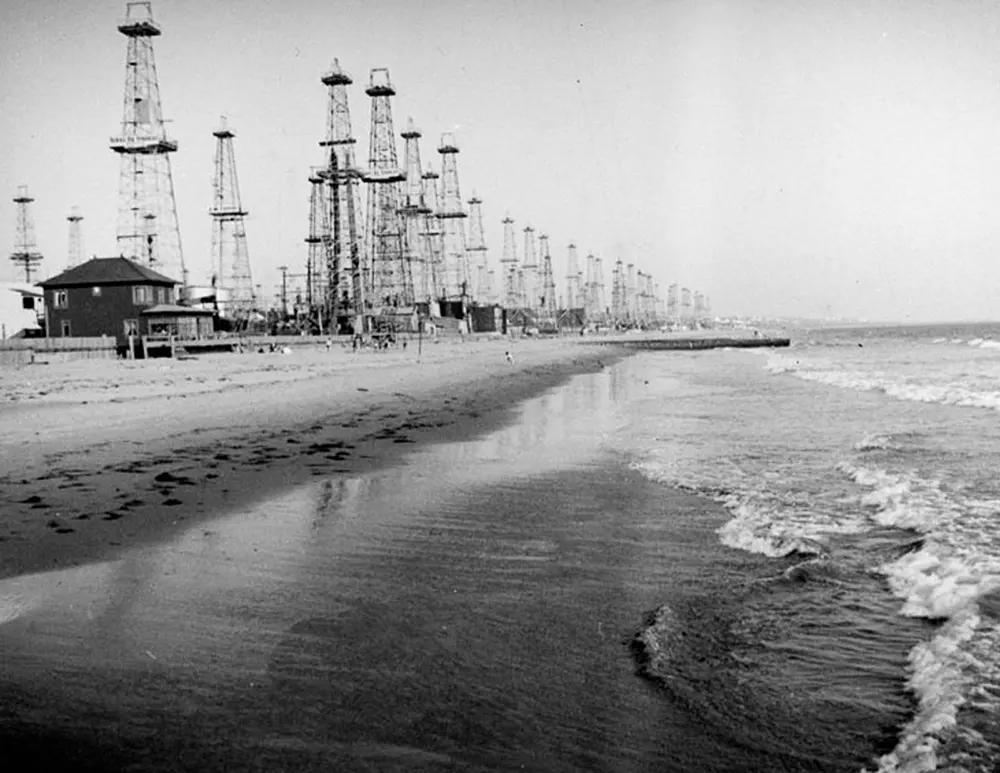
The coast along the Venice oilfield, in what is now Marina del Rey. 1937.

Following the initial oil discovery in California in 1872, Edward L. Doheny struck the massive Los Angeles oilfield in 1892, thirty-five miles south of the Pico Canyon.

Huntington Beach, 1937

FYI…It’s been reported that the recent runoff from California’s historic rainy season has exposed more gold around Placerville, the heart of gold country. Treasure seekers are dusting off their metal detectors and searching for the shiny stuff. With gold prices hovering at approximately $2,700 per ounce, it’s going to look like an episode of Aussie Gold Hunters out there.

Lots of great info at https://rarehistoricalphotos.com/

Was that a wild animal or what?

Last night I totally freaked out. I was watching my new obsession, Aussie Gold Hunters, and I heard a noise. My heart started to pound…

It sounded like there was some kind of creature in the house–in the room where I was on the sofa watching TV.

I muted the sound and looked around to try and figure out if it was coming from under the sofa, under the table, or near the patio doors.

It was a regular sound, kind of like scratching, scrabbling or fumbling, almost as if something was caught or stuck.

I got out a powerful little flashlight and looked everywhere. Then I thought that whatever it could be was trapped behind the entertainment center but there’s no way I can see behind it or move it.

After spending quite a while searching,I was pretty super stressed out. What to do? I straightened up the kitchen, put away in the refrigerator a half bottle of cayenne kombucha that I hadn’t finished, and went to bed, making sure my bedroom door was closed tight just in case IT tried to find me while I was asleep.

The first thing I did this morning was to check and see if I still heard the noises.

Nope.

I made my coffee and while it was brewing, I took out that unfinished bottle of kombucha, had a few sips, put the cap back on, and set it on the tile counter. I went to my bedroom to unplug my computer and bring it out so I could read emails and learn about what fresh hell the Supreme Court was doing while I was drinking the fresh French roast.

I HEARD THE NOISES AGAIN!

“Scritch, scritch, scritch…”

Now it seemed to be coming from the direction of the tile counter where I had placed the kombucha. I put my ear near the cap and heard the very same sounds that had alarmed me last night.

OMG. Apparently, my “wild animal” was merely the bacteria-friendly fermented carbonation trapped in the bottle of kombucha.

Did you know this? When making kombucha, bubbles are created during bottling (also called second fermentation). At room temperature, the yeast eat the sugar and create carbon dioxide (CO2). … This is how kombucha becomes fizzy! If your kombucha sprays out of the bottle as soon as you open it, it’s because there is too much pressure inside.

I quite honestly got weirded out over NOTHING. I really am crazy, but very glad to know that no critter was trapped in my house. Whew!