Like a ship that runs aground because of low tide or unseen rocks or fog or navigational errors, our beautiful heart can be damaged when blood flow is restricted or when it flows unregulated.
Heart/wrecked.
I grew up hearing the term, “Stress kills.”
I was never quite sure what that meant, but then I did when it happened to me.
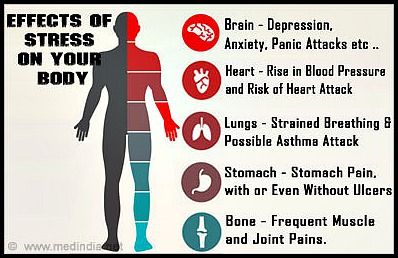
After a seemingly nonstop barrage of a personal stressful situation–like a ship hitting the rocks over and over again–it all finally took an undeniable toll on my physical health.
One of my favorite places to live is in the state of Denial, but I’ve been forced to temporarily move to a new town called Reality. Hopefully, I’ll just visit there for a bit until I can come home again.
After experiencing some intermittent and strangely terrifying heart pains, I went to the doc who took my blood pressure and was concerned about the results. It was super high. I had always had enviably LOW blood pressure since I exercise regularly, am vegan and never smoked, so this raised concerns.
Over the course of a couple weeks, my BP was checked daily and it stayed consistently high; dangerously high, which only made me more anxious and more stressed, and at one of the office visits, I started hyperventilating and had a panic attack. (Super embarrassing for the doc and absolutely mortifying for me.)
This led to an order for an Echocardiogram along with all the other heart-focused tests. The echo was done at a local hospital–a definite trigger. No one wants to go to a hospital at any time, but especially during Covid. It seemed like I was being admitted, with a wrist band and lots of little stickers, and I was devastated.
I almost bolted out of the front door at that point, but I persevered. I can share with you that it’s a scary time when you have to figure out why you don’t feel great. I’ve been a medical advocate for several loved ones, but it’s radically more difficult when you have to care for yourself. Poor me.
The technician was amazing, especially considering I tormented her with a million questions. I know enough about medical stuff to see that she was concentrating on a certain area of my heart. I really appreciated her patience with me and her detailed explanations during the hour-long ordeal.
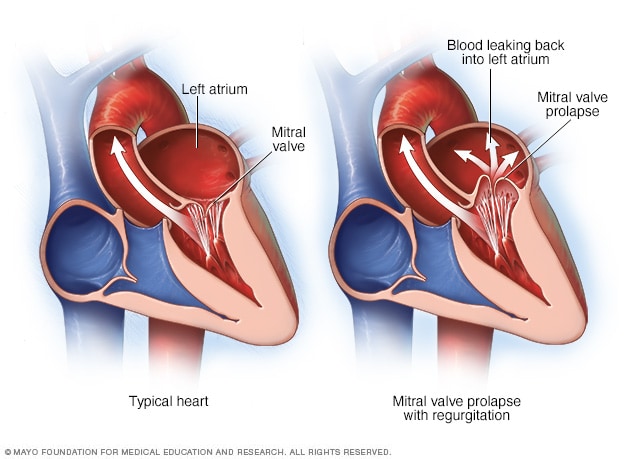
The results showed a dilated aortic root valve and regurgitation of the mitral valve.
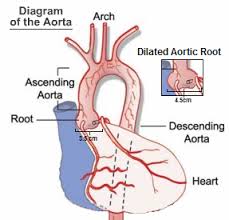
What this means is that the accumulation of stress and panic attacks and PTSD that I’ve endured during the last four years manifested medically and physically and caused structural damage to my heart.
“Severe physical or emotional stress increases blood pressure to the point where the tensile limit of the aortic tissue is overwhelmed, causing the rupture.”
“Over time, certain conditions, such as high blood pressure, can cause your heart to work harder, gradually enlarging your heart’s left ventricle.”
“Mitral valve regurgitation can cause complications such as atrial fibrillation, in which the atria of the heart don’t contract well. This leads to increased risk of stroke. Also, elevated blood pressure in the lungs (pulmonary artery hypertension).”
Hypertension makes the blood push harder against the valve and causes it to dilate, enlarge, and that’s pretty much the same scenario for the mitral valve, which seems to be the cause of the intermittent chest pain.
I’ll need to be monitored regularly because if I can’t control the stress/blood pressure and the valves stretch to a dangerous size, the only solution is surgical intervention–or death.
Reducing stress and hypertension can possibly keep the valves from enlarging any further, but the damage is done–nothing will make them reduce in size back to normal, except surgery.
Let me tell you that it’s true. Stress kills.
Now I’m off to change course, take some magnesium, eat more beets, meditate, calm down and regulate my breathing so that I don’t have a stroke or an aneurysm.
There’s still too much ugliness in this world, so I’m going to keep my rosebud colored glasses on a bit longer…
When I realize how many songs Leon Russell contributed his magic to, how he was the secret ingredient in hundreds of popular tunes, I am continually in awe and amazed.
My mom and I used to listen and sing along to all of Gary Lewis & The Playboys songs. We loved the perfect piano playing and we never knew it was Leon. We didn’t have a CLUE but what we did sense was that whoever played the piano was special and magical. It wouldn’t be the same WITHOUT Leon’s contributions– as arranger AND pianist.
Gary Lewis once said that eighty percent of his success was due to Leon, but I believe it’s closer to one hundred percent. If you take away the piano, you’re left with nothing special.
Leon morphed from this uber quiet, short-haired clean-cut session keyboardist to the coolest longhaired sunglass-wearing sexy visionary like a butterfly bursting out of a cocoon. The magic was always inside of him.
I didn’t write this, but it’s worth sharing. (I did however, edit it a bit.)
If you listened to pop music in the 1960s, you heard Leon Russell play. You just didn’t know it.
That piano on the Ronettes’ “Be My Baby”? Leon Russell. The Byrds’ early records? Leon Russell. Beach Boys sessions? Leon Russell. Phil Spector’s legendary “Wall of Sound” productions? Leon Russell was there, in a suit and tie, hair neatly trimmed, playing whatever was needed, and here with the Monkees.
For nearly a decade, Leon was one of the most sought-after session musicians in Los Angeles. Producers loved him because he could play anything—rock, jazz, country, blues, gospel. You could hum a melody and he’d give you the perfect piano part. You could describe a feeling and he’d translate it into music.
Producer Snuff Garrett said, “I could talk style with him and he’d do it. I’d name a record and go, ‘I like the piano on this…’ and he’d go, ‘Okay,’ and play it.”
Leon Russell was on hundreds of hit records. He was the secret ingredient in countless songs you’ve heard a thousand times.
And for years, almost no one knew his name.
Leon was born Claude Russell Bridges in 1942 in Lawton, Oklahoma with a birth injury (cerebral palsy on the right side) and began playing classical piano at age four. By fourteen, he was sneaking into Tulsa nightclubs with a fake ID, playing backup for Jerry Lee Lewis.
The fake ID belonged to a friend. The name on it was “Leon.” He kept it.
At seventeen, Leon moved to Los Angeles to chase his dream of making it in music. He studied guitar with James Burton, one of the best session players in the business. He worked constantly—sessions during the day, clubs at night, whatever paid.
And he was good. So good that by his early twenties, Leon Russell was playing on some of the biggest records of the decade.
He backed the Ronettes, the Crystals, Darlene Love. He played on Phil Spector’s famous Christmas album in 1963. He worked with the Byrds, Gary Lewis & the Playboys, Herb Alpert & the Tijuana Brass, the Beach Boys, the Ventures, Jan and Dean.
Herb Alpert later recalled that Leon would sit at the piano and say, “I don’t know what to play.” Then he’d “chime in with something special and affect the groove in a very Leon Russell way that was always unique.”
For years, Leon was brilliant, versatile, and completely invisible. A studio ghost. The guy in the suit playing piano while someone else got famous.
Then in the late 1960s, something changed.
Leon grew his hair long. He stopped wearing suits. He gathered a commune of musicians around him in the Hollywood Hills.
He stopped being the anonymous session player and started becoming Leon Russell—the artist–The Master of Space and Time.
In 1970, everything exploded at once.
Leon released his first solo album, simply titled Leon Russell. The musicians backing him? Eric Clapton. Ringo Starr. George Harrison. Not exactly unknown names.
That same year, he organized Joe Cocker’s legendary Mad Dogs & Englishmen tour—a massive, chaotic traveling circus of forty-plus musicians, complete with a full horn section, backup singers, and absolute mayhem. It was revolutionary. The tour became the stuff of legend, and Leon was the mastermind behind it all.
He wrote “Delta Lady” for Joe Cocker. It became a hit.
Then in 1971, Leon performed at George Harrison’s Concert for Bangladesh—one of the first major benefit concerts in rock history. He shared the stage with Harrison, Bob Dylan, Eric Clapton, and Ringo Starr. His medley of “Jumpin’ Jack Flash” and “Young Blood” was one of the standout performances of the night. He was ON FIRE.
Suddenly, Leon Russell wasn’t just a session player anymore. He was a star.
By 1973, Billboard named him the “Top Concert Attraction in the World.”
Read that again. The guy who had spent a decade playing anonymous piano parts was now filling stadiums on solo tours. His album Carney reached #2 on the charts. He was crossing genres effortlessly—rock, blues, country, gospel, bluegrass—and audiences couldn’t get enough.
He wrote songs that became standards. “A Song for You”—a tender, achingly beautiful ballad—has been recorded by more than 200 artists, including Ray Charles, Donny Hathaway, Whitney Houston, and Amy Winehouse. In 2018, it was inducted into the Grammy Hall of Fame.
Another of his songs, “This Masquerade,” was covered by more than 75 artists. George Benson’s version won a Grammy.
Leon founded Shelter Records in 1969, creating wild, creative environments where musicians could live and work together. He established studios in Hollywood and Tulsa, fostering creativity without boundaries.
He produced and played on sessions for Barbra Streisand, Bob Dylan, Frank Sinatra, Ike & Tina Turner, the Rolling Stones. He toured with the Stones. He collaborated with Willie Nelson. He wrote and recorded hits like “Tight Rope” and “Lady Blue.”
For a brief, brilliant period in the early 1970s, Leon Russell was one of the biggest names in music.
But Leon struggled.
He battled severe depression. He had crippling stage fright that haunted him throughout his career, even at his peak. His insecurities ran deep. He trusted the wrong people with his business.
And as the years went on, musical trends changed; his star faded,
By the 2000s, Leon was playing smaller venues. The stadiums were gone. The hits had stopped. A new generation of music fans had never even heard of him. He kept touring—because that’s what he did, that’s who he was—but he was a legend from another era that the world had moved past.
He was still brilliant. He was still performing. But the spotlight had moved on.
In 2009, Elton John decided to do something about it.
Elton had idolized Leon since the beginning of his own career. When Elton was starting out in the early 1970s, Leon was already a star. Leon’s influence shaped Elton’s sound, his flamboyant showmanship, his entire approach to piano-driven rock.
Elton had always called Leon a mentor and an inspiration. So when he saw that Leon had been nearly forgotten, he reached out and asked him to record an album together.
The result was The Union, released in 2010. It was a collaboration between two piano-playing legends—one at the height of his fame, one who’d been overlooked for decades.
The album was critically acclaimed and Grammy-nominated. Cameron Crowe made a documentary about the creative process. And suddenly, people were talking about Leon Russell again.
Elton championed him publicly. He spoke about Leon’s genius, his influence, his importance to rock history. And in 2011, Elton inducted Leon into the Rock and Roll Hall of Fame.
That same year, Leon was also inducted into the Songwriters Hall of Fame.
After decades of being overlooked, Leon Russell was finally getting the recognition he deserved.
But by then, his health was failing. He’d had a heart attack. He had brain surgery. He was exhausted from decades of performing.
On November 13, 2016, Leon Russell died in his sleep at his home in Nashville. He was 74 years old.
Elton John tweeted: “My darling Leon Russell passed away last night. He was a mentor, inspiration & so kind to me. I loved him and always will.”
Leon Russell left behind an extraordinary legacy: 33 albums, 430 songs, collaborations with virtually every major artist of his era. He’d been directly involved with hundreds of bestselling records over a 60-year career.
But more than the numbers, Leon Russell represented something rare in music—a musician’s musician. Someone who could play anything, work with anyone, cross any genre. Someone equally at home backing Frank Sinatra in a suit or leading a hippie commune with wild hair and a beard down to his chest.
He proved you could be both the anonymous session player and the stadium-filling star. The guy in the background and the guy in the spotlight.
Leon Russell’s story is a reminder that the most talented people aren’t always the most famous—and that sometimes genius hides in plain sight for years before the world finally sees it.
He played on songs you’ve heard a thousand times without ever knowing his name.
Then he stepped into the light and showed the world what he’d been all along: a master. Curated from NoCapArchives
As someone posted on social media, “Besides beautiful Leon’s awesome talents and accomplishments, the purity of his heart shines through.” His disability didn’t hold him back; he’s an inspiration.
We’re still reeling from record-breaking heat in SoCal on this first day of Spring. Flowers and fruit trees are going crazy because the heat has altered their normal growth cycle.
The Spring Equinox (or Vernal Equinox) symbolizes a spiritual rebirth; marking the balance of light and dark, rebirth and renewal. It represents a shift from winter’s stagnation to active growth to encourage reflection, letting go of old burdens, and setting new intentions for the year ahead.
In a weird way, I guess this might explain the death of Chuck Norris.
I learned that Chuck Norris, actor and martial artist, passed away at the age of 86 in Hawaii.
He held black belts in Karate, Taekwondo, Tang Soo Do, Brazilian jiu-jitsu, and judo. He was friends with the legendary Bruce Lee and acted as a pallbearer at his funeral.
But way before he became a loud and vocal Repub and supported that orange POS and the disgusting Obama “birther conspiracy”, I was cast in one of his films.
I spent a few days with him on set and he was a real gentleman, respectful and kind to everyone, including me.
It was a treat to watch him choreograph fight scenes. I also met some of the other stars including the veryvery handsome Ron O’Neal, with whom I was involved in a stunt that was sadly cut from the final product.
It’s a shame that Chuck chose the path he did because social media is remembering him harshly, which is not a surprise, considering the ideologies he championed are actively ruining our country. He will be judged for all of those failings, and that, I suppose, is his karma.
Happy Spring!
Peach tree photo credit to Enchanted Seashells Photo of Chuck Norris from Instagram
I really wish you could close your eyes and inhale the fragrance of these freesias. Our weather’s been hot here in SoCal and all the flowers bloomed at the same time.
Photo by Enchanted Seashells
Isn’t that vase adorable? I found it at a thrift shop and it’s one of my favorite things.
Here’s another post that actively ignores the bizarre world we live in. I’ve managed to compartmentalize it all down to a single grain of rice.
Unless you’re making sushi, no one likes to eat sticky, gummy rice. YUCK. Last night was a watershed moment in my kitchen.
Sometimes I don’t want to eat “healthier” brown rice. Sometimes only white rice will satisfy that inner craving. This time I perfected stovetop rice. Every grain was separate, fluffy, and exquisite; a joy to eat.
***The key is to rinse as much of the surface starch as possible before cooking.
Always rinse white rice under cold water until the water runs clear. This prevents the grains from becoming sticky or clumpy.
For most types of white rice, use a ratio of 1 part rice to 1.5–2 parts water.
Never lift the lid while the rice is simmering. Steam escapes and ruins the texture.
After rinsing the rice, bring to a rolling boil. Reduce the heat, cover tightly with a lid, and let simmer for about thirteen minutes.
Turn off the heat and let it rest for a few minutes, then fluff with a fork.
I usually add tofu and a variety of veggies to the pot before cooking, so this is a true one-pot meal.
HOWEVER, I learned that it’s not a great idea to make a giant pot of rice and eat it for several days because it can make you really sick.
Did you know about this?
“The culprit behind reheated rice syndrome is a spore-forming bacteria called Bacillus cereus. Unlike common foodborne bacteria like Salmonella and E. coli, cooking or reheating your food won’t protect you from a Bacillus cereus infection because the toxins are heat-resistant and the spores can also survive cooking or digestion and can afterward begin growing on food or in your intestines.
“It survives the initial cooking process as a spore and if it’s left out a room temperature, it’ll produce toxins,” says Emily Hovis, an assistant teaching professor at the University of Washington School of Public Health, as well as a former food safety specialist for the Washington State Department of Health. “So even when you reheat it, you’re killing the vegetative cells, you’re not destroying the toxins.”
Most people can handle a small amount of these toxins, but if Bacillus cereus multiplies enough in the “danger zone” of between 40°F and 140°F, it can make you sick.
“People will get a really terrible vomiting illness because of this bacterial toxin that’s in their food,” says Hovis. It can also cause cramps and diarrhea.
Symptoms from Bacillus cereus form within 6 to 12 hours, which is faster than most foodborne illnesses. You can expect nausea, cramps and lots of barf. The bacteria can also cause severe diarrhea if it multiplies in your intestine and produces toxin. Either way, you’ll be spending a lot of time in the bathroom.”
Some tips to avoid a Bacillus cereus infection:
When in doubt, throw it out.
Cook smaller portions of rice instead of big batches.
Don’t leave rice out for more than an hour or two (the “two hour rule” applies to all cooked foods).
If you do make a big portion, break it up into smaller storage containers before refrigerating. Don’t put a hot, covered pot of rice in the fridge that will trap heat and take a long time to cool.
After storing rice in smaller containers, put it right in the fridge; you don’t need to wait for it to cool down first.
Eat leftover rice within a few days, or even before that depending on your personal risk tolerance.
…and like my mom used to say, “If in doubt, toss it out!”
EXCOGITATE: To think out; devise; invent. To study intently and carefully in order to grasp or comprehend fully.
TO THIINK IN OR THINK OUT…WHAT IS YOUR METHOD?
According to wiseGEEK, to think outside the box means means to “handle a situation or challenge in an unconventional manner. The origin of the phrase is believed to date back to the 1960s, and is often associated with a famous mental puzzle called The Nine Dots.”
I’ve had a lot of jobs over the years and I’ve found that no one really wanted me to think outside the box — independently, creatively, with imagination or compassion. I felt the overwhelming corporate mantra was to agree with everything and keep quiet.
And that leads us on to another outside the box obsession of mine…
I love boxes; cardboard boxes, wooden boxes, large and small boxes. Over the years, I’ve accumulated a massive collection. (I’m not a hoarder, I’m not a hoarder, I’m NOT a hoarder. Stop thinking that!)
But a box full of Bandit was my favorite. Our poor baby died of chronic renal failure. Wasn’t she soo beautiful? Sniff.
She’s speaking to me with her eyes, ” I don’t feel very good, Mommy.” Photo by Enchanted Seashells
I’m reading bell hooks (yes, all lower case) All About Love.
To truly love we must learn to mix various ingredients—care, affection, recognition, respect, commitment, and trust, as well as honest and open communication.
“The wounded child inside many males is a boy who, when he first spoke his truths, was silenced by paternal sadism, by a patriarchal world that did not want him to claim his true feelings. The wounded child inside many females is a girl who was taught from early childhood that she must become something other than herself, deny her true feelings, in order to attract and please others. When men and women punish each other for truth telling, we reinforce the notion that lies are better. To be loving we willingly hear the other’s truth, and most important, we affirm the value of truth telling. Lies may make people feel better, but they do not help them to know love.”
I say it every year, but this is more than simply a day to celebrate Angel Boy’s TENTH birthday, March 8 is International Women’s Day 2026.
“When women thrive, we all rise.” The initiative highlights that empowering women brings collective progress.
This year’s theme is “Give To Gain”, a campaign that urges collaboration and generosity to accelerate gender equality.
The theme highlights that by giving support—through funding, knowledge, or advocacy—we gain a more inclusive world.
The campaign encourages taking concrete actions, such as investing in women, providing resources, increasing visibility, and fostering mentorship.
Of course we’ll commemorate Angel Boy’s ten years around the sun, especially since this is the year he becomes a double-digiter. No longer a baby, he enters the world of the pre-teen with my same shoe size and he’s nearly as tall as me. I predict by the end of summer, he’ll have surpassed my sixty inches. Happy Birthday, Angel Boy!
This is another post in my continual quest to NOT allow current events to cause mental and emotional distress. I don’t actively ignore the news; instead, I’m trying to manage my visceral reactivity, if that makes sense.
I didn’t get good pics of March’s full blood moon, but look who I discovered on the deck this morning! He didn’t look too perky so I put him near a flower and hope he rallies…
The White-lined Sphinx Moth, Hyles lineata, is a common “hawk moth” (Family Sphingidae) and gigantic at almost four inches! I’ve seen them around here on very rare occasions but have mistaken them for hummingbirds because they’re so big.
Hummingbird moths are excellent, beneficial pollinators, especially for night-blooming flowers, helping gardens and ecosystems thrive, though their caterpillar stage might munch on host plants like tomatoes, a minor trade-off for their adult benefits. They are harmless to humans, mimic hummingbirds, and are crucial for plant reproduction, making them a positive addition to any pollinator-friendly yard.
Hummingbird moth symbolism often centers on luck, transformation, peace, prosperity, and longevity, appearing as a messenger for change or a sign to look closer at life’s illusions, blending butterfly themes (change) with hummingbird traits (joy, flexibility) as they are mimics of hummingbirds and symbolize a spiritual connection to nature’s deeper messages and joyful living.