
Kintsugi is a Japanese method for repairing broken ceramics with a special lacquer mixed with gold, silver, or platinum.
The philosophy behind the technique is to recognize the history of the object and to visibly incorporate the repair into the new piece instead of disguising it.
The process usually results in something more beautiful than the original.
Kintsugi is rooted in the Japanese philosophy of wabi-sabi, which appreciates the beauty of imperfection and impermanence. It encourages embracing flaws and seeing them as part of a unique history rather than something to be concealed.
When I had my recent fainting (syncope) episode, my fall smashed one of my favorite planters. It was white, simple, pure, and had a twin, which makes my OCD happy. When I cleaned up the mess, I saved the broken pieces. I wasn’t sure what I could do with them but I wasn’t ready to toss it out, especially as it created an imbalance with its sibling.
Yesterday, finally, I decided to see if I could repair it. I used E6000 to glue all the pieces back together. I thought I could use it outside in the garden even if it was too destroyed to be brought back in the house. It didn’t look great, but then I remembered that I had a gold permanent marker.
Instead of hiding the damage, I used the kintsugi concept and revealed the beauty in its brokenness.
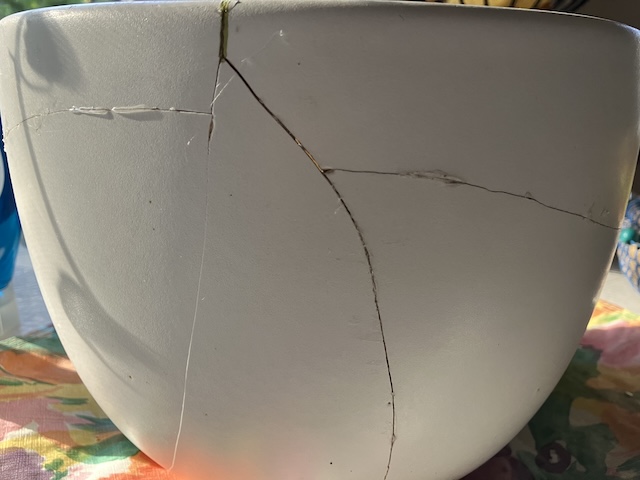

I love the way it looks and the rattlesnake plant is once again displayed in a perfectly, now imperfect setting.
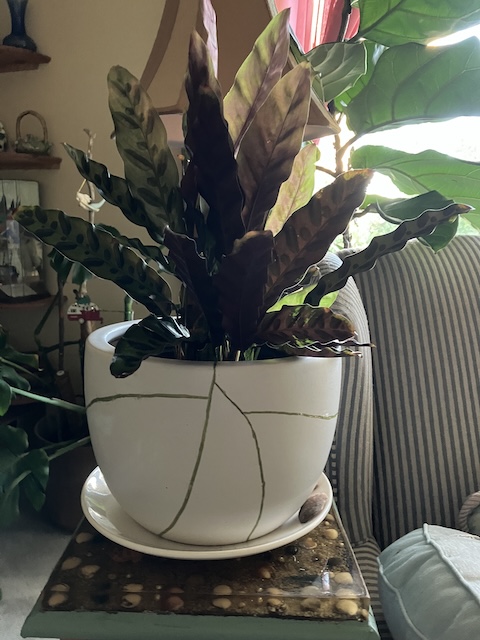
I know you can buy kintsugi repair kits, but my little gold marker did a great job.
While traditionally used for ceramics, the philosophy of kintsugi has been applied to various aspects of life, including personal healing. It offers a perspective on how to find beauty in the brokenness and learn from life’s experiences.
Since I break things all of the time, I’m fairly certain I’ll be able to attempt more kintsugi in the future. I’m slightly tempted to break something on purpose. I won’t, but maybe I will!
 Enchanted Seashells | Princess Rosebud