
A Lagoon Swan and a History Lesson

A few photos to memorialize January 2024.

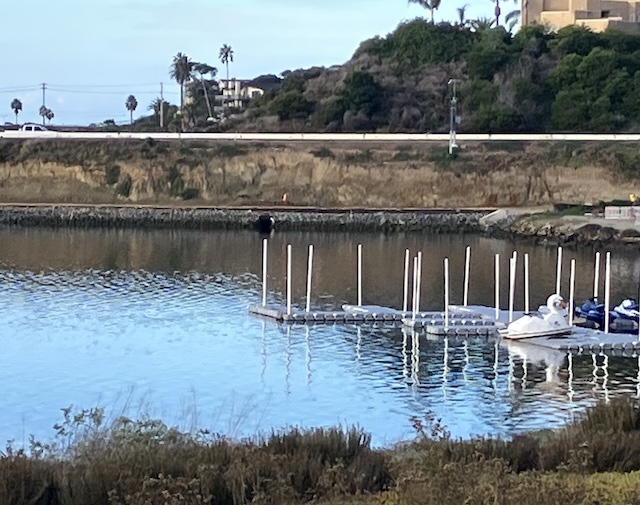
This is my favorite, a swan pedal boat on Agua Hedionda Lagoon. It’s an activity high on the list when the Angels visit this summer. Doesn’t that look like a lot of fun?
Now I’m standing on a path with a view of the trestle bridge and a peek of a blue Pacific ocean. Do any locals know my specific location? I bet not, ‘cos it’s a secret.

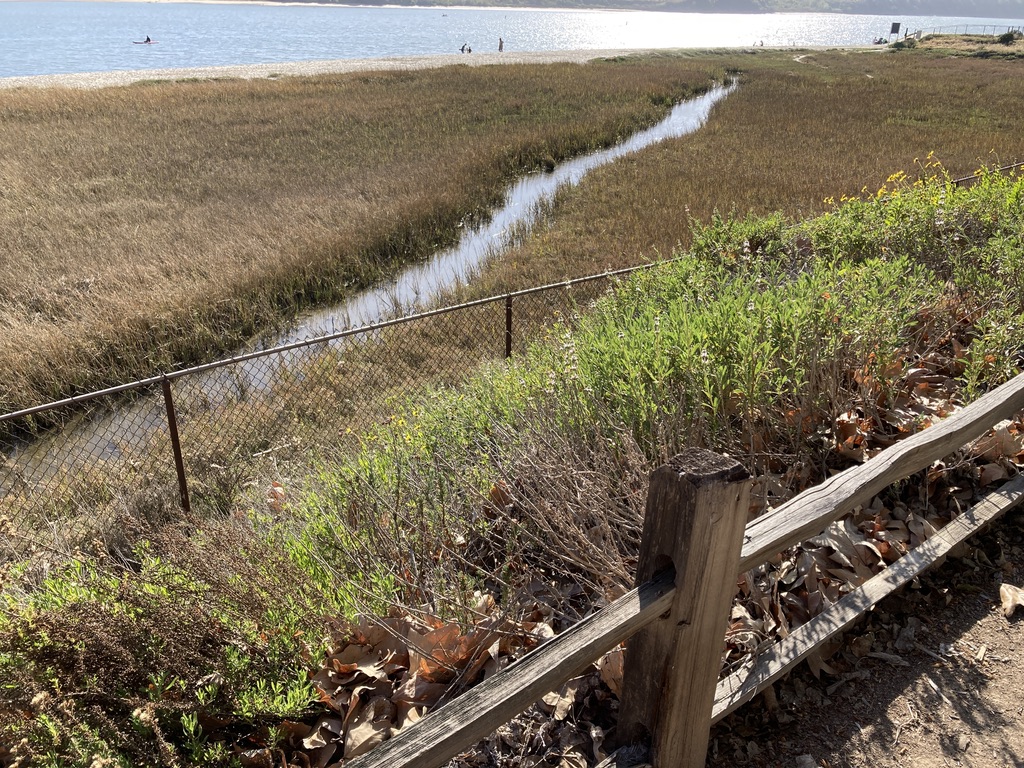
After walking all the way around the lagoon, this is a look to the east and a very low tide…

If you block out the electrical poles and the road, it’s easy to transport yourself back in time to when this land was the home of the indigenous Kumeyaay Indian Nation.

This is where they lived, fished, gathered berries, wove baskets, and buried their families. They lived in small family groups which had to move frequently to find new sources of food and water. Each clan wintered in a sheltered valley and migrated into the mountains in the spring.

It’s sacred land and should stay that way in perpetuity.
Learn more here: https://www.kumeyaay.com/the-kumeyaay-millenium.html#:~:text=Kumeyaay%20fished%2C%20hunted%20deer%20and,created%20watersheds%20and%20stored%20groundwater.

Kumeyaay Lagoon View

I like to walk here and imagine the native population who lived in this area a couple centuries ago. Did they gather berries and seeds and grind flour in a metate nestled in the warm sands by the lagoon?

On this full moon day, I’m wondering what they thought when they looked up. With no city lights to get in the way, I bet they saw millions of stars alongside the moon and all the other planets and constellations.

The Kumeyaay, also known as Tipai-Ipai, or by their historical Spanish name Diegueño, is a tribe of Indigenous peoples of the Americas. (Wiki)

The story I tell myself is that I’m walking the same paths the Kumeyaay took and we are cosmically connected by the same sun shining on the waters of Agua Hedionda Lagoon, minus the intrusion of the fencing, of course.

According to the Old Farmer’s Almanac, if you have just a bit of rain, you may even get to spot a rare phenomenon called a moonbow. A moonbow is just like a solar rainbow, but is created by moonlight (rather than sunlight) when it is refracted through water droplets in the air. Moonbows only happen when the full Moon is fairly low in the sky, so look for one in the hours after sunset when the sky is dark.