Word Of The Day: Shindig

I hope nobody watched or streamed that demented orange POSs speech yesterday. There are other, more pressing matters to occupy ourselves with, like why can't we eat salads or fresh salsa with cilantro? Why is our food contaminated with cyclospora? Why did that POS remove the FDA  “Food Traceability Rule” and place us at risk?

ANYWAY, back to my form of reality (and therapy)…

Does anybody even know what “shindig” means?

The word originated in the United States in the mid-19th century. It’s believed to be a playful alteration of the older slang word shindy, which originally referred to a rowdy commotion or a street game similar to field hockey.

In modern, everyday use, it’s synonymous with words like “bash,” “blowout,” or “hoedown”. For example, you might say, “Are you going to the big neighborhood shindig this weekend?”

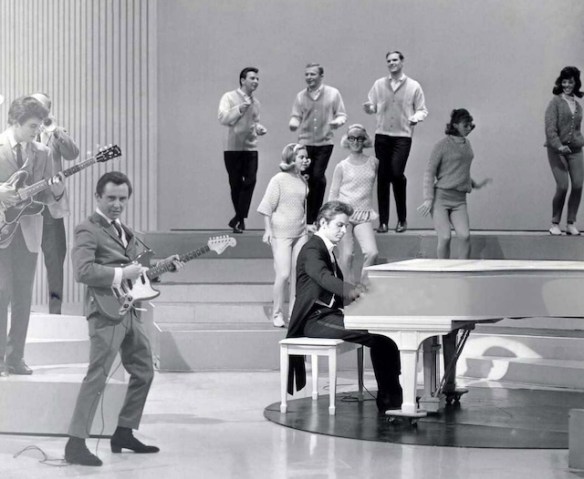
In the mid-60s, there was a TV show broadcast from Los Angeles called Shindig! It was a musical variety series hosted by DJ Jimmy O’Neill. I never watched it, maybe it wasn’t shown in my area, I dunno.

Most exciting for all of us who love him is that Leon Russell, the house band’s pianist, was often featured in solo performances.

(Learn more about Shindig! at https://en.wikipedia.org/wiki/Shindig)

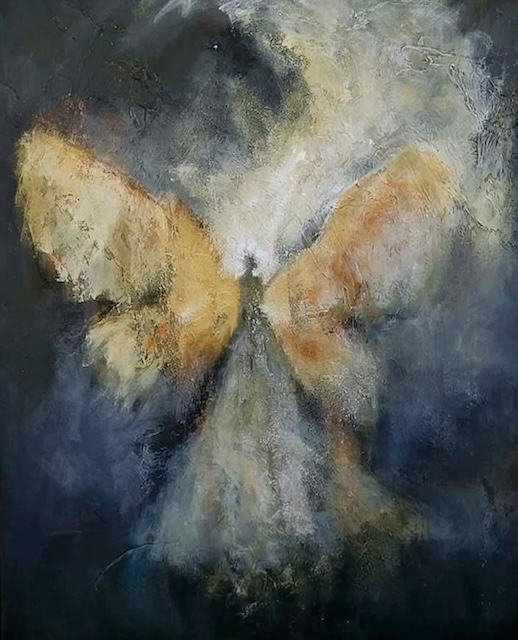
I never get tired of wondering exactly how Leon went from THIS to the uber cool long-haired sunglass-wearing exuberant Master of Space and Time that filled stadiums. The butterfly definitely broke out of the chrysalis!

Photo credit from Pinterest

Check out Leon on the first song with Donna Loren (you can hear him before you see him, it’s unmistakably LEON) and something I’ve never seen before, Leon on organ with Bobby Sherman at 10:02.

And on another day with Aretha Franklin; I also always wonder what HE was thinking about…it’s a mystery.

Word Of The Day: Bedridden

I couldn’t think of anything to write today, so I looked at my recent situation and decided there was no other way to describe it: bedridden or bedbound.

From Pinterest

A bedbound person still retains some limited movement and can actively participate in their care, such as repositioning or feeding themselves. A bedridden person is completely confined to bed with minimal to no mobility, 

Let me reiterate and I’m not being melodramatic at all; shingles/herpes zoster is not something you can ignore.

Most things I don’t take very seriously; an injury, a fall, a brief bout of the flu or a sore throat, but THIS was lifechanging.

The pain is really indescribable, and now I understand why I felt paralyzed when I had it as a child; it’s really that overwhelming. I’d show you the photos I took of every stage of the rash that covered my entire right side, but it’s too gross to share.

For the past two weeks, I’ve literally not been able to walk, to move, to exist — without extreme torment, and that’s not an exaggeration. Waiting too long to inform my doc so that she could prescribe an antiviral was completely stupid of me.

Now that I’m nearing the end of this disease cycle, it’s time to reflect on what it means to be bedridden or bedbound, because for me, not being active is hell on earth.

Not being able to go for walks or work out is torture. I lay there in agony, thinking about how my muscles and joints were actively atrophying from disuse, and that just added to my depression. The garden suffered too, since I couldn’t water anything and we’ve had no rain for months. It looks sad and dismal, kind of how I feel.

The antiviral meds made me extremely fatigued, so I honestly couldn’t move no matter how badly I wanted to force myself.

I was bedridden, or more accurately, sofaridden, because the sofa was slightly more comfortable than my bed.

Spiritually, pain is widely viewed as a catalyst for growth, a profound teacher, or a signal of energetic imbalance. Rather than mere suffering, many traditions frame pain as an invitation to look inward, release resistance to change, and align more deeply with your authentic self.

I’m not too sure about that. What I have learned is to call for medical help sooner, to stop being so stubborn, and to get the shingles vaccine. No way I want to repeat this lesson. I got it. Message received.

“Darling, Be Home Soon”

I’ve been waiting…..for the great relief of having you to talk to...

Pain is a crazy thing; it has a life of its own, it takes over every minute of every day, and that’s all you can think of — it’s like oceans of pain with no relief.

Anyway, stubborn me finally called the doc to tell her I had shingles. She immediately called in a prescription for an anti-viral. She said I’m a bit outside of the 72 hour window for it to be totally effective, but she hoped it would still work to relieve the intense burning and stabbing pain and shorten the duration of this cycle of hell.

I can’t get comfortable, I can’t lie on my back or my right side and sitting is also excruciating, so I’ve given up attempting to find the least tortuous position. I’m sick of watching TV, too. Sleep is elusive because I can’t get comfortable.

Awake at 3am, these lyrics were swirling around in my delirious brain…“darling, be home soon…”

I couldn’t remember what song it came from, so I opened my computer and searched. I learned that it was originally written and performed by John Sebastian of the Lovin’ Spoonful for the soundtrack of Francis Ford Coppola’s film You’re a Big Boy Now, and another version included in the Mad Dogs and Englishmen tour.

Not only was our magical Leon Russell a brilliant songwriter, composer, pianist, and singer, his arranging skills were off the chart.

Here’s the original of Darling Be Home Soon by the Lovin’ Spoonful and the Leon Russell version with Joe Cocker of the Mad Dogs and Englishmen tour.

Bonus! Master of Space and Time, Leon Russell, on guitar. You beauty!

They lyrics are quite poignant and as beautiful now as they were in the 60s…

Come and talk of all the things we did today
Here and laugh about our funny little ways
While we have a few minutes to breathe
And I know that it’s time you must leave

But darling be home soon
I couldn’t bear to wait an extra minute if you dawdled
My darling be home soon
It’s not just these few hours but I’ve been waiting since I toddled
For the great relief of having you to talk to

And now, a quarter of my life is almost passed
I think I’ve come to see myself at last
And I see that the time spent confused
Was the time that I spent without you
And I feel myself in gloom

So darling be home soon
I couldn’t bear to wait an extra minute if you dawdled
My darling be home soon
It’s not just these few hours but I’ve been waiting since I toddled
For the great relief of having you to talk to

So darling…
My darling be home soon
I couldn’t bear to wait an extra minute if you dawdled
My darling be home soon
It’s not just these few hours but I’ve been waiting since I toddled
For the great relief of having you to talk to

Go and beat your crazy head against the sky
Try and see beyond the houses and your eyes
It’s OK to shoot the moon

Darling be home soon
I couldn’t bear to wait an extra minute if you dawdled
My darling be home soon
It’s not just these few hours but I’ve been waiting since I toddled
For the great relief of having you to talk to

“Without music, life would be a mistake.”

“Without music, life would be a mistake” – Friedrich Nietzsche
Auf Deutsch: Ohne Musik wäre das Leben ein Irrtum.

This famous quote by Friedrich Nietzsche, found in his 1889 book Twilight of the Idols, highlights his belief that music is essential to a meaningful existence.

Music directly affects our mood. It accompanies us when we’re sad, makes us cheerful when we’re happy, increases our motivation, and calms us down.

Whether it’s Leon Russell (literally any song) or Kpop Demon Hunters, music appeals directly to emotions. It can bring people together and overcome cultural, racial, and language barriers.

This is true for animals, too. Have you seen the video of the guy who plays the piano for elephants? British concert pianist Paul Barton frequently plays classical music on an acoustic piano for rescued, blind, and elderly elephants at the Elephants World sanctuary in Thailand. His performances aim to bring comfort, emotional healing, and a calming presence to traumatized animals through soothing vibrations and melodies.

Music plays a critical role in the construction of individual and social identity. It accompanies important memories in our personal memory.

Scientific research shows that music reduces stress, strengthens memory, enhances neurological connections, and can be used for therapeutic purposes. Music therapy for brain injury uses neuroscience to retrain the brain. By targeting cognitive, sensory, and motor functions through active music-making or rhythmic listening, it stimulates neuroplasticity to help survivors regain lost speech, movement, and emotional control.

Have you heard this? “Music hath charms to soothe a savage breast” was written by English playwright William Congreve in his 1697 play The Mourning Bride.

I recall one time in the car when the Angel Kids were being obnoxious in the back seat. Because they were really getting on my nerves, I started to play Beethoven’s Fur Elise and within literal SECONDS, they both calmed down for the remainder of the drive. If it can soothe those feral creatures, I’m a believer.

I’m sure you know that I’m listening to Leon Russell right now…what are YOU listening to?

Word Of The Day: Lethologica

Has this ever happened to you? Have you ever forgotten a word while you were in the middle of a conversation? Did you feel that it was on the tip of your tongue but oh so elusive?

I have, and it just happened to me today! I was chatting with a friend and completely lost the word I was searching for. It was so annoying,

I discovered there’s a word to describe that phenomenon. It’s lethologica, the technical term for the “tip-of-the-tongue” feeling—that frustrating moment when a specific word or name is on the tip of your tongue but you can’t quite retrieve it from memory.

The term combines lethe (meaning forgetfulness or oblivion, referencing the River Lethe in Greek mythology) and logos (meaning word or speech).

Every language seems to have a way to describe it; in German it’s Es liegt mir auf der Zunge (It’s lying on my tongue.)

While it happens to everyone, lethologica is a complex neurological event involving many factors that aren’t completely understood. Scientists believe one contributing element could be sleep levels, as lethologica tends to happen more often to those who are tired. Other factors might include how well the memory was encoded (the base memory of the word) and interference from other memories, which can cause confusion.

Studies have also found a positive correlation with age. Older adults might experience lethologica up to once a day, while younger adults experience it around once a week. The average native English-speaking American adult knows around 42,000 dictionary words; it’s only natural that some are forgotten from time to time.

The most common resolution for the failure to recall a specific word is to NOT think about it, which is often when the word suddenly “pops up” out of nowhere. This is referred to as a spontaneous resolution or one in which the state resolves itself.

Some content curated from: grandezza.seabreezecommunications.com and https://www.verywellmind.com/ Image credit to owner, from Pinterest.

Love Memo

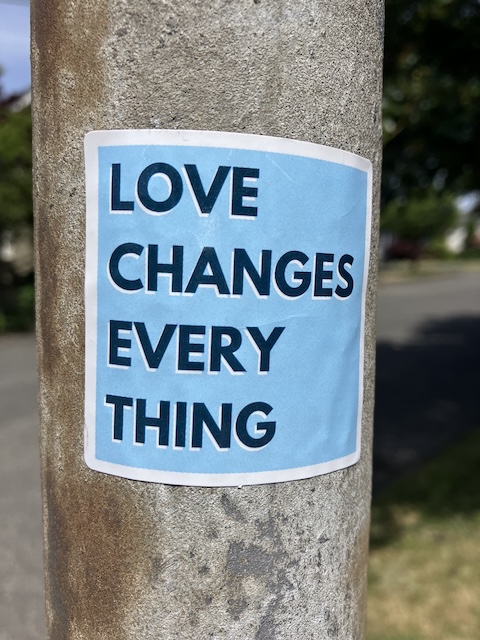
I found this during a beach walk and had to snap a pic. Love changes everything and every thing, that’s true.

Photo by Enchanted Seashells

A Hopeful Walk

She walks
With such a knowing
Of all that has been
And such a hope
For what is not yet seen

A Poem by Athey Thompson/Art by Paula Jones

Generational Talent: Amy Lee Nelson and Tina Rose Bridges

Amy Lee Nelson and Tina Rose Bridges, the daughters of Willie Nelson and Leon Russell, have officially joined forces to create a brand new duo, ALeeN ROSE.

Their debut single, “They’re There” features music icon Willie Nelson. According to PEOPLE, he wrote the song’s bridge, played guitar, and lent his unmistakable vocals. “Now it’s a full-on family song, as it should be,” Amy said.

The song is a loving tribute to Amy’s late brother Billy Nelson who died in 1991 and Tina Rose’s father, Leon Russell. Leon died in 2016.

“In my dreams, my daddy tells me stories / Of all the things I can do and who I could be / He takes my hand / says understand you’re still beside me/ I’m not gone/ We are waltzing inside this dream,” Tina Rose sings on her verse.

This is a sweet and beautiful song that honors their spirits and the memories that continue to guide them through life.

“Tina Rose called me one evening during lockdown and we spoke about the feelings of loss surrounding the death of her dad,” Amy Lee Nelson recalls, “I told her how I’ve found myself often saying ‘they’re there’ when speaking of loved ones who have passed. I shared with her a song that I had begun writing after having dream visions of my brother, Billy.”

She continues, “I asked her to write the second verse as a healing outlet for her pain and grief. I was blown away by the verse she brought back to me. But it still wasn’t finished and we weren’t sure where to take it. We asked my dad for help, and so he wrote the bridge. Now it is a full-on family song, as it should be.”

Willie Nelson and Leon Russell are two of the best and most individual songwriters and vocalists in any musical genre. Leon Russell was a musician, songwriter, and arranger who had been a first-call session man and producer even longer than he had been known as an individual performer.

In 1979, Willie Nelson and Leon Russell released their chart-topping double album, One for the Road. Although One for the Road is their only joint album, the two continued to perform together on stage over the years.

News of ALeeN ROSE’s “They’re There” release comes soon after Willie Nelson’s son, Lukas Nelson, performed a cover of Leon Russell’s “A Song for You” at Cain’s Ballroom in Oklahoma. The track’s release also coincides with what would have been Billy Nelson’s 68th birthday.

As you listen to “They’re There”, the respect and love is truly inspirational.

It oozes with generational talent. Their ability to translate feelings into a musical format is genuine and authentic. What an amazing way to carry on the legacy of two musical giants. I just know that Leon Russell would be so proud of Tina Rose.

Some content curated from internet sources.

Unexpected Magic

“But once in a while the odd thing happens,
Once in a while the dream comes true,
And the whole pattern of life is altered,
Once in a while the moon turns blue.”
W.H. Auden

Photos from Pinterest

Disturbing Dreamland

After not being able to recall my dreams for a while, this one was so unsettling, I can remember most of the details. I don’t know what part of my brain decided to spew these strange thoughts…

The first image is of me in a hotel room with two cats. One was all black and the other was more fluffy and furry like a Maine Coon. There was a balcony with a sliding glass door which I kept closed and locked. I can’t explain why I was traveling and had made the poor decision to bring the cats with me — NOT something I’d do in real life. The cats were chipped but weren’t wearing collars or ID tags, also something I’d never do. My kitties always had stylish collars.

Maybe it’s the right time to explain that I don’t have any cats at the present time which makes this an even more bizarre dream scenario.

I felt extremely worried about them getting out of the room and getting lost. I have a distinct memory of feeling a lot of anxiety.

I don’t even like hotels because I think they’re inherently unsanitary and the impermanence of temporary lodging where hoards of strangers have been is unsettling. I love my homespace. (There’s really no place like home.)

I’d much rather camp or even sleep in a car than stay in a hotel, even a five-star one.

Funnily enough, even my dreamstate knew that!

After one night, I checked out of the hotel, carrying both of the cats in my arms, along with pulling my suitcase. I don’t know why I didn’t have cat carriers because that would have obviously made it all so much easier, right? I remember being so afraid that I’d drop one of them and they’d run off. The fear was palpable.

The next part of the dream took place at a camp site which I believe was in Yosemite. Someone had kindly set up a red tent along with a litter box. However, I was quite distraught, consumed with keeping the cats safely IN the tent so they wouldn’t run away. The thought of them lost in the woods was intensely disturbing.

In a state of wake/asleep, I thought to myself, who brings cats to places that they aren’t familiar with? The cats wanted to escape, pawing at the the tent stakes, and I was becoming overwhelmed.

I wasn’t having any fun, that’s for sure.

I don’t know what happened after that. There was no resolution to my dilemma because I woke up.

My entire morning was tainted with agitation, apprehension, and dread — not a calm and peaceful way to start the day, so I decided to research what that kind of dream might mean.

Now that I think about it, the fact that I made myself wake up BEFORE the kitties got out of the tent was the best possible outcome, because I couldn’t forgive myself (awake or asleep) if they got lost and I failed to protect them.

Here’s a few thoughts:

Two Cats: In dreams, pairs often represent duality or a decision you are currently weighing. Cats typically symbolize independence, intuition, or personal freedom.

Hotels represent temporary situations, transience, or being “away from home.” It suggests your subconscious is trying to process a situation that feels foreign, unstable, or out of your usual routine.

Feeling Overwhelmed: Too many cats in a contained space points to sensory overload. You may be juggling too many responsibilities or dealing with conflicting demands from others.

Campsite: Dreaming of multiple cats getting lost at a campsite typically reflects underlying anxieties about a loss of control or feelings of vulnerability. Because campsites represent unstructured environments and cats symbolize independence and intuition, this dream points to wandering emotions that are difficult to corral.

Getting Lost: Losing a pet in a dream often mirrors waking-life fears of abandonment, a lack of trust, or a feeling that you have lost control over certain aspects of your ilife.

All I know is that I hope I don’t have that dream again, and because I can’t seem to help myself, this dream made me think about Leon Russell’s song, Out In The Woods, about being lost in actual woods as well as the feeling of being lost in life.

When Leon wanted to learn the Zulu translation for being “lost in the woods”, he was told that there isn’t one because the Zulu don’t get lost in the woods. 

At about the seven-minute mark , Leon explains the story behind the the chorus: “Doda koo panga-ma, doda koo kala, Doda koo panga-oo, kala shatini.”
https://youtu.be/b7IYrFkYyJA?si=gY44_a3kn_11ls2d