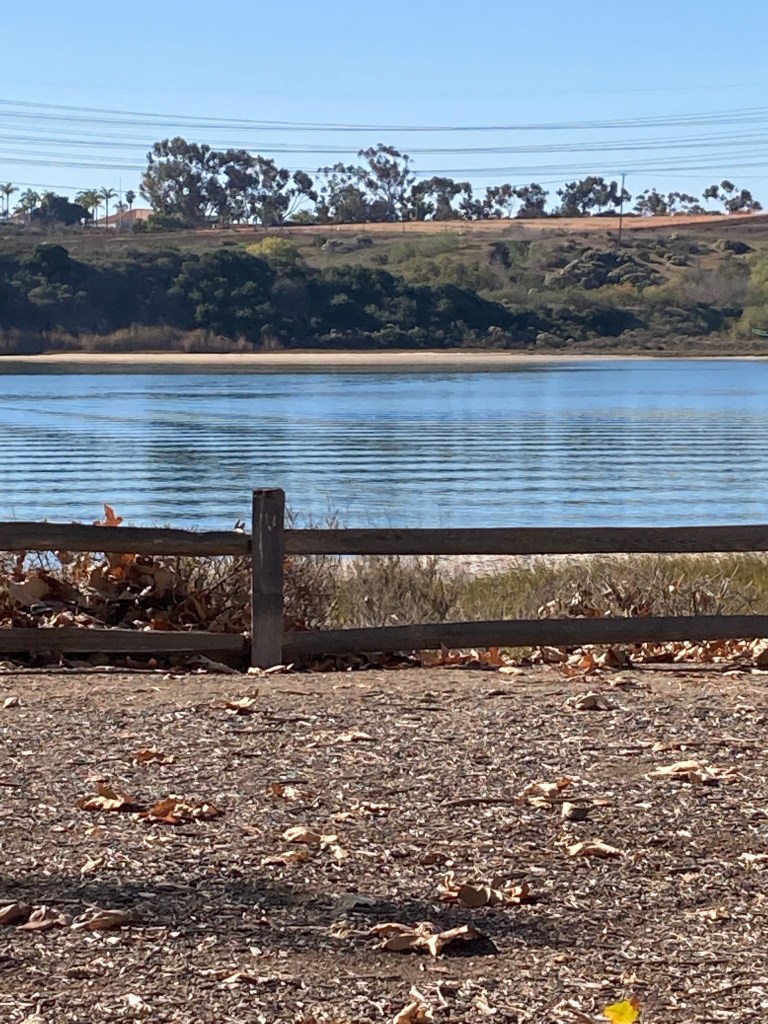
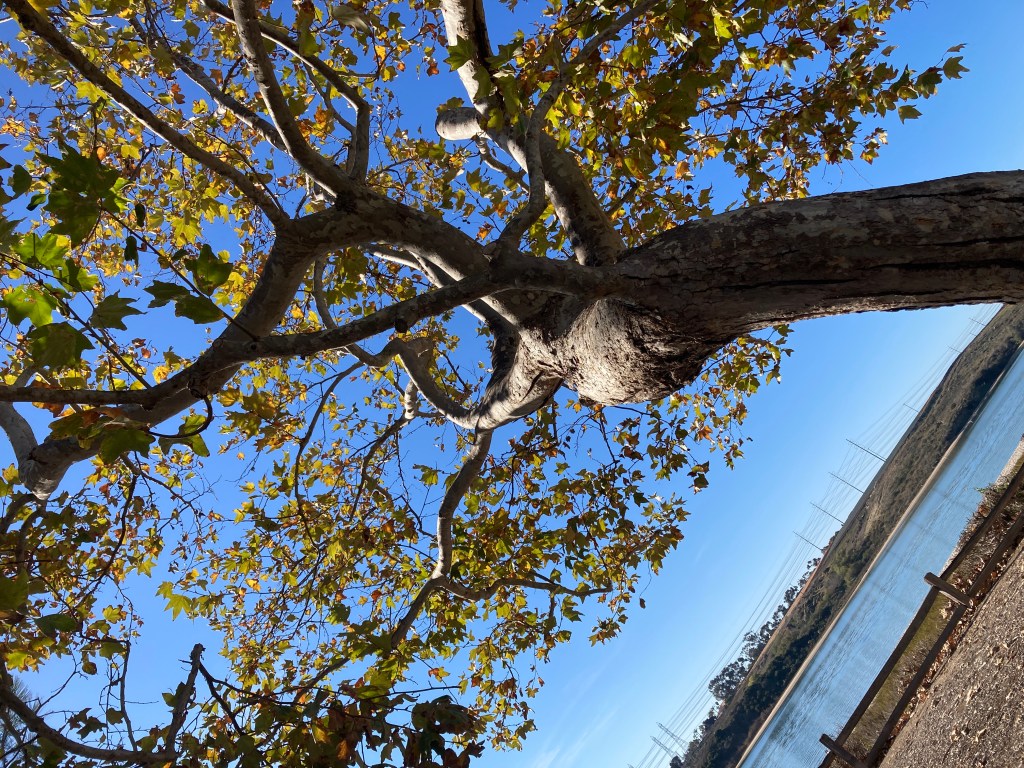
That’s the feeling I get from an afternoon walk around Agua Hedionda Lagoon. It’s the kind of holiday celebration I love.
This is the perfect spot to breathe and contemplate centuries of Native American history.
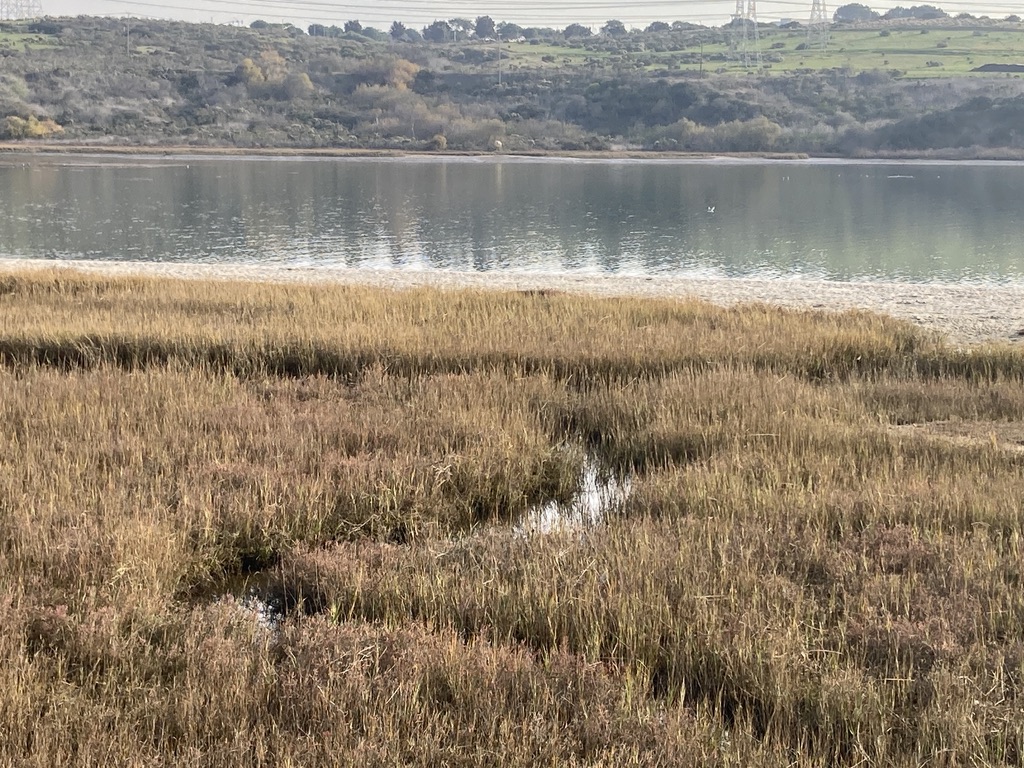
For ten thousand years, these rolling hills and canyons surrounding the lagoon provided shelter and food with an abundance of native plants and trees.
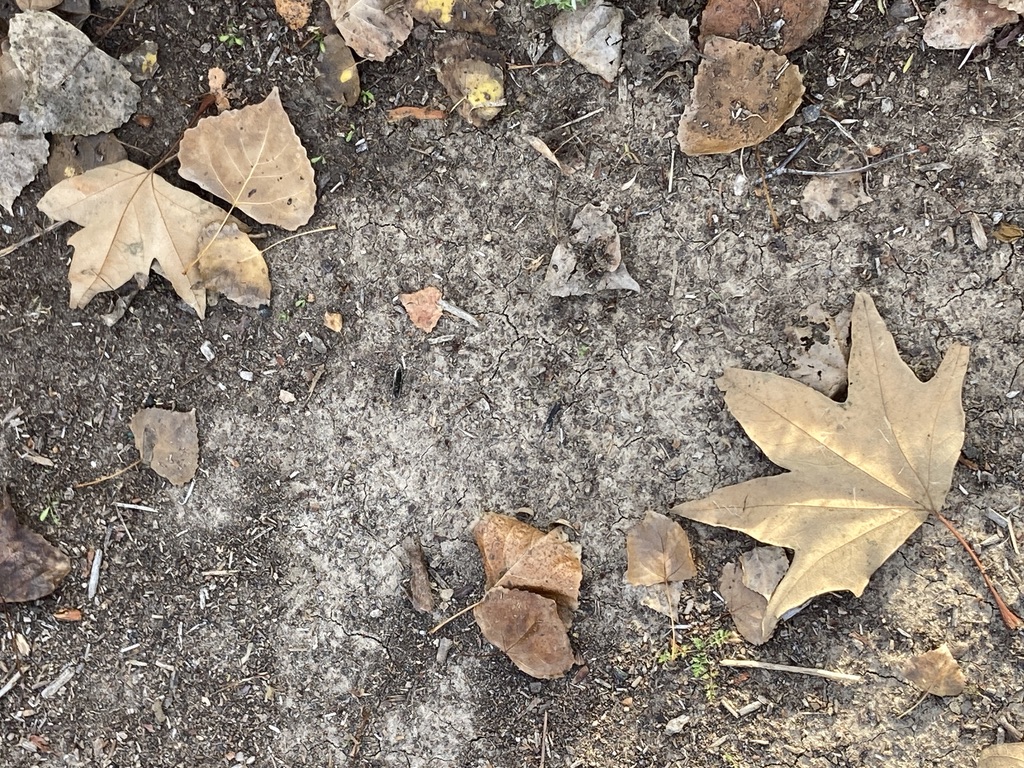
Indigenous peoples spent their winters making salt and gathering shellfish for food, jewelry, tools, and trade.
To the Luiseño, this area was Palmai, or “place of big water.” The Luiseño culture is noted for its mysticism and religious practices.

From “Seekers of the Spring – A History of Carlsbad” by Marje Howard-Jones:
“It was a hot and dusty afternoon when Don Gaspar de Portola and Father Juan Crespi called a halt by the banks of a tidal lagoon. According to the padre’s journal for Monday, July 17, 1769, the party had left San Alejo to the south at three in the afternoon. They had traveled one league before descending into a valley where alders sheltered a deserted Indian village. ‘We named this valley San Simon Lipnica’, he wrote. Taking special exception to the scent of decaying fish and other debris, it was the soldiers who unwittingly christened the lagoon for posterity: ‘Agua Hedionda,” the ‘stinking waters’.”

The Native American peaceful coexistence with nature created a culture whose openness and adaptability left them vulnerable to aggressive invaders, another tragic story of desecration, destruction, and appropriation.

 Enchanted Seashells | Princess Rosebud