Loved the book, loved the film, and can’t stop laughing. If you get it, let me know!
But is it vegan?
Loved the book, loved the film, and can’t stop laughing. If you get it, let me know!
But is it vegan?

Every single time I pour out a half drunk cup of cold coffee, I am reminded of A Tree Grows in Brooklyn.
Each and every time, I become Francie in her belief that this is what rich people do; to waste coffee is a luxurious act of defiance against personal poverty. I didn’t grow up like Francie but I hate waste, so it’s become a conscious act of extravagance.
I first read A Tree Grows in Brooklyn when I was about ten; I had a VERY active imagination combined with an overabundance of empathy and I would take on the persona–I BECAME the character I most identified with–and so I became poor Francie.
Just like I became Laura Ingalls Wilder in Little House on the Prairie or Anne Frank or Mary Lennox in The Secret Garden.
In my case, these multiple personalities weren’t anything more than trying on a new dress or pair of shoes; I always returned to my own authentic self–wolf lover, nature lover, underdog defender, wearer of rose-colored glasses—but it was part of the process of individuation to slip on these other personas and feel as if I was walking in another’s shoes to learn about how other people live and think.
Mom Katie Nolan believes that Francie is entitled to throw her coffee down the drain if she wishes, saying that it’s good for poor people like them to be able to waste something.
“There was a special Nolan idea about the coffee. It was their one great luxury. Mama made a big potful each morning and reheated it for dinner and supper and it got stronger as the day wore on. It was an awful lot of water and very little coffee but mama put a lump of chicory in it which made it taste strong and bitter. Each one was allowed three cups a day with milk. Other times you could help yourself to a cup of black coffee anytime you felt like it. Sometimes when you had nothing at all and it was raining and you were alone in the flat, it was wonderful to know that you could have something even though it was only a cup of black and bitter coffee.
Neeley and Francie loved coffee but seldom drank it. Today, as usual, Neeley let his coffee stand black and ate his condensed milk spread on bread. He sipped a little of the black coffee for the sake of formality. Mama poured out Francie’s coffee and put the milk in it even though she knew that the child wouldn’t drink it.”
“Francie loved the smell of coffee and the way it was hot. As she ate her bread and meat, she kept one hand curved about the cup enjoying its warmth. From time to time, she’d smell the bitter sweetness of it. That was better than drinking it. At the end of the meal, it went down the sink.”
A Tree Grows in Brooklyn–Betty Smith
Did you ever read this classic? What did you like about it?
Today blog is my not-so-humble brag about the original Angel Boy. I am so very proud of him.
I talk an awful lot about the second boy who stole my heart, AB 2.0, my curly haired free spirit/sprite and his equally magnificent sister, Angel Girl, but there is still the one who owns MOST of my heart, his daddy…
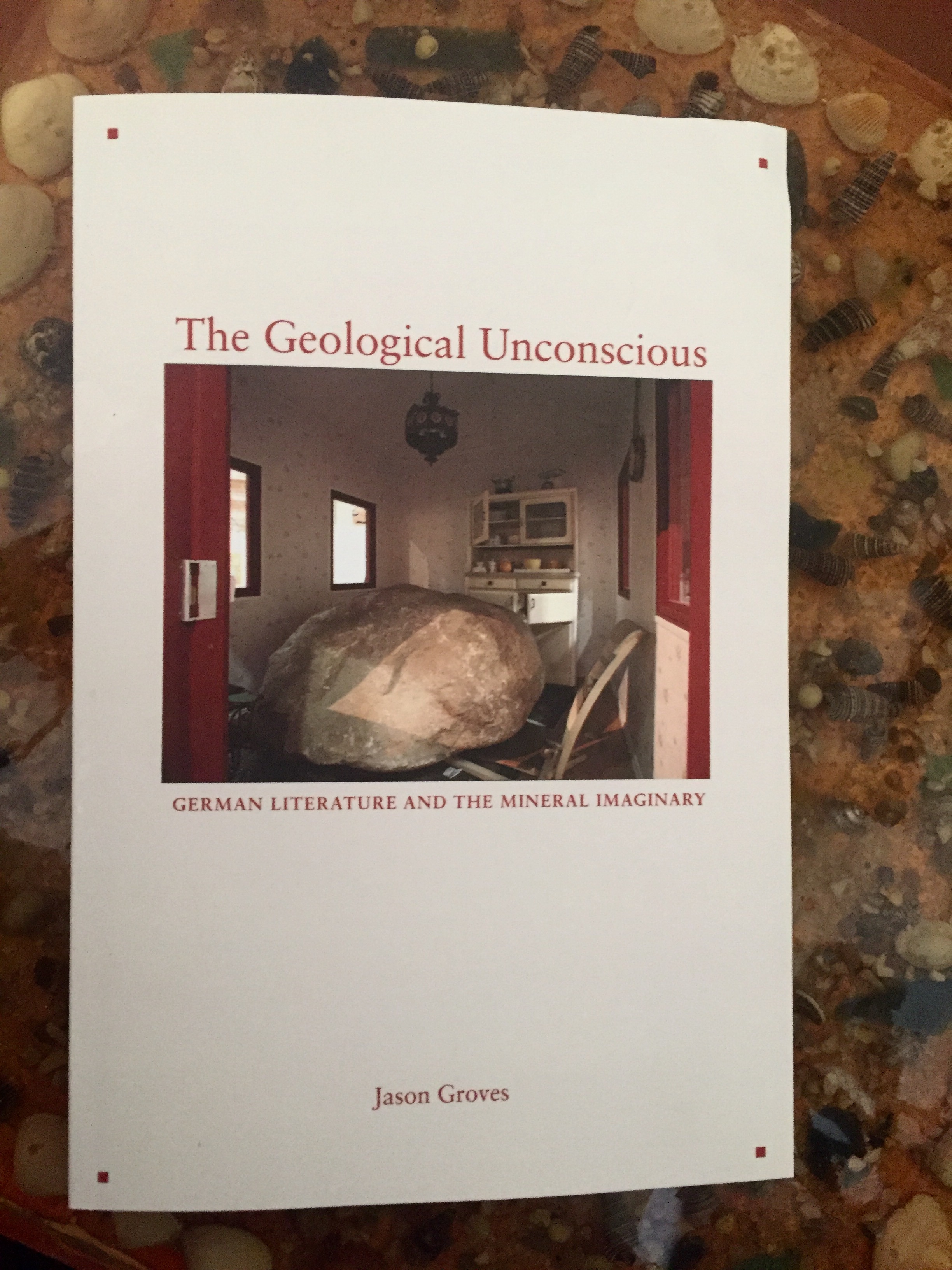 …WHO WROTE A BOOK THAT GOT PUBLISHED!!!
Here’s the deets:
Title: THE GEOLOGICAL UNCONSCIOUS
GERMAN LITERATURE AND THE MINERAL IMAGINARY
https://www.fordhampress.com/9780823288113/the-geological-unconscious/
From the author…
“Already in the nineteenth century, German-language writers were contending with the challenge of imagining and accounting for a planet whose volatility bore little resemblance to the images of the Earth then in circulation. The Geological Unconscious traces the withdrawal of the lithosphere as a reliable setting, unobtrusive backdrop, and stable point of reference for literature written well before the current climate breakdown.”
“Through a series of careful readings of romantic, realist, and modernist works by Tieck, Goethe, Stifter, Benjamin, and Brecht, Groves elaborates a geological unconscious—unthought and sometimes actively repressed geological knowledge—in European literature and environmental thought. This inhuman horizon of reading and interpretation offers a new literary history of the Anthropocene in a period before it was named.”
“These close readings show the entanglement of the human and the lithic in periods well before the geological turn of contemporary cultural studies. In those depictions of human-mineral encounters, the minerality of the human and the minerality of the imagination become apparent. In registering libidinal investments in the lithosphere that extend beyond Carboniferous deposits and beyond any carbon imaginary, The Geological Unconscious points toward alternative relations with, and less destructive mobilizations of, the geologic.”
It might take me as long to read it as it took him to write it ‘cos it’s definitely going to stretch all of my working brain cells which are more used to reading chicklit by Jennifer Weiner or Sophie Kinsella, but it’s IMPORTANT to read things that are outside our comfort zone. WAY OUT.
This is the kind of book you need to read with a dictionary and Thesaurus very close by.
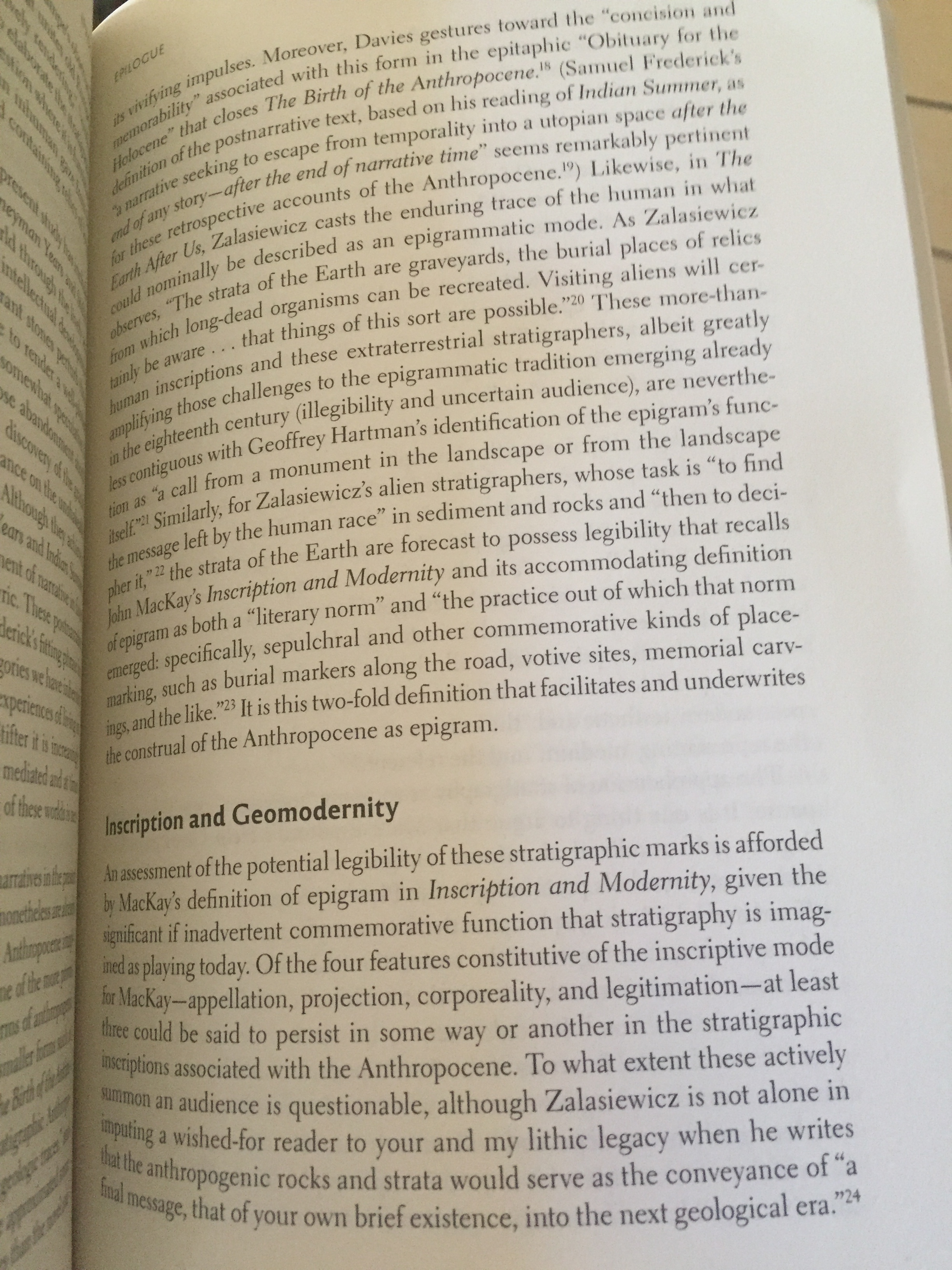
Sample page 121:
Editorial Reviews:
“An impressive and accomplished study that delves deep into the layers of German mineralogical imagination from Goethe to Benjamin. Stones may not be able to speak, but they have found their spokesman. A pleasure to read.” (Geoffrey Winthrop-Young, University of British Columbia)
“The Geological Unconscious offers subtle close readings of several canonical texts that receive provocative illumination from ecocriticism. The book’s focus on the instability of ground is insightfully paired with a consideration of how already in the nineteenth century literary style and narrative register geological time and planetary wounding.” (Catriona MacLeod, University of Chicago)
UPDATE: Author Dr. Jason Groves is a tenured professor at the University of Washington in Seattle. He is cotranslator of Werner Hamacher’s Minima Philologica.
If you’re fascinated (like I am) about the what goes on behind the scenes in Hollywood with BIG DEALS and BIG MONEY, you will love these books.
I’m talking about the kind of book you can’t put down; the kind where you’re in limbo-time, in a trancelike state — and where you are so invested in the characters that you hope the book never ends — but you can’t wait to get to the last page to see how the author ties everything up — only to discover that there’s a sequel to the first book.
And it’s just as awesome.
If you’ve been following my blog for a while, you know that I live an Enchanted Life on the edge of fantasy. Reality for me is, at best, a road not taken.
Although reality can and does rear its ugly head at odd and unexpected moments, that’s the best time for a well-written chick lit novel or two to transport me on a magic carpet ride back to the Land of Princess Rosebud and all that is sparkly.
According to Wikipedia, Chick lit is genre fiction which addresses issues of modern womanhood, often humorously and lightheartedly.
Although this is definitely chick lit, it’s so well written and the characters are so well fleshed out and alive, you’ll be as pleasantly surprised as I was.
(My Ph.D. DIL was as obsessed as I was, so it’s not just me.)
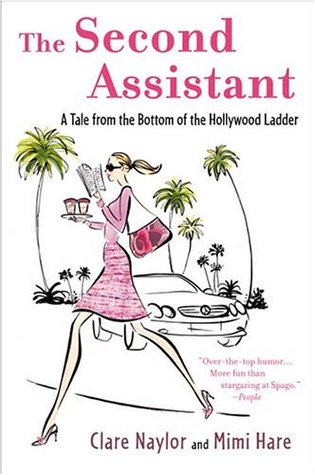
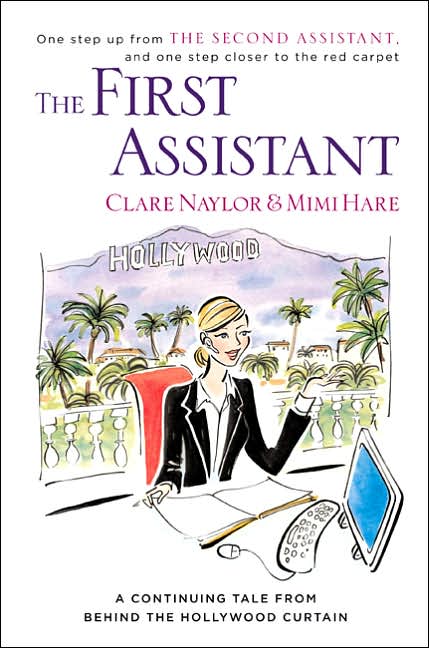
Clare Naylor and Mimi Hare met and became a fantastic writing team. Clare is the author of Love: A User’s Guide and Catching Alice.
Mimi was the director of development at Gracie Films, the company responsible for Jerry Maguire and As Good As It Gets.
They draw upon their own real life experiences for a riveting behind-the-scenes look at what goes on in Hollywood.
I loved reading these novels and I hope you will enjoy them too. Even though they came out a few years ago, it’s still fresh and relevant.
Read The Second Assistant FIRST:
Read The First Assistant NEXT:
 Enchanted Seashells | Princess Rosebud