Today is the anniversary of Leon’s death, November 13, 2016.
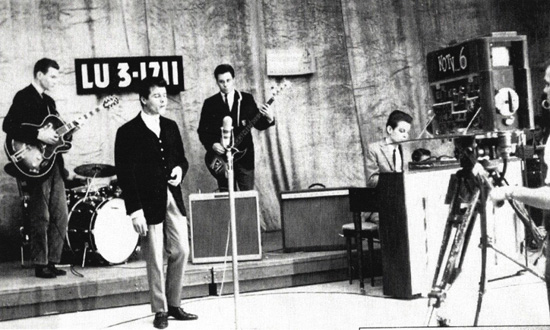
Here’s where it began — Leon was sixteen years old in this KOTV photo from the 1958 March of Dimes Telethon. Left to right, Tommy Crook, drummer Chuck Blackwell, Jimmy ‘Junior’ Markham, Bill Raffensperger and (Leon) Claude Russell Bridges.
From Tulsa Today
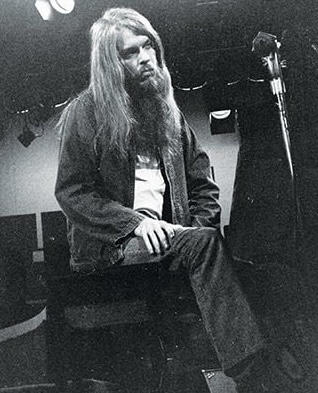
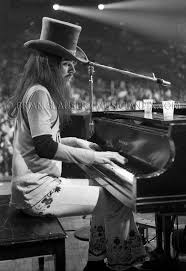
Leon Russell will always be the one and only visionary and musical magician, The Master of Space and Time, and we’re still mourning him.
A Song For You is one of the most beautiful and iconic songs ever composed and no one can perform it like Leon.
Written by Bill Janovitz, this nearly 600 page New York Times bestselling biography of Leon Russell, Leon Russell: The Master of Space and Time’s Journey Through Rock & Roll History was a gift from the original Angel Boy.
I don’t think he (or the Angel Kids) quite understand my passionate interest (read obsession) with the one and only Claude Russell Bridges (Leon Russell), but he’s supportive in his own way, although he wouldn’t play “A Song For You” on our piano because he said it had been too long since he tickled the ivories and it might have looked simple to play, but it was a very complex piece of music and he didn’t feel he could do it justice. Or at least that’s the excuse he gave me.
So…this BOOK. It’s comprehensive, it’s respectful, and it delves into areas of Leon’s life that even I didn’t know. Yes, there’s some sex, drugs, and rock and roll, but the overarching theme of Leon’s life and music is LOVE.
The life path that took a child born with cerebral palsy during the Second World War, who overcame his physical challenges to become a classically trained pianist — and was catapulted to the top of the music scene–is inspirational. He was and always will be the Master of Space and Time — a visionary.
One of my favorite quotes from the book is from his friend and fellow musician, Ann Bell:
“One night everybody had gone to bed, and it was about four o’clock in the morning. All of a sudden, I woke up; I could hear him playing. It was a classical piece; he’s in the living room, where he had a piano, and he’s playing this piece that’s forty minutes long, from memory. There was no sheet music. I sat down on the bench, and I didn’t say a word. I just thought, ‘They didn’t understand the depth of his well.’ And when he was done, I was crying. He goes, ‘Girl, what’s wrong witchoo?'”
From the Rock & Roll Hall of Fame: The definitive New York Times bestselling biography of legendary musician, composer, and performer Leon Russell, who profoudly influenced George Harrison, the Rolling Stones, Eric Clapton, Elton John, Willie Nelson, Tom Petty, and the world of music as a whole.
Leon Russell is an icon, but somehow is still an underappreciated artist. He is spoken of in tones reserved not just for the most talented musicians, but also for the most complex and fascinating. His career is like a roadmap of music history, often intersecting with rock royalty like Bob Dylan, the Stones, and the Beatles. He started in the Fifties as a teenager touring with Jerry Lee Lewis, going on to play piano on records by such giants as Frank Sinatra, The Beach Boys, and Phil Spector, and on hundreds of classic songs with major recording artists. Leon was Elton John’s idol, and Elton inducted him into the Rock and Roll Hall of Fame in 2011. Leon also gets credit for altering Willie Nelson’s career, giving us the long-haired, pot-friendly Willie we all know and love today.
In his prime, Leon filled stadiums on solo tours, and was an organizer/performer on both Joe Cocker’s revolutionary Mad Dogs and Englishmen tour and George Harrison’s Concert for Bangladesh. Leon also founded Shelter Records in 1969 with producer Denny Cordell, discovering and releasing the debut albums of Tom Petty, the Gap Band, Phoebe Snow, and J.J. Cale. Leon always assembled wildly diverse bands and performances, fostering creative and free atmospheres for musicians to live and work together. He brazenly challenged musical and social barriers. However, Russell also struggled with his demons, including substance abuse, severe depression, and a crippling stage fright that wreaked havoc on his psyche over the long haul and at times seemed to will himself into obscurity. Now, acclaimed author and founding member of Buffalo Tom, Bill Janovitz shines the spotlight on one of the most important music makers of the twentieth century.
I give this book all the stars ⭐⭐⭐⭐⭐⭐ and tophats 🎩🎩🎩🎩🎩🎩🎩🎩
In my opinion, if you don’t know who Leon Russell was, you should, and reading Janovitz’s biography is a good way to learn about him and to be amazed at his musical genius. You’ll understand why he’s referred to as the Master of Space and Time.
Leon Russell and the GAP band on The Midnight Special with Wolfman Jack:
A while back I wrote about the 1970s TV show, Emergency!, a favorite of mine to watch with my RN mom. A little research revealed that one of the stars, Julie London, was an amazing vocalist and her husband in real life, Bobby Troup (also on Emergency!), was not only an accomplished musician but he wrote the hit song, Route 66.
Since it’s no secret that I have an ongoing OBSESSION with Leon Russell that doesn’t seem to be abating any time soon, I was listening to some of the tracks on the Mad Dogs and Englishmen CD and watched the videos where LR is prominent.
I’m not a huge fan of Joe Cocker, never have been, and still think that Leon’s versions of his own songs can’t be surpassed (like Delta Lady), but then I heard JC sing “Cry Me a River” by Arthur Hamilton, and realized that it’s the same song Julie London sang a while back, but this was a completely light years different arrangement by….you guessed it, the one and only Master of Space and Time, the magical visionary himself, Leon Russell.
It’s actually not that crazy because a little more digging revealed that Leon was often a Wrecking Crew first call session pianist for some of Julie London’s recordings, so there was a connection.
Listen to Julie London (amazing for sure)…
…and now watch this video. I confess that for me, one of the best parts besides seeing Leon’s magical hands on the piano is when he counts off “1-2-3-4“. No shame in owning my obsession, is there? If only Leon had sung this himself…
Do you have a preference? Both awesome versions of the song, but the talents of Leon Russell forever blow my mind. How did he even think of arranging the song that way? Sadly, we’ll never know, but his magic lives on.
And then there’s Ella Fitzgerald’s version…OMG! They are all incredible interpretations, aren’t they?

 Enchanted Seashells | Princess Rosebud