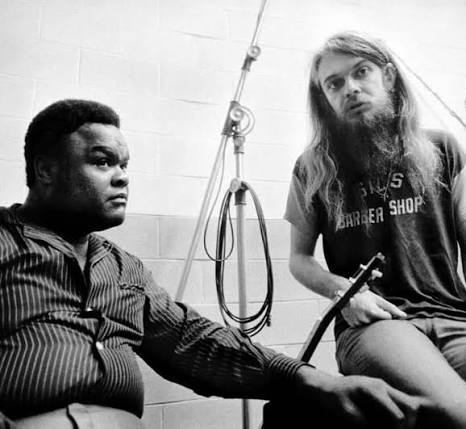
I’d Rathe Be Blind is a blues song written, composed, and produced by LeonRussell, recorded by legendary blues guitarist and singer FreddieKing with Leon on piano.
(This is not the same as “I’d Rather Go Blind” by Etta Jamea.)
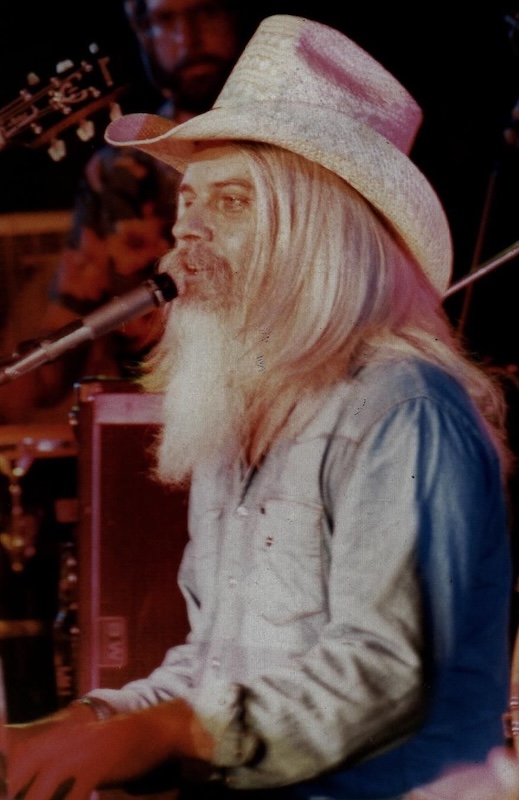
Image from Church Studio
Freddie’s voice is as distinctive as Leon’s.
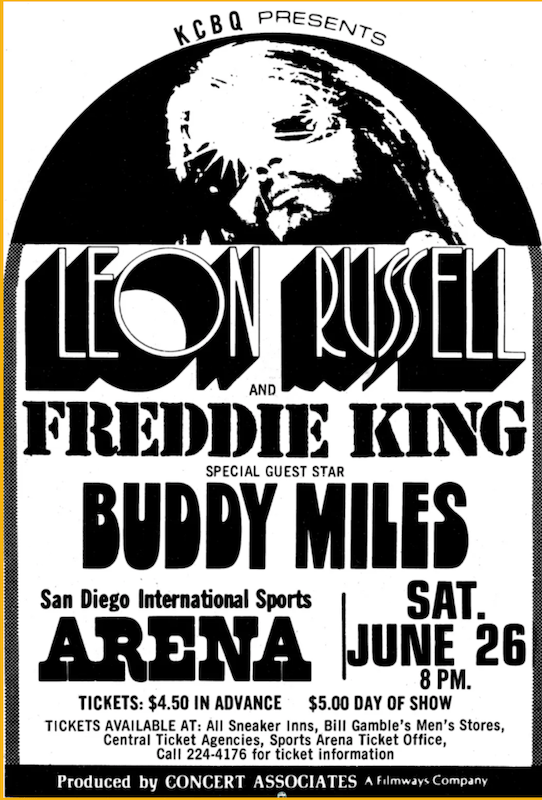
When I saw Leon in concert, he was with Freddie King. It was memorable, that’s for sure.
I’ve been waiting…..for the great relief of having you to talk to...
Pain is a crazy thing; it has a life of its own, it takes over every minute of every day, and that’s all you can think of — it’s like oceans of pain with no relief.
Anyway, stubborn me finally called the doc to tell her I had shingles. She immediately called in a prescription for an anti-viral. She said I’m a bit outside of the 72 hour window for it to be totally effective, but she hoped it would still work to relieve the intense burning and stabbing pain and shorten the duration of this cycle of hell.
I can’t get comfortable, I can’t lie on my back or my right side and sitting is also excruciating, so I’ve given up attempting to find the least tortuous position. I’m sick of watching TV, too. Sleep is elusive because I can’t get comfortable.
Awake at 3am, these lyrics were swirling around in my delirious brain…“darling, be home soon…”
I couldn’t remember what song it came from, so I opened my computer and searched. I learned that it was originally written and performed by John Sebastian of the Lovin’ Spoonful for the soundtrack of Francis Ford Coppola’s film You’re a Big Boy Now, and another version included in the Mad Dogs and Englishmen tour.
Not only was our magical Leon Russell a brilliant songwriter, composer, pianist, and singer, his arranging skills were off the chart.
Here’s the original of Darling Be Home Soon by the Lovin’ Spoonful and the Leon Russell version with Joe Cocker of the Mad Dogs and Englishmen tour.
Bonus! Master of Space and Time, Leon Russell, on guitar. You beauty!
They lyrics are quite poignant and as beautiful now as they were in the 60s…
Come and talk of all the things we did today Here and laugh about our funny little ways While we have a few minutes to breathe And I know that it’s time you must leave
But darling be home soon I couldn’t bear to wait an extra minute if you dawdled My darling be home soon It’s not just these few hours but I’ve been waiting since I toddled For the great relief of having you to talk to
And now, a quarter of my life is almost passed I think I’ve come to see myself at last And I see that the time spent confused Was the time that I spent without you And I feel myself in gloom
So darling be home soon I couldn’t bear to wait an extra minute if you dawdled My darling be home soon It’s not just these few hours but I’ve been waiting since I toddled For the great relief of having you to talk to
So darling… My darling be home soon I couldn’t bear to wait an extra minute if you dawdled My darling be home soon It’s not just these few hours but I’ve been waiting since I toddled For the great relief of having you to talk to
Go and beat your crazy head against the sky Try and see beyond the houses and your eyes It’s OK to shoot the moon
Darling be home soon I couldn’t bear to wait an extra minute if you dawdled My darling be home soon It’s not just these few hours but I’ve been waiting since I toddled For the great relief of having you to talk to
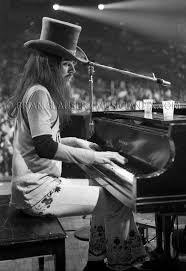
I possess an endless fascination and curiosity about how someone can change so drastically from being an anonymous, quiet, shy, piano player behind the scenes on hundreds of songs — to the persona that emerged and developed into the magical Master of Space and Time, Leon Russell.
I wish I could have asked him how it happened, how he shifted from one to the other, but sadly, I’ll never get the chance, so I continue to marvel at his drastic transformation.
In 1959, he was still Claude Russell Bridges; he hadn’t yet metamorphosed into the uber cool bearded musician with long hair and those iconic sunglasses, but the talent was there. Long before he became Leon Russell and had massively successful career as a solo artist, he was still a musical genius.
Leon was only about fourteen when he formed The Starlighters in the mid-1950s. He and the other band members attended Will Rogers High School in Tulsa, Oklahoma.
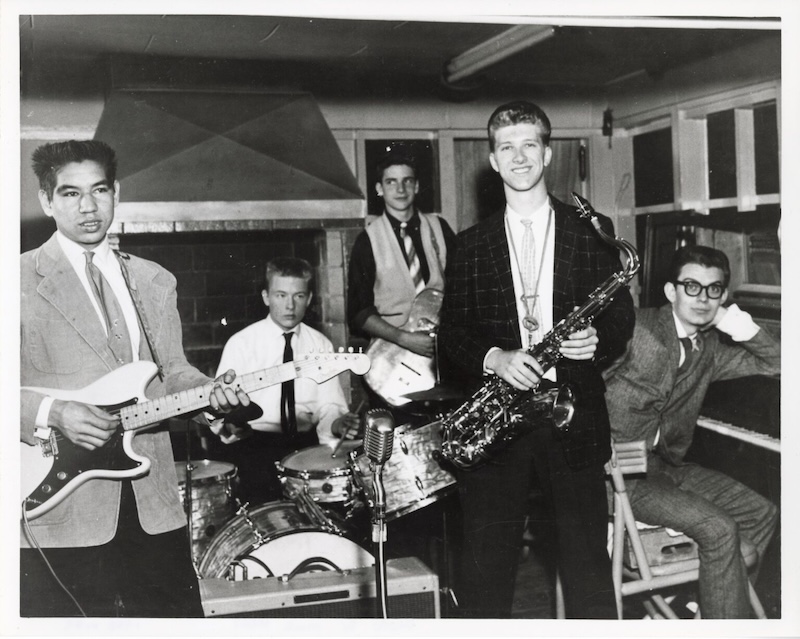
This is a photo of the Starlighters at the Tropicana Club, 1959. Left to right: Leo Feathers, Chuck Blackwell, Ron Ryan, Johnny Williams, and Russell Bridges wearing glasses.
A promoter at Cain’s Ballroom in Tulsa hired the Starlighters to back Jerry Lee Lewis at an upcoming show.
After the Starlighters’ first warm-up set, Lewis came up onto the bandstand, pointed at seventeen-year-old Leon, and declared, ”I’m not gonna set down at that piano. He plays a lot better piano than I do!” Lewis immediately hired the band to back him on a tour. (Courtesy of the OKPOP Museum)
Leon produced this record when he was seventeen. I’m blown away by his piano mastery; he was definitely destined for greatness.
Crazy random connection time…I read something on Facebook about Oak Park High School where I briefly attended before moving to California.
The post shared information about a former classmate who became a famous singer/songwriter; Marcy Levy/Marcella Detroit.
Because I’m obsessed and have a one-track-mind, I messaged her and asked if she had ever known Leon Russell because I knew he spent a lot of time in Detroit around the early ’70s.
Her response blew me away! Not only did she know Leon, she toured with him before going on tour with Eric Clapton and co-wrote some of Clapton’s songs, including my favorite, “Lay Down Sally.”
ERIC CLAPTON, OMG.
I’m not at all embarrassed to tell you that I asked her if Leon’s eyes were as amazing as everyone has reported, and her exact quote was, “Oh yes his eyes were incredible.” I have so many more questions. So many. I can be SO annoying.
As a teenager, Marcy had posters of Russell on her walls. She later achieved her goal of singing with him, joining his touring band as a featured female vocalist for the Stop All That Jazz album (which also featured The Gap Band).
Leon Russell wrote the song “Time for Love” for her. The two developed a personal and professional connection in the early 1970s, during which time they dated for approximately nine months.
Detroit has reflected on their relationship in interviews, noting that Russell was a childhood idol. She viewed him as an incredibly gifted songwriter, musician, and arranger. She specifically recalled him creating an amazing live arrangement of “Unchained Melody” for her to sing on tour.
We’re fortunate to see Marcy as a background singer with Ann Bell on the Midnight Special with Leon, too. It’s an amazing video:
One more brick in the path that leads to Leon. One more step.
Another mind blowing fact I learned is that one of Marcy Levy’s earliest gigs was opening for David Bowie! DAVID BOWIE!!!
She was also a member of the ground breaking award winning band “Shakespear’s Sister”. Their song “Stay” is the longest running number one hit for a female band in UK history remaining at number ONE for eight weeks, and Marcy recently appeared on THE MASKED SINGER UK. https://marcelladetroit.com/
At the time, I would have had no idea there was such talent lurking at OPHS. I certainly never accomplished anything that rises to Marcy’s level. Sigh. #failure
Enjoy all of these songs on this beautiful Friday before Mother’s Day.
Did you know about Dylan and Leon?
Leon Russell considered Bob Dylan to be one of the greatest songwriters of all time. He enjoyed playing on covers of his songs by other artists, and even produced Dylan Jazz, an album of jazz versions of Dylan songs for GNP Records in 1965.
Their friendship lasted decades. Leon Russell joined Bob Dylan for a series of U.S. dates during Dylan’s Never Ending Tour in the summer of 2011.
In March 1971 Leon was the producer as he and his group, The Tulsa Tops, worked with Dylan at Blue Rock Studios in New York. When I Paint My Masterpiece and Watching The River Flow were recorded live with no overdubs with Dylan on vocal as Leon played an acoustic grand piano, Jesse Ed Davis was on electric guitar, Carl Radle played electric bass with Jim Keltner on drums.
I prefer Leon Russell’s version (below) as I always do, but you can definitely hear Leon’s magical contribution here:
I discovered Steve Liddycoat isolated Leon’s piano umami here and it’s awesome:
When I Paint My Masterpiece studio outtake:
On the Mad Dogs and Englishmen tour, Leon and Joe Cocker sang a beautiful duet of Girl From The North Country to serenade Dylan who was in the audience. Listen to what Leon had to say about Dylan….
Bob Dylan is coming to my area in June. I’m sure all tickets are sold out, but I’d love to see him if anyone has a spare????
Lastly, Leon’s version of Dylan’s Masters of War is especially poignant today; as fresh as when Dylan originally recorded it in 1963.
Featured image found on Pinterest; credit to owner.
I discovered yet another talented musician who had Leon’s magic umami sprinkled onto his songs.
This time it’s Dave Mason, founding member of the rock band, Traffic, who recently passed away on April 19.
As he was forming his own public persona as a solo artist, Leon Russell continued to collaborate with other musicians.
As I re-listen to these Dave Mason songs, I can now detect Leon’s contributions; always distinctive, always the secret ingredient, the umami that enhanced the flavor of every melody and arrangement.
In my opinion, he was meant to be on center stage, never in the background and anonymous.
Special thanks to Leon Russell Superstar in a Masquerade. His YouTube channel is an encyclopedia about the Master of Space and Time. Featured photo curated from Pinterest.
I’m not sure I really liked this song when it first came out; perhaps it was a bit too “country” for this little hippie rocker chick, along with “Rhinestone Cowboy”, but the lyrics and melody stood the test of time, and then there’s LEON, or as he was known back then, Claude Russell Bridges.
I had no idea he was the pianist on this recording; another magical moment from the Master of Space and Time, the secret ingredient.
Here’s another version from 1983. They made a great team, part of the famous Wrecking Crew of first call studio musicians in Los Angeles during the 1960’s. I could watch his fingers on the piano all day every day.
Claude Russell Bridges (Leon Russell) would be eighty-four years old today and sadly, while he’s no longer here, it’s a good time to remember him through his musical genius. He was a gifted pianist, songwriter, arranger, bandleader, and producer–a visionary.
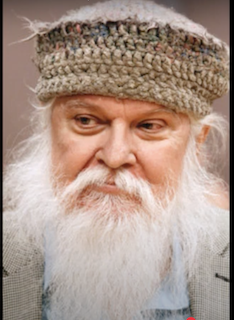
His beauty shines through, no matter his age.
This is a brief compilation of some of his water themed recordings:
Back To The Island (Leon Russell’s creation, NOT Jimmy Buffet)
There’s still too much ugliness in this world, so I’m going to keep my rosebud colored glasses on a bit longer…
When I realize how many songs Leon Russell contributed his magic to, how he was the secret ingredient in hundreds of popular tunes, I am continually in awe and amazed.
My mom and I used to listen and sing along to all of Gary Lewis & The Playboys songs. We loved the perfect piano playing and we never knew it was Leon. We didn’t have a CLUE but what we did sense was that whoever played the piano was special and magical. It wouldn’t be the same WITHOUT Leon’s contributions– as arranger AND pianist.
Gary Lewis once said that eighty percent of his success was due to Leon, but I believe it’s closer to one hundred percent. If you take away the piano, you’re left with nothing special.
Leon morphed from this uber quiet, short-haired clean-cut session keyboardist to the coolest longhaired sunglass-wearing sexy visionary like a butterfly bursting out of a cocoon. The magic was always inside of him.
I didn’t write the following, but it’s worth sharing. (I did however, edit it a bit.)
If you listened to pop music in the 1960s, you heard Leon Russell play. You just didn’t know it.
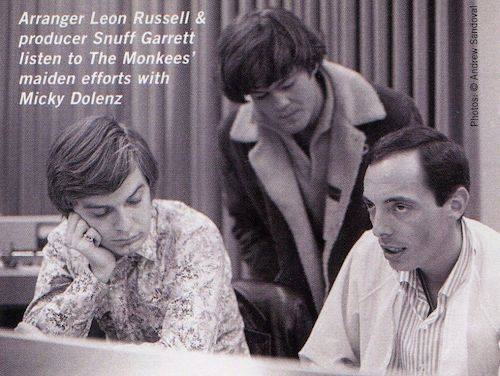
That piano on the Ronettes’ “Be My Baby”? Leon Russell. The Byrds’ early records? Leon Russell. Beach Boys sessions? Leon Russell. Phil Spector’s legendary “Wall of Sound” productions? Leon Russell was there, in a suit and tie, hair neatly trimmed, playing whatever was needed, and here with the Monkees.
For nearly a decade, Leon was one of the most sought-after session musicians in Los Angeles. Producers loved him because he could play anything—rock, jazz, country, blues, gospel. You could hum a melody and he’d give you the perfect piano part. You could describe a feeling and he’d translate it into music.
Producer Snuff Garrett said, “I could talk style with him and he’d do it. I’d name a record and go, ‘I like the piano on this…’ and he’d go, ‘Okay,’ and play it.”
Leon Russell was on hundreds of hit records. He was the secret ingredient in countless songs you’ve heard a thousand times.
And for years, almost no one knew his name.
Leon was born Claude Russell Bridges in 1942 in Lawton, Oklahoma with a birth injury (cerebral palsy on the right side) and began playing classical piano at age four. By fourteen, he was sneaking into Tulsa nightclubs with a fake ID, playing backup for Jerry Lee Lewis.
The fake ID belonged to a friend. The name on it was “Leon.” He kept it.
At seventeen, Leon moved to Los Angeles to chase his dream of making it in music. He studied guitar with James Burton, one of the best session players in the business. He worked constantly—sessions during the day, clubs at night, whatever paid.
And he was good. So good that by his early twenties, Leon Russell was playing on some of the biggest records of the decade.
He backed the Ronettes, the Crystals, Darlene Love. He played on Phil Spector’s famous Christmas album in 1963. He worked with the Byrds, Gary Lewis & the Playboys, Herb Alpert & the Tijuana Brass, the Beach Boys, the Ventures, Jan and Dean.
Herb Alpert later recalled that Leon would sit at the piano and say, “I don’t know what to play.” Then he’d “chime in with something special and affect the groove in a very Leon Russell way that was always unique.”
For years, Leon was brilliant, versatile, and completely invisible. A studio ghost. The guy in the suit playing piano while someone else got famous.
Then in the late 1960s, something changed.
Leon grew his hair long. He stopped wearing suits. He gathered a commune of musicians around him in the Hollywood Hills.
He stopped being the anonymous session player and started becoming Leon Russell—the artist–The Master of Space and Time.
In 1970, everything exploded at once.
Leon released his first solo album, simply titled Leon Russell. The musicians backing him? Eric Clapton. Ringo Starr. George Harrison. Not exactly unknown names.
That same year, he organized Joe Cocker’s legendary Mad Dogs & Englishmen tour—a massive, chaotic traveling circus of forty-plus musicians, complete with a full horn section, backup singers, and absolute mayhem. It was revolutionary. The tour became the stuff of legend, and Leon was the mastermind behind it all.
He wrote “Delta Lady” for Joe Cocker. It became a hit.
Then in 1971, Leon performed at George Harrison’s Concert for Bangladesh—one of the first major benefit concerts in rock history. He shared the stage with Harrison, Bob Dylan, Eric Clapton, and Ringo Starr. His medley of “Jumpin’ Jack Flash” and “Young Blood” was one of the standout performances of the night. He was ON FIRE.
Suddenly, Leon Russell wasn’t just a session player anymore. He was a star.
By 1973, Billboard named him the “Top Concert Attraction in the World.”
Read that again. The guy who had spent a decade playing anonymous piano parts was now filling stadiums on solo tours. His album Carney reached #2 on the charts. He was crossing genres effortlessly—rock, blues, country, gospel, bluegrass—and audiences couldn’t get enough.
He wrote songs that became standards. “A Song for You”—a tender, achingly beautiful ballad—has been recorded by more than 200 artists, including Ray Charles, Donny Hathaway, Whitney Houston, and Amy Winehouse. In 2018, it was inducted into the Grammy Hall of Fame.
Another of his songs, “This Masquerade,” was covered by more than 75 artists. George Benson’s version won a Grammy.
Leon founded Shelter Records in 1969, creating wild, creative environments where musicians could live and work together. He established studios in Hollywood and Tulsa, fostering creativity without boundaries.
He produced and played on sessions for Barbra Streisand, Bob Dylan, Frank Sinatra, Ike & Tina Turner, the Rolling Stones. He toured with the Stones. He collaborated with Willie Nelson. He wrote and recorded hits like “Tight Rope” and “Lady Blue.”
For a brief, brilliant period in the early 1970s, Leon Russell was one of the biggest names in music.
By the 2000s, Leon was playing smaller venues. The stadiums were gone. A new generation of music fans had never even heard of him. He kept touring—because that’s what he did, that’s who he was—but he was a legend from another era that the world had moved past.
He was still brilliant. He was still performing. But the spotlight had moved on.
In 2009, Elton John decided to do something about it.
Elton had idolized Leon since the beginning of his own career. When Elton was starting out in the early 1970s, Leon was already a star. Leon’s influence shaped Elton’s sound, his flamboyant showmanship, his entire approach to piano-driven rock.
Elton had always called Leon a mentor and an inspiration. So when he saw that Leon had been nearly forgotten, he reached out and asked him to record an album together.
The result was The Union, released in 2010. It was a collaboration between two piano-playing legends—one at the height of his fame, one who’d been overlooked for decades.
The album was critically acclaimed and Grammy-nominated. Cameron Crowe made a documentary about the creative process. And suddenly, people were talking about Leon Russell again.
Elton championed him publicly. He spoke about Leon’s genius, his influence, his importance to rock history. And in 2011, Elton inducted Leon into the Rock and Roll Hall of Fame.
That same year, Leon was also inducted into the Songwriters Hall of Fame.
After decades of being overlooked, Leon Russell was finally getting the recognition he deserved.
But by then, his health was failing. He’d had a heart attack. He had brain surgery, but was looking forward to another tour.
On November 13, 2016, Leon Russell died in his sleep at his home in Nashville. He was 74 years old.
Elton John posted: “My darling Leon Russell passed away last night. He was a mentor, inspiration & so kind to me. I loved him and always will.”
Leon Russell left behind an extraordinary legacy: 33 albums, at least 430 songs (probably more), collaborations with virtually every major artist of his era. He’d been directly involved with hundreds of bestselling records over a 60-year career.
But more than the numbers, Leon Russell represented something rare in music—a musician’s musician. Someone who could play anything, work with anyone, cross any genre. Someone equally at home backing Frank Sinatra in a suit or leading a hippie commune with wild hair and a beard down to his chest.
He proved you could be both the anonymous session player and the stadium-filling star. The guy in the background and the guy in the spotlight.
Leon Russell’s story is a reminder that the most talented people aren’t always the most famous—and that sometimes genius hides in plain sight for years before the world finally sees it.
He played on songs you’ve heard a thousand times without ever knowing his name.
Then he stepped into the light and showed the world what he’d been all along: a master. Curated from NoCapArchives
As someone posted on social media, “Besides beautiful Leon’s awesome talents and accomplishments, the purity of his heart shines through.” His disability didn’t hold him back; he’s an inspiration.
Check out the genius of Leon during the Homewood Sessions…it captured a priceless moment in time:
I’m trying not to react to current events and news reports and instead surround myself with positivity and joy. What shines more light than love?
Leon Russell and New Grass Revival – The Live Album is AMAZING. It was recorded live at Perkins Palace, Pasadena, CA. on May 15, 1980 by Paradise Records and Paradise Video (all Leon productions.)
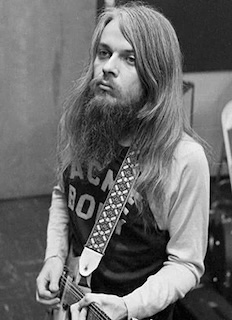
The beauty of this man.
Performing with New Grass Revival. Photo by Steve Kahn via Pinterest
 Enchanted Seashells | Princess Rosebud