“Tomorrow I’ll Be Gone” is an unreleased 1966 track widely attributed to a collaboration between Leon Russell and legendary music producer Snuff Garrett.
This specific 1966 recording has circulated among deep-cut collectors and music historians—often appearing on rare bootlegs or historical archival threads labeled as an “Unknown Artist” fronting a track arranged or written by Russell and Garrett. Because it was never given an official studio release by a major label, it remains a rare piece of rock-and-roll history.
I’m not all about Leon Russell, at least not ALL the time. I have a certain fond connection to PNW-born musician Macklemore, if you can believe it…
It relates to skateboarding and that’s all I’m going to say!
There are many reasons why I admire Macklemore, real name Benjamin Hammond Haggerty, and it’s not just because I reallyreally like his music, which I do.
I swear, I’ve been playing Thrift Shop on repeat for a long time. I AM that thrift shop girl hahahaha.
I admire him because he’s a great dad and I’ve witnessed it in action, so this is not celebrity gossip, and I admire him for the way he walks the talk and speaks his truth:
Macklemore has been loudly advocating for an end to Israel’s genocide in Gaza for years. The Seattle rapper is currently opening for Sheeran on his North American stadium tour, and he’s using it as a platform to advocate for a free Palestine among other causes. In response, a pro-Israel group has launched a petition to get him removed from the tour.
Halfway through his opening set Friday at MetLife Stadium in New Jersey, Macklemore delivered a version of the speech he’s been giving through the tour. He’s since posted video footage of the speech on Instagram for all to see.
I’ve been trying to figure out a way to say this all day. One of the reasons why I wanted to come on this tour was because I wanted to stand up here on stages in stadiums across America and say two words that are very near and dear to my heart: “Free Palestine.” I said, “Free Palestine!” I want those words to be loud and clear so that people from Gaza, all the way to the occupied West Bank know that we have not forgotten them.
And this next song was inspired by the bravery of Columbia University students who led an encampment movement that mobilized the entire world. Opened up hearts, myself included. So thank you to those students that risked their diplomas, that risked their tuition, that risked their scholarships, that stood up and said, “No.” CUAD students, Students For Justice In Palestine, and Jewish Voices For Peace. Thank you guys.
To all of my Jewish brothers and sisters: Criticism of Israel, criticism of apartheid, being against genocide in no way is a criticism of you. My message is for peace. Love. For all human beings to be treated with dignity, respect, and equality. So I say free Palestine. I say free Lebanon. I say free Cuba. I say free Congo, free Sudan, free all people in America living in fear over this terrorist organization ICE. None of us will be free until we are all free. (Curated from Stereogum)
Instead of petitioning against him and vilifying this talented musician, husband, and wonderful dad, how about we REALLY listen to his words?
Macklemore is a brave truth teller and ought to be commended. As granddaughter of a rabbi, I’m on #TeamMacklemore
Here’s a couple of my fave songs, and I chose the ADULT version:
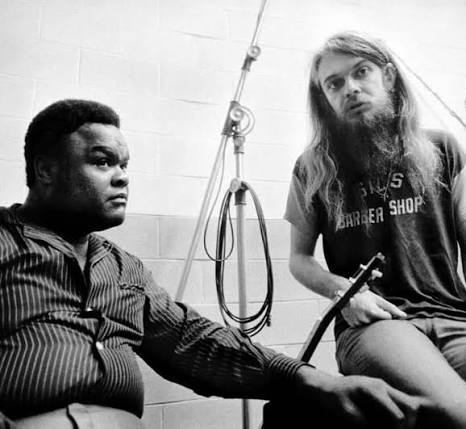
I’d Rathe Be Blind is a blues song written, composed, and produced by LeonRussell, recorded by legendary blues guitarist and singer FreddieKing with Leon on piano.
(This is not the same as “I’d Rather Go Blind” by Etta Jamea.)
Image from Church Studio
Freddie’s voice is as distinctive as Leon’s.
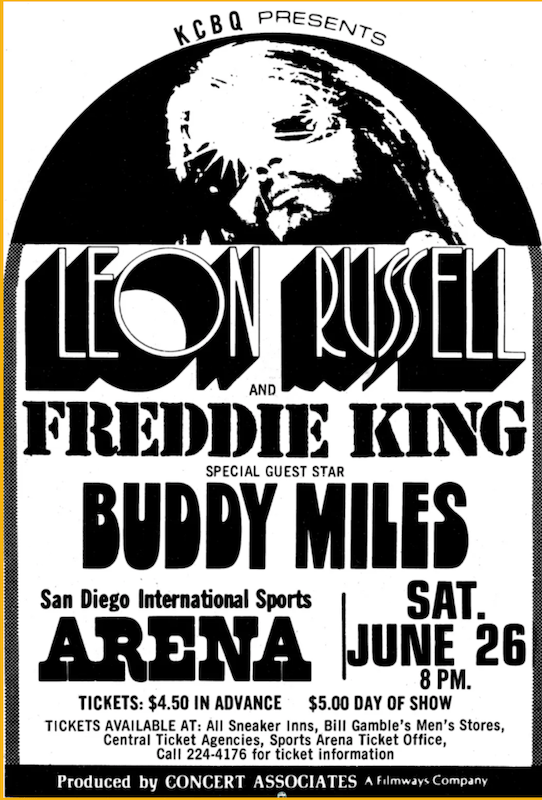
When I saw Leon in concert, he was with Freddie King. It was memorable, that’s for sure.
Was there anyone Leon did NOT work with? I think not. This time it was Aretha Franklin.
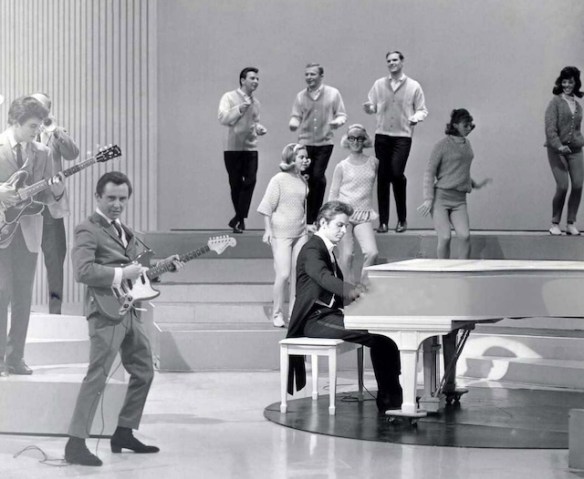
Check out this treasure from 1964 when Leon Russell was the featured house pianist for the TV show, Shindig.
This time, he’s right there with Aretha Franklin, and once again, this is Leon with short hair, no beard, and no sunglasses, but he’s still and always the Master of Space and TIme.
The two shared a mutual professional history: Leon Russell played piano on early sessions for Franklin at Columbia Records (including a string arrangement of “Am I Blue?”), and Franklin later recorded a renowned cover of Russell’s classic ballad, “A Song for You”.
Before the collaboration with Aretha on Shindig, word got around about the skinny kid from Oklahoma who played the piano like nobody else, and producers and arrangers booked him for their sessions as soon as he turned twenty-one and was able to join the union. Among them was Robert Mersey who had Russell on several, including this pair of songs for Aretha Franklin in 1963. Thanks to Leon Russell Superstar in a Masquerade
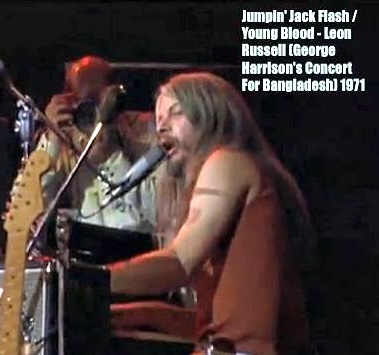
That’s how casually George Harrison introduced the force of energy and talent that was Leon Russell to the crowd at the Concert for Bangladesh, the first historic benefit shows organized by George Harrison and Ravi Shankar at Madison Square Garden in New York City on August 1, 1971.
As always, Leon’s arrangements and performances were magical and inspiring. I mean, how in the world did he think of choosing an old song by the Coasters and pair it with Jumpin’ Jack Flash? More genius by the Master of Space and Time… It absolutely didn’t hurt that he was absolutely gorgeous, right?
You can find the whole concert video on Dailymotion. Other performers include Bob Dylan. Leon Russell on guitar and backup singer with Dylan is a bonus.
Jumpin’ Jack Flash and Young Blood:
Cool rehearsal footage of Come On In My Kitchen, and yup, that’s Ringo Starr on drums!
Last night as I was closing the windows, I looked out and up, and witnessed the rising of the moon.
I hadn’t used my real camera in a while, but I knew my phone would never be able to capture the details, so I snapped a few pics with my Canon and this was the best of the bunch…She’s a beauty!
Photo by Enchanted Seashells
Yes, it was really that reddish-orange-gold color, probably from whatever wildfires are raging in the area, and those are the power lines near the lagoon.
Thank you, Mother Moon! Happily, I found a Leon Russell song to accompany a full moon…When My Blue Moon Turns To Gold:
I couldn’t locate a live performance, but it’s still Leon being Leon, Master of Space and TIme.
I hope nobody watched or streamed that demented orange POSs speech yesterday. There are other, more pressing matters to occupy ourselves with, like why can't we eat salads or fresh salsa with cilantro? Why is our food contaminated with cyclospora? Why did that POS remove the FDA “Food Traceability Rule” and place us at risk?
ANYWAY, back to my form of reality (and therapy)…
Does anybody even know what “shindig” means?
The word originated in the United States in the mid-19th century. It’s believed to be a playful alteration of the older slang word shindy, which originally referred to a rowdy commotion or a street game similar to field hockey.
In modern, everyday use, it’s synonymous with words like “bash,” “blowout,” or “hoedown”. For example, you might say, “Are you going to the big neighborhood shindig this weekend?”
In the mid-60s, there was a TV show broadcast from Los Angeles called Shindig! It was a musical variety series hosted by DJ Jimmy O’Neill. I never watched it, maybe it wasn’t shown in my area, I dunno.
Most exciting for all of us who love him is that Leon Russell, the house band’s pianist, was often featured in solo performances.
I never get tired of wondering exactly how Leon went from THIS to the uber cool long-haired sunglass-wearing exuberant Master of Space and Time that filled stadiums. The butterfly definitely broke out of the chrysalis!
Photo credit from Pinterest
Check out Leon on the first song with Donna Loren (you can hear him before you see him, it’s unmistakably LEON) and something I’ve never seen before, Leon on organ with Bobby Sherman at 10:02.
I’ve been waiting…..for the great relief of having you to talk to...
Pain is a crazy thing; it has a life of its own, it takes over every minute of every day, and that’s all you can think of — it’s like oceans of pain with no relief.
Anyway, stubborn me finally called the doc to tell her I had shingles. She immediately called in a prescription for an anti-viral. She said I’m a bit outside of the 72 hour window for it to be totally effective, but she hoped it would still work to relieve the intense burning and stabbing pain and shorten the duration of this cycle of hell.
I can’t get comfortable, I can’t lie on my back or my right side and sitting is also excruciating, so I’ve given up attempting to find the least tortuous position. I’m sick of watching TV, too. Sleep is elusive because I can’t get comfortable.
Awake at 3am, these lyrics were swirling around in my delirious brain…“darling, be home soon…”
I couldn’t remember what song it came from, so I opened my computer and searched. I learned that it was originally written and performed by John Sebastian of the Lovin’ Spoonful for the soundtrack of Francis Ford Coppola’s film You’re a Big Boy Now, and another version included in the Mad Dogs and Englishmen tour.
Not only was our magical Leon Russell a brilliant songwriter, composer, pianist, and singer, his arranging skills were off the chart.
Here’s the original of Darling Be Home Soon by the Lovin’ Spoonful and the Leon Russell version with Joe Cocker of the Mad Dogs and Englishmen tour.
Bonus! Master of Space and Time, Leon Russell, on guitar. You beauty!
They lyrics are quite poignant and as beautiful now as they were in the 60s…
Come and talk of all the things we did today Here and laugh about our funny little ways While we have a few minutes to breathe And I know that it’s time you must leave
But darling be home soon I couldn’t bear to wait an extra minute if you dawdled My darling be home soon It’s not just these few hours but I’ve been waiting since I toddled For the great relief of having you to talk to
And now, a quarter of my life is almost passed I think I’ve come to see myself at last And I see that the time spent confused Was the time that I spent without you And I feel myself in gloom
So darling be home soon I couldn’t bear to wait an extra minute if you dawdled My darling be home soon It’s not just these few hours but I’ve been waiting since I toddled For the great relief of having you to talk to
So darling… My darling be home soon I couldn’t bear to wait an extra minute if you dawdled My darling be home soon It’s not just these few hours but I’ve been waiting since I toddled For the great relief of having you to talk to
Go and beat your crazy head against the sky Try and see beyond the houses and your eyes It’s OK to shoot the moon
Darling be home soon I couldn’t bear to wait an extra minute if you dawdled My darling be home soon It’s not just these few hours but I’ve been waiting since I toddled For the great relief of having you to talk to
“Without music, life would be a mistake” – Friedrich Nietzsche Auf Deutsch: Ohne Musik wäre das Leben ein Irrtum.
This famous quote by Friedrich Nietzsche, found in his 1889 book Twilight of the Idols, highlights his belief that music is essential to a meaningful existence.
Music directly affects our mood. It accompanies us when we’re sad, makes us cheerful when we’re happy, increases our motivation, and calms us down.
Whether it’s Leon Russell (literally any song) or Kpop Demon Hunters, music appeals directly to emotions. It can bring people together and overcome cultural, racial, and language barriers.
This is true for animals, too. Have you seen the video of the guy who plays the piano for elephants? British concert pianist Paul Barton frequently plays classical music on an acoustic piano for rescued, blind, and elderly elephants at the Elephants World sanctuary in Thailand. His performances aim to bring comfort, emotional healing, and a calming presence to traumatized animals through soothing vibrations and melodies.
Music plays a critical role in the construction of individual and social identity. It accompanies important memories in our personal memory.
Scientific research shows that music reduces stress, strengthens memory, enhances neurological connections, and can be used for therapeutic purposes. Music therapy for brain injury uses neuroscience to retrain the brain. By targeting cognitive, sensory, and motor functions through active music-making or rhythmic listening, it stimulates neuroplasticity to help survivors regain lost speech, movement, and emotional control.
Have you heard this? “Music hath charms to soothe a savage breast” was written by English playwright William Congreve in his 1697 play The Mourning Bride.
I recall one time in the car when the Angel Kids were being obnoxious in the back seat. Because they were really getting on my nerves, I started to play Beethoven’s Fur Elise and within literal SECONDS, they both calmed down for the remainder of the drive. If it can soothe those feral creatures, I’m a believer.
I’m sure you know that I’m listening to Leon Russell right now…what are YOU listening to?
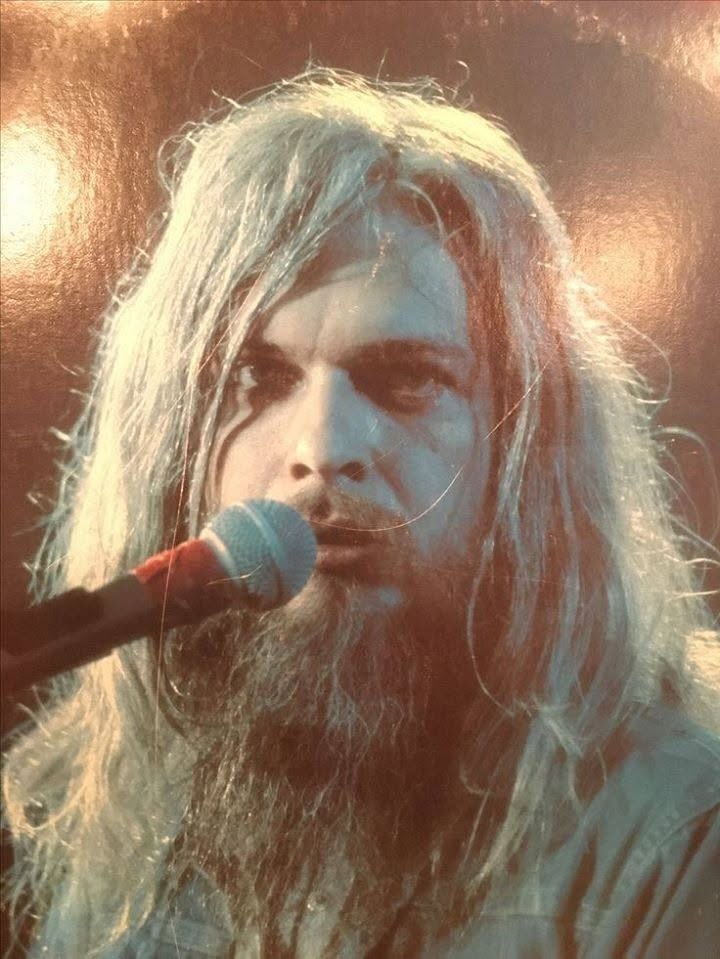
I possess an endless fascination and curiosity about how someone can change so drastically from being an anonymous, quiet, shy, piano player behind the scenes on hundreds of songs — to the persona that emerged and developed into the magical Master of Space and Time, Leon Russell.
I wish I could have asked him how it happened, how he shifted from one to the other, but sadly, I’ll never get the chance, so I continue to marvel at his drastic transformation.
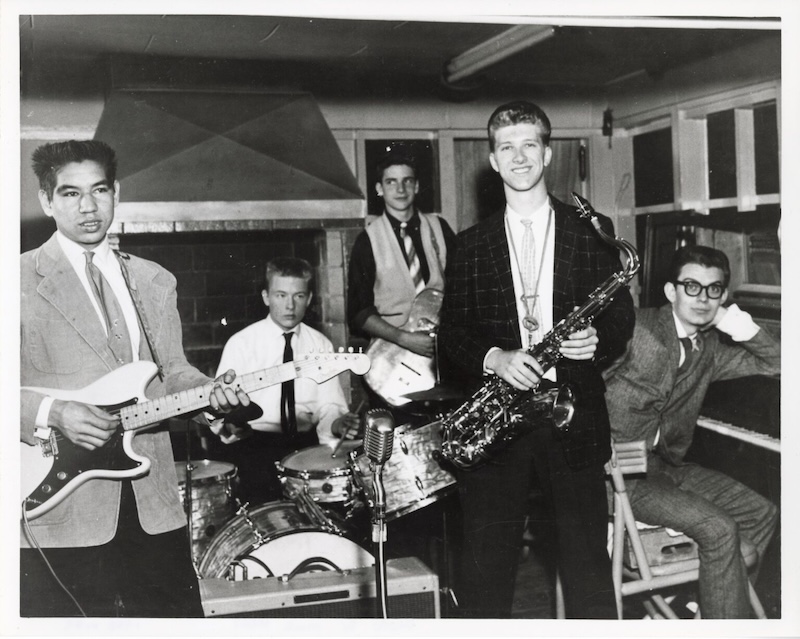
In 1959, he was still Claude Russell Bridges; he hadn’t yet metamorphosed into the uber cool bearded musician with long hair and those iconic sunglasses, but the talent was there. Long before he became Leon Russell and had massively successful career as a solo artist, he was still a musical genius.
Leon was only about fourteen when he formed The Starlighters in the mid-1950s. He and the other band members attended Will Rogers High School in Tulsa, Oklahoma.
This is a photo of the Starlighters at the Tropicana Club, 1959. Left to right: Leo Feathers, Chuck Blackwell, Ron Ryan, Johnny Williams, and Russell Bridges wearing glasses.
A promoter at Cain’s Ballroom in Tulsa hired the Starlighters to back Jerry Lee Lewis at an upcoming show.
After the Starlighters’ first warm-up set, Lewis came up onto the bandstand, pointed at seventeen-year-old Leon, and declared, ”I’m not gonna set down at that piano. He plays a lot better piano than I do!” Lewis immediately hired the band to back him on a tour. (Courtesy of the OKPOP Museum)
Leon produced this record when he was seventeen. I’m blown away by his piano mastery; he was definitely destined for greatness.

 Enchanted Seashells | Princess Rosebud