Blooming Bee-filled Fragrant California Lilac: Ceanothus

(I think if you click on the little pics, they become big.)

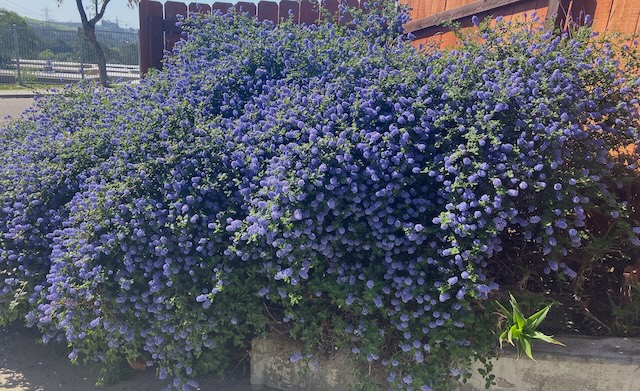
This gigantic California Lilac (Ceanothus) has survived and thrived against all odds. About seven years ago, I thought it had completely died; there was no hint of the plant at all — it had disappeared. Since dying plants are something I’ve gotten used to here in the southwest, I figured it had gone the way of many others…

However., one day as I randomly inspected the area, I saw something that strangely resembled a minuscule Ceanothus leaf, shiny and green. I kept my eye on it for a while and was amazed that it WAS that same Ceanothus plant — it had resurrected itself.

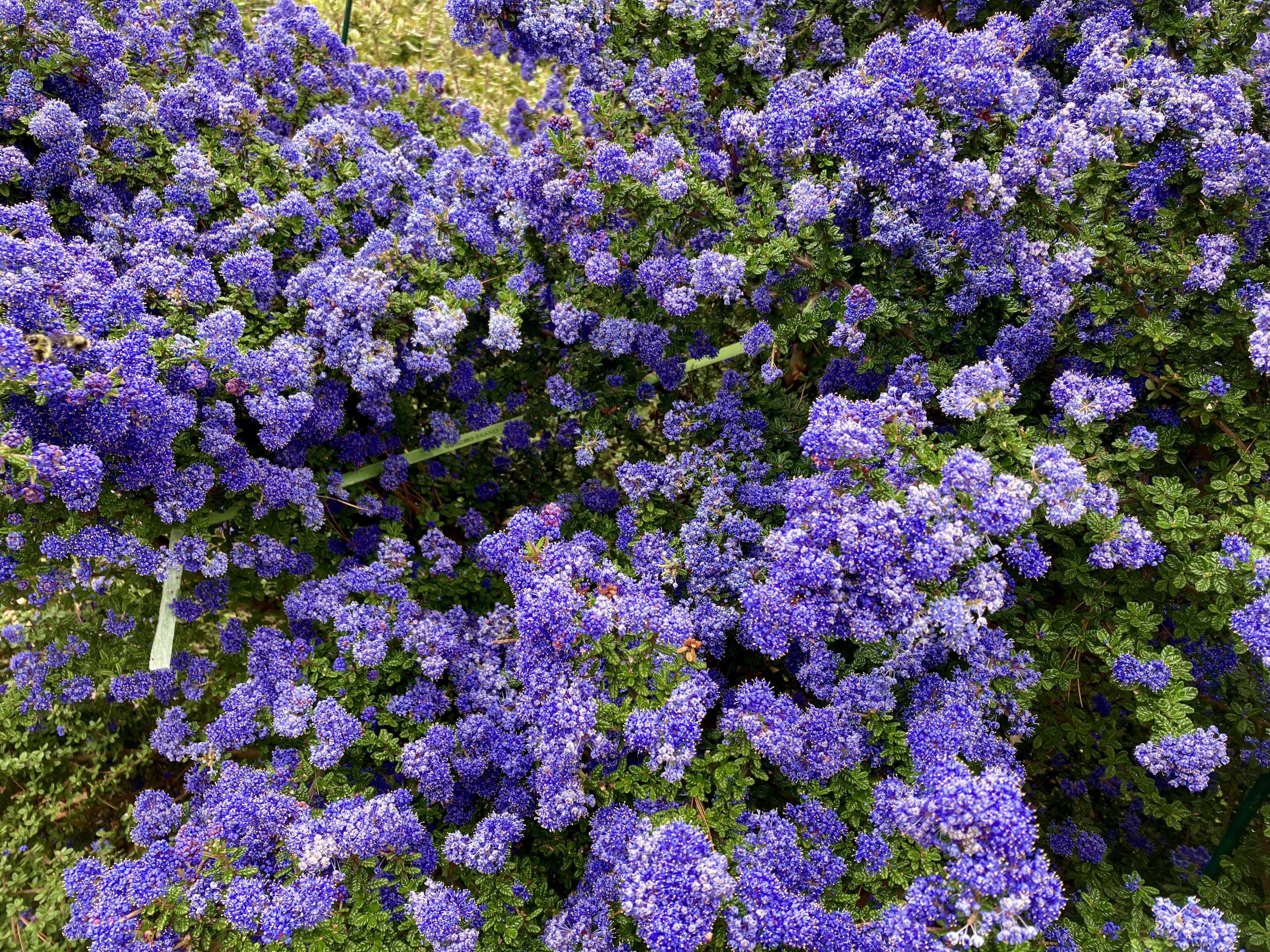
Look at it today! It’s taken over the entire area next to the driveway. Periodically, I cut it back because it grows so prolifically, I wouldn’t be able to get in the garage. Trimming doesn’t seem to bother it at all, as you can see.

What you can’t hear are the hundreds of bees it attracts and what you can’t smell is the fragrance of a blooming Ceanothus, powerful yet delicate.

Did you know? The flowers of certain Ceanothus species contain saponin, a natural compound that creates a soapy lather when mixed with water. 

Historically, Native Americans used Ceanothus flowers as a natural soap for washing hands and clothes.

To use Ceanothus as soap, simply gather the flowers, get your hands wet, and rub the flowers between your hands. The saponin will create a soapy lather. It really works!

Photo Journey of South Lake Park

A new walking trail opened up in the city of San Marcos.

It’s inland and a bit of a drive, so it’s best to get there in the early morning or late afternoon because the temps are going up.

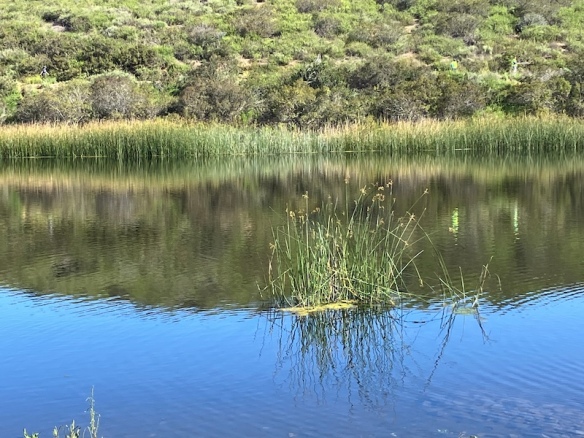
The trail is only a mile or so, not at all strenuous, but the views are magnificent with California lilacs and mature ceanothus surrounding the South Lake Reservoir — built in 1959, although it hasn’t been used as a source of drinking water since 1984.

I doubled back instead of completing the easier loop and that added an extra mile to the hike.

There’s a lot of coastal scrub, coots, ducks, redwing blackbirds, deer, bobcats, and coyotes. I wish I had seen deer; maybe next time! South Lake is also home to a rare native turtle; the Western Pond Turtle, and I’m sorry to say that I didn’t see them, either.

Definitely remember to bring water and a wide-brimmed hat as it gets super toasty in the sun!

California Lilacs: Blooming Ceanothus

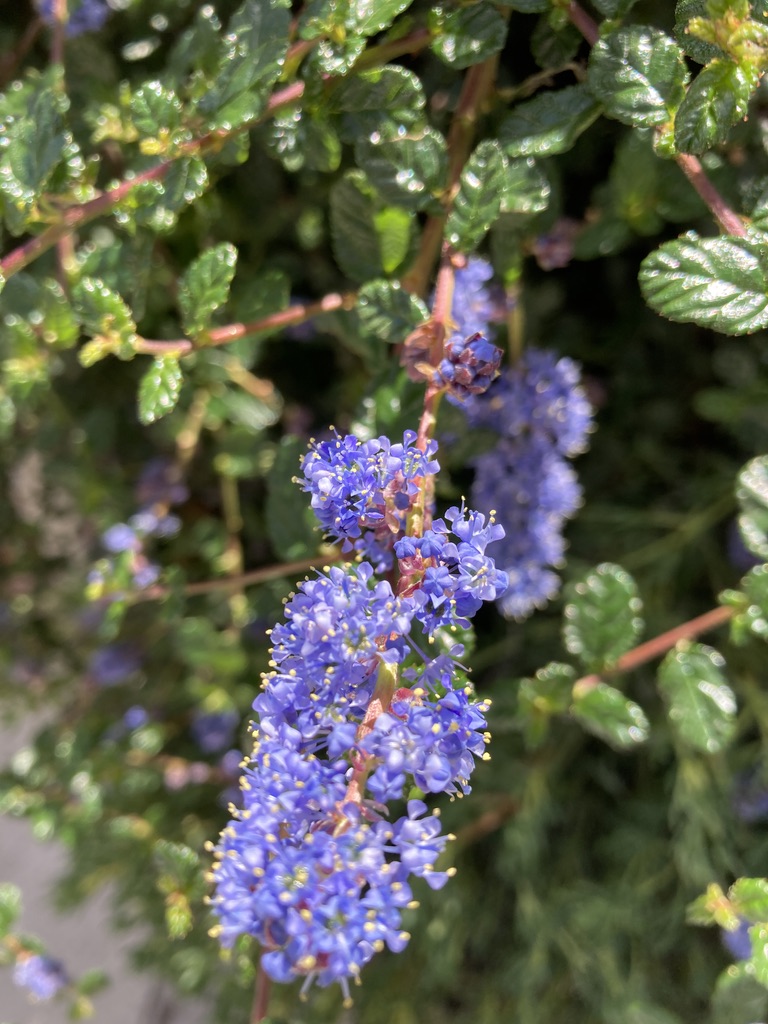
California Lilacs, or Ceanothus, are some of our most fragrant and colorful shrubs here in California. They are also evergreen and very drought tolerant.

Our extreme rain has caused my prize ceanothus plant to bloom like it’s never bloomed before.

What’s even more amazing is that a few years ago I thought it had died and planted other things in its place. When I noticed a few sprouted leaves, I decided to watch and see what happened.

Magic happened where I couldn’t see; beneath the topsoil.

Today, it’s taken over the entire area next to my driveway. It’s a testament to tenacity, determination, and perseverance; great qualities to emulate.

This ceanothus is so vibrant and alive that it takes my breath away.

Happiness is a Blooming Hedgehog Aloe and Stunning Ceanothus

The temps dropped nearly forty degrees and we were lucky enough to get some unexpected rain.

In the morning I was greeted by this flowering orange Hedgehog Aloe against a background of a very healthy ceanothus covered in lilac blooms.

Magical Purple-Blue Ceanothus

I have NEVER seen a color like the blue of this ceanothus. It’s a deep intense pure purpleblue, an amazing gigantic specimen.

Ceanothus has many ethnobotanical uses. Native Americans would mix the flowers with water to create a soapy detergent. It really works! Roots and leaves have reputed medicinal properties, and the long, flexible stems of some species are used in basket-making. The common name for Ceanothus americanus, a species from the eastern United States, is New Jersey Tea, which refers to its use during the Revolutionary War as a substitute for traditional British tea.

The camera definitely doesn’t capture the saturation of color. It’s full of the sound of buzzing BEES.

#WordlessWednesday

Daley Ranch Hike

Only about twenty minutes away in Escondido, there’s nothing like the Daley Ranch nature preserve for an array of views on a mostly clear, sunny day.

My favorite ceanothus in blue.

This ranch house that we see today was built in 1925 as a summer cottage for the Daley family.

Visit http://daleyranch.org/ for all the facts and other interesting info about the land that was designated as a conservation mitigation bank to be preserved in perpetuity. 

Hiking through the Daley Ranch

Yesterday we went for a three-hour hike in one of my favorite spots: the Daley Ranch in Escondido. While it was overcast and drizzly near the coast, Escondido is inland where it’s usually always warm and sunny. We took the Sage Trail all the way up to Stanley Peak.

This is an especially lovely time of year with the ceanothus in bloom.  Ceanothus blooms are rich in saponins, which produce lather when rubbed with some water; basically ceanothus flowers make soap. It really works! Try it for yourself! Pick a handful of flowers, add a little water, and rub your hands together.

Ramona Lilac Ceanothus

Ramona lilac ceanothus Lilac ceanothus

As you can see off in the distance, it was a very hazy day near the coast.

Stanley peak

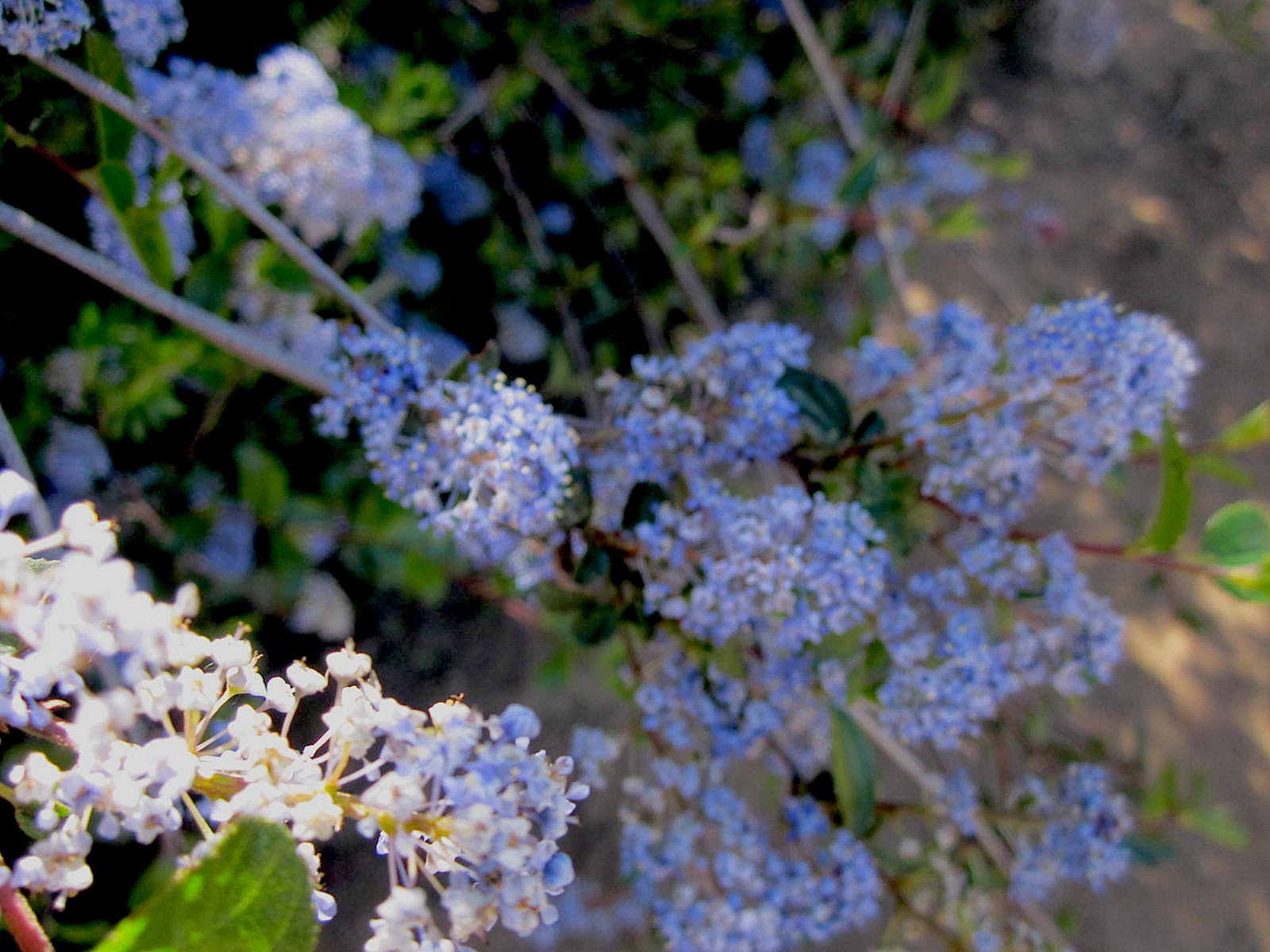
White Lilac Ceanothus

white lilac ceanothus

The Ranch House

Daley Ranch House