There’s still too much ugliness in this world, so I’m going to keep my rosebud colored glasses on a bit longer…
When I realize how many songs Leon Russell contributed his magic to, how he was the secret ingredient in hundreds of popular tunes, I am continually in awe and amazed.
My mom and I used to listen and sing along to all of Gary Lewis & The Playboys songs. We loved the perfect piano playing and we never knew it was Leon. We didn’t have a CLUE but what we did sense was that whoever played the piano was special and magical. It wouldn’t be the same WITHOUT Leon’s contributions– as arranger AND pianist.
Gary Lewis once said that eighty percent of his success was due to Leon, but I believe it’s closer to one hundred percent. If you take away the piano, you’re left with nothing special.
Leon morphed from this uber quiet, short-haired clean-cut session keyboardist to the coolest longhaired sunglass-wearing sexy visionary like a butterfly bursting out of a cocoon. The magic was always inside of him.
I didn’t write the following, but it’s worth sharing. (I did however, edit it a bit.)
If you listened to pop music in the 1960s, you heard Leon Russell play. You just didn’t know it.
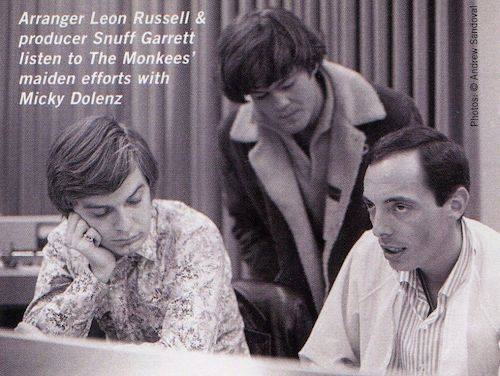
That piano on the Ronettes’ “Be My Baby”? Leon Russell. The Byrds’ early records? Leon Russell. Beach Boys sessions? Leon Russell. Phil Spector’s legendary “Wall of Sound” productions? Leon Russell was there, in a suit and tie, hair neatly trimmed, playing whatever was needed, and here with the Monkees.
For nearly a decade, Leon was one of the most sought-after session musicians in Los Angeles. Producers loved him because he could play anything—rock, jazz, country, blues, gospel. You could hum a melody and he’d give you the perfect piano part. You could describe a feeling and he’d translate it into music.
Producer Snuff Garrett said, “I could talk style with him and he’d do it. I’d name a record and go, ‘I like the piano on this…’ and he’d go, ‘Okay,’ and play it.”
Leon Russell was on hundreds of hit records. He was the secret ingredient in countless songs you’ve heard a thousand times.
And for years, almost no one knew his name.
Leon was born Claude Russell Bridges in 1942 in Lawton, Oklahoma with a birth injury (cerebral palsy on the right side) and began playing classical piano at age four. By fourteen, he was sneaking into Tulsa nightclubs with a fake ID, playing backup for Jerry Lee Lewis.
The fake ID belonged to a friend. The name on it was “Leon.” He kept it.
At seventeen, Leon moved to Los Angeles to chase his dream of making it in music. He studied guitar with James Burton, one of the best session players in the business. He worked constantly—sessions during the day, clubs at night, whatever paid.
And he was good. So good that by his early twenties, Leon Russell was playing on some of the biggest records of the decade.
He backed the Ronettes, the Crystals, Darlene Love. He played on Phil Spector’s famous Christmas album in 1963. He worked with the Byrds, Gary Lewis & the Playboys, Herb Alpert & the Tijuana Brass, the Beach Boys, the Ventures, Jan and Dean.
Herb Alpert later recalled that Leon would sit at the piano and say, “I don’t know what to play.” Then he’d “chime in with something special and affect the groove in a very Leon Russell way that was always unique.”
For years, Leon was brilliant, versatile, and completely invisible. A studio ghost. The guy in the suit playing piano while someone else got famous.
Then in the late 1960s, something changed.
Leon grew his hair long. He stopped wearing suits. He gathered a commune of musicians around him in the Hollywood Hills.
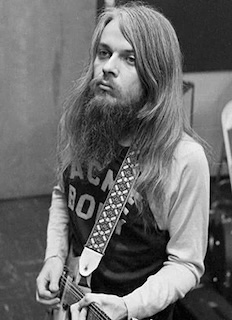
He stopped being the anonymous session player and started becoming Leon Russell—the artist–The Master of Space and Time.
In 1970, everything exploded at once.
Leon released his first solo album, simply titled Leon Russell. The musicians backing him? Eric Clapton. Ringo Starr. George Harrison. Not exactly unknown names.
That same year, he organized Joe Cocker’s legendary Mad Dogs & Englishmen tour—a massive, chaotic traveling circus of forty-plus musicians, complete with a full horn section, backup singers, and absolute mayhem. It was revolutionary. The tour became the stuff of legend, and Leon was the mastermind behind it all.
He wrote “Delta Lady” for Joe Cocker. It became a hit.
Then in 1971, Leon performed at George Harrison’s Concert for Bangladesh—one of the first major benefit concerts in rock history. He shared the stage with Harrison, Bob Dylan, Eric Clapton, and Ringo Starr. His medley of “Jumpin’ Jack Flash” and “Young Blood” was one of the standout performances of the night. He was ON FIRE.
Suddenly, Leon Russell wasn’t just a session player anymore. He was a star.
By 1973, Billboard named him the “Top Concert Attraction in the World.”
Read that again. The guy who had spent a decade playing anonymous piano parts was now filling stadiums on solo tours. His album Carney reached #2 on the charts. He was crossing genres effortlessly—rock, blues, country, gospel, bluegrass—and audiences couldn’t get enough.
He wrote songs that became standards. “A Song for You”—a tender, achingly beautiful ballad—has been recorded by more than 200 artists, including Ray Charles, Donny Hathaway, Whitney Houston, and Amy Winehouse. In 2018, it was inducted into the Grammy Hall of Fame.
Another of his songs, “This Masquerade,” was covered by more than 75 artists. George Benson’s version won a Grammy.
Leon founded Shelter Records in 1969, creating wild, creative environments where musicians could live and work together. He established studios in Hollywood and Tulsa, fostering creativity without boundaries.
He produced and played on sessions for Barbra Streisand, Bob Dylan, Frank Sinatra, Ike & Tina Turner, the Rolling Stones. He toured with the Stones. He collaborated with Willie Nelson. He wrote and recorded hits like “Tight Rope” and “Lady Blue.”
For a brief, brilliant period in the early 1970s, Leon Russell was one of the biggest names in music.
By the 2000s, Leon was playing smaller venues. The stadiums were gone. A new generation of music fans had never even heard of him. He kept touring—because that’s what he did, that’s who he was—but he was a legend from another era that the world had moved past.
He was still brilliant. He was still performing. But the spotlight had moved on.
In 2009, Elton John decided to do something about it.
Elton had idolized Leon since the beginning of his own career. When Elton was starting out in the early 1970s, Leon was already a star. Leon’s influence shaped Elton’s sound, his flamboyant showmanship, his entire approach to piano-driven rock.
Elton had always called Leon a mentor and an inspiration. So when he saw that Leon had been nearly forgotten, he reached out and asked him to record an album together.
The result was The Union, released in 2010. It was a collaboration between two piano-playing legends—one at the height of his fame, one who’d been overlooked for decades.
The album was critically acclaimed and Grammy-nominated. Cameron Crowe made a documentary about the creative process. And suddenly, people were talking about Leon Russell again.
Elton championed him publicly. He spoke about Leon’s genius, his influence, his importance to rock history. And in 2011, Elton inducted Leon into the Rock and Roll Hall of Fame.
That same year, Leon was also inducted into the Songwriters Hall of Fame.
After decades of being overlooked, Leon Russell was finally getting the recognition he deserved.
But by then, his health was failing. He’d had a heart attack. He had brain surgery, but was looking forward to another tour.
On November 13, 2016, Leon Russell died in his sleep at his home in Nashville. He was 74 years old.
Elton John posted: “My darling Leon Russell passed away last night. He was a mentor, inspiration & so kind to me. I loved him and always will.”
Leon Russell left behind an extraordinary legacy: 33 albums, at least 430 songs (probably more), collaborations with virtually every major artist of his era. He’d been directly involved with hundreds of bestselling records over a 60-year career.
But more than the numbers, Leon Russell represented something rare in music—a musician’s musician. Someone who could play anything, work with anyone, cross any genre. Someone equally at home backing Frank Sinatra in a suit or leading a hippie commune with wild hair and a beard down to his chest.
He proved you could be both the anonymous session player and the stadium-filling star. The guy in the background and the guy in the spotlight.
Leon Russell’s story is a reminder that the most talented people aren’t always the most famous—and that sometimes genius hides in plain sight for years before the world finally sees it.
He played on songs you’ve heard a thousand times without ever knowing his name.
Then he stepped into the light and showed the world what he’d been all along: a master.
Curated from NoCapArchives
As someone posted on social media, “Besides beautiful Leon’s awesome talents and accomplishments, the purity of his heart shines through.” His disability didn’t hold him back; he’s an inspiration.
Check out the genius of Leon during the Homewood Sessions…it captured a priceless moment in time:
 Enchanted Seashells | Princess Rosebud