SymphonyinYellow An omnibus across the bridge Crawls like a yellow butterfly And, here and there, a passer-by Shows like a little restless midge.
Big barges full of yellow hay Are moored against the shadowy wharf, And, like a yellow silken scarf, The thick fog hangs along the quay.
The yellow leaves begin to fade And flutter from the Temple elms, And at my feet the pale green Thames Lies like a rod of rippled jade. –Oscar Wilde
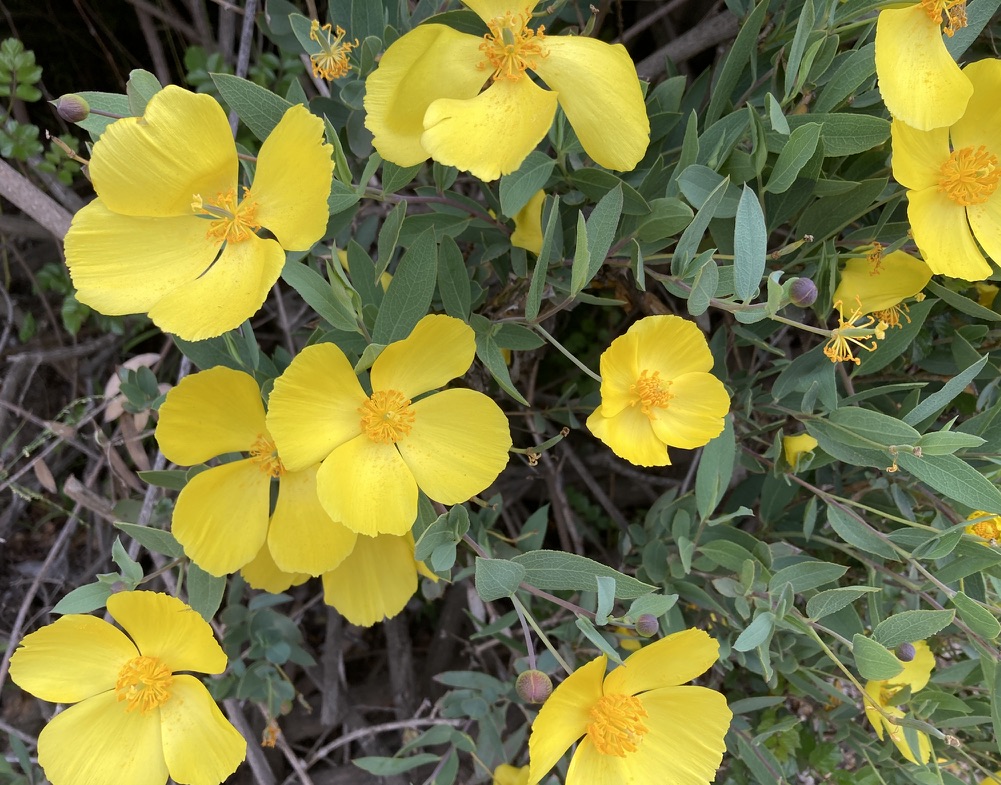
This Bush Poppy (Dendromecon rigida) is a California native shrub. It’s a tough and beautiful plant but only if planted in the right conditions. The Bush Poppy thrives on rocky clay slopes with excellent draining. If planted in sandier soils, it can handle supplementary water up to once a month. Prefers full sun. Flowers are beautiful, as are the long, thin, blue-green leaves.
Look at this lemony yellow azalea. I didn’t even know they came in yellow until I used the info app on my phone to identify this gorgeous girl. I think it’s actually called Rhododendron ‘Lemon Lights’.
From my native garden in the front yard, where we planted everything but a lawn. We have white and purple sages, buckwheat, coffeeberry, lemonade berry, ceanothus, and a sprawling wild Rock Rose.
I loved the way the sun was shining on these hot pink blooms. No filter, nothing but natural beauty.
Rock Rose
The flower is used to make medicine and is commonly used in Bach flower remedies. Rock Rose is purported to treat panic, stress, extreme fright or fear, and anxiety; and for promoting calmness and relaxation.
The oleo-resin obtained from the leaves and stems is used as a commercial food flavoring in baked goods, ice cream, and chewing gum.
Leaves, flowers, and stems can all be harvested and used to make tea. I haven’t tried it yet, but I plan to do it soon.
When I was in college, we lived across the street from a wild place, an abandoned and untended avocado grove blanketed with nasturtiums. Their long tendrils would wind up and around the gnarled trunks.
After school, my friends and I would sit under the trees and pick tiny avocados from the low hanging branches and gorge on them until we were full, and then we’d lie back in the pillowy nasturtium leaves and pretend we were forest fairies.
We’d sometimes weave orange and yellow tiaras through our hair, and always pick a bouquet to bring home.
I love their tangy but sweet fragrance and often add the flowers to salads, but only the ones from my garden that I’m sure are pesticide-free.
All the rain birthed my own enchanted nasturtium forest this year.
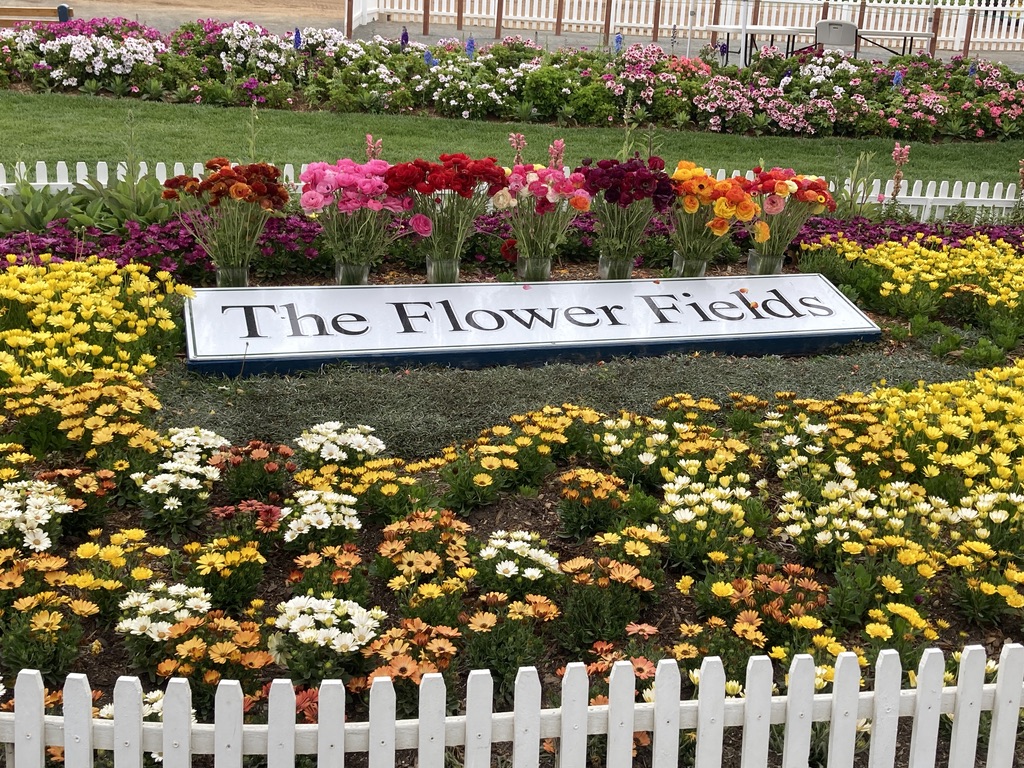
I remember when rows upon rows of a colorful flowering ranunculus tapestry was only a quirky, delightful curiosity we’d point at as we drove north along the freeway. Back then it was an annual locals-only kind of attraction and now The Flower Fields enchants visitors from all over the world.
I can’t believe that it took me this long to visit The Flower Fields in all its glory, but it’s a definite recommended destination. It was a truly enjoyable day and best of all, it’s simply impossible to take a bad photo there!
The Flower Fields are located off the freeway at Palomar Airport Road in Carlsbad. In addition to forty acres of beautiful ranunculus in peak bloom, there are tractor rides, wine tastings, food, yoga classes, a Mother’s Day picnic, and day-long educational and fun activities for children of all ages.
And a butterfly garden!
HISTORY: The Flower Fields today are a direct result of nearly eighty-five years of floral cultivation that began with Luther Gage, an early settler and horticulturist who settled here in the early 1920s. Mr. Gage brought ranunculus seeds to the area and began growing them in his fields next to Frank Frazee’s small vegetable farm in South Oceanside. In 1933 Frank Frazee also started growing ranunculus and introduced his son Edwin to the art of seeding, cultivating, and irrigating this beautiful flower.
This is what it used to look like — the fields of flowers grew close to the freeway:
1970s. Photo credit: Bob Gardner
INFO: Open daily from 9:00am-6:00pm until Mother’s Day (Sunday, May 14th, 2023) Ongoing Specials (Starting March 6th) Mondays – With the purchase of one adult or one senior/military, you receive one child’s ticket free (ages 3-10)| Tuesdays & Wednesdays – Between 1:00pm-4:00pm, receive $2 off adults, seniors/military and children’s tickets. Buy tickets online at theflowerfields.com
(Excluding the vintage photo, all photo credit to Enchanted Seashells.com) @the_flower_fields
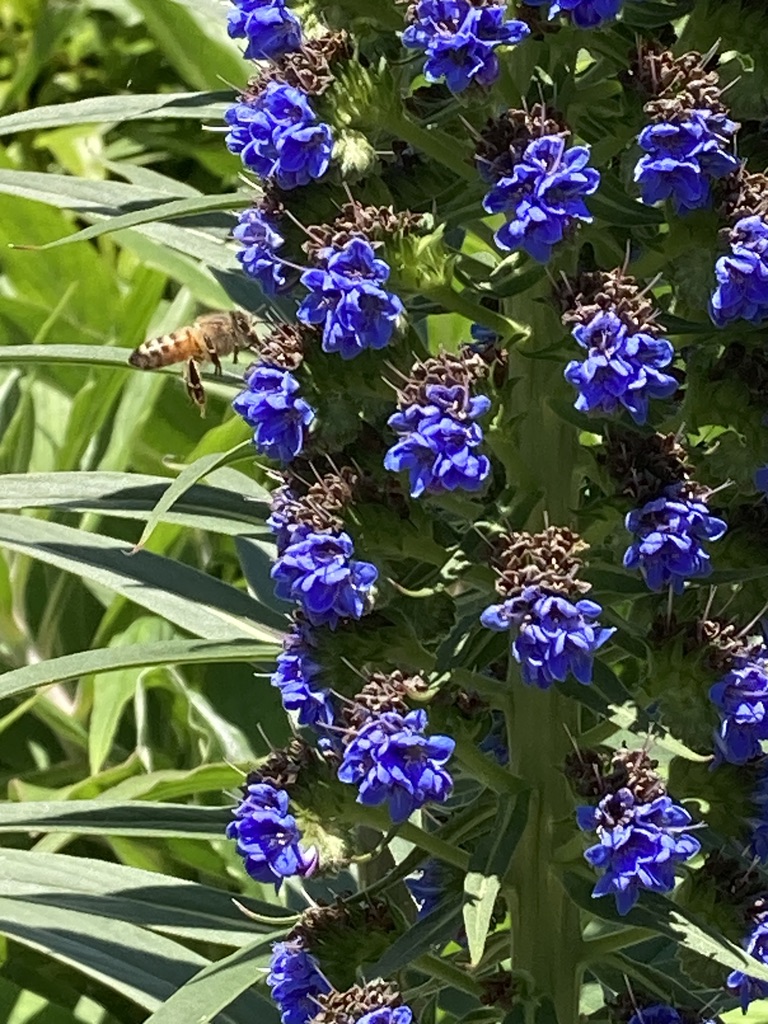
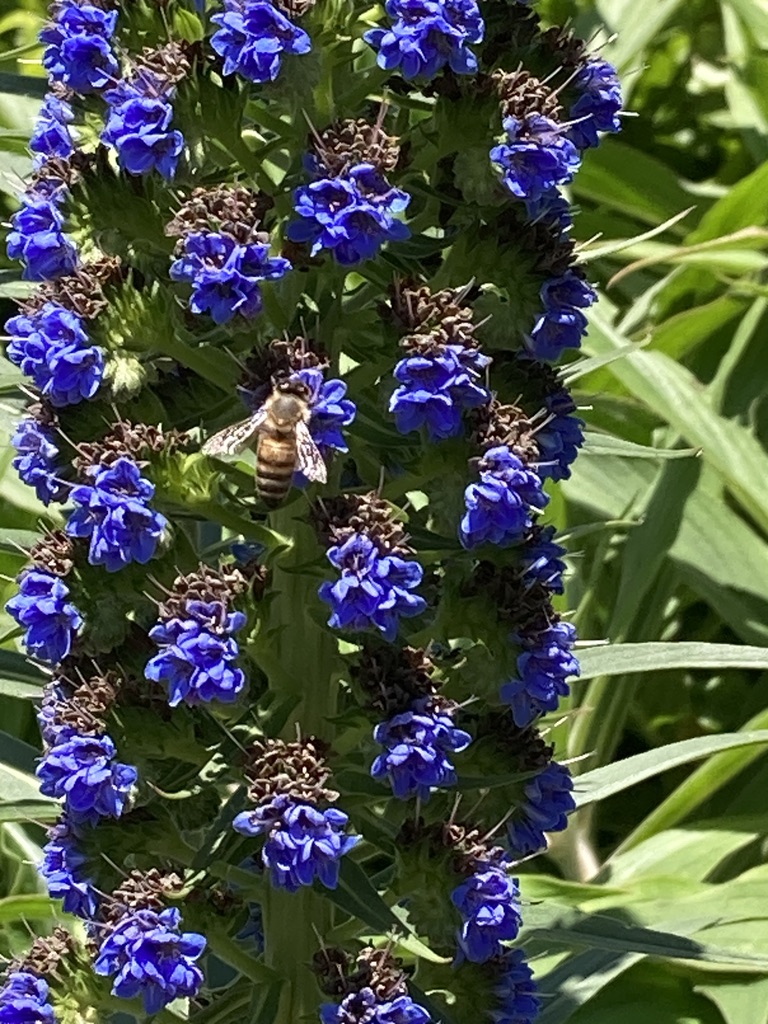
I’m referring to Pride of Madeira, the superstar of my garden!
This plant REALLY loves the environment here at Casa de Enchanted Seashells. I read that it’s becoming invasive in places along the coast and I can see how that could happen as it easily reseeds itself.
Native to Madeira Island, north of the Canary Islands, it’s a tough perennial and can survive all summer with little to no water. Since I think we’ve seen the last of our record-breaking rainfall here in SoCal, that’s exactly what they’ll have to do to survive.
And in a different part of the garden, a slightly different hue…It’s HUGE.
Bees love it too. So do hummingbirds and butterflies.
Pride of Madeira grows to about six feet tall and some of my specimens are twice as wide as they are tall.
I quite literally have dozens of baby Prides if anyone wants to plant them in their garden!
After all the rain we’ve had here in Southern California, every bit of land is awash in springtime color.
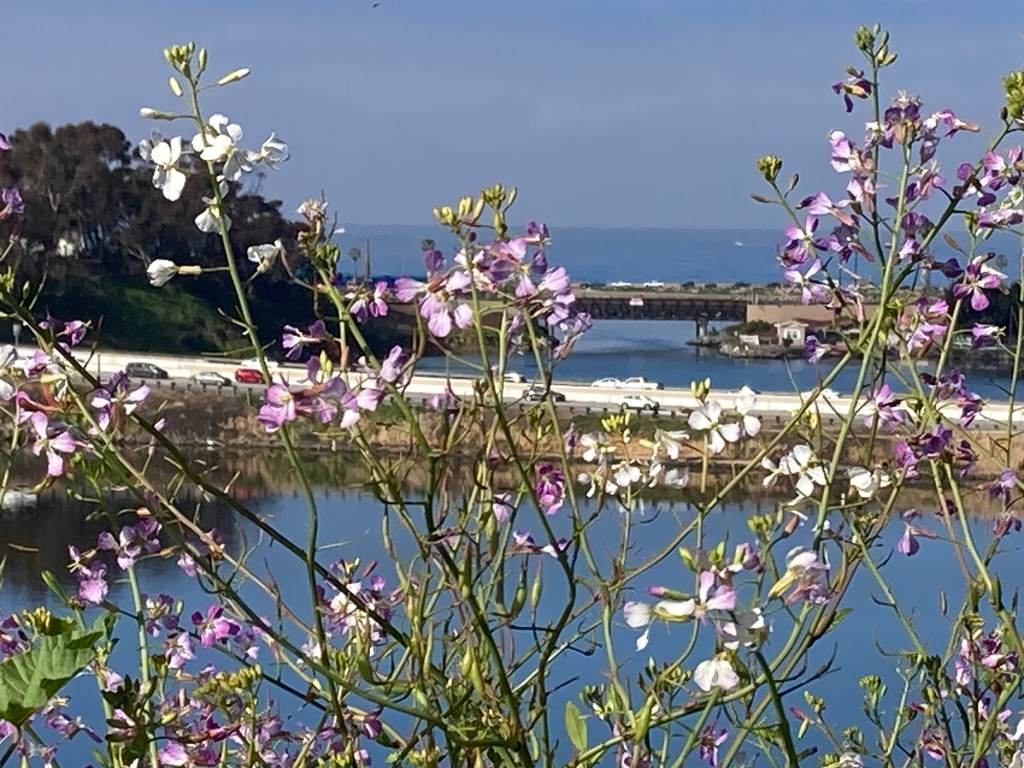
A picturesque view of the lagoon, train tracks, and Pacific ocean through Purple Mustard, an invasive weed:
I call this plant Beach Daisy, definitely a weed, if not also invasive…
And finally, I’m impossibly happy because the wildflower seeds I planted last year in my native garden decided to sprout and present me with lovely spires of lupine:
**All photo credit belongs to Enchanted Seashells.
Casa de Enchanted Seashells gardens are alive, blooming with color and fragrance.
In one week, since the last rain, most of the fruit trees are flowering and my florals are flourishing. It brings much joy to create a bouquet from the fruits of my own efforts, a labor of love.
This lavender is vibrant!
Peaches!
Plums!
More peaches!
Apples!
We’re expecting more rain this week. 2023 has been a crazy wet year in SoCal, but it’s just what we need to end the drought for a while. The only downside is horrible seasonal allergies, but that’s a small price to pay to live in paradise.
This Lemonade Berry tree has almost completely taken over my front yard, surpassing our wildest intentions.
Once again, my brilliant Angel Boy didn’t think far enough into the future when we turned our front garden from lawn into a haven for California native plants.
Lemonade Berry (Rhus integrifolia) is an evergreen shrub or small tree. It tends to grow upright (10- 30 feet tall), but sprawls next to beaches. It’s often found in coastal canyons where it sometimes dominates entire hillsides. (YES!)
The Lemonade Berry’s petioles are pink or brownish and leaf blades are leathery. The flowers appear from February to May. The fruit is red to gray and has a tart flavor which gives the plant its name. Lemonade Berry is an important wildlife plant and the berries are a significant food source for birds and small mammals.
The Cahuilla and other California native peoples ate the fruits of the lemonade berry raw. They soaked the berries in water to make a beverage, and ground the dried berries into flour for a mush or to add to soup. It also has medicinal uses.
As Food: Ripe berries of the sugar bush or lemonade berry can be soaked in hot water to produce a tart lemon-tasting beverage. Steeping in almost boiling water produces a stronger drink than steeping in sun-heated water. For a strong drink, you will need a ratio of one-part berries to two parts water.
These berries make a tart snack if picked right off of the bush, but only if sucked for their juice; the pulp is not swallowed. The berries have small hairs that can upset your stomach. Enjoy the bitter refreshing taste and spit the berry out when done.
Medicine: Tea made from the stems can be used to treat coughs. The tea made from the bark, berries, or leaves steeped in cold water can be gargled for sore throats and cold sores.Caution: Some people are allergic to the bark, roots, and leaves, so use it sparingly the first time.
Some info curated from Santa Monica Mountains Trail Council
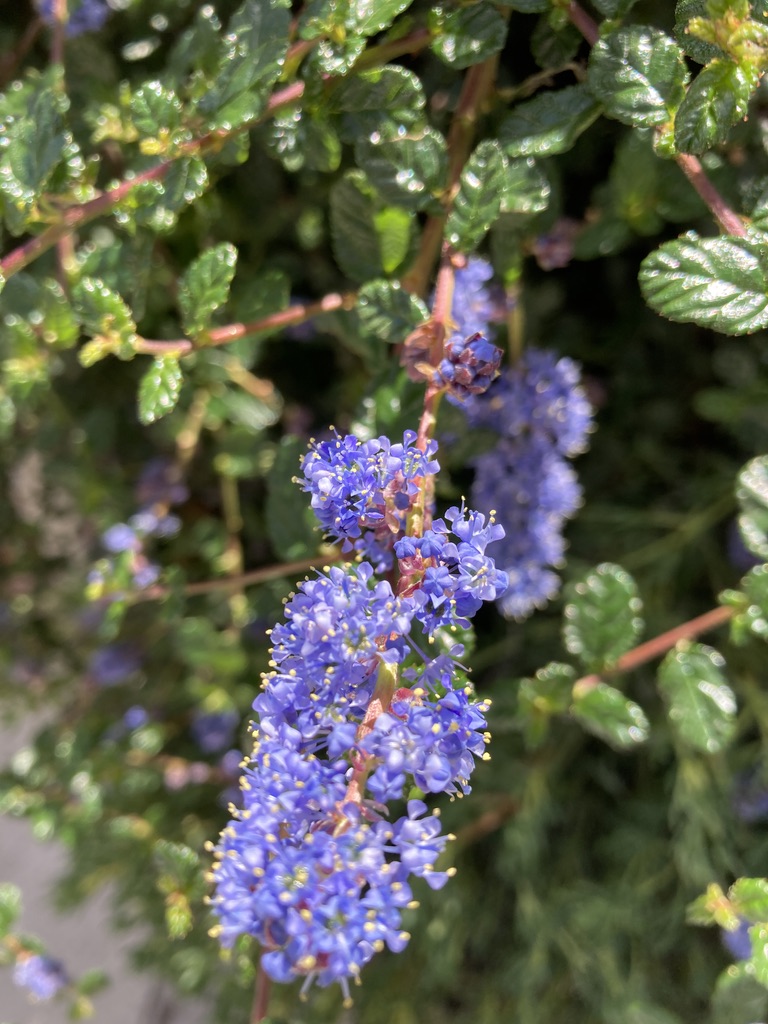
California Lilacs, or Ceanothus, are some of our most fragrant and colorful shrubs here in California. They are also evergreen and very drought tolerant.
Our extreme rain has caused my prize ceanothus plant to bloom like it’s never bloomed before.
What’s even more amazing is that a few years ago I thought it had died and planted other things in its place. When I noticed a few sprouted leaves, I decided to watch and see what happened.
Magic happened where I couldn’t see; beneath the topsoil.
Today, it’s taken over the entire area next to my driveway. It’s a testament to tenacity, determination, and perseverance; great qualities to emulate.
This ceanothus is so vibrant and alive that it takes my breath away.
On an early morning walk before the rain started (yes, we’re getting more sky water!), I spied this colorfully striking succulent.
Sticks on Fire, sometimes called Firesticks (Euphorbia tirucalli), is a shrubby succulent with bright red, pink, orange, or yellow stems.
The more sun it gets, the more ‘fiery’ it appears. The sap of this plant is sticky/milky and may cause irritation to skin as there are mild toxins.
Many succulents in the euphorbia genus, such as the pencil cactus and crown of thorns, are also poisonous to both cats and dogs. Symptoms of poisoning from ingesting this succulent range from gastrointestinal upset to skin and eye irritation.
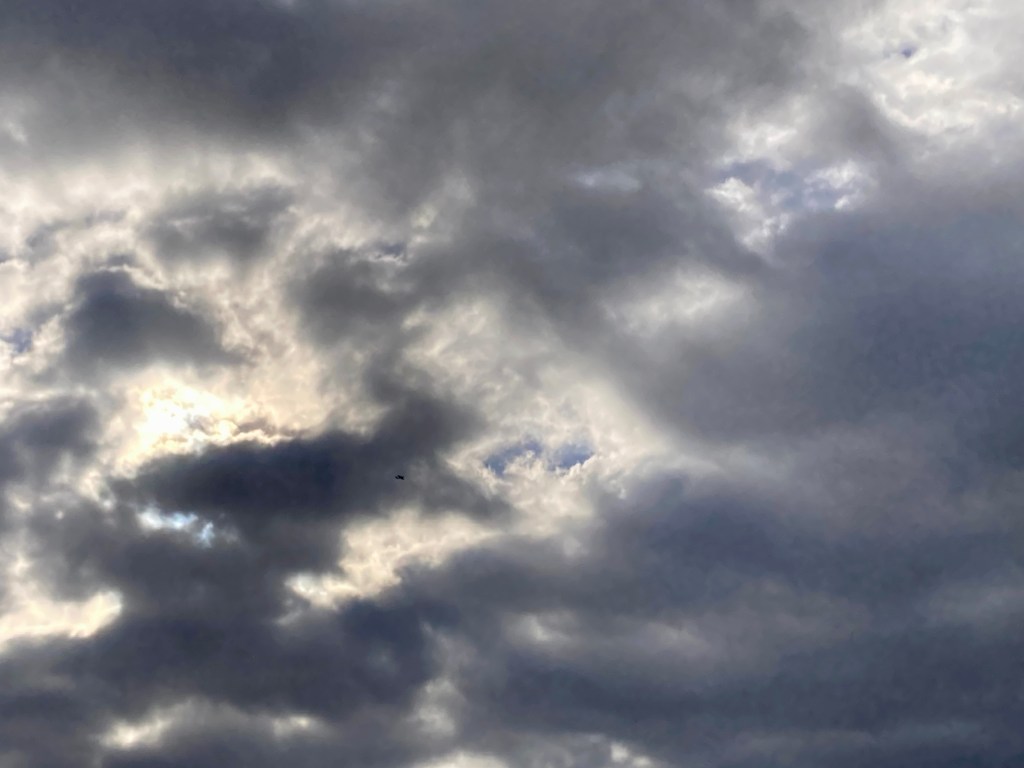
I made it home just in time! That’s not a speck on your screen, it’s an airplane heading to our local airport.








 Enchanted Seashells | Princess Rosebud