PlantLust | Polka Dot Angel Wing Begonia

Think about it: a plant with polka dots, how could you NOT love it?

Here’s my prettypretty Polka Dot Begonia in her prettypretty seashell pot! Simple pleasures bring joy for this simple girl, I confess.
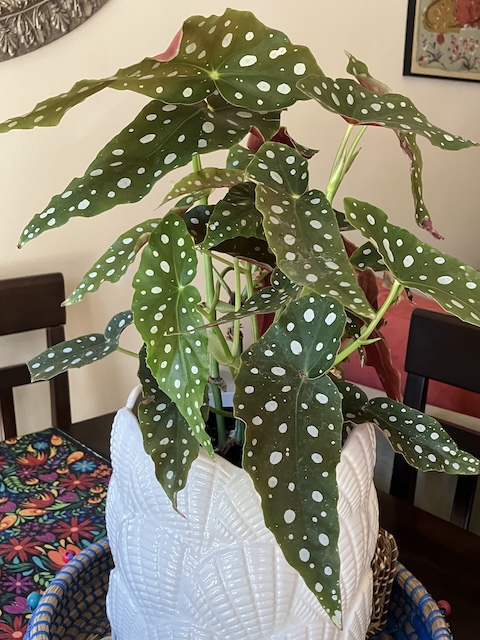
Photo by Enchanted Seashells

I’ve been lusting for this Polka Dot Angel Wing Begonia (Maculata ‘Wightii’) for a long time and finally found one in the clearance section at the nursery.

The check out employee told me there was literally nothing wrong with the plant but it was stressed out and should be repotted which was pretty awesome. (I can relate as I’m a little stressed out and wish all it took was to be repotted in new soil to fix me, too…)

When young, the Polka Dot Begonia is a beautiful tabletop houseplant. As it gets older, with good care, it becomes a beautiful floor plant, reaching four feet tall or more. 
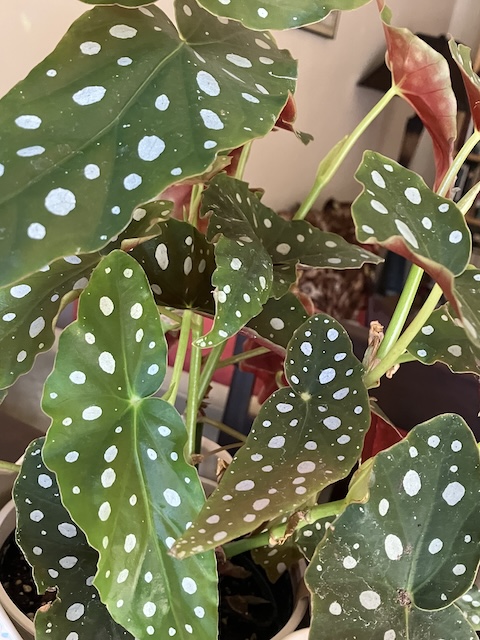
Photo by Enchanted Seashells

While its variegated leaves are the main reason to grow it, polka dot begonia can also show off clusters of small white flowers on and off throughout the year if it gets enough light. 

Propagating Polka Dot Begonias (Begonia maculata) is best achieved via stem cuttings placed in water. Cut a healthy stem just below a node (leaf joint), remove lower leaves, and place it in water for four to six weeks until roots reach about 2 inches, then pot in airy, fast-draining soil.
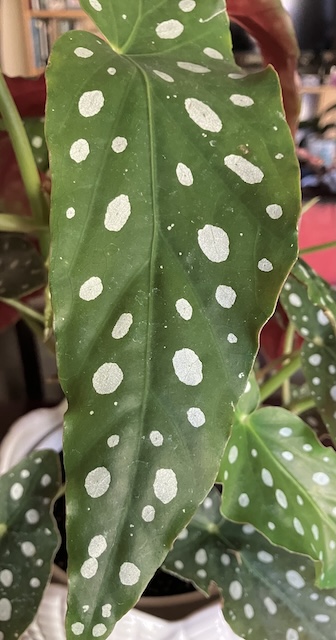
Photo by Enchanted Seashells

Fingers crossed that I won’t love this one to death like I’ve done to other specimen plants.
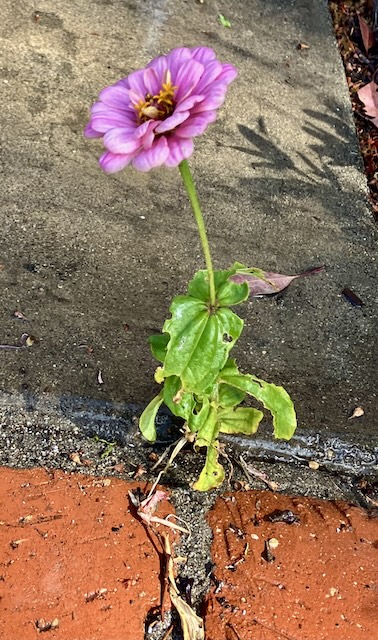
The Impossible Flower

With news of ships blown up during an illegal faux war to manipulate financial markets, a deranged fraud of a prez, skyrocketing prices, future uncertainty, there’s sanity in the simplicity of a flower that persists against all odds.

When I first noticed it, I tried to gently pry up this volunteer zinnia from between the crack in my driveway to plant in a better location, but I would have destroyed it, so there was nothing else to do but leave it where it grew. The roots are strong, much more so than I thought.

Photo by Enchanted Seashells

I’ve watered it, watching and waiting, and it just bloomed, one single, brave flower.

My plan is to wait until the flower dies and forms seeds so I’ll continue to plant resilience, grit, tenacity, and determination.

I think there’s a lesson here, somewhere…

Plant Seeds of Serenity

With all the powerful planetary energies at play right now and everything else in this country that almost too horrible to even think about, it seems like a great time to get grounded, to literally get back to what’s simple and healing — and that’s where you’ll find me, in the garden planting seeds of serenity (and flowers).

A garden must combine the poetic and the mysterious
with a feeling of serenity and joy.
– Luis Barragan

Photo by Enchanted Seashells

Wistful Wisteria

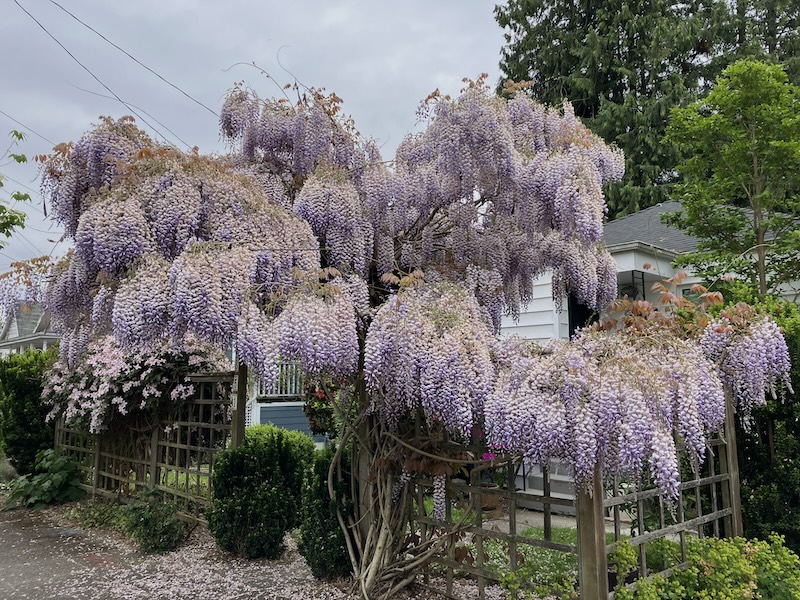
The welcoming fragrance of this wisteria is an intoxicating blend of lavender, honeysuckle, and lilac. You can smell it half a block away. I’ve never before seen such exquisite wisteria. Once upon a time I planted it in my garden but it didn’t thrive, I’m sad to say.

Photo by Enchanted Seashells

Wisteria symbolism is associated with romance, devotion, and good luck. In Japan, it represents longevity and success. It can also symbolize humility and endurance, 

Hügelkultur: Word of The Day

It’s time to prepare the garden for spring vegetables. Every year I attempt to win the battle with rodents and bugs and lack of sky water; sometimes I win, sometimes they do…

I have a couple new ideas. I purchased coconut coir bricks to rehydrate and mix with the existing soil in my raised bed and I thought I’d try cardboard box planters, too, inside the raised bed.

Maybe one day I’ll be able to build my own Hügelkultur.

“Hügelkultur” (pronounced hyoo-gul-kulture) is a German word that means mound culture or hill culture. A hügelkultur is a sloped and raised planting bed filled with topsoil, wood, and organic materials. Germans and Europeans have practiced it as a gardening method for hundreds of years.

Instead of gathering branches, leaves and grass clippings for yard waste trash pickup or to toss in the compost, build a hugel bed. Mound logs, branches, leaves, grass clippings, straw, cardboard, petroleum-free newspaper, manure, compost, or whatever other biomass you have available, top with soil and plant your veggies.

The advantages of a hugel bed are many, including:

The gradual decay of wood is a consistent source of long-term nutrients for the plants. A large bed might give out a constant supply of nutrients for decades. The composting wood also generates heat which might extend the growing season.

Logs and branches act like a sponge. Rainwater is stored and then released during drier times. Actually you may never need to water your hugel bed again after the first year (except during long term droughts).

We had a bit of rain yesterday which is a perfect opportunity to prep the coconut coir and plant seeds. I’ll start with my favorites: mixed greens, tomatoes, beets, chard and kale, cucumbers, snap peas, beans, peppers, and zucchini (of course).

There’s nothing more adorable than watching the first little sprouts emerge, right? I can’t wait!

Hügelkultur image credit to https://www.hugelkultur.com.au/intro-hugelkultur/
Photo credit to Enchanted Seashells

Dawn’s Beauty

Up at dawn, the dewy freshness of the hour,
the morning rapture of the birds,
the daily miracle of sunrise, set her heart in tune,

and gave her Nature’s most healing balm.
~ Louisa May Alcott

Because of all the rain we’ve had, spring blossoms in the garden are exceptionally lush. My Cup of Gold vine (Solandra guttata/Solandra maxima) is bursting with flowers and this gigantic dinner-plate sized golden chalice looked right at me as if to say “good morning.”

What a spectacular way to greet the day!

My Soul Mate is a Monster

Sorry for the typo.

I meant to say my Giant Monstera is my soulmate. I certainly should have done a better job of proofreading…my bad.

This guy is the cause of my freak injury. I know I should hate him for it, but he’s so beautiful, especially when backlit by the sun.

I can’t help but love the source of my trauma, my pain.

You can’t really see it in this photo, but the reason why I raced down the stairs in slippery socks (and fell HARD) was to get the Amazon package that contained the moss poles to help my BFF climb to new heights.

When we first met (at Trader Joe’s) and fell in love, he whispered to me that a little support would make him happy. Since I love to oblige, it was an easy request to grant, however, this proclivity of mine set the stage for me to become irrevocably injured.

Deep wounds take a long time to heal, but my love for this Giant Monstera will last forever. Pretty soon I’ll need taller poles and more support because he’s growing and thriving under my care.

Love hurts, but isn’t he gorgeous? My monster(a), my soulmate.

Update on my injury: Stitches came out yesterday (after two weeks) but were replaced by a dozen Steri-strips to help the eight-inch gash finish healing, which it is,  but at a snail's pace, probably because I'm not a very patient patient. I'm a much better caregiver. The recommendation was no strenuous activity for at least two more weeks or it'll open up again and I'll need more stitches and the doc threatened me with an aircast to immobilize my leg. "Threatened" might be a SLIGHT exaggeration, but that's how I interpreted her words...

Falling Stars | Crocosmia

I was enchanted by the yellow to intense lipstick red blooms against the bright green leaves on this crocosmia. Hummingbirds, butterflies, and bees love them, too!

It’s said that dipping dry crocosmia flowers in water releases a saffron-like aroma. Crocosmia plants grow from corms, which are closely related to bulbs.

The spiritual meaning of this beautiful plant encourages us to playfully engage our emotional strength, power, and will to express ourselves confidently and with enthusiasm.

#FOTD

Not Too Shy Shasta Daisy

A couple years ago, I rescued a sad and wilted Shasta daisy from the garden center and tended it with love and care. Since then, I’ve divided it into enough plants to fill an entire bed under the dining room windows.

It wasn’t at all reticent about outgrowing container after container until I had no choice but to allow it to freely spread.

Named after the snowy peaks of Mount Shasta in California, the perennial Shasta daisy (Leucanthemum x superbum) seems to be extremely hardy.

Once established, they are vigorous growers and easily spread via rhizomes. They make lovely cut flowers, but I also learned these daisies are toxic to dogs and cats.

They’re not shy about how bold and beautiful they are!

Blooming Cups of Gold

I don’t know when this Cup of Gold (Solandra maxima) vine will stop growing but I’m going to allow it to live freely without pruning.

It’s already outgrown the arbor and now stretches like a canopy from tree to tree…The flowers are about six inches wide with a light tropical fragrance.

For the first time this year, it looks like the sun is almost ready to come out. We’ve had a very gloomy first half of 2023 with a heavy marine layer and unseasonably cool weather.

I’m looking forward to blue sky again!