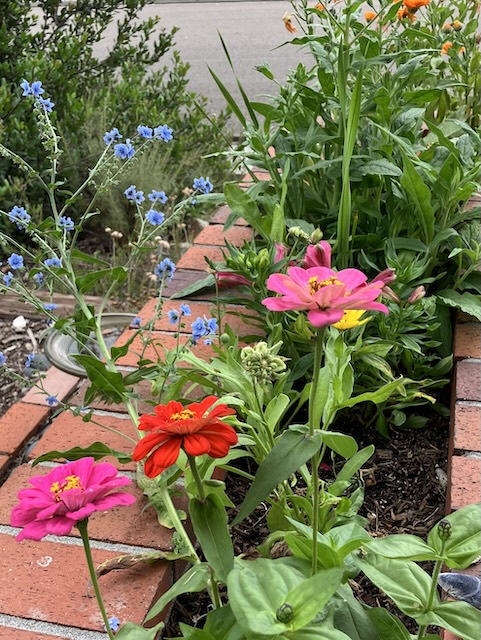
June Blooms

Here’s a little sprinkle of alchemy from Mother Earth.

I grew these flowers: Forget-Me-Not, Zinnia, Calendula…with seeds collected from last season’s blooms. It’s a satisfying project to participate in the circle of life, almost like I gave birth to them, which in a way, I did.

It’s not just me: A query about saving one’s seeds reveals this:
Harvesting garden seeds offers a deep connection to the natural world, to become more self-sufficient, and to witness the unique adaptations plants make over time to their specific environment. It also provides a sense of continuity and independence from commercial seed companies. 

Yes! I do so love FREE things!

I try to save as many seeds as I can in the veggie garden, too. Cilantro and tomatoes perform well, as do certain types of lettuce. Cucumbers and members of the squash family won’t produce true to type if they’re hybrids, but it’s fun to experiment.

June is full of color around here. Soon enough, it’ll be too dry and everything will turn drab and brown, but the joy continues because I’ll salvage the seeds for next spring. It’s the circle of life all over again!

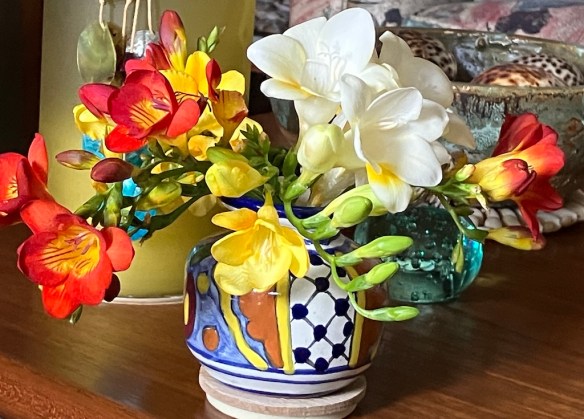
Not Too Shy Shasta Daisy

A couple years ago, I rescued a sad and wilted Shasta daisy from the garden center and tended it with love and care. Since then, I’ve divided it into enough plants to fill an entire bed under the dining room windows.

It wasn’t at all reticent about outgrowing container after container until I had no choice but to allow it to freely spread.

Named after the snowy peaks of Mount Shasta in California, the perennial Shasta daisy (Leucanthemum x superbum) seems to be extremely hardy.

Once established, they are vigorous growers and easily spread via rhizomes. They make lovely cut flowers, but I also learned these daisies are toxic to dogs and cats.

They’re not shy about how bold and beautiful they are!

Confession: Secret Talent

One of my proudest skills is the unexpected ability to propagate plants. Currently I’m propagating lavender, rosemary, roses, and a variety of bushy daisies.

Another simple (and thrifty) joy of mine is to go to the section at the nursery where the sad unloved plants are piled up and sold .50 cents to a dollar. I call them my “rescues”. Sometimes all they need is to be transplanted, maybe cut back, offer a bit of care and tenderness, and they’ll thank me by bouncing back and thriving.

A couple months ago, I “rescued” six Autumn Sage one gallon plants. I transplanted them to serve as a border around the deck.

Leaves on Salvia greggii are narrow, leathery and aromatic. This low water need perennial boasts a long flower season. Blooms appear from spring to fall.

They responded to immediately and have now grown into gigantic, beautiful plants with lipstick red flowers. Butterflies, bees, and hummingbirds are happy, too! Even better, I pinched off some new growth and have successfully propagated them to another part of the garden and the little babies are also healthy and flourishing. Success!