Here’s a little sprinkle of alchemy from Mother Earth.
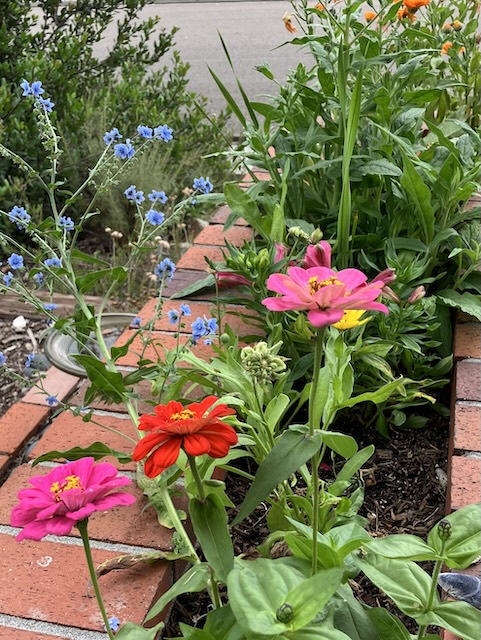
I grew these flowers: Forget-Me-Not, Zinnia, Calendula…with seeds collected from last season’s blooms. It’s a satisfying project to participate in the circle of life, almost like I gave birth to them, which in a way, I did.
It’s not just me: A query about saving one’s seeds reveals this:
Harvesting garden seeds offers a deep connection to the natural world, to become more self-sufficient, and to witness the unique adaptations plants make over time to their specific environment. It also provides a sense of continuity and independence from commercial seed companies.
Yes! I do so love FREE things!
I try to save as many seeds as I can in the veggie garden, too. Cilantro and tomatoes perform well, as do certain types of lettuce. Cucumbers and members of the squash family won’t produce true to type if they’re hybrids, but it’s fun to experiment.
June is full of color around here. Soon enough, it’ll be too dry and everything will turn drab and brown, but the joy continues because I’ll salvage the seeds for next spring. It’s the circle of life all over again!


 Enchanted Seashells | Princess Rosebud