In The Garden: Cape Honeysuckle

After a few very rainy days, it’s dry for a while until the next storm appears. I see a bit of blue sky as the contrasting backdrop to my Cape Honeysuckle trained to climb over an arbor.

The sweet nectar of its orange-red flowers attracts butterflies and hummingbirds.

The Cape Honeysuckle (Tecoma capensis) produces long, thin elongated fruit capsules that contain numerous seeds easily dispersed by the wind. 

It’s easy to propagate from a cutting, so I have lots of them growing in different parts of the garden.

Yup, there’s a lot going on in this photo; a path leading to a pond, the arbor of Cape Honeysuckle and Peppermint-Striped Climbing Roses, and a giant Bird of Paradise.
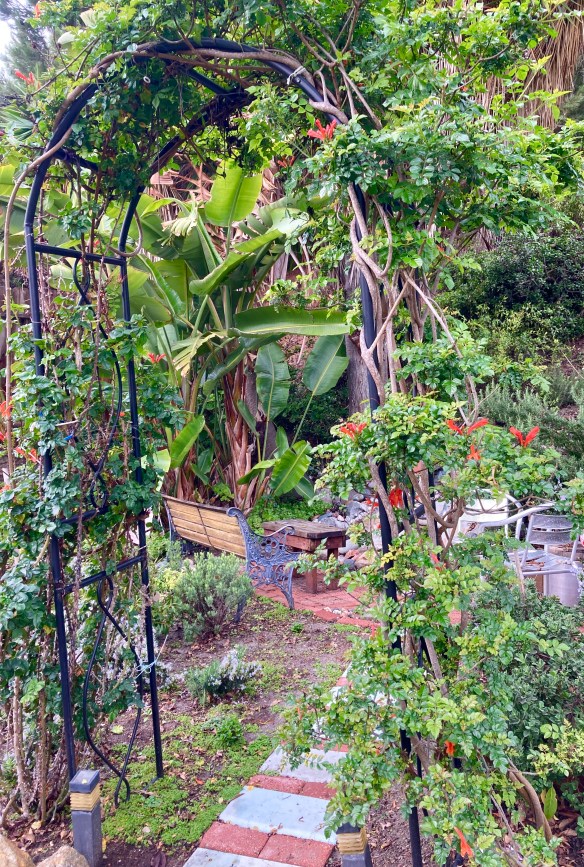
Everything needs some major work, but it’s a labor of love.

#WordlessWednesday

First Full Moon of 2023 and BIG Surf!

Tonight, this full wolf moon occurs with the sun in Capricorn opposite the moon in Cancer. The full moon is a time of culmination and the promise of fulfilling intentions set during the new moon.

The Pineapple Express, atmospheric river rain event here in California is over for now, although more wet weather is forecasted for next week.

There was talk of waves of up to sixteen feet for today, so I went down to the beach but here in Carlsbad, they were only about six to eight feet.

This morning:

A lifeguard told me there had been no rescues here, but further south in Cardiff, waves were definitely in the twelve foot range, with high surf expected again next week with the next storm.

It was super crowded; lots of people not only with cameras for pics and video, but to take advantage of the healing power of a little vitamin sea and abundant sunshine!

A Royal High Tide

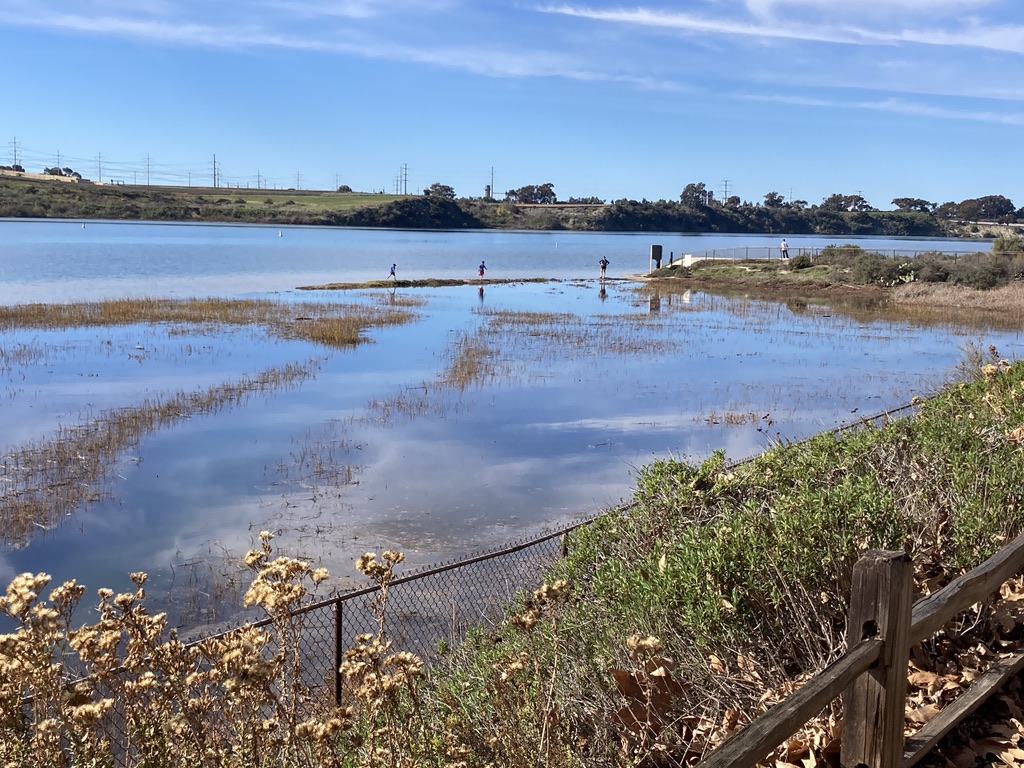
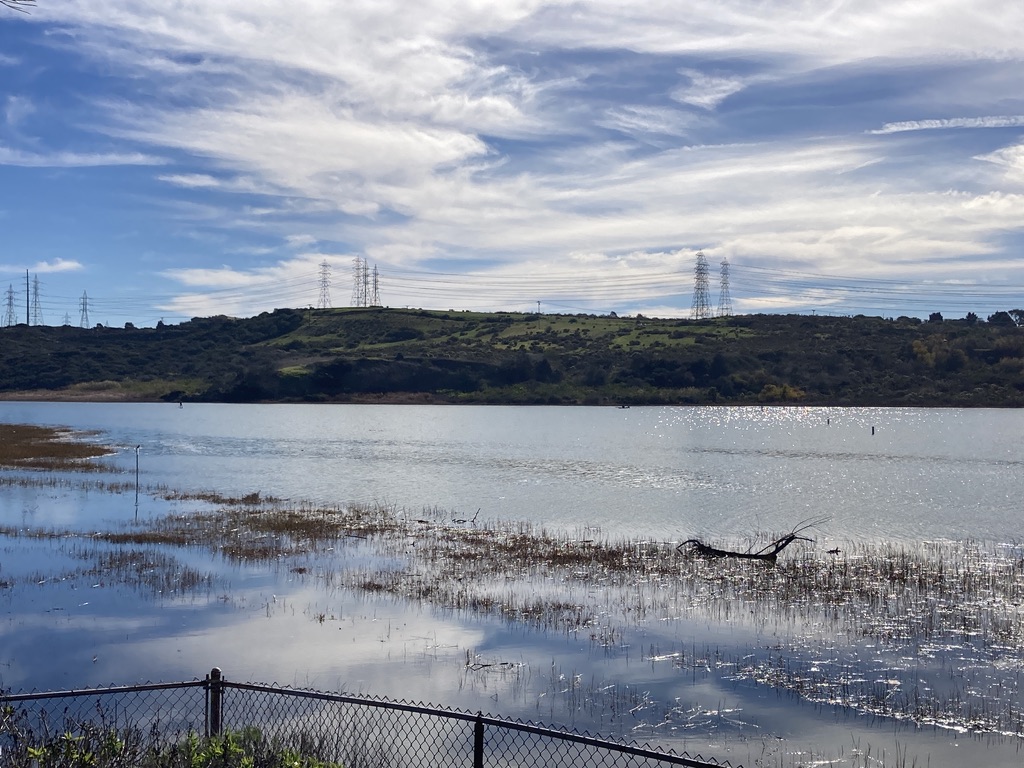
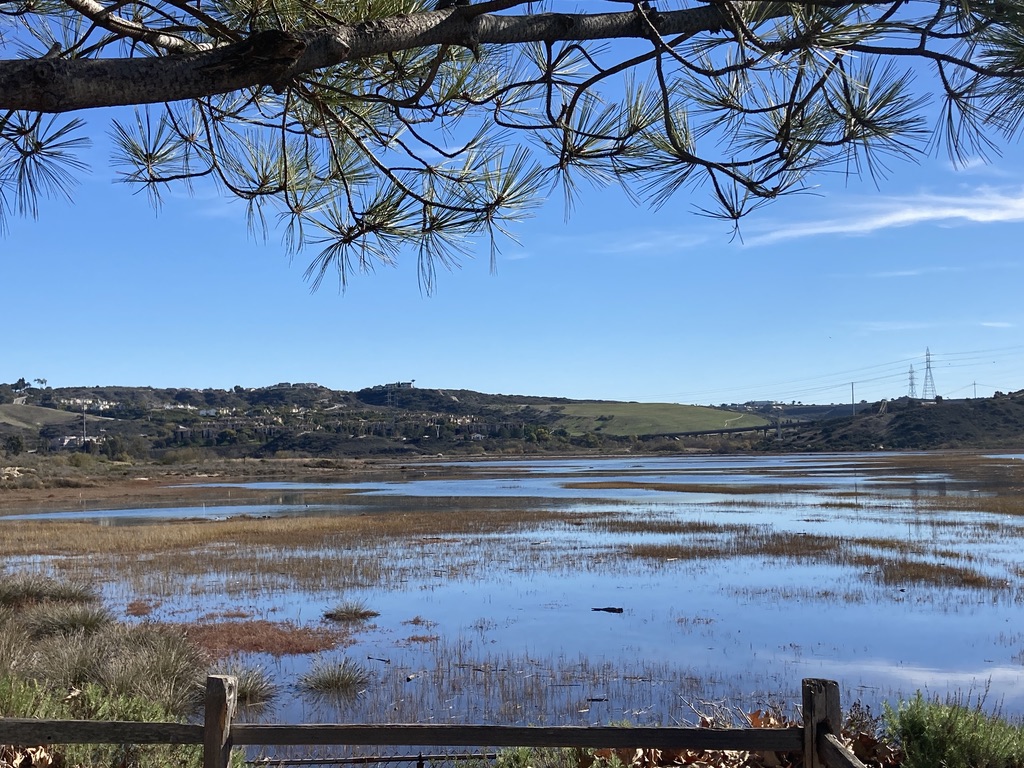
Last week’s King Tides created the unusual sight of flooded marsh and wetlands.

Here at Agua Hedionda, freshwater creeks drain into a low-lying area meeting the sea. The ocean pushes tides and sands against the land as the creek drains its fresh water and sediment into the sea. This mix of fresh and salt water forms a brackish environment. The salinity varies with the seasonal influence of rain and storms.

Sometimes the tide is so low, we can walk all the way around to the south side where there’s a sweet little beach, but not that day!

With all of this recent rain we’ve had (and more on the way), freshwater basins appear and fill the normally dry land surrounding the lagoon.

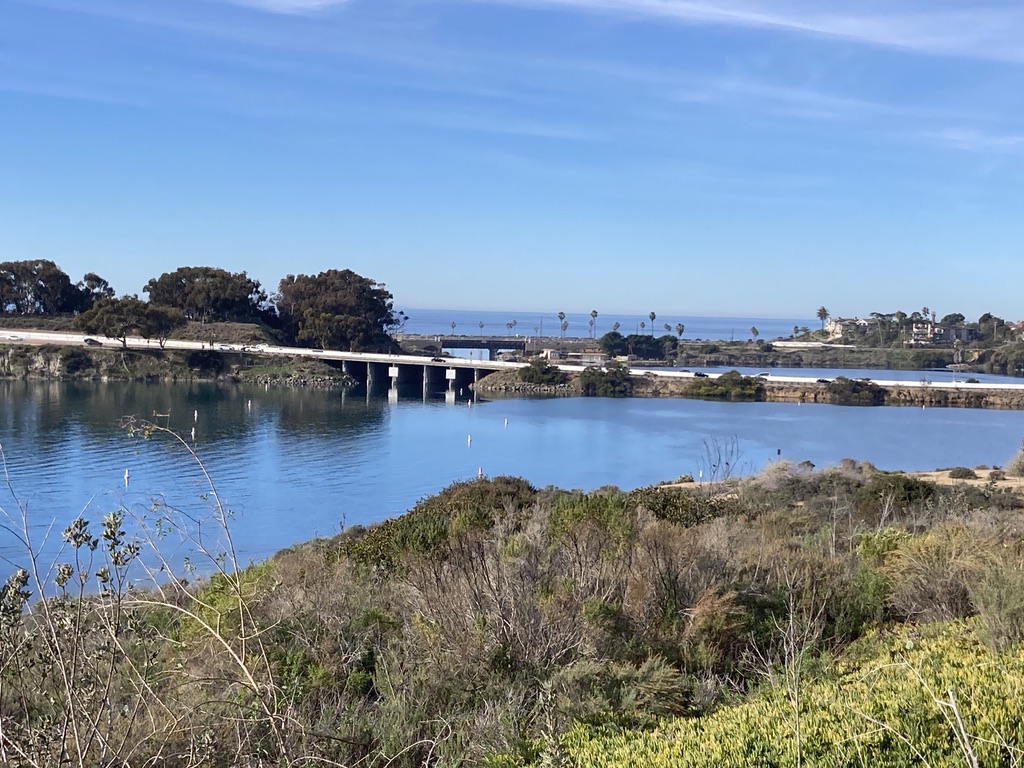
After all these years, this is still one of my favorite views. We see the lagoon, freeway, train tracks, and Pacific ocean.

Peace, Serenity, and Joy

That’s the feeling I get from an afternoon walk around Agua Hedionda Lagoon. It’s the kind of holiday celebration I love.

This is the perfect spot to breathe and contemplate centuries of Native American history.

For ten thousand years, these rolling hills and canyons surrounding the lagoon provided shelter and food with an abundance of native plants and trees.

Indigenous peoples spent their winters making salt and gathering shellfish for food, jewelry, tools, and trade.

To the Luiseño, this area was Palmai, or “place of big water.” The Luiseño culture is noted for its mysticism and religious practices.

From “Seekers of the Spring – A History of Carlsbad” by Marje Howard-Jones:
“It was a hot and dusty afternoon when Don Gaspar de Portola and Father Juan Crespi called a halt by the banks of a tidal lagoon. According to the padre’s journal for Monday, July 17, 1769, the party had left San Alejo to the south at three in the afternoon. They had traveled one league before descending into a valley where alders sheltered a deserted Indian village. ‘We named this valley San Simon Lipnica’, he wrote. Taking special exception to the scent of decaying fish and other debris, it was the soldiers who unwittingly christened the lagoon for posterity: ‘Agua Hedionda,” the ‘stinking waters’.”

The Native American peaceful coexistence with nature created a culture whose openness and adaptability left them vulnerable to aggressive invaders, another tragic story of desecration, destruction, and appropriation.

Looking Toward the Horizon

What a shiny December morning in SoCal!

Astronomically high tides known as King Tides will appear just before Christmas, forecasters say.

This phenomenon, which describes what are typically some of the highest tides of the year, are scheduled to occur on December 23 and 24, and can cause coastal flooding.

An Uphill Climb

We had rain, hardly enough to do anything but wet the street and sidewalk. After, the sky was painted with spectacular clouds and bonus moon sightings!

At the lagoon.

After the lagoon, walking up the hill, homeward bound.

#WordlessWednesday

Sailing Regatta

Having a lazy afternoon looking through old photos of a sailing regatta on Shilshole Bay near Golden Gardens park in Seattle.

I love the shades of gray and blue with white sails. It wasn’t very windy, so these were slow moving boats.

Beachy Walkabout

A few sprinkles of welcome rain over the weekend made perfect timing for a beach walk.

Look at this GIGANTIC skeleton for Halloween. Not too scary, right?

Then I saw some literal beach bunnies on the upper sidewalk.

Beautifully overcast, no whales or dolphin, but the ubiquitous surfer reigns supreme.

Before the Rain | After: Petrichor

This is what it looked like before a brief thunderstorm delighted all of us in SoCal.

It sounded as if someone was throwing around trash cans on the side of the house so I went out to look, and realized it was thunder! That’s an example of how novel an experience a thunder and lightening storm is for us.

We haven’t had rain in such a long time and it smells fresh right now, exactly the definition of the word petrichor.

Petrichor is the term coined in 1964 by Australian scientists to describe the unique, earthy smell associated with rain. It’s said to be caused by the water from rain, along with certain compounds like ozone, geosmin, and plant oils.
(https://www.acs.org/content/dam/acsorg/education/students/highschool/chemistryclubs/infographics/petrichor-the-smell-of-rain.pdf)

It looks like a bit more rain might visit us in the next few days. We’re excited to fill up our rain barrels and receive the bounty of Mother Nature.

Wavescape

There are hardly any plants that grow in the sand here, so when I saw these marshy reeds up against the seawall, I peeked through and snapped a few photos of the pretty ocean.