Dreamy White Christmas

I’ve always had red and pink zygocacti, and for some reason, mine bud and bloom several times a year, whether they’re labeled Thanksgiving/Christmas/Easter cactus.

I’ve been seeing other, amazing colors of these flowering succulents. I couldn’t resist this white Schlumbergera that I found at Trader Joe’s for about five dollars. This is her very first flower. Check out the magenta stamen. It’s absolutely stunning. The Chanel-inspired pot was a Daiso treasure.

I’m in LOVE. I can’t wait until all the other buds open.
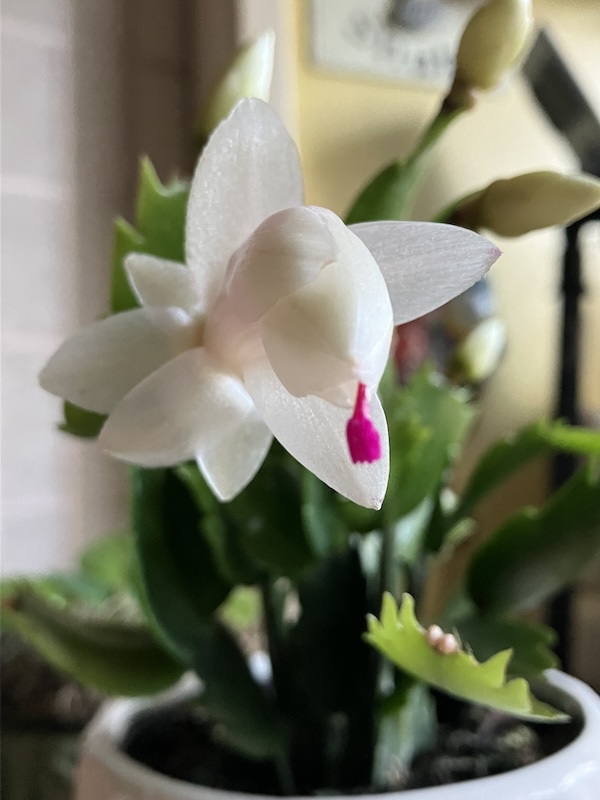
Do you see that double bud? It’s ridiculously easy to make me happy.

Pink Symmetry

This is the first bloom from my Marie Bracey camellia japonica. Dozens of buds formed, but this symmetrical, ruffled, peony-like beauty is the first that’s fully open.

The camellia is a flowering evergreen shrub with dark, glossy leaves and large, lush blossoms that appear and bloom for several weeks during the fall through early spring period in warmer regions. 

Camellias represent a spirit of depth, self-reflection, and inner strength. This plant will need all of those traits to survive a mostly drought environment.

Camellias also symbolize perfection and excellence due to their symmetry. Soon, I’ll have to plant it in the ground, but for this initial blooming season, I’m going to leave it right where it is, at the front door.

Purple + White

Doomed to live and die on the same day, the morning glory is a symbol of resilience and rebirth.

This enchanted morning glory is thriving near a bunch of Natal plum bushes and their fragrant white five-petaled flowers.

The Natal plum is a tropical shrub grown mostly as a flowering landscape specimen, but also known for its small fruits which taste like cranberries and are used in jams and jellies.

Once upon a time when I was in high school, I picked a bushel of the fruits from an empty field and made the most delicious jam but the thorns on the plant almost tore my arms up so I’ve never done it again.

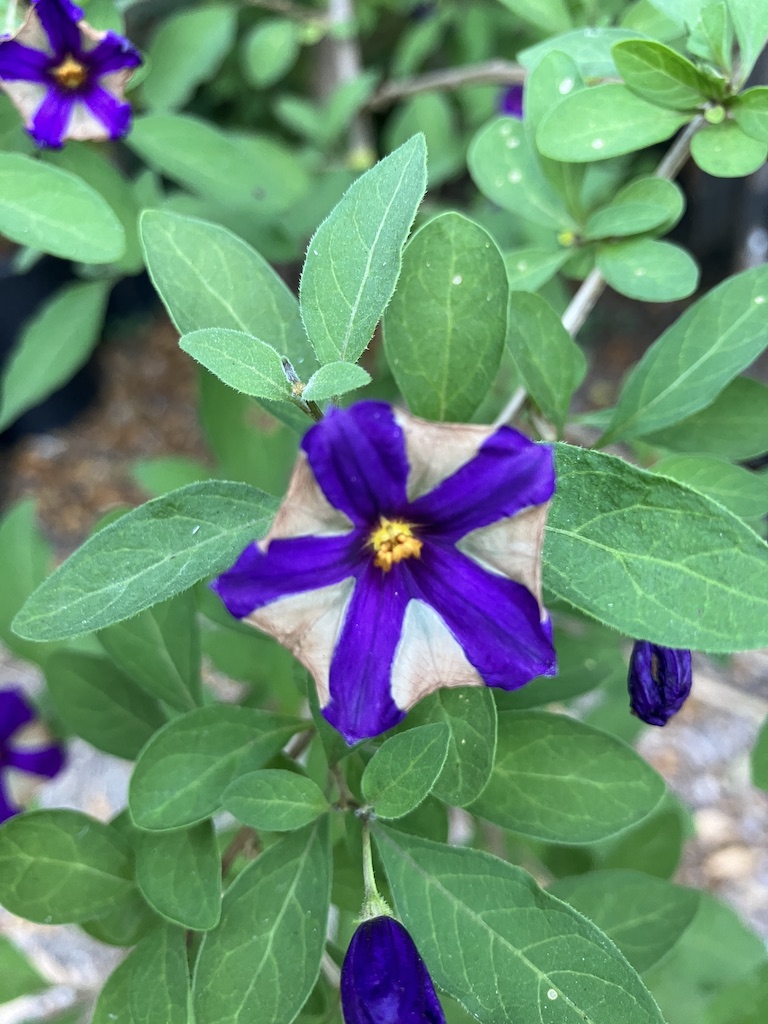
This is a Blue Potato Bush: The flowers are gorgeous but all parts of this part are toxic!

The sweetly scented flowers of Lycianthes rantonnetii, also known as Solanum rantonnetii, blue potato bush, and Paraguay nightshade, grows near a fence in the garden. I cut it back every year which it seems to love because it returns full of flowers that attract bees, hummingbirds, and other pollinators.

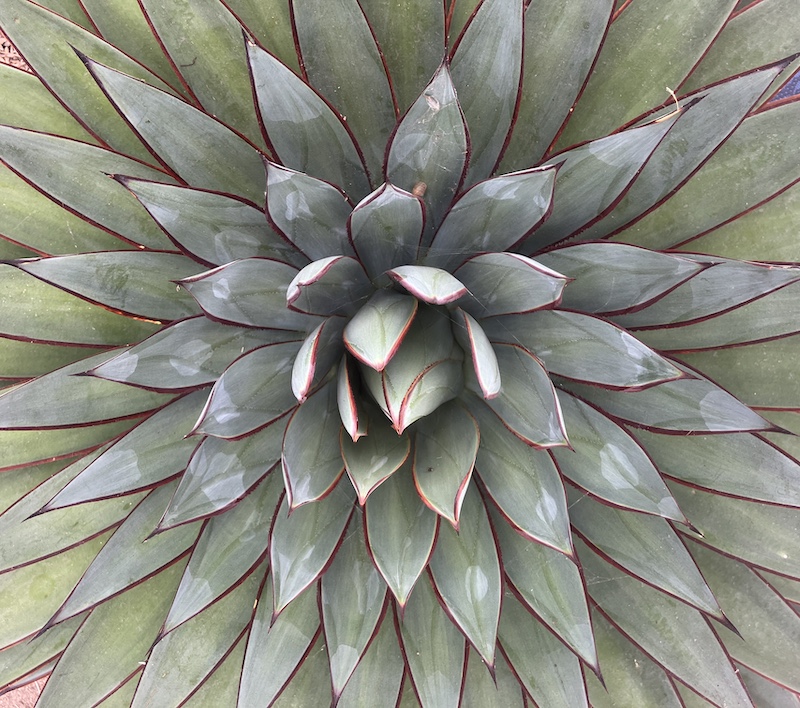
Nature’s Fractal Beauty

As I walked around the neighborhood I had to snap a pic of this mndblowing geometric perfection.

Agave

Falling Stars | Crocosmia

I was enchanted by the yellow to intense lipstick red blooms against the bright green leaves on this crocosmia. Hummingbirds, butterflies, and bees love them, too!

It’s said that dipping dry crocosmia flowers in water releases a saffron-like aroma. Crocosmia plants grow from corms, which are closely related to bulbs.

The spiritual meaning of this beautiful plant encourages us to playfully engage our emotional strength, power, and will to express ourselves confidently and with enthusiasm.

#FOTD

Blooming Cups of Gold

I don’t know when this Cup of Gold (Solandra maxima) vine will stop growing but I’m going to allow it to live freely without pruning.

It’s already outgrown the arbor and now stretches like a canopy from tree to tree…The flowers are about six inches wide with a light tropical fragrance.

For the first time this year, it looks like the sun is almost ready to come out. We’ve had a very gloomy first half of 2023 with a heavy marine layer and unseasonably cool weather.

I’m looking forward to blue sky again!

Symphony in Yellow

Symphony in Yellow

An omnibus across the bridge
Crawls like a yellow butterfly
And, here and there, a passer-by
Shows like a little restless midge.

Big barges full of yellow hay
Are moored against the shadowy wharf,
And, like a yellow silken scarf,
The thick fog hangs along the quay.

The yellow leaves begin to fade
And flutter from the Temple elms,
And at my feet the pale green Thames
Lies like a rod of rippled jade.
–Oscar Wilde

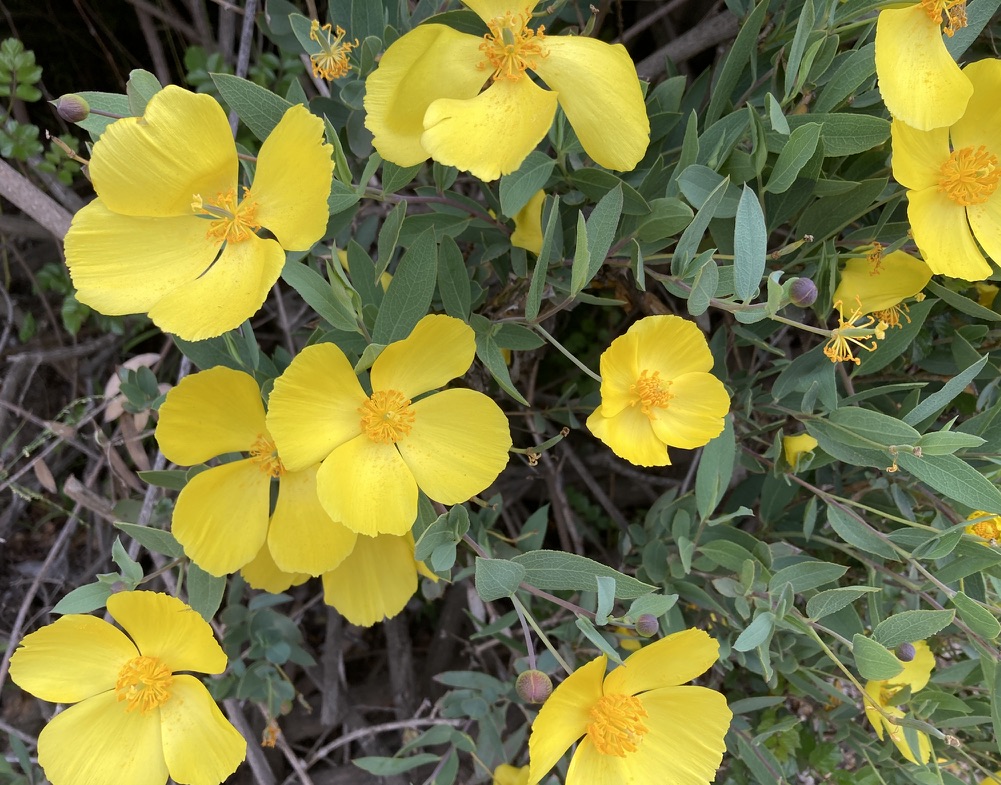
This Bush Poppy (Dendromecon rigida) is a California native shrub. It’s a tough and beautiful plant but only if planted in the right conditions. The Bush Poppy thrives on rocky clay slopes with excellent draining. If planted in sandier soils, it can handle supplementary water up to once a month. Prefers full sun. Flowers are beautiful, as are the long, thin, blue-green leaves.

Look at this lemony yellow azalea. I didn’t even know they came in yellow until I used the info app on my phone to identify this gorgeous girl. I think it’s actually called Rhododendron ‘Lemon Lights’.

Purple Pride

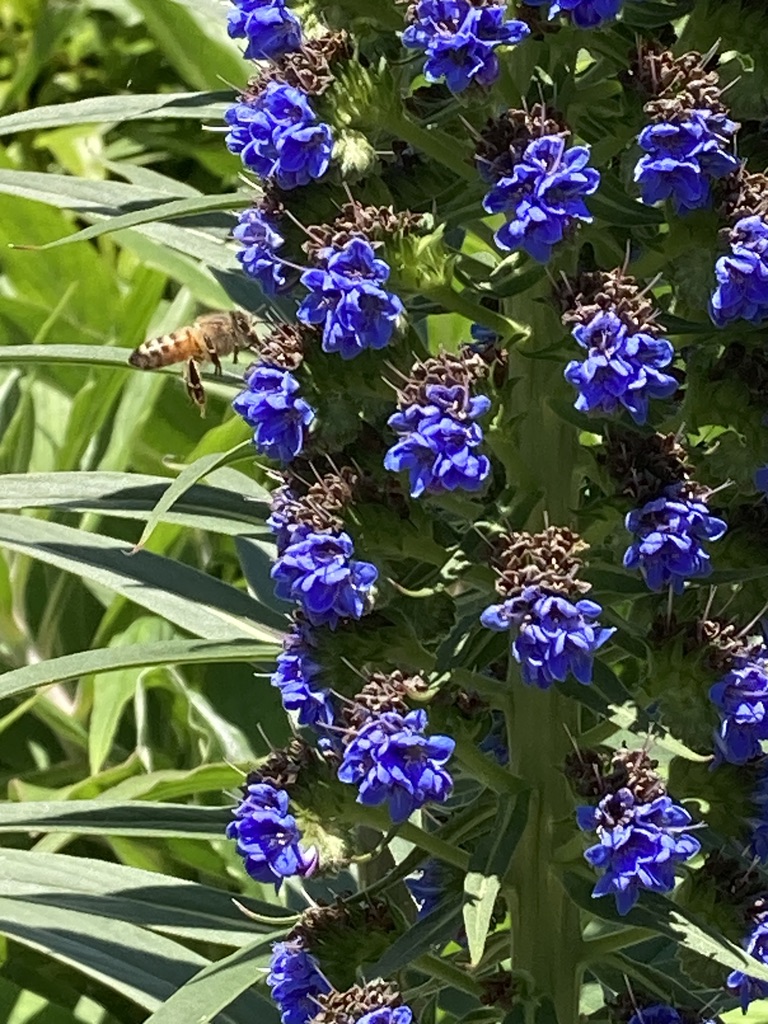
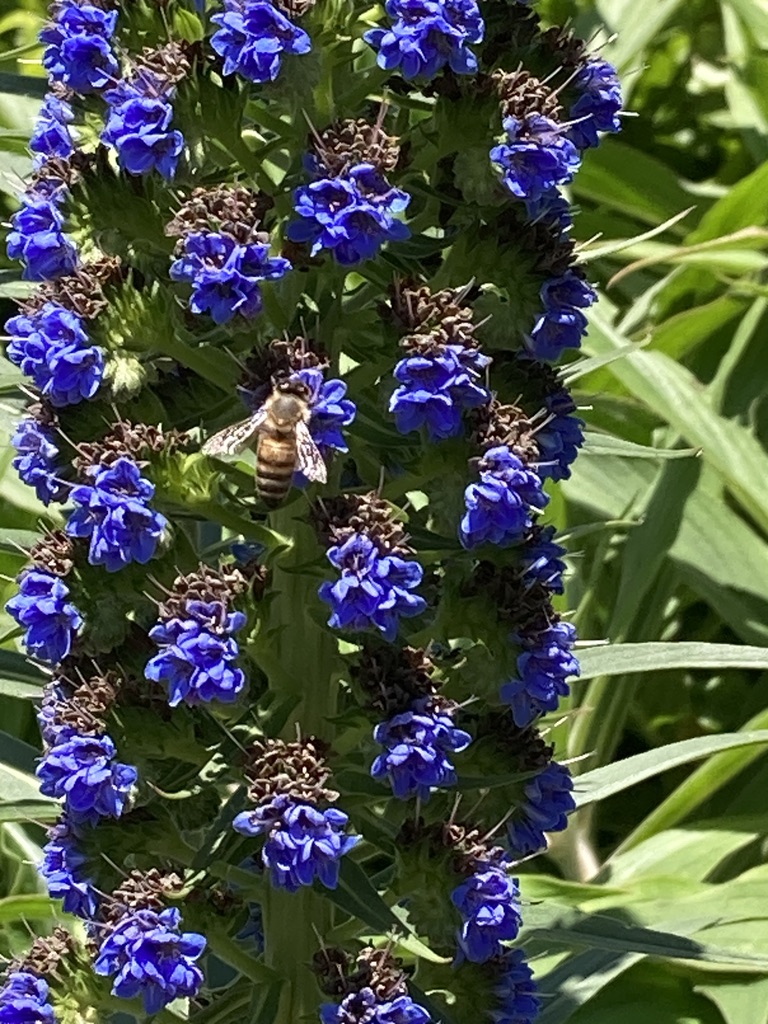
I’m referring to Pride of Madeira, the superstar of my garden!

This plant REALLY loves the environment here at Casa de Enchanted Seashells. I read that it’s becoming invasive in places along the coast and I can see how that could happen as it easily reseeds itself.

Native to Madeira Island, north of the Canary Islands, it’s a tough perennial and can survive all summer with little to no water. Since I think we’ve seen the last of our record-breaking rainfall here in SoCal, that’s exactly what they’ll have to do to survive.

And in a different part of the garden, a slightly different hue…It’s HUGE.

Bees love it too. So do hummingbirds and butterflies.

Pride of Madeira grows to about six feet tall and some of my specimens are twice as wide as they are tall.

I quite literally have dozens of baby Prides if anyone wants to plant them in their garden!

Sticks on Fire

On an early morning walk before the rain started (yes, we’re getting more sky water!), I spied this colorfully striking succulent.

Sticks on Fire, sometimes called Firesticks (Euphorbia tirucalli), is a shrubby succulent with bright red, pink, orange, or yellow stems.

The more sun it gets, the more ‘fiery’ it appears. The sap of this plant is sticky/milky and may cause irritation to skin as there are mild toxins.  

Many succulents in the euphorbia genus, such as the pencil cactus and crown of thorns, are also poisonous to both cats and dogs. Symptoms of poisoning from ingesting this succulent range from gastrointestinal upset to skin and eye irritation.

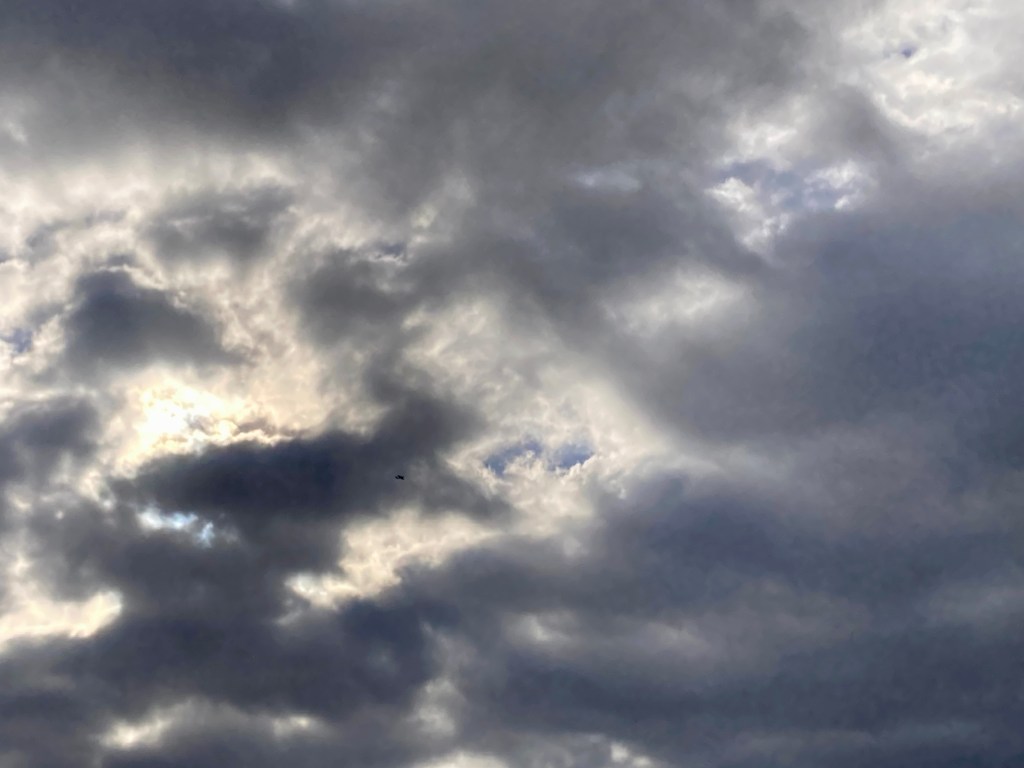
I made it home just in time! That’s not a speck on your screen, it’s an airplane heading to our local airport.

In The Garden: Cape Honeysuckle

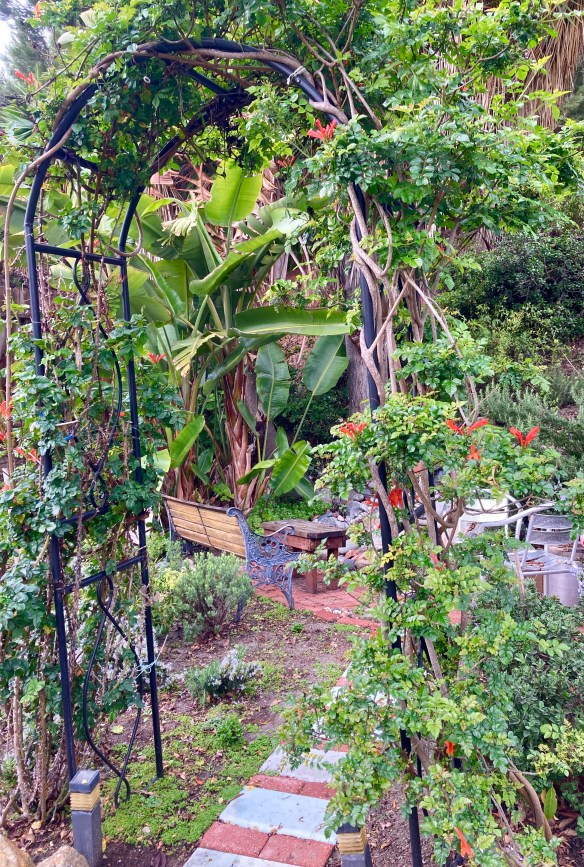
After a few very rainy days, it’s dry for a while until the next storm appears. I see a bit of blue sky as the contrasting backdrop to my Cape Honeysuckle trained to climb over an arbor.

The sweet nectar of its orange-red flowers attracts butterflies and hummingbirds.

The Cape Honeysuckle (Tecoma capensis) produces long, thin elongated fruit capsules that contain numerous seeds easily dispersed by the wind. 

It’s easy to propagate from a cutting, so I have lots of them growing in different parts of the garden.

Yup, there’s a lot going on in this photo; a path leading to a pond, the arbor of Cape Honeysuckle and Peppermint-Striped Climbing Roses, and a giant Bird of Paradise.

Everything needs some major work, but it’s a labor of love.

#WordlessWednesday