Amazing Rosemary

Sometimes people call me Rosemary even though that’s not my name. They call me Roxanne too, and that’s not my name, either. I guess I’m not very memorable because I’m so often referred to incorrectly and it’s actually annoying, even more because my real name is almost always misspelled.

But this is not about ME, it’s about the herb, rosemary. There’s a lot of rosemary growing in the gardens of Casa de Enchanted Seashells. It’s easy to propagate and seems to endure, if not thrive, during our many months of drought.
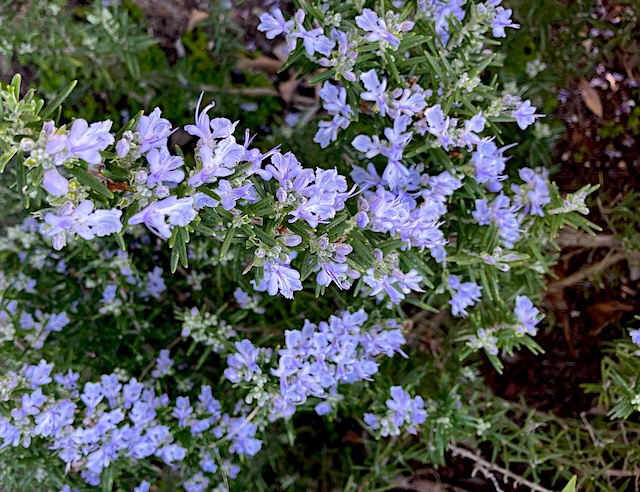
Here’s a couple ideas to to create a happy home with rosemary…

Rosemary flowers can be eaten, used in tea, or as a garnish. I’ve never consumed any rosemary flowers but I think they’d perk up a salad.

Rosemary Aromatherapy Recipe

  • Fill medium sized pot with fresh water.
  • Add 10-15 freshly picked rosemary sprigs.
  • Bring it to a boil for a few minutes.
  • Allow it to simmer for about ten minutes.
  • Turn off the heat and let it steep as long as you like.
    As the rosemary releases its essential oils, your home will be filled with an uplifting fragrance. Option to add add lemon slices or cinnamon sticks.

Rosemary Infused Bath
This could not be any easier. Simply pick a few sprigs of rosemary and toss into the bath as you fill the tub. Try it and enjoy! (Just make sure your rosemary is bee-free!)
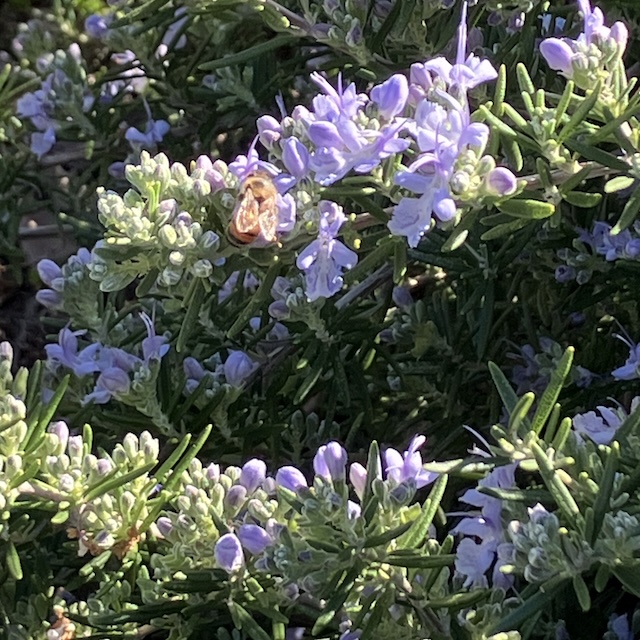
All photo credit to Enchanted Seashells
Garden Crimes

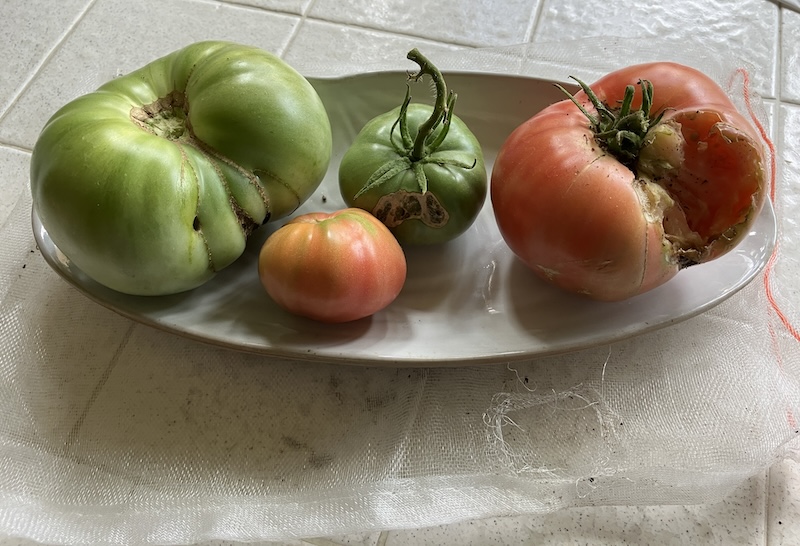
Look at these poor tomatoes. It’s a tragedy...

I’ve shared lots of stories about our plight with RATS here in SoCal; for whatever reason — whether it’s overbuilding or decimation of natural predators — many neighborly conversations are about the growing rodent populations.

Because rats love tomatoes, I use mesh bags to protect my beautiful heirlooms from being vandalized and I check on them daily.

Look at that photo...a rat ate through the bag to ravage a gorgeous tomato that was just beginning to turn color. I harvested the rest of them even though they’re green because I refuse to feed those disgusting, destructive, villainous vermin.

I had anticipated simply slicing the heirlooms to enjoy with homegrown basil. I am so sad; it’s a crime against humanity!

I wondered if it was safe to still eat the mangled tomato if I chopped off a large area around the bite and cleaned it really well, but I learned that it’s not worth the risk of any saliva-borne diseases that may have infected the whole tomato, so I had to toss them out. That was PAINFUL.

African Violets: Tender Loving Care

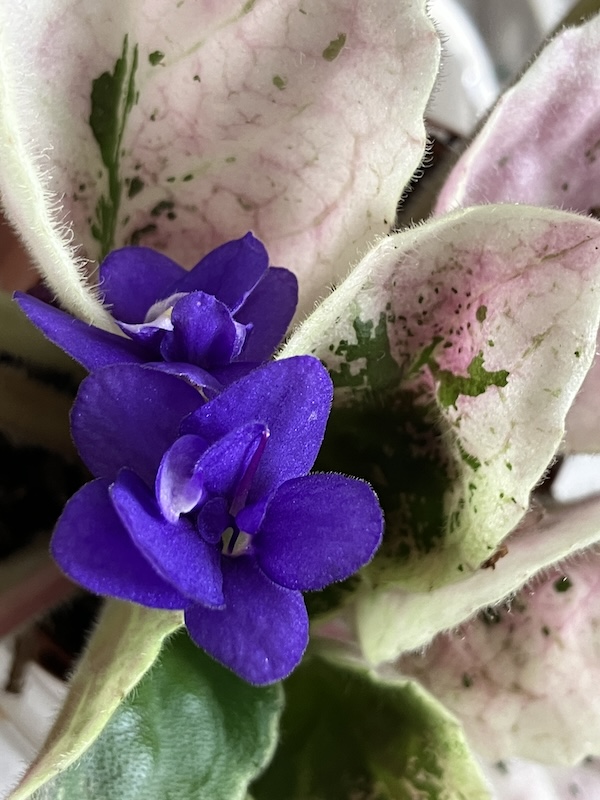
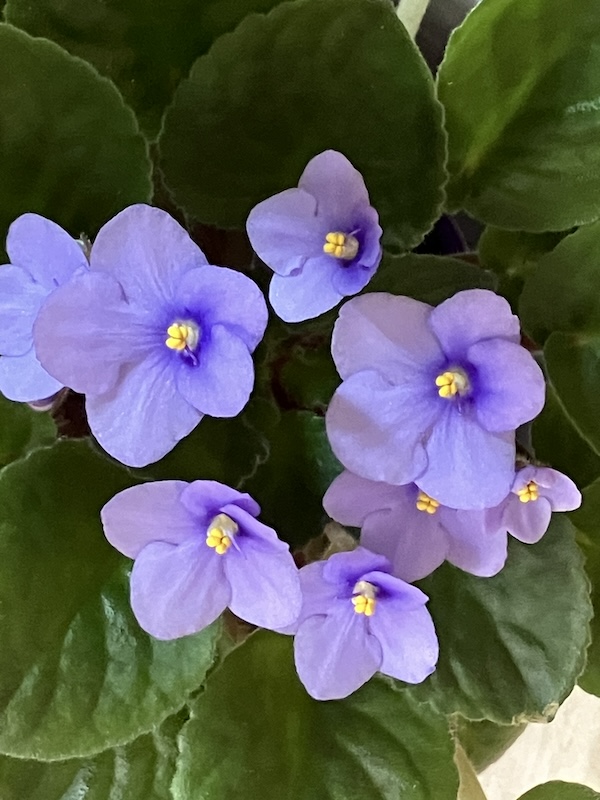
My plant obsession isn’t all about monsteras and fiddle leaf figs, I lovelove African Violets, too.

The African violet symbolizes devotion, faithfulness, and commitment. They’re also supposed to be great for indoor air purification because African violets absorb toxins.

They appear delicate and precious but they’re actually quite hardy and sturdy and not really high maintenance at all, at least not in my opinion. The flowers last for a long time.

Their botanical name is Saintpaulia and they belong to the Gesneriaceae genus. I started propagating my own violets a few years ago. Creating new life gives me a great deal of pleasure, plus it’s pretty easy, so there’s a high success rate.

A couple of my very own babies are flowering. I’m so proud of them!

They’re not too finicky or hard to take care of if you follow a few tips:

❀ Don’t water from the top and try not to get the leaves wet.

❀ They love bright, indirect light.

❀ Fertilize about once a month.

❀ Some websites suggest an Epsom salt drench every two weeks to assist flowering.

❀ Remove dead or faded flowers.

❀ They don’t like to be too wet or too dry, I use filtered water because our SoCal tap water is disgusting.

❀ It’s almost funny but the best performing violets are in the smallest pots, much smaller than you’d think for dinner plate sized foliage.

❀ Propagating is simple. The traditional method of propagating violet leaves is to place the stem into water until roots begin to grow. Select a healthy leaf. It doesn’t take very long for roots to form.

Good luck!

Phytophile: Word of The Day

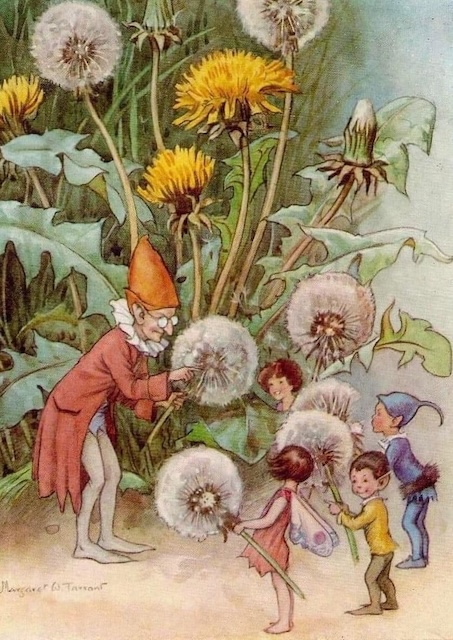
phytophile is a person who loves plants, and for me, that includes dandelions! Phytophile comes from the Greek words phytòn (plant) and philìa (love or passion).

Last week I rescued a six-foot ficus and a sad little cordyline from the nursery clearance section. They were dried out and cruelly discarded. These once beautiful specimens simply needed a bit of my tender, loving care. They quickly perked up and are both now enjoying the good life here at Casa de Enchanted Seashells.

Margaret Tarrant

More about the adorable and functional dandelion…

Don’t Cry, Baby Girl

When plants cry…not at all like Prince’s When Doves Cry

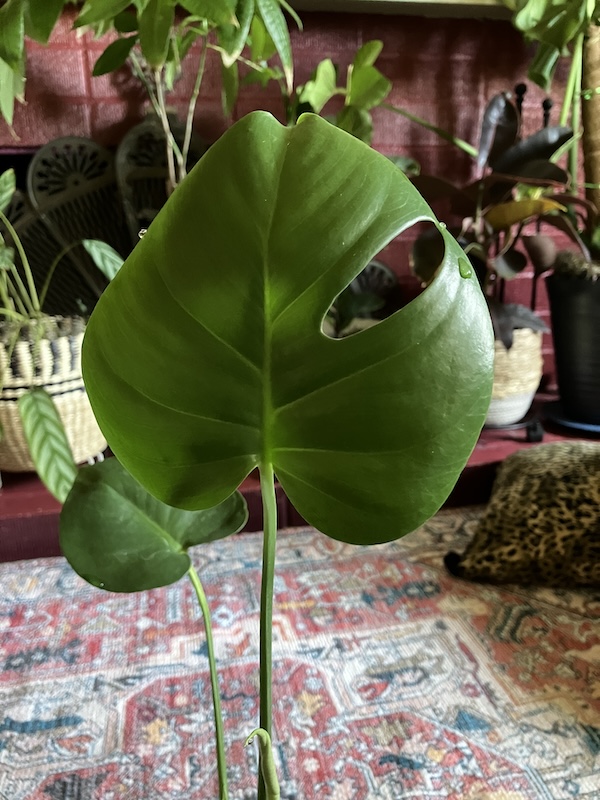
I was beyond ecstatic when my mini-Monstera began to unfurl the first new leaf since I brought her home. When I checked on her progress this morning, I noticed that she appeared to be crying.

Why so sad, baby girl?

I try to do everything to make her happy and healthy; water, fertilizer, the right amount of sun, and I adorned her with a beautiful, thrifted Satsuma pot.

This tear looks like it’s coming from her alien-eye, the classic Monstera fenestration.

They’re not tears of sadness nor joy; they’re actually due to a process called guttation.

Guttation is a mixture of xylem and phloem fluid, which contains sugars and other chemicals produced in the leaves that are exuded overnight by the plant.

Guttation is one way houseplants attempt to regulate their growing conditions. This response can occur when a plant has been overwatered or under stress, or the plant could be perfectly fine and want to balance its nutrients or minerals.

Aren’t plants SO smart?

I confess that sometimes I love my plants too much, as in too much watering, and I hope this isn’t the reason because I adore this new leaf baby and her brothers and sisters love her, too.

Don’t shed any more tears, little one! I promise to try and not love you to death!

Stargazing

After being subjected to the real world for a while by the trial and guilty verdict of an ex-President — as I shake my head and wonder how ANYONE could have voted for that narcissistic orange blowhard, it’s time to recover with the simple, joyful, garden beauty of a Stargazer Lily — like a palate cleanser, but instead for my brain.

I’m super allergic to the alluring fragrance of most cut flowers in a vase, but I can enjoy them in the garden without sneezing. Stargazers return every year; this is the first bloom to fully open, but you can see all the others waiting their turn.

Hügelkultur: Word of The Day

It’s time to prepare the garden for spring vegetables. Every year I attempt to win the battle with rodents and bugs and lack of sky water; sometimes I win, sometimes they do…

I have a couple new ideas. I purchased coconut coir bricks to rehydrate and mix with the existing soil in my raised bed and I thought I’d try cardboard box planters, too, inside the raised bed.

Maybe one day I’ll be able to build my own Hügelkultur.

“Hügelkultur” (pronounced hyoo-gul-kulture) is a German word that means mound culture or hill culture. A hügelkultur is a sloped and raised planting bed filled with topsoil, wood, and organic materials. Germans and Europeans have practiced it as a gardening method for hundreds of years.

Instead of gathering branches, leaves and grass clippings for yard waste trash pickup or to toss in the compost, build a hugel bed. Mound logs, branches, leaves, grass clippings, straw, cardboard, petroleum-free newspaper, manure, compost, or whatever other biomass you have available, top with soil and plant your veggies.

The advantages of a hugel bed are many, including:

The gradual decay of wood is a consistent source of long-term nutrients for the plants. A large bed might give out a constant supply of nutrients for decades. The composting wood also generates heat which might extend the growing season.

Logs and branches act like a sponge. Rainwater is stored and then released during drier times. Actually you may never need to water your hugel bed again after the first year (except during long term droughts).

We had a bit of rain yesterday which is a perfect opportunity to prep the coconut coir and plant seeds. I’ll start with my favorites: mixed greens, tomatoes, beets, chard and kale, cucumbers, snap peas, beans, peppers, and zucchini (of course).

There’s nothing more adorable than watching the first little sprouts emerge, right? I can’t wait!

Hügelkultur image credit to https://www.hugelkultur.com.au/intro-hugelkultur/
Photo credit to Enchanted Seashells
Dawn’s Beauty

Up at dawn, the dewy freshness of the hour,
the morning rapture of the birds,
the daily miracle of sunrise, set her heart in tune,

and gave her Nature’s most healing balm.
~ Louisa May Alcott

Because of all the rain we’ve had, spring blossoms in the garden are exceptionally lush. My Cup of Gold vine (Solandra guttata/Solandra maxima) is bursting with flowers and this gigantic dinner-plate sized golden chalice looked right at me as if to say “good morning.”

What a spectacular way to greet the day!

My Soul Mate is a Monster

Sorry for the typo.

I meant to say my Giant Monstera is my soulmate. I certainly should have done a better job of proofreading…my bad.

This guy is the cause of my freak injury. I know I should hate him for it, but he’s so beautiful, especially when backlit by the sun.

I can’t help but love the source of my trauma, my pain.

You can’t really see it in this photo, but the reason why I raced down the stairs in slippery socks (and fell HARD) was to get the Amazon package that contained the moss poles to help my BFF climb to new heights.

When we first met (at Trader Joe’s) and fell in love, he whispered to me that a little support would make him happy. Since I love to oblige, it was an easy request to grant, however, this proclivity of mine set the stage for me to become irrevocably injured.

Deep wounds take a long time to heal, but my love for this Giant Monstera will last forever. Pretty soon I’ll need taller poles and more support because he’s growing and thriving under my care.

Love hurts, but isn’t he gorgeous? My monster(a), my soulmate.

Update on my injury: Stitches came out yesterday (after two weeks) but were replaced by a dozen Steri-strips to help the eight-inch gash finish healing, which it is,  but at a snail's pace, probably because I'm not a very patient patient. I'm a much better caregiver. The recommendation was no strenuous activity for at least two more weeks or it'll open up again and I'll need more stitches and the doc threatened me with an aircast to immobilize my leg. "Threatened" might be a SLIGHT exaggeration, but that's how I interpreted her words...

Forget-Me-Not

I was at a free expo a couple months ago and grabbled a package of forget-me-not seeds. I tossed them in a planter and forgot about them until today.

This is their first flowering!

Forget-me-nots symbolize true love, fidelity, and respect. It’s also associated with Alzheimer’s disease, and has (weirdly) been adopted as a symbol by the Freemasons.

Germans coined the most common name used for this flower, das Vergissmeinnicht, because of the myth of two lovers who first saw the bright blue flowers as they walked along the Danube River. The man retrieved the flowers for the woman but was swept away by the river. As he floated away, he told her not to forget him.

Whether the story is true or not, it’s certainly made the forget-me-not a lasting symbol of remembrance.

Myosotis sylvatica readily reseeds, so I’m hoping to grow more and more in the garden because the blue is so valiantly BLUE and truly unforgettable.