
When I told my mom I wanted to become a famous actress, she said it was in my blood and shared a story about my grand-aunt, Josephine Victor, who WAS a well known performer, often in productions at the Belasco Theatre on Broadway.
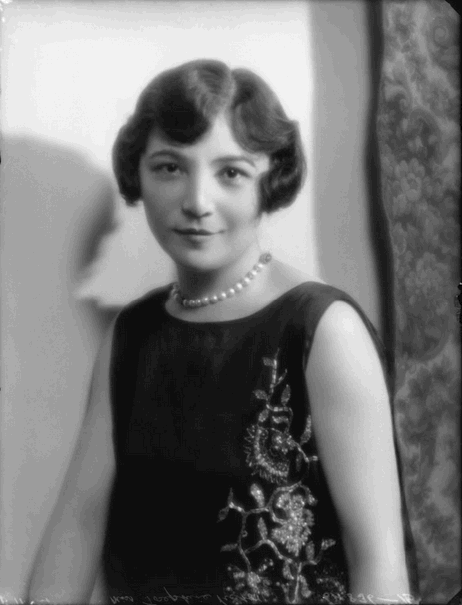
Josephine Victor (born Josephina Gunczler/Ginzler; June 28, 1885 – 1963) was a Hungarian-born American stage actress and director active on Broadway from 1905 to 1939.
Her father was a Hungarian vintner. The Ginzler family originated from the Tokay wine region, where viticulture played a central role in local economy and culture during the late 19th century.
Josephine had several siblings, including a half-brother, my grandfather, Rabbi Arthur Ginzler.
Known for her versatile performances in dramatic roles, Victor appeared in many Broadway productions, frequently as part of original casts in plays by prominent playwrights such as John Galsworthy and Elmer Rice.
Her career highlights include leading roles like Zabette de Chauvalons in Martinique (1920), for which she received praise for delivering a powerful and tender performance in the play’s pivotal second-act scene, and Chloe in Galsworthy’s The Skin Game (1920).
Later, she transitioned into directing, helming the Broadway production of Doctor X in 1931, and continued acting in sophisticated dramas such as Judgment Day (1934) as Lydia Kuman and Wise Tomorrow (1937) as Diana Ebury.
She also ventured into vaudeville, debuting at New York City’s Palace Theatre in 1921 in the one-act play Juliet and Romeo by Harry Wagstaff Gribble, where she co-headlined alongside Adele Rowland.
Victor’s personal life intersected with the theater world through her marriage to Francis E. Reid, a theatrical publicist and drama critic.
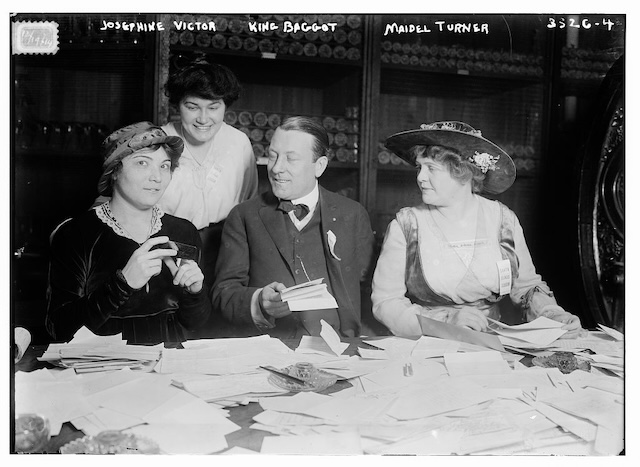
Victor’s combined directing and playwriting output, though limited in major productions, bridged her acting with creative authorship, fostering narratives that amplified immigrant voices and familial tensions in early 20th-century drama. Her works contributed to the era’s exploration of social undercurrents, paving subtle paths for women in theatre leadership during a male-dominated field
Widowed after Reid’s death in 1933, Victor’s contributions to American theater spanned acting and directing, cementing her legacy as a multifaceted figure in the era’s stage scene.
In her post-retirement years, Victor maintained a low public profile.
It’s interesting to observe that one sibling became a rabbi and another became an actress, as they are very different and also very similar careers, if you stop and think about it. Performing is performing, whether it’s for an audience or a congregation.
She died in 1963, and I’m not sure that my mom ever met her, but wish I had so I could have asked her when she got the acting bug and maybe I could have picked up a few helpful acting tips from her, as I didn’t really win many auditions or perform regularly, so I gave up that dream…

