Since I was fortunate enough to NOT die last week and still slightly anxious from that near-death event, I stayed home this morning.
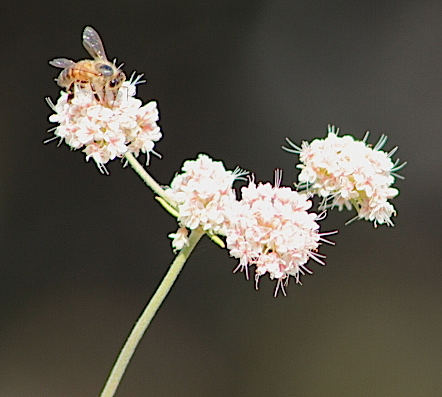
As I was taking out the trash, I saw a single bee on the deck. I crouched down to get a better look at the little guy and while he was still moving, he seemed lethargic and tired, but not dead, thank goodness.
I ran inside to get a shallow plate which I filled with sugar water, placed a rock in the center, and brought out a toothpick. I set the plate near the little bee and watched as he took a couple of sips from the drops hovering at the end of the toothpick.
I scooped him up with a seashell and placed him on the rock in the plate. After the thirsty little guy drank a bit more of the sweetness, he gathered enough energy to buzz away.
There are no pics of that miracle because I was too intensely focused on bee rescue, but I felt really good about the outcome especially since I’m allergic to bees and have always been afraid of them.
Bees are incredibly hard workers and if you do find a bee on the ground for an extended period of time, then in most cases there is nothing wrong with the bee. It simply needs a little rest. It’s pretty easy to revive tired and exhausted bees. A simple solution of white sugar and water can work wonders to give them the energy they need to fly away. 🐝
It was a warm night and the patio doors were open…
I’m used to hearing coyotes and the occasional hoot of a pair of Great Horned Owls that live in the ‘hood, but last night I heard what could only be described as a MONKEY — but that’s crazy, right?
I turned off the TV, grabbed my phone, and pointed it outside.
You can hear it too, the monkey sounds in tandem with very faint owl hoots. The hoots didn’t get picked up as I was recording though the screen door, so you might not catch it. Definitely turn up the volume.
I did some research: What is a bird that sounds like a monkey — and thanks to the brilliance of Google, a zillion results popped up.
It turns out that I might have been lucky enough to hear a Barred Owl, which is more rare here. Or it’s another vocalization from the Great Horned Owl, one I’ve never before heard.
Barred Owls are huge, between 16 to 25 inches long, with a broad wingspan of up to 60 inches. Since I’m five feet tall, I cannot even fathom that.
Whoever it was, I’m overjoyed! It’s one more animal friend helping to rid my garden of disease-ridden rodents. Bon apetit!
Apologies again for the crappy video, as this was my screen door and I couldn’t turn off the flash because I didn’t want to mess around and lose the capture.
So what is it? Monkey? Owl? Monkey Owl? Or something else?
I hardly ever see my backyard friends during the day so this was a huge surprise, even more so because I was actually outside at the time.
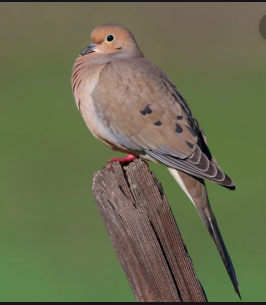
I have no idea how I missed observing this beauty in real time, but it was such a treat to check the camera and discover my silent visitor up on the hill.
Isn’t his coloring beyond beautiful? I can’t wait to see him again…
The mournful song of my little dove reminded me of a poem by Becky Hemsley.
She walked along the pathway And she hadn’t walked for long When she met a little bird Who sang a melancholy song She listened for a moment To his sad, enchanting sound And she asked him why he sang his song When no-one was around “I sing to tell the forest That the day has just begun And I join the morning chorus As we’re welcoming the sun I sing so all the other birds Will know they’re not alone And I hum to all the trees To help their leaves and branches grow I sing for all the creatures As they go about their day And I whistle warnings to the sky That clouds are on their way” But why,” she asked him gently “Is your song so bittersweet? Why does it sound like longing And like yearning when you tweet?” “I sing to feel less lonely,” Said the tiny, little bird “And I tweet into the quiet Just so I can feel heard For when the sun is busy, When the other birds have flown, When the trees are climbing skyward Then I’m left here on my own And I sing to ask the questions That are tearing through my mind But I don’t know what I fear the most Silence… or the reply”
Heaving mountain in the sea, Whale, I heard you Grieving. Great whale crying for your life, Crying for your kind…
Song of the Whale — Kit Wright
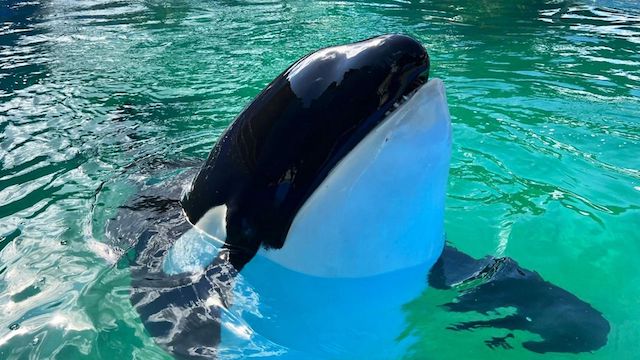
The last surviving orca of the infamous Penn Cove captures of 1970 is dead.
Lolita is dead. In my opinion, she was murdered; a long, slow, painful death.
When will humans stop abusing other living creatures for MONEY?
The blood is on your hands, Miami Seaquarium.
Earlier this year, the Seaquarium announced plans to return Lolita back to the the waters of the Pacific where she could spend her final days. The decision came after years of pressure from animal rights groups to allow the aging orca to spend her final days swimming freely in her natural habitat.
But months later, Lolita remained at the aquarium. The Dolphin Company, which owns the Seaquarium, saidthat the orca would be relocated sometime between October 2024 and April 2025. (NPR)
I can’t even verbalize how angry I am at the humans who did this to Lolita. She was so close to finally being reunited with her family and experiencing freedom.
What makes me even more outraged are the ignorant comments on the aquarium’s website, thanking them for “loving” this orca, and how beautiful it was to see her. IT WAS NOT BEAUTIFUL. It was a total and complete travesty. So very wrong.
Lolita (also known as Tokitae), the most famous orca in captivity, and the subject of a decades-long, global movement to retire her to a seaside sanctuary, has died at Miami Seaquarium. While reports of her deteriorating health have peppered the media over the last several months, this is no easy news to accept.
The Seaquarium stated that during the past two days, Lolita “…started exhibiting serious signs of discomfort.” The aquarium went on to say that while her medical team began treating her condition, “…she passed away Friday afternoon from what is believed to be a renal condition.”
“There is something inherently obscene about a magnificent creature such as Lolita dying in a concrete STADIUM. This is going to continue until people stop buying tickets. There is no other way.” ~ Ric O’Barry, Founder/Director of Dolphin Project
On August 8, 1970 at approximately four years old, Lolita was captured from the waters of Penn Cove, in the state of Washington. It was a violent capture, where five whales drowned, including four babies. This young member of the L pod of the Southern Resident killer whales was sold to Miami Seaquarium, a marine park located on Biscayne Bay, in Miami, Florida for $20,000 and in the following month, was shipped across the country to her new home.
Her “home” would be a concrete tank, known as the “Whale Bowl”. Another orca at the facility, Hugo, would eventually be moved into the tank alongside Lolita, where they performed their daily routines. For ten years, the two orcas shared the Seaquarium’s spotlight. Despite mating, no offspring was produced. (Curated from dolphinproject.com)
While Lolita may never experience the freedom she deserved, her legacy will continue to inspire us to push for a world where animals are treated with compassion and respect. Her story will forever remind us of the urgent need to protect our oceans and the magnificent creatures that call them home.https://www.savelolita.org/
There isn’t one single word to describe the unspeakable wrongs that were done to Lolita for fifty years, but I can think of a few…repugnant, vile, abusive.
Lolita should be swimming with her family in Puget Sound. On behalf of the human race, I’m so very sorry.
This little Jewish girl from Detroit dancing around in a pink tutu and satin toe shoes harbored a secret desire to live among the wolves and become accepted as a pack member.
Crazy, right?
Crazy because the only wolves I encountered in Detroit were the hormone-addled little boys at the Jewish Community Center.
“The gaze of the wolf reached into our soul.” Barry Lopez
It wasn’t until we moved to California and I was in college that I did anything about it.
Back in the 1970s, I joined the fight to save the wolf from extinction by advocating for protection under the Endangered Species Act (ESA),
In college, I studied predators and made plans to accompany research scientists and live with wolves in Minnesota and Michigan but never fulfilled that dream because I couldn’t (obviously) bring my dog, and I didn’t want to leave her.
Another dream unfulfilled. Oh, well.
Wolf print, Yellowstone
I was lucky to finally get to Yellowstone National Park and see IRL several of the wolves who make up the Lamar Valley pack, but never heard the song of the wolf, probably because we camped right on Slough Creek and the water, while beautiful, drowned out most animal sounds.
I’m still involved in the never-ending fight to save, defend, and protect this magnificent animal; read about my experiences in Sacramento when I testified at the Fish and Wildlife Service‘s wolf delisting hearing: Saving Wolves.
From my testimony: “At 6:00 a.m., a few miles outside our camp at Slough Creek, we followed others to a bison carcass, and our efforts paid off with a multiple sighting of many wolves, including 755. There was an overwhelming sense of awe among the dozens of us who silently watched him cross the road and then a collective sigh of relief when he disappeared safely over the ridge.
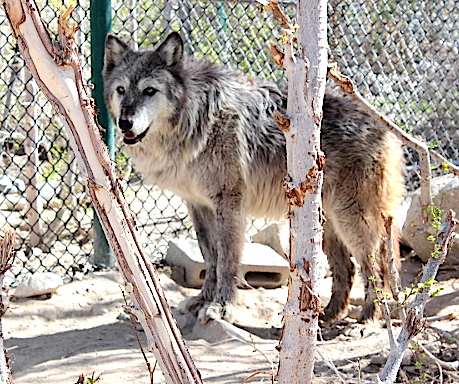
I recently took a drive to the Mojave Desert town of Lucerne to spend a few hours at Wolf Mountain Sanctuary, a 501c3 nonprofit organization founded in 1976 by Tonya Littlewolf.
Many wolves call this sanctuary home, and while I finally heard the haunting song of the wolf, the whole experience could only be described as sad.
Why sad?
Sad because these magnificent creatures NEED to be rescued.
Sad that humans think they have the right to try and make pets out of these wild animals. (Not gonna work.)
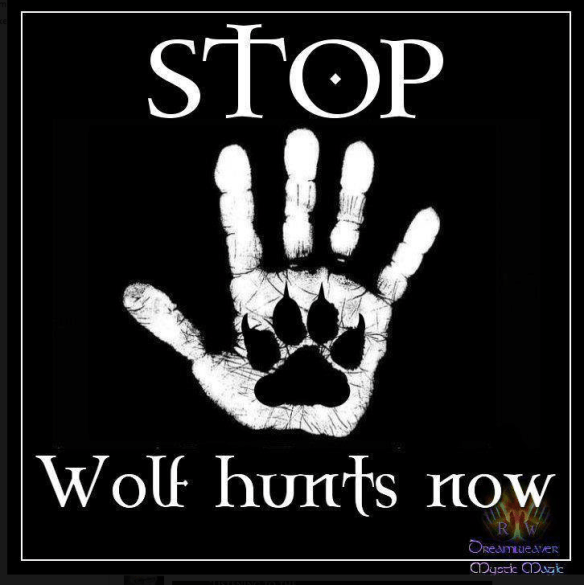
Sad that the wolves can’t roam free, sad they’re hunted, tortured, hated, vilified.
Wolves are among the most intelligent species.
HOW DARE WE DESTROY THEM.
Wolf Mountain Sanctuary
So yes. Sad. Very sad.
From Wolf Mountain Sanctuary website…all volunteer educational organization dedicated to the preservation, protection, and proper management of wolves in the wild and in captivity. We are a forever home for all of the wolves we rescue. We rescue wolves from the movie industry, private owners, and from breeders. The impression a 180 pound wolf leaves on you is everlasting. To look into their knowing, wise, amber colored eyes is a moving, spiritual experience. When you look into the eyes of a wolf, you see your soul…
“We have doomed the Wolf not for what it is, but for what we have deliberately and mistakenly perceived it to be..the mythologized epitome of a savage, ruthless killer..which is, in reality no more than a reflexed images of ourself.” Farley Mowat
Wolf Mountain Sanctuary
Denali (Deh-Nah-Lee) (“Great One” or “Highest Mountain”) was one of two pups born in the wilds of Alaska. He was rescued from the wolf-killing that was taking place in that state, both by private citizens and government agencies.
He’s a beautiful wolf with a golden sand coat. Denali’s personality is very sweet, curious, and friendly.
The wolves at Wolf Mountain Sanctuary seem to be well cared for and healthy.
When I met this handsome guy, Holan, he immediately jumped up, put his front paws on my shoulders, and licked my face. See my joy? This is the smile of someone who loves wolves.
Wolf Mountain Sanctuary
“The wolf is neither man’s competitor nor his enemy. He is a fellow creature with whom the earth must be shared.” L. David Mech
Look at him. The eyes. Amazing.
Wolf Mountain Sanctuary
Wolf Mountain Sanctuary
“Throughout the centuries we have projected on to the wolf the qualities we most despise and fear in ourselves.” Barry Lopez
Wolf Mountain Sanctuary
“Inescapably, the realization was being borne in upon my preconditioned mind that the centuries-old and universally accepted human concept of wolf character was a palpable lie. On three separate occasions in less than a week I had been completely at the mercy of these “savage killers”; but far from attempting to tear me limb from limb, they had displayed a restraint verging on contempt, even when I invaded their home and appeared to be posing a direct threat to the young pups.” Farley Mowat, Never Cry Wolf
WHY SAVE THE WOLF? Look at them: they are so noble, so beautiful. The wolf, as well as other endangered species, are ecological indicators. It is by studying these species and learning how to preserve them that we learn the main factors affecting our environment.
Perhaps in so doing, we will learn undiscovered ways to benefit mankind!
Unfortunately, there are those who deny the wolf’s place in the ecosystem. Wolves are gunned down from airplanes and snowmobiles (which some consider “sport”). Sometimes the fur is taken; however, more often than not, the animal is simply left to decay.
The wolf is poisoned “en masse,” trapped by leg-hold traps, used as adornments for the idle rich.
Today, the wolf’s range is limited to Alaska, Canada, the upper Midwest, and in Yellowstone National Park. Some of the YNP wolves have traveled into adjoining states, which allow hunters to kill wolves on sight and for little to no reason. In the 1930’s, there were approximately 50,000 wolves roaming the North American continent. By the 1940’s, that number had been decreased to 1,000. Today, mostly because of conservation efforts, there are approximately 3,000 wild wolves on the entire continent. They have made a small comeback, but because of the recent delisted from the Endangered Species Act, wolves are once again under attack.
Wolf lovers need to band together and do all we can to help them. TIME IS RUNNING OUT!
Only you can save the wolf from extinction. Proper management procedures must be put into action.
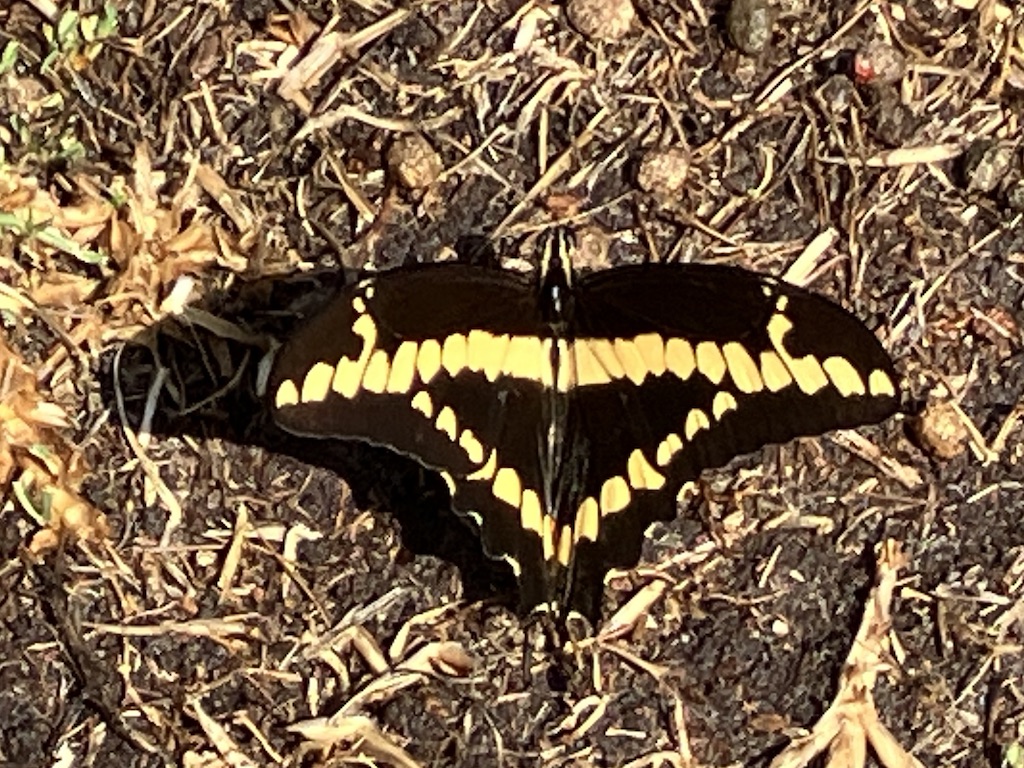
This giant followed me around the garden all afternoon. I’ve never seen this particular butterfly before, but I think he was attracted by my solar powered pond fountain, and that makes me very happy.
The Western Giant Swallowtail wingspan is about 5.5 to 7.4 inches, depending on gender.
I took a lot of great photos with my Canon but was disappointed to have some kind of error message with the SD card, so I can’t share those more pristine images.
The swallowtail butterfly is believed to represent transformation and embodiment of souls who have crossed over to the spiritual realm. It has also long been an animal that symbolizes joy, freedom, and honour of the soul.
Additionally, in many cultures, the swallowtail butterfly is believed to be a messenger of pleasant news and luck.
I don’t really know what possessed me to look out my bedroom window at 8pm last night, but I’m glad I did because I was able to meet my new garden visitor, Pepe LePew!
I took this not great photo through the window because I didn’t want to scare my new skunk friend. He strolled through the lawn, dug some grubs out of the soil, and was generally a kind and considerate guest.
Best of all, he’s now joining the other predators like my bobcat, coyote, hawk, owl, possum, and the occasional roadrunner to de-rat my backyard. Even raccoons feast on rats now and again, so I hope my animal family enjoy all they find. I’m exceedingly grateful for their efforts!
The spiritual meaning of seeing a skunk is often associated with self-awareness, introspection, boundaries, and self-respect. Skunks are known for their ability to protect themselves with their strong scent when threatened, symbolizing self-defense and independence.
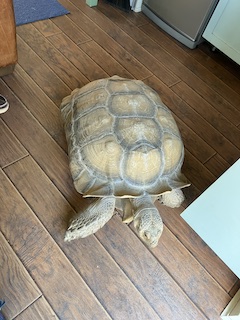
This is a friend’s land tortoise who likes to make himself at home in their living room. They’ve had him for a couple of decades and he follows me around when I wear pink or red. He must think I look like a hibiscus flower, his favorite snack.
Don’t know who did this, but it’s a cute fire hydrant, all dressed up.
I tried to get closer to this white egret, but he flew away…








 Enchanted Seashells | Princess Rosebud