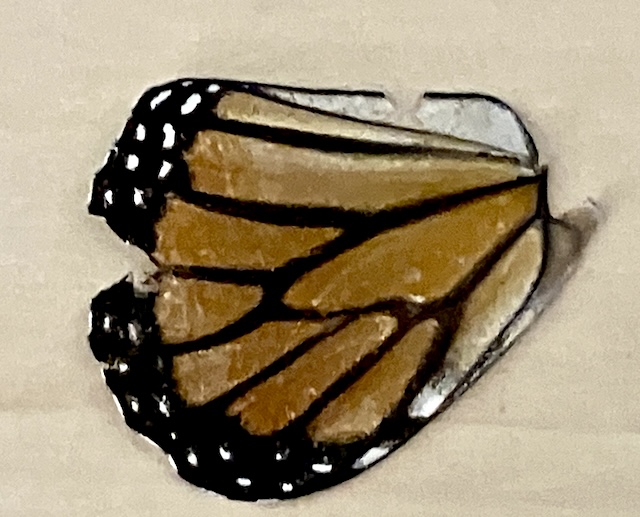
In the corner of the garden close to the back gate, I found a wing that belonged to a Monarch butterfly. Poor tattered little one, colors dull and listless; I carefully picked her up to bring inside the house to spend eternity resting in a pretty box of similar treasures.
Photo by Enchanted Seashells
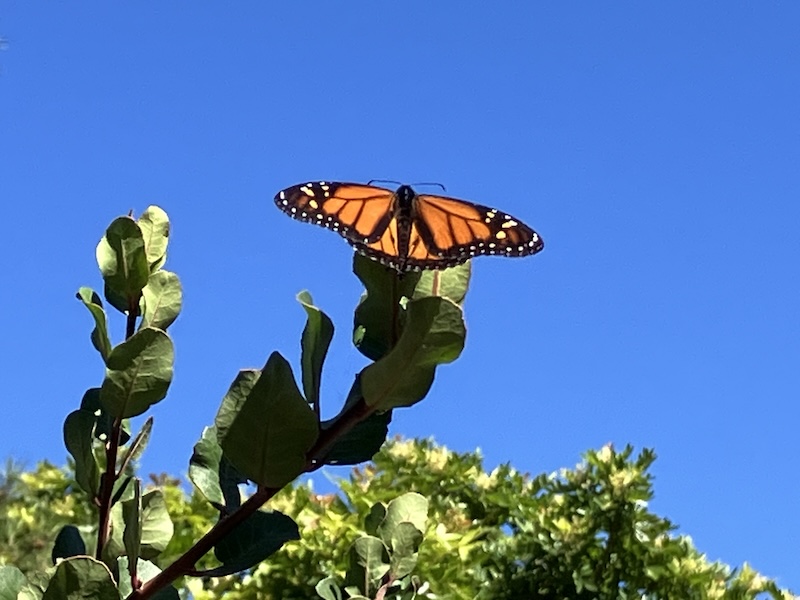
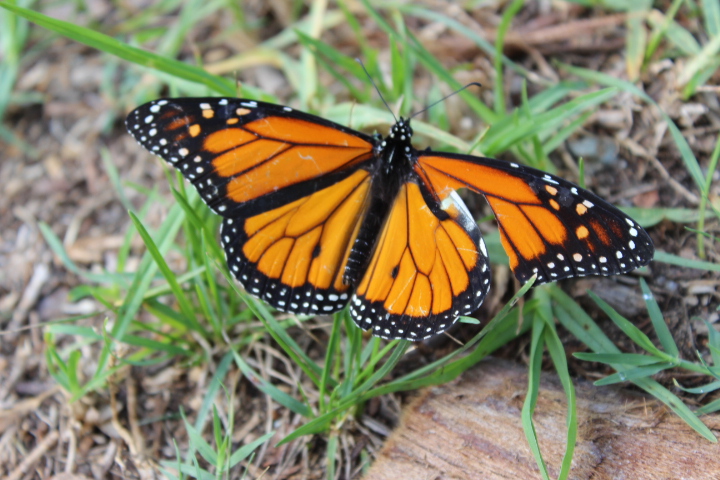
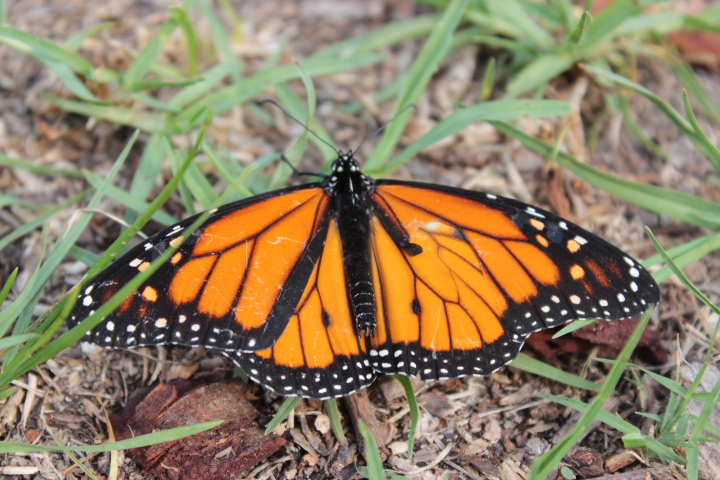
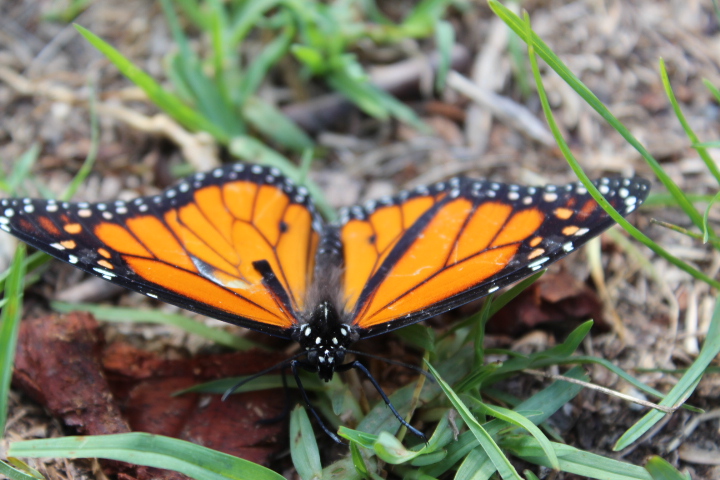
When I went back outside to finish a yard clean-up project, I had a visitor — this magnificent Monarch who stayed still long enough to spread her wings for a picture, vibrant and alive:
Photo by Enchanted Seashells
It’s a blueblue sky circle of life day here in SoCal.
Confession: I’m a hoarder, not crazy enough to be featured on an episode of that TV show, but I really, really hate to throw things away and I love to acquire STUFF.
For example, I have a lovely collection of empty boxes because YOU NEVER KNOW when you’re going to need one, right?
I don’t know if this is true where you live, but here, there’s a local group that gives all kinds of things away FOR FREE, which is total crack for a hoarder. Did I mention that it’s FREE?
They give away everything from furniture to clothing to toys to appliances. In many cases, the gifted items are valuable, like the cashmere scarf I received, also a set of Russian lacquerware.
Since I joined the group, my ratio of receiving to gifting is about 90 to 10. It’s REALLY difficult for me to relinquish anything because, exactly like those boxes, what if I want or need it again some day in the future? But I do and have posted items, especially things the kids no longer need; highchairs, baby clothes, stuff like that.
It’s equally difficult for me to not bring home everything that’s offered because I like to think I’m rescuing whatever it is from being discarded. I often initiate a conversation with myself (not out loud, IN MY HEAD) about whether I reallyreallyreally NEED what’s offered, or if can I live without it. Most of the time, I’m rational haha, but not always. (The very act of talking to myself sounds kinda crazy if I think about it.)
I’ve brought home lots of plants, planter pots, and other garden items, little boxes similar to what I already collect, a giant dollhouse for the Angel Kids; also toys and even bicycles for them.
Recently, we re-gifted the dollhouse. The Angel Kids and I had a discussion about the future of it. They both said they had enjoyed playing with the house but it was time to give to a new home and other children, so I did, with their blessing.
This time, someone was giving away milkweed seedlings SHE had rescued from our local community garden. Another gardener was going to toss them out, but she saved them and transplanted into little cups.
Photo by EnchantedSeashells
This kind woman posted on the site that she had plenty to share and I responded. There were enough for multiple people which is great because we all care about helping butterflies.
Photo by EnchantedSeashells
The woman messaged me her address which was literally only about three minutes away and I headed over there.
Here’s the problem: She lives in a new housing complex with a million apartments. Her very detailed map didn’t help me as I get typically become hopelessly lost in similar situations. I drove around and around for a while and couldn’t find the location where the plants were waiting for me at the front door.
As I usually do, I became a bit disoriented when I get lost, and dejected, I drove home. My navigation skills are sorely lacking and I felt incredibly stupid. I messaged her my apologies and reason for not showing up and suggested she choose another person.
Instead of doing that, this woman that I don’t know — a complete stranger — offered to bring the milkweed to me! It was such a kind gesture that it blew my mind.
I gave her my address and she came by a couple hours later with the plants and we had a lovely chat.
With all the horrible news coming out of our nation’s capital, it’s heartwarming and affirming to realize that there are still good people in the world, those who will go out of their way to help a neighbor AND help save butterflies.
Lately, I’ve been acting like Sherlock Holmes in my quirky attempts to capture this elusive Monarch butterfly. It’s like she knowingly teases me–such a coquette–flitting all around but never staying in one place long enough to capture her beauty. “Here I am; oops, now I’m gone. Catch me if you can!”
Yesterday, my patience paid off!
Purely bewitching…
FYI…did you know that the brilliant Leon Russell was the pianist on Bob Lind’s recording of his song,Elusive Butterfly? It’s TRUE, Leon was everywhere with his musical genius.
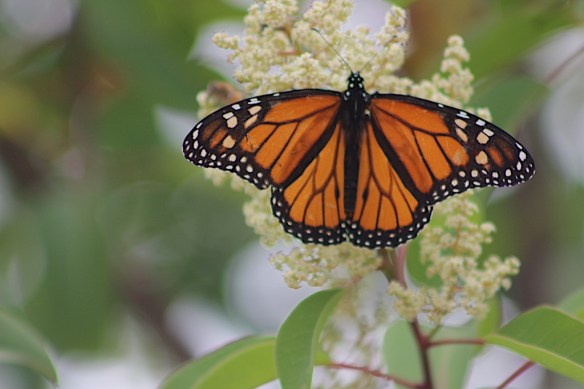
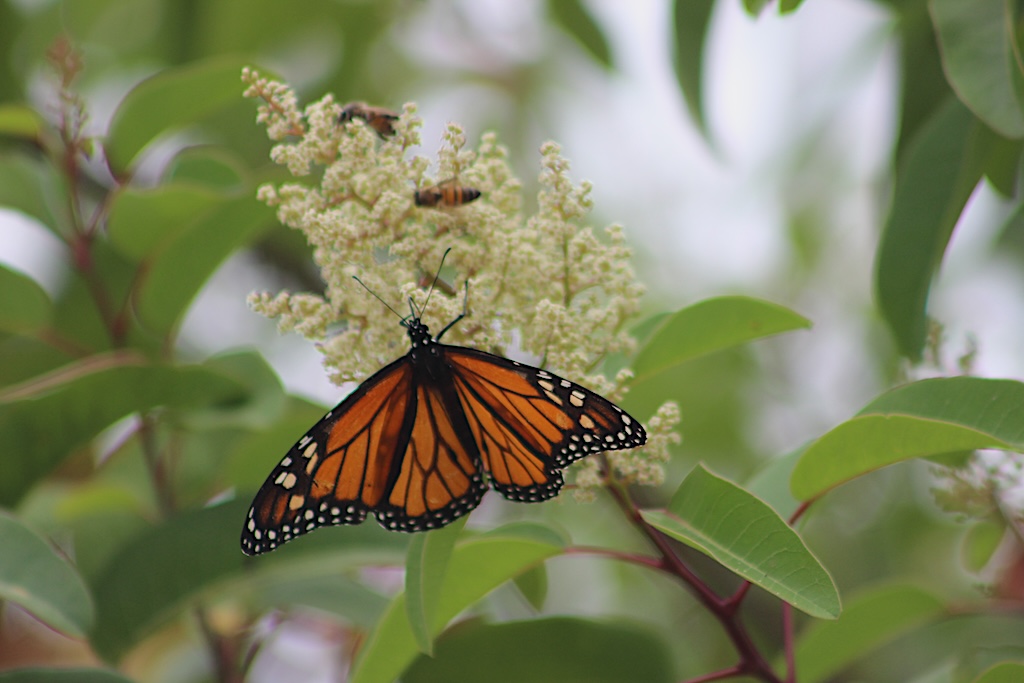
Here’s she is, in all her glory on the flowering California native sumac, joined by a couple of friendly bees:
I helped this monarch butterfly escape from being trapped in the fence and she flew away unharmed.
Photo credit Enchanted Seashells
And just when the darkness
became too much to bear
and the struggle too hard,
the light broke through
and the caterpillar emerged
a butterfly
delicate but unbroken,
wild and gentle,
finally free to spread its lovely wings
and fly away on the wind. --L.R. Knost
Last year I attended the first ever North County Monarch Butterfly Festival. I’m glad to learn that it’s coming back again this Mother’s Day weekend.
The Festival highlights all aspects of the Monarch universe, from monarch-inspired arts and crafts to jewelry, clothing, biology, pollinator gardening, milkweed and nectar plant propagation and cultivating. Join discussions and presentations on a wide range of subjects, such as conservation and butterfly migration, habitat restoration and creation; talks on diseases and predators to gardening with native plants. It’s a great event for families with children’s activities and seed exchanges. (Event link below.)
In my garden, I thought my milkweed plants had died, but they miraculously returned and are doing well.
Planting milkweed is one of the easiest ways that each of us can make a difference for the Monarch. There are more than one hundred species of this wildflower native to North America. Here are just a dozen:
I did a lot of “B” things today all before noon, which leaves me the rest of the day to enjoy in the garden.
First of all, I went to a butterfly festival. I mean, how could I NOT, right?
It was the North County Monarch Butterfly Festival in San Marcos, which isn’t too terribly far from me, but it’s inland and since we’re having a heatwave, I thought I’d go early. It was 95 degrees at 10:00 a.m. That’s HOT!
The North County Monarch Butterfly Festival featured butterfly-inspired art, crafts, clothing, gardening, live music, and food. I really wish the kids were here because it was the perfect fun and educational event for children.
Here’s what the event website had to say: The fate of the iconic Western monarch butterfly is tied inextricably to the health of the planet, and that means our fate as human beings is informed by the same forces that impact the monarchs. Simply put, if monarch butterflies thrive, so do we, along with all of the other inhabitants of the monarch universe; conversely, if the monarchs can’t thrive in this universe, then human beings can’t either.
This event – hopefully the first of many – will feature any and all aspects of the monarch universe, from monarch-inspired arts and crafts to jewelry, clothing, biology, pollinator gardening, milkweed and nectar plant propagation and cultivating, to discussions and presentations on a wide range of subjects, from conservation and migration to habitat restoration and creation, from diseases and predators to native plants vs tropical, from children’s activities to seed exchange.
I held a snake too, from the San Diego Herpetological Society, the same organization that helped me identify that Great Basin lizard that visited for a while last year. I’m not 100% sure what snakes and lizards have to do with butterflies, but me and all the other children loved it. The snake’s name is Matt. Isn’t he handsome?
All kinds of milkweed; I purchased the native variety. I also got a variety of milkweed called Hairy Balls, again, how could I NOT? Gomphocarpus physocarpus, commonly known as hairy balls, is a species of milkweed native to southeast Africa, but it has been widely naturalized. It is often used as an ornamental plant.
After that I drove back to the coast where it was noticeably cooler and stopped by the Bans Off Our Bodies rally gathering at our local train station. I was happy to see an awesome and exuberant crowd of like-minded folks while I took a few photos.
Bans Off Our Bodies
Blocks and blocks of people all the way to the beach! This is in front of Spin Records.
It was around noon. I was in the garden, watering because it’s uncomfortably hot here in SoCal. Not as bad as Paris, cos there’s still a bit of an ocean breeze, but HOT.
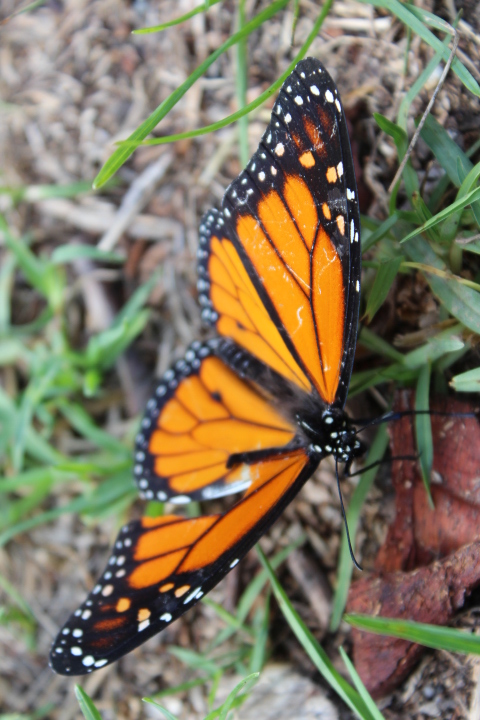
A pretty orange and black spotted Monarch butterfly began to follow the spray of water from the hose, and she and I had a little chat.
Well, she listened while I talked to her.
“Hey, pretty girl, are you thirsty?”
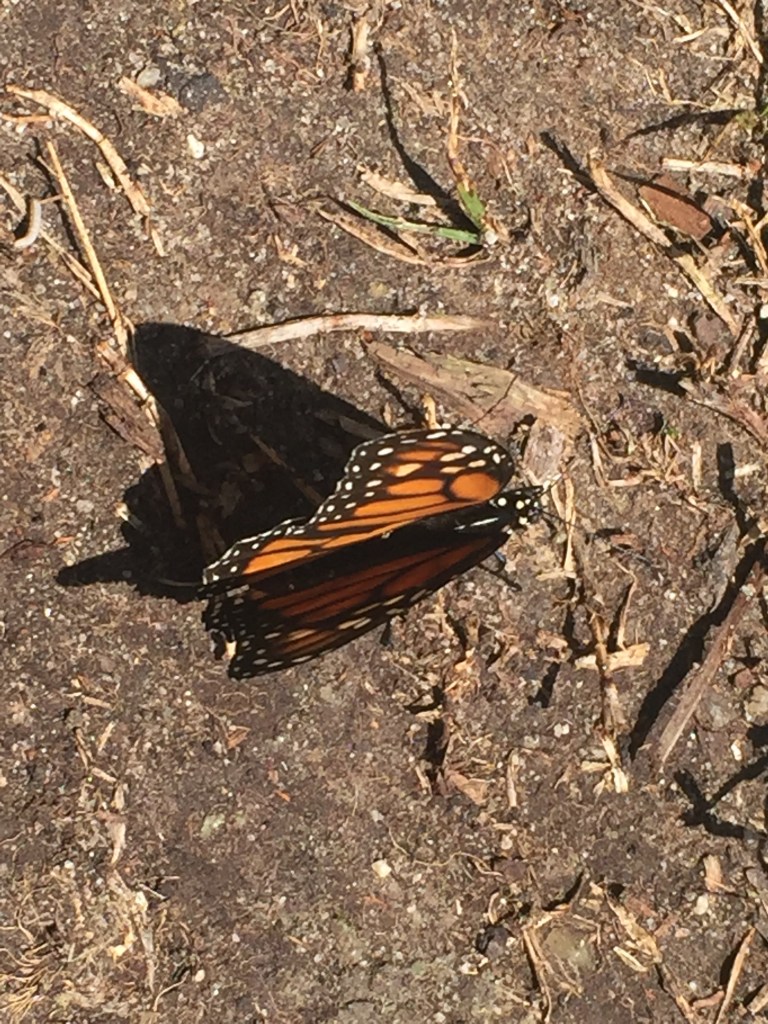
By way of response, she floated to the ground and folded up her wings like a beautiful fan. Or like pressed together hands in namaste.
“Are you OK?”“Are you injured anywhere?” At the same time I wondered how in the world I could take a butterfly to the emergency vet.
I turned off the water and crouched down to get a closer look.
“What do you need? Are you having a little rest?”
Again, no response, but I inched closer and slowly sat down, hardly daring to breathe.
We stayed that way for a moment or two, each of us motionless.
“Can I touch you?” I asked. “I won’t hurt your wings, I promise.”
(By the way, the powder on the wings of a butterfly or moth is actually tiny scales made from modified hairs, and it doesn’t actually damage them if they’re touched.)
Ever so tentatively I reached out my right hand and ever so gently touched the charcoal gray folded up underside of her fan wings, and then I simply sat still as a statue.
After a few seconds in which time stopped, she opened her wings once, twice, three times, and then lifted off the ground and fluttered away.
Thank you” I whispered, and held my heart to keep the love from spilling out.
It was nothing short of an amazing encounter, don’t you agree? One of my most enchanting and enchanted days.
Perhaps it’s because this is the first day of autumn that coincides with my Angel Boy’s half birthday (we always celebrate) or because he really has left the nest for real this time with his first tenure track professorship (at least on the west coast so we’re closer) but I’m feeling a sense of change along with the the season.
Even in SoCal the weather will eventually morph into a winter of sorts and maybe that’s why this butterfly was in a weakened condition, because there’s no way to tell how the injury occurred, but she was flying around me and then came to rest on the lawn right next to my new raised bed where I was playing around with the sand dolllars from yesterday’s post.
How do you help an injured butterfly? Can I pick her up and take her to the vet? Can you superglue the torn wing? (I don’t think so) but her ability to still lift off and float on the breeze made me think of her metaphorically.
In fact, it’s a day full of metaphors with my son flying off and away (literally on an airplane as I’m typing this) to become a fully fledged adult with a grown up job and a boatload of responsibility.
SIGH.
But then this butterfly visited me and I’m trying to decipher her deeper message, although maybe a butterfly is just a butterfly.
I do know that even though her wing was damaged, she didn’t give up; she was resilient.
Maybe she just needed a safe place to rest and heal.
And just like that, she flew away, carried off by the balmy breezes of another SoCal heat wave. And thanks to a smarter blogger than me who writes over at https://pacificparatrooper.wordpress.com/ (you need to follow him!) his brilliant comment referenced the “butterfly effect. According to Wiki, it’s a popular hypothetical example of chaos theory which illustrates how small initial differences may lead to large unforeseen consequences over time.
And he doesn’t know it, but this is SO TRUE. As I keep saying, all will be revealed…
Stay safe, my friends, and Happy Autumnal Equinox to everyone!
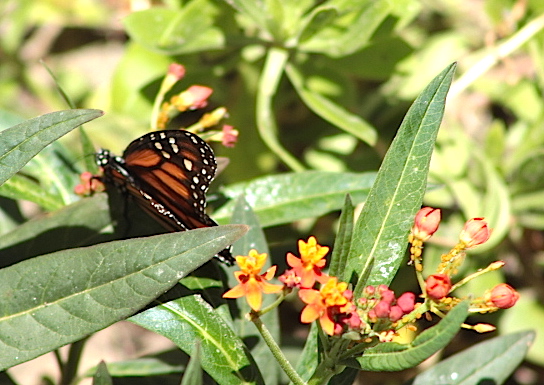
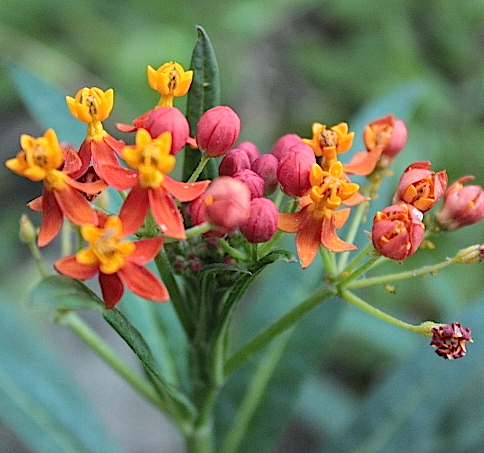
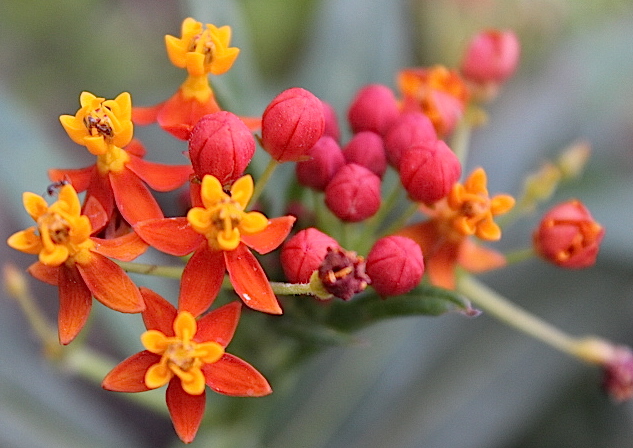
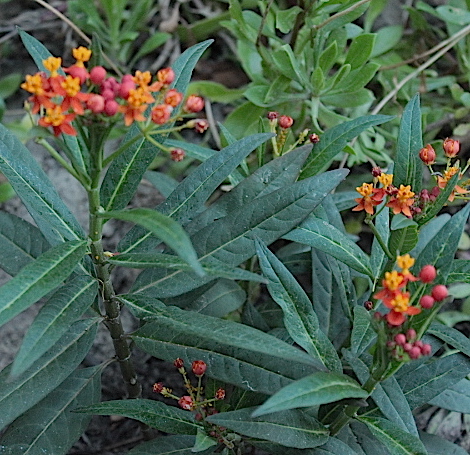
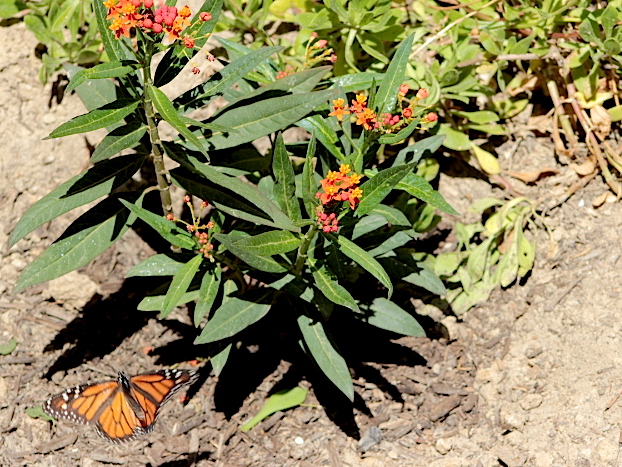
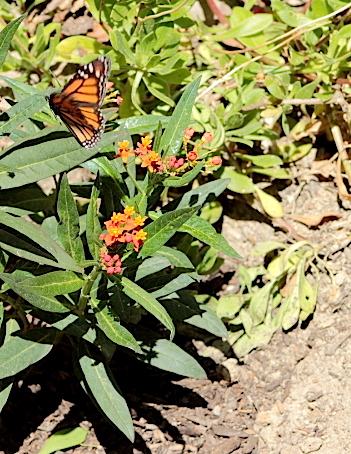
The motherly milkweed provides sustenance to the Monarch butterfly and is crucial to sustain the species.
Everyone who loves butterflies should plant milkweed and since NObody doesn’t love butterflies, there should be enough milkweed planted to sustain the entire cosmos.To clarify, I’m not referring to the plural of one my fave cocktails, but the cosmos of our universe.
According to Monarch Joint Venture…
Monarchs cannot survive without milkweed; their caterpillars only eat milkweed plants (Asclepias spp.), and monarch butterflies need milkweed to lay their eggs. With shifting land management practices, we have lost much milkweed from the landscape.
Please plant milkweed to support monarch populations, and their incredible migration!
Planting milkweed is a great way to help other pollinators too, as they provide valuable nectar resources to a diverse suite of bees and butterflies.



 The view from my kitchen window in the early morning light.



 Enchanted Seashells | Princess Rosebud