Monkey? Owl? Monkey Owl?

What in the world did I just hear?

It was a warm night and the patio doors were open…

I’m used to hearing coyotes and the occasional hoot of a pair of Great Horned Owls that live in the ‘hood, but last night I heard what could only be described as a MONKEY — but that’s crazy, right?

I turned off the TV, grabbed my phone, and pointed it outside.

You can hear it too, the monkey sounds in tandem with very faint owl hoots. The hoots didn’t get picked up as I was recording though the screen door, so you might not catch it. Definitely turn up the volume.

I did some research: What is a bird that sounds like a monkey — and thanks to the brilliance of Google, a zillion results popped up.

It turns out that I might have been lucky enough to hear a Barred Owl, which is more rare here. Or it’s another vocalization from the Great Horned Owl, one I’ve never before heard.

Barred Owls are huge, between 16 to 25 inches long, with a broad wingspan of up to 60 inches. Since I’m five feet tall, I cannot even fathom that.

Whoever it was, I’m overjoyed! It’s one more animal friend helping to rid my garden of disease-ridden rodents. Bon apetit!

Apologies again for the crappy video, as this was my screen door and I couldn’t turn off the flash because I didn’t want to mess around and lose the capture.

So what is it? Monkey? Owl? Monkey Owl? Or something else?

Colorful Coyote

I hardly ever see my backyard friends during the day so this was a huge surprise, even more so because I was actually outside at the time.

I have no idea how I missed observing this beauty in real time, but it was such a treat to check the camera and discover my silent visitor up on the hill.

Isn’t his coloring beyond beautiful? I can’t wait to see him again…

Melancholy September

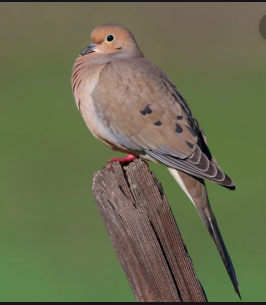
The mournful song of my little dove reminded me of a poem by Becky Hemsley.

She walked along the pathway
And she hadn’t walked for long
When she met a little bird
Who sang a melancholy song
She listened for a moment
To his sad, enchanting sound
And she asked him why he sang his song
When no-one was around
“I sing to tell the forest
That the day has just begun
And I join the morning chorus
As we’re welcoming the sun
I sing so all the other birds
Will know they’re not alone
And I hum to all the trees
To help their leaves and branches grow
I sing for all the creatures
As they go about their day
And I whistle warnings to the sky
That clouds are on their way”
But why,” she asked him gently
“Is your song so bittersweet?
Why does it sound like longing
And like yearning when you tweet?”
“I sing to feel less lonely,”
Said the tiny, little bird
“And I tweet into the quiet
Just so I can feel heard
For when the sun is busy,
When the other birds have flown,
When the trees are climbing skyward
Then I’m left here on my own
And I sing to ask the questions
That are tearing through my mind
But I don’t know what I fear the most
Silence… or the reply”

Becky Hemsley

RIP Lolita

Heaving mountain in the sea,
Whale, I heard you
Grieving.
Great whale crying for your life,
Crying for your kind…

Song of the Whale — Kit Wright

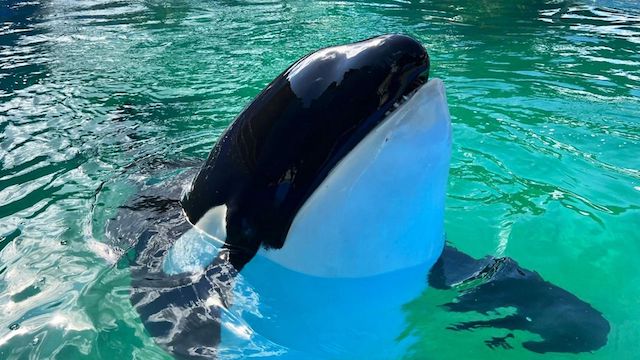
The last surviving orca of the infamous Penn Cove captures of 1970 is dead.

Lolita is dead. In my opinion, she was murdered; a long, slow, painful death.

When will humans stop abusing other living creatures for MONEY?

The blood is on your hands, Miami Seaquarium.

Earlier this year, the Seaquarium announced plans to return Lolita back to the the waters of the Pacific where she could spend her final days. The decision came after years of pressure from animal rights groups to allow the aging orca to spend her final days swimming freely in her natural habitat.

But months later, Lolita remained at the aquarium. The Dolphin Company, which owns
the Seaquarium,  said that the orca would be relocated sometime between October 2024 and April 2025. (NPR)

I can’t even verbalize how angry I am at the humans who did this to Lolita. She was so close to finally being reunited with her family and experiencing freedom.

What makes me even more outraged are the ignorant comments on the aquarium’s website, thanking them for “loving” this orca, and how beautiful it was to see her. IT WAS NOT BEAUTIFUL. It was a total and complete travesty. So very wrong.

Lolita (also known as Tokitae), the most famous orca in captivity, and the subject of a decades-long, global movement to retire her to a seaside sanctuary, has died at Miami Seaquarium. While reports of her deteriorating health have peppered the media over the last several months, this is no easy news to accept.

The Seaquarium stated that during the past two days, Lolita “…started exhibiting serious signs of discomfort.” The aquarium went on to say that while her medical team began treating her condition, “…she passed away Friday afternoon from what is believed to be a renal condition.”

“There is something inherently obscene about a magnificent creature such as Lolita dying in a concrete STADIUM. This is going to continue until people stop buying tickets. There is no other way.” ~ Ric O’Barry, Founder/Director of Dolphin Project

On August 8, 1970 at approximately four years old, Lolita was captured from the waters of Penn Cove, in the state of Washington. It was a violent capture, where five whales drowned, including four babies. This young member of the L pod of the Southern Resident killer whales was sold to Miami Seaquarium, a marine park located on Biscayne Bay, in Miami, Florida for $20,000 and in the following month, was shipped across the country to her new home.

Her “home” would be a concrete tank, known as the “Whale Bowl”. Another orca at the facility, Hugo, would eventually be moved into the tank alongside Lolita, where they performed their daily routines. For ten years, the two orcas shared the Seaquarium’s spotlight. Despite mating, no offspring was produced.
(Curated from dolphinproject.com)

While Lolita may never experience the freedom she deserved, her legacy will continue to inspire us to push for a world where animals are treated with compassion and respect. Her story will forever remind us of the urgent need to protect our oceans and the magnificent creatures that call them home.https://www.savelolita.org/

There isn’t one single word to describe the unspeakable wrongs that were done to Lolita for fifty years, but I can think of a few…repugnant, vile, abusive.

Lolita should be swimming with her family in Puget Sound. On behalf of the human race, I’m so very sorry.
Respect, Honor, and Ask For Permission

This seems like a positive life goal — to be compassionate and tender-hearted toward the entire living world around us.

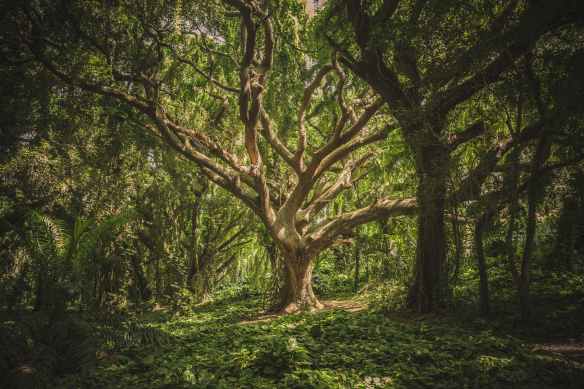
Photo by veeterzy on Pexels.com

Ask permission…

Before cutting the branch of a tree or removing a flower, tell the spirit of the tree or plant what you are going to do, so that they can withdraw their energy from that place and not feel the cut so strong.

When you go to nature and want to take a stone that was in the river, ask the river keeper if he allows you to take one of his sacred stones.

Honor…

If you have to climb a mountain or make a pilgrimage through the jungle, ask permission from the spirits and guardians of the place. It is very important that you communicate even if you do not feel, do not listen or do not see. Enter with respect to each place, since Nature listens to you, sees you and feels you.

Every movement you make in the microcosm generates a great impact on the macrocosm.

Respect…

Honor life in its many forms and be aware that each being is fulfilling its purpose, nothing was created to fill spaces, everything and everyone is here remembering our mission, remembering who we are and awakening from the sacred dream to return home. Repost from @Sharyl WhiteHawk

Tree connection…

Find a tree that calls to you. As you approach the tree, remember that it is a living, breathing energy. Ask if you may sit with it. You may hear a rustling of the leaves or hear a voice in your head or feel a slight wind brush across you granting permission. Many cultures believe that the shadow of the tree is a portal or entry point into the tree’s realm. Let your intuition guide you in this matter.

Sit with some part of your body touching the tree’s skin, the bark, with your own. Feel your heartbeat as it blends with that of the tree. You may feel the rushing of the sap through the veins of the tree. Match it with the blood flowing in your own veins. 

Allow your roots to ground into the earth with the tree’s roots. Reach your arms into the sky as the tree’s branches are reaching. Breathe this experience.

You may wish to just relish this connection or you may have a question or some guidance you are seeking. Allow the tree to respond to you in its own way, staying open to the limitless possibilities of this connection.

You may also wish to commune with the tree’s spirit or the faeries that live in or around this precious being. Also be mindful of the animals and birds that interact with this tree while you are there. Perhaps they have a message for you as well.

When you feel complete, thank the tree for sharing its wisdom and ask if you may hug it. There is nothing quite like tree hugging.
https://www.vibranttreeministry.com/tree-connection.html

Be The Wild One

Be the wild one, my friends.

And, she
Be the wild one
That wanders the woods
Wanting for silence
But for, the song of the birds

Photo credit to Enchanted Seashells
A little poem by Athey Thompson
Taken from A Little Pocket Book of Poems by Athey Thompson

Bigger IS Better…Western Giant Swallowtail

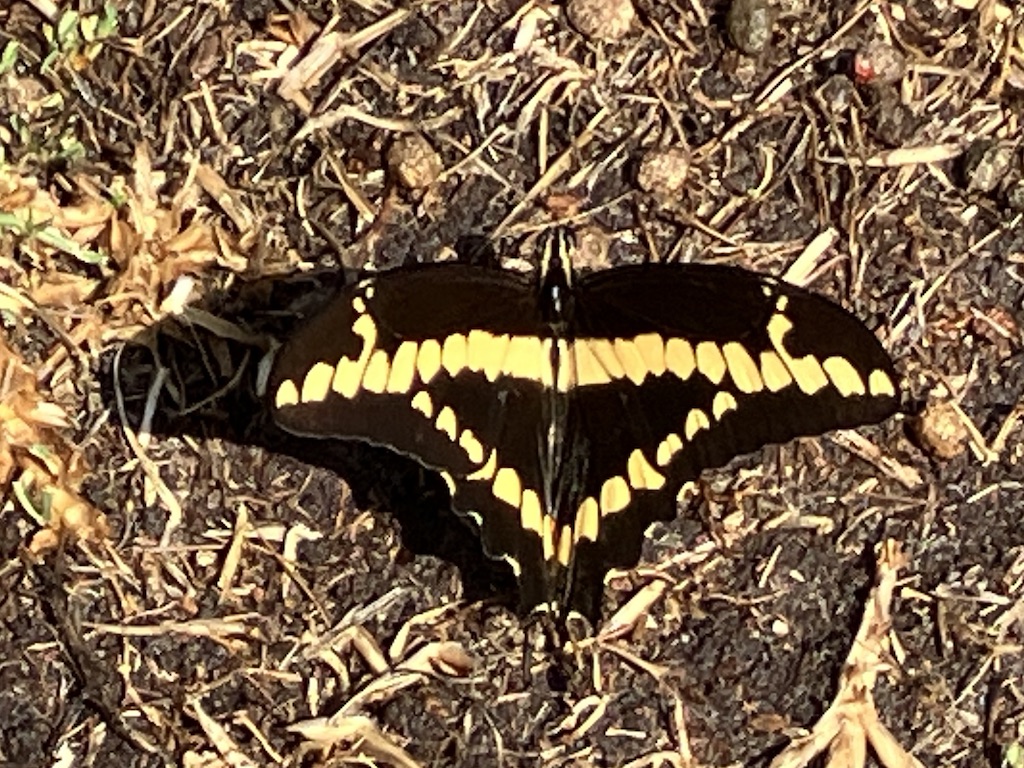
This giant followed me around the garden all afternoon. I’ve never seen this particular butterfly before, but I think he was attracted by my solar powered pond fountain, and that makes me very happy.

The Western Giant Swallowtail wingspan is about 5.5 to 7.4 inches, depending on gender.

I took a lot of great photos with my Canon but was disappointed to have some kind of error message with the SD card, so I can’t share those more pristine images.

The swallowtail butterfly is believed to represent transformation and embodiment of souls who have crossed over to the spiritual realm. It has also long been an animal that symbolizes joy, freedom, and honour of the soul.

Additionally, in many cultures, the swallowtail butterfly is believed to be a messenger of pleasant news and luck.

Curated from https://spiritualdesk.com/swallowtail-butterfly-spiritual-meaning/

Death Valley is HOT

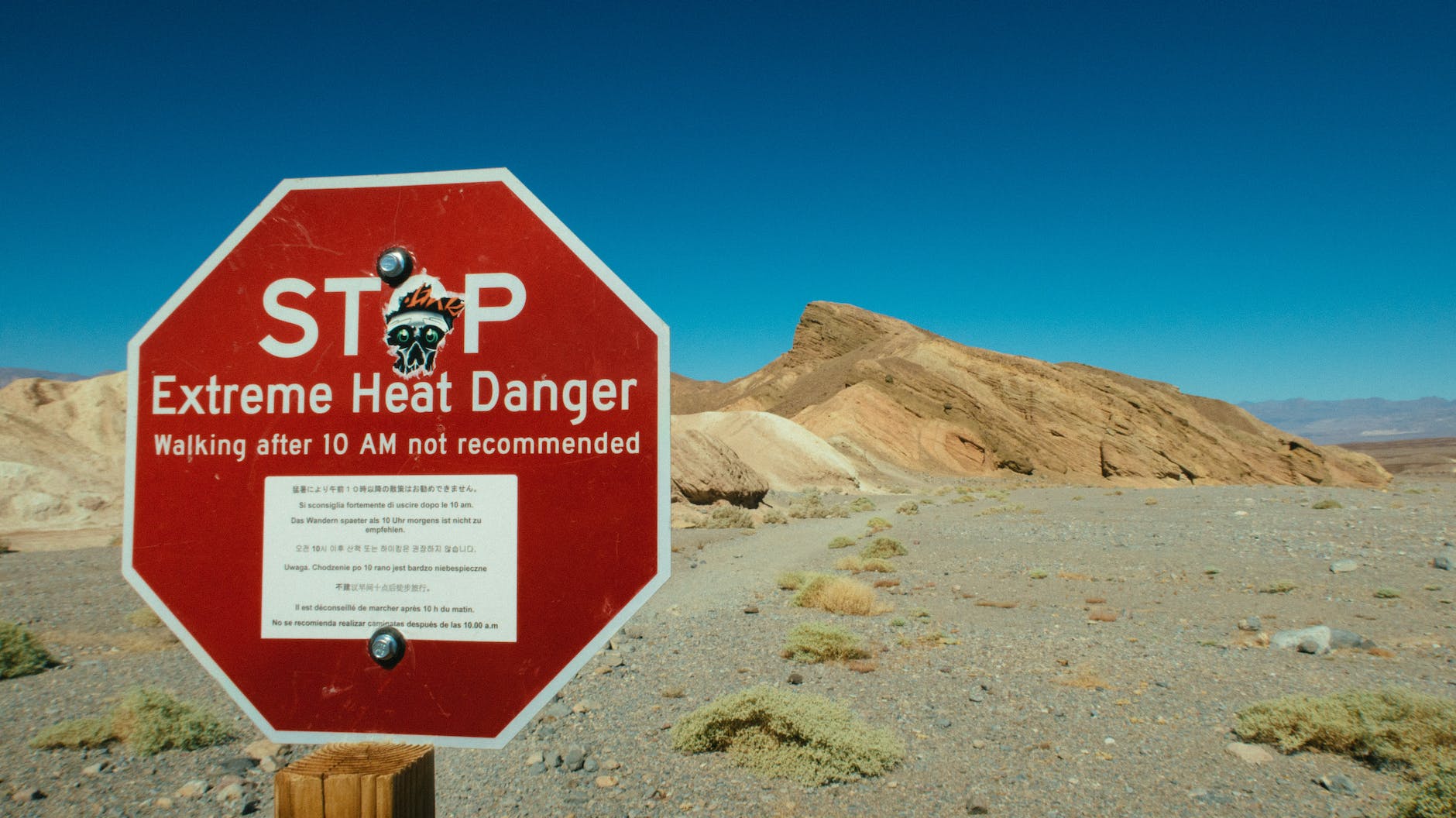
Photo by Athena on Pexels.com

Right now, visitors are flocking to Death Valley National Park to experience the forecasted EXTREME heat.

Death Valley is projected to set a verified world record for the hottest temperature ever reliably recorded, with Furnace Creek expected to reach 131 degrees with a low temperature at night of 101 degrees.

I’ve been to Death Valley a few times. It’s an otherworldly and mysterious experience. It’s a whole mind/body connection, the kind of heat that permeates down to a soulful, cellular level. Along with the magnificent silence, there’s really nothing to compare to desert heat.

Ten thousand years ago, Badwater Basin, the lowest point in North America, was once a hundred-mile long lake. It’s now a vast expanse of salty ground.

When you visit Death Vally, make sure you stop at Artists Palette, a technicolor, kaleidoscopic display of multicolored rock in that makes you feel you’re at an art exhibit.

Of course, as with the rest of our country, there were Indigenous People here before us.

The Timbisha Shoshone Indians lived there for centuries before the first white man entered the valley. They hunted and followed seasonal migrations to harvest pinyon pine nuts and mesquite beans. To them, the land provided everything they needed and many areas were, and are, considered to be sacred places.

I always thank the first people when I camp or hike, no matter where I am.

The shamanic ground markings of Death Valley tend to be found in the more remote parts of this already remote region – probably the reason why any trace of them survives at all. They are ritual and magical features left by long-ago shamans, probably of the ancestral Pima and Shoshone peoples, and they are fragile, so much so that their precise locations are not advertised.

They take various forms – ritual pathways, shrines, vision quest beds, scraped ground markings, strange sinuous lines, and weird patterns of rocks.

Vision quest beds are remote, subtly-marked locations where an Indian brave or shaman would go to spend a solitary vigil seeking a vision – a personal spiritual gift. He would go without food or sleep for perhaps three or four days and nights until the vision came. If it came at all, it would most commonly be in the form of what we would call an auditory hallucination: he would hear a chant or song.

Ritual pathways are probably the rarest of the shamanic features. a loose group of boulders.

The most enigmatic of all the shamanic relics in the valley are markings etched into the hard, sunbaked ground (‘intaglios’) or laid out with small rocks on the surface of the ground (‘petroforms’). Such features are collectively known as ‘geoglyphs’. Both types in Death Valley mainly show meandering, abstract patterns, but a few seem to depict mythical creatures. (Curated from https://www.ancient-origins.net)

If you make it to Death Valley, no matter what season, take more water than you think you’ll need to stay well hydrated!

What’s Black and White and Adorable?

I don’t really know what possessed me to look out my bedroom window at 8pm last night, but I’m glad I did because I was able to meet my new garden visitor, Pepe LePew!

I took this not great photo through the window because I didn’t want to scare my new skunk friend. He strolled through the lawn, dug some grubs out of the soil, and was generally a kind and considerate guest.

Best of all, he’s now joining the other predators like my bobcat, coyote, hawk, owl, possum, and the occasional roadrunner to de-rat my backyard. Even raccoons feast on rats now and again, so I hope my animal family enjoy all they find. I’m exceedingly grateful for their efforts!

The spiritual meaning of seeing a skunk is often associated with self-awareness, introspection, boundaries, and self-respect. Skunks are known for their ability to protect themselves with their strong scent when threatened, symbolizing self-defense and independence.

Come back soon, Mr. LePew!

OPINION | Ban Fireworks #July4th #IndependenceDay

There’s nothing to celebrate on the #July4th when traditional fireworks cause environmental pollution, scare wildlife, pets, and veterans.

Instead, let’s be smart and kind and use laser light shows. It’s virtually the same experience with zero #cruelty. #BanFireworks#IndependenceDay

Fortunately, a growing number of cities and counties are opting to prohibit fireworks, including recently adopted bans in Portland, Oregon; San Jose, California; Detroit, Michigan; and King County, Washington (home to Seattle).

The Animal Legal Defense Fund advocates in favor of such bans to protect animals and the ecosystems in which they live.

Companion Animals at Risk

Every July like clockwork, news articles and social media posts are published sharing advice for animal guardians about how to keep their companions as safe and calm as possible on the Fourth of July.

And, every July like clockwork, municipal animal shelters fill to the brim with dogs and cats who’ve escaped their homes and yards, becoming lost as they try to flee the sounds, smells, and vibrations of fireworks.

Wildlife Suffer for Fireworks

As for animals in the wild, they face perils of their own as a result of fireworks. “We know what to expect, but wildlife don’t,” the U.S. Fish and Wildlife Service notes, adding that “[t]he abrupt lights and sounds are often seen as a threat by nesting bald eagles and easily startle great blue herons and other colonial nesting birds.”

Additional Problems for Humans and the Environment

Fireworks have environmental and public health impacts that are rarely considered or fully appreciated. They release particulate matter and toxins, adversely affecting air quality. They also pose a serious risk of igniting wildfires, particularly in areas facing dry conditions.

Many humans are also bothered by fireworks, including people with post-traumatic stress disorder, those on the autism spectrum, and others with sensory processing challenges.

https://aldf.org/article/animals-suffer-for-fireworks-more-localities-are-implementing-bans/