African Violets: Tender Loving Care

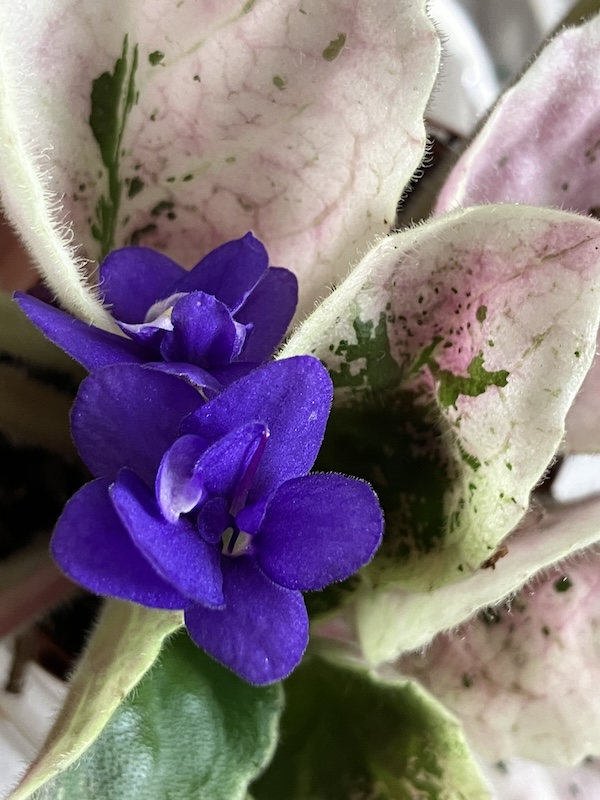
My plant obsession isn’t all about monsteras and fiddle leaf figs, I lovelove African Violets, too.

The African violet symbolizes devotion, faithfulness, and commitment. They’re also supposed to be great for indoor air purification because African violets absorb toxins.

They appear delicate and precious but they’re actually quite hardy and sturdy and not really high maintenance at all, at least not in my opinion. The flowers last for a long time.

Their botanical name is Saintpaulia and they belong to the Gesneriaceae genus. I started propagating my own violets a few years ago. Creating new life gives me a great deal of pleasure, plus it’s pretty easy, so there’s a high success rate.

A couple of my very own babies are flowering. I’m so proud of them!
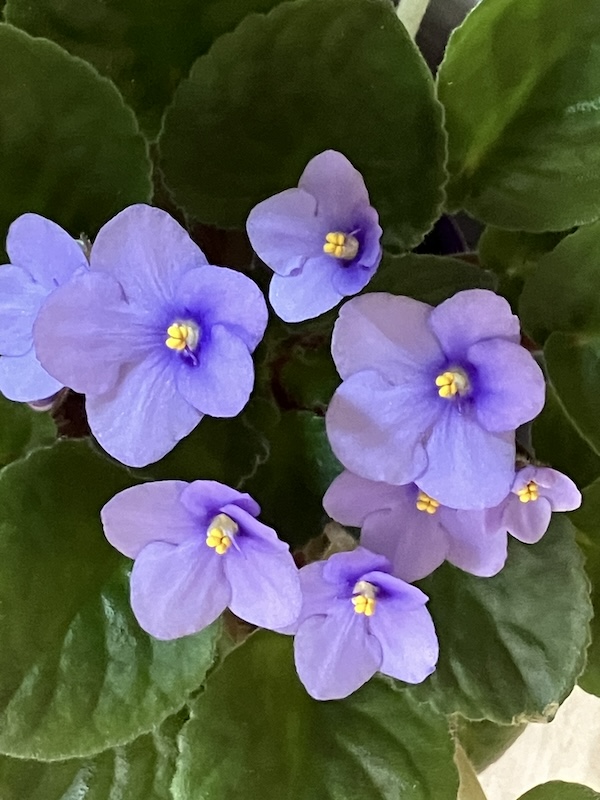
They’re not too finicky or hard to take care of if you follow a few tips:

❀ Don’t water from the top and try not to get the leaves wet.

❀ They love bright, indirect light.

❀ Fertilize about once a month.

❀ Some websites suggest an Epsom salt drench every two weeks to assist flowering.

❀ Remove dead or faded flowers.

❀ They don’t like to be too wet or too dry, I use filtered water because our SoCal tap water is disgusting.

❀ It’s almost funny but the best performing violets are in the smallest pots, much smaller than you’d think for dinner plate sized foliage.

❀ Propagating is simple. The traditional method of propagating violet leaves is to place the stem into water until roots begin to grow. Select a healthy leaf. It doesn’t take very long for roots to form.

Good luck!

To Be So Loved

Meet my boo, my bae, my sweetie:

Every morning he waits for me on the deck by the patio doors. Sometimes I almost trip over him because he’s always underfoot, trailing me from the deck to the garden and back again.

When I first noticed this behavior, I thought he had somehow become stranded on the deck and was asking for help, so I put him him in a box and released him on the grass, but he came right back.

He turns his head back and forth as if he’s listening to me, “Good morning, little guy!” “Is it hot enough for you?” “Here’s a bowl of fresh water in case you’re thirsty.”

At night, he looks through the screen door, but that’s where I draw the line. He’s not coming in, not even if he shows off with a few sets of those lizard-y pushups. #boundaries

One occurrence would be nothing to think about, but this happens daily, so I guess I’m in a relationship now.

I brought him a green hornworm from my tomato plant and he gobbled it up. Since my love language involves feeding and caregiving, that made me happy (and a little grossed out).

Most of my research says that lizards symbolize resurrection and rebirth. In Egyptian hieroglyphics, the symbol of the lizard was representative of plentiful abundance. A lizard in one’s house is often seen to represent an old friend or acquaintance.

Gotta go, my boo just came by for breakfast. 🐛

Phytophile: Word of The Day

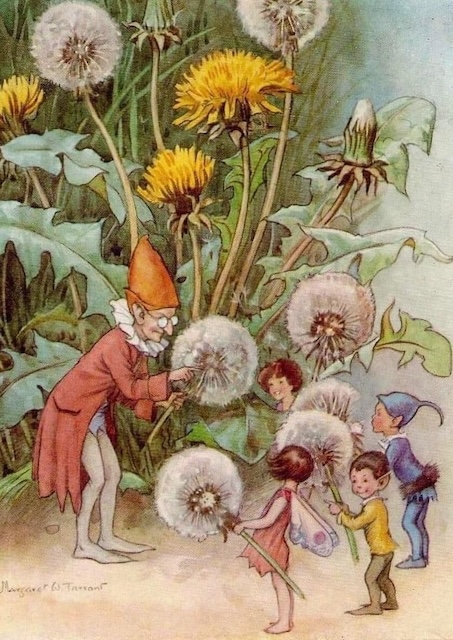
A phytophile is a person who loves plants, and for me, that includes dandelions! Phytophile comes from the Greek words phytòn (plant) and philìa (love or passion).

Last week I rescued a six-foot ficus and a sad little cordyline from the nursery clearance section. They were dried out and cruelly discarded. These once beautiful specimens simply needed a bit of my tender, loving care. They quickly perked up and are both now enjoying the good life here at Casa de Enchanted Seashells.

Margaret Tarrant

More about the adorable and functional dandelion…

Weekend Vibes

Just picked a cluster of gorgeous grapes; might pour myself a glass of some chilled and fermented ones a bit later. (Of course I’m talking about chardonnay.)

Happy Friday!

Makin’ Babies

There are a lot of doves around here AND a lot of hawks. I’ve actually watched them hunt doves, and because they’re not the most swift birdies, it’s not even a contest. The hawk wins every time. It’s a traumatizing experience for ME because there’s nothing I can do to save them from their terrible fate.

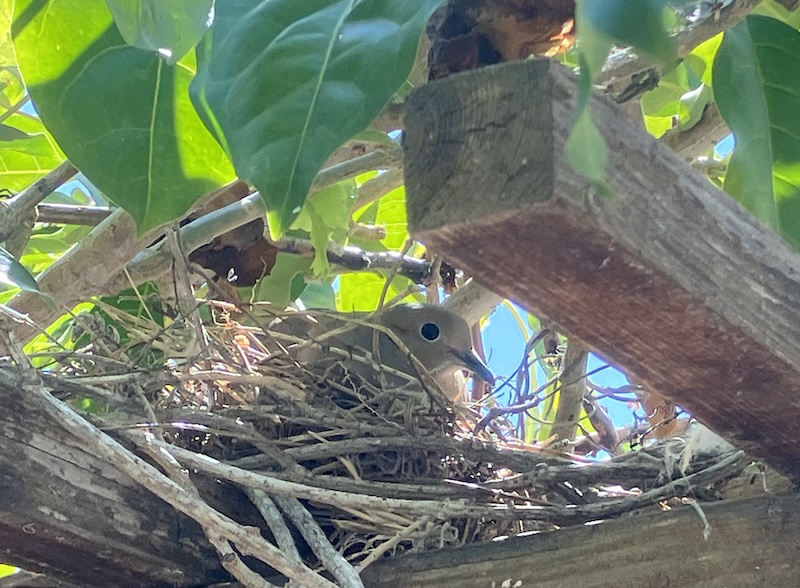
Yesterday, I noticed some ripe grapes in one of the arbors in my garden so I climbed on a ladder to snip the cluster when I spied a rough twig-filled nest wedged on top between the vines.

Camouflaged so adorably was a mama dove sitting in the nest looking right at me with her big round eyes. I think there are two eggs in her nest.

Photo by Enchanted Seashells

I grabbed the grapes and climbed down as fast as I could to not further disturb or scare mom.

I’m not sure this is the most secure location to raise a family so I’ll do all I can to keep them safe. “You can trust me, mama dove!”

Photo by Enchanted Seashells

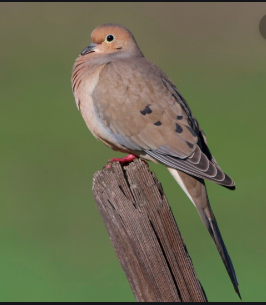
A dove pair may raise two families in a single summer. Mourning doves mate for life – about seven to ten years. If a mate dies, the remaining dove will persevere in its futile attempts to evoke a response from its lifeless mate. Driven by hunger, thirst, threat, or nightfall, the bird will ultimately depart. SAD!!!

Doves are mainly ground feeders which makes them extremely vulnerable to being swooped up by predators. They’re almost 100% granivores, feasting on grains and seeds from wild grasses, weeds, and herbs. I stopped filling the bird feeders because of RATS and squirrels so these guys are on their own, but that doesn’t seem to bother them.

Like all birds, Mourning Doves are unable to sweat, so to stay cool during hot weather … they pant just like a dog. Panting requires the doves to drink a great deal of water due the excessive loss of moisture to evaporation. Doves are one of the few species of birds that drink by sucking up their water instead of taking a bill full of water and letting it trickle down their throat. It can suck up its total daily requirement in less than twenty seconds.

Symbolically, it’s believed that when a dove visits you, they bring a message from a loved one who has passed away or a sign of peace and comfort during times of grief. Two doves together symbolize unity, partnership, and love.

I left the ladder nearby so I can check on mama’s progress. Soon, I hope to hear the chirping of hungry little dove babies.

Wild Bunny Ambivalence

Did you know that a family of bunnies is called a “fluffle”?

My garden is home to a fluffle of wild rabbits. Sometimes they frustrate me because they eat every single blade of grass, even pulling out the roots, and it’s literally impossible to reseed the bare spots they create.

This is where the ambivalence comes from; a love/hate kind of feeling. On one hand, they’re cute, especially the babies, but rabbits can be quite destructive, and there’s not much that deters them.

One of my neighbors who complained about a similar problem suggested shaving Ivory or Irish Spring soap around the area to discourage the buns and I might try that to see if it really works or if it’s an urban myth.

However, this little guy greets me every morning when I open the patio doors. He’s always perched on the deck bench and devours grape leaves.

What’s even freakier is that he sits at the screen door and watches me, even at night. I have to remember to securely latch the screen because I think he’s trying to come in the house.

Because of all the rain early in the year, the vines grew crazy big. I covered the grape clusters with little white mesh bags to save them from the buns and other critters, but I’m happy to share a few leaves, especially since they’re pesticide-free.

Love Is All You Need | Rescue and Thrive

A couple months ago, a neighbor was planning to discard half a dozen orchids she thought were dead or dying and asked me if I wanted them before they ended up in the trash.

That really broke my heart, as I have a soft spot for animals and plants (and a few humans) that might benefit from some kindness and attention, so I took them all.

When I brought them home, they were sad little things; dried up, starving, and so thirsty that I could feel their pain, so I immediately submerged them in filtered water and set them in a quiet and shady place to drink all they needed.

I pruned some of the withered bits, found pretty pots for all, and decided to give them some time to heal in a loving environment.

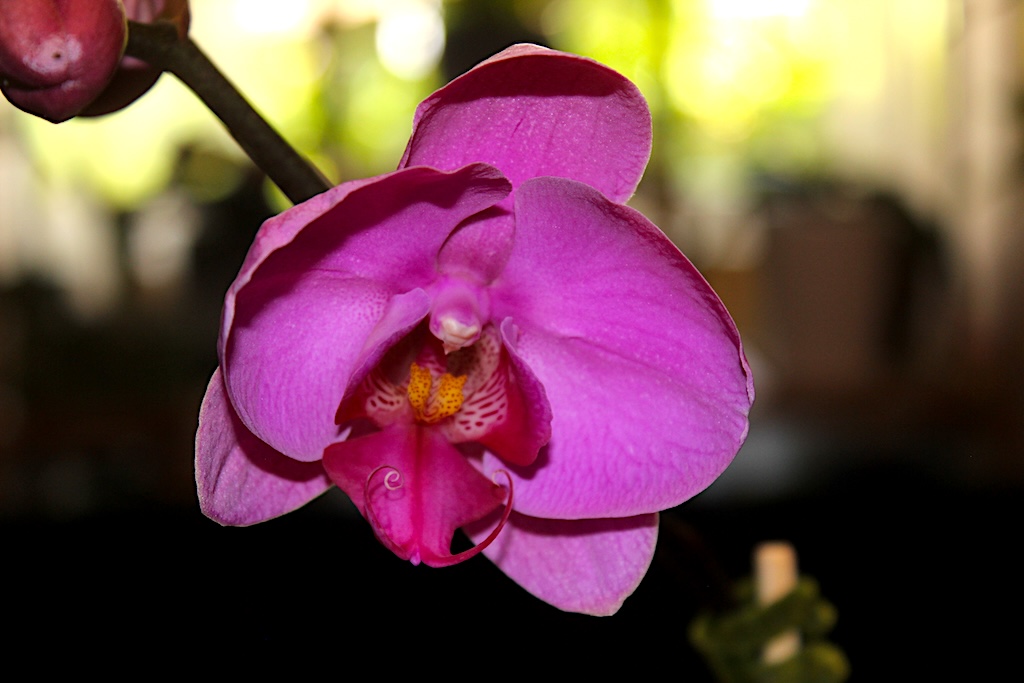
This is the first orchid that has rewarded my caregiving with a spike of stunning color!

Let me introduce my rescued baby, a pink Phalaenopsis Elastic Love, also called Moth Orchid.

She is SUCH a drama queen and thrives as the center of attention!

The remainder of the rescues all have new growth and are throwing spikes, too, which brings an overwhelming sense of joy! All they needed was a little tender, loving care.

What an absolutely amazing way to start a new month!

Don’t Cry, Baby Girl

When plants cry…not at all like Prince’s When Doves Cry…

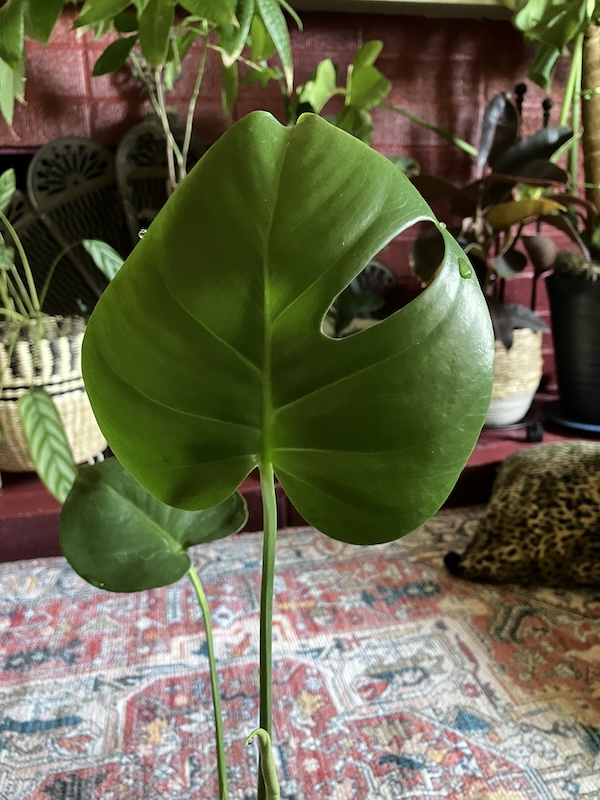
I was beyond ecstatic when my mini-Monstera began to unfurl the first new leaf since I brought her home. When I checked on her progress this morning, I noticed that she appeared to be crying.

Why so sad, baby girl?

I try to do everything to make her happy and healthy; water, fertilizer, the right amount of sun, and I adorned her with a beautiful, thrifted Satsuma pot.

This tear looks like it’s coming from her alien-eye, the classic Monstera fenestration.

They’re not tears of sadness nor joy; they’re actually due to a process called guttation.

Guttation is a mixture of xylem and phloem fluid, which contains sugars and other chemicals produced in the leaves that are exuded overnight by the plant.

Guttation is one way houseplants attempt to regulate their growing conditions. This response can occur when a plant has been overwatered or under stress, or the plant could be perfectly fine and want to balance its nutrients or minerals.

Aren’t plants SO smart?

I confess that sometimes I love my plants too much, as in too much watering, and I hope this isn’t the reason because I adore this new leaf baby and her brothers and sisters love her, too.

Don’t shed any more tears, little one! I promise to try and not love you to death!

Enchanting Friends

As if on cue, summer finally arrived during the solstice with intense heat and abundant sunshine. Around Casa de Enchanted Seashells, a couple new friends visit every day.

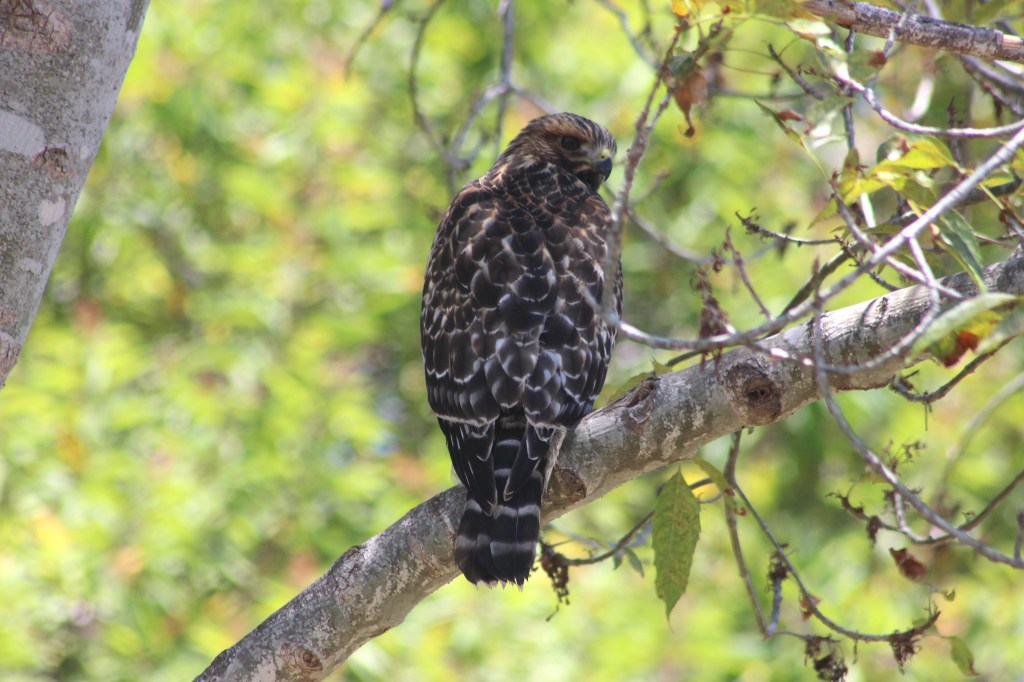
Here’s my Red Shouldered hawk, who looks directly at me as he scouts the garden for breakfast, lunch, and dinner. He’s so, so gorgeous.

He’s always on the same branch in my ash tree.

This BIG skunk is probably the same one who sprayed my neighbor’s dog not once, but twice. The photo is a bit grainy because it was almost dark and I was way closer than I should have been. If I had startled him, I’d still be bathing in tomato juice right now!

Happy Monday!

A Shasta Daisy and The Fibonacci Sequence

Flowers always make people better, happier, and more helpful; they are sunshine, food, and medicine for the soul.” – Luther Burbank

With no rain in sight, my plants are becoming thirsty and I have to water them so they don’t dry out. I stopped for a minute to contemplate the droplets on a perfectly perfect Shasta daisy.

Nature is amazing. Everything is related to everything. Nothing is simply what it seems.

Many flowers exhibit a petal count that corresponds to Fibonacci numbers. Shasta daisies have twenty-one. This is something I didn’t even know about until recently. If they taught it in school, it’s another one of those days when I wasn’t paying attention.

In the 13th century an Italian mathematician, Leonardo de Pisa, better known today as Fibonacci, published a book called Liber Abaci. He introduced a number sequence that became known as the Fibonacci sequence. Starting with 0 and 1, each new number in the sequence is the sum of the two before it.  0, 1, 1, 2, 3, 5, 8, 13, 21, 34, 55, 89, 144, 233, 377.

The golden mean or the golden ratio is a special number found by dividing a line into two parts.

The golden mean and the Fibonacci spiral are connected to life, even spiritual life. They can be found in nature in the number of petals of flowers, the way the tiniest stem
unfurls, in spirals in seashells, and more. 

The golden proportion of 1.618 is found in key proportions of the body in humans, animals, insects, and in DNA. Our perceptions of beauty support that phi is a factor in what we find attractive.https://energeticgeometry.com/

That’s a pretty weighty concept for my brain to absorb or even understand. The possibilities seem endless, one more mystery of the universe.

I’m an uncomplicated person. All I know for sure is that I love the way Shasta daisies spread to fill in the empty spaces like they fill my heart and make me happy.

“Deep in their roots, all flowers keep the light.” – Theodore Roethke.