Blooming Bee-filled Fragrant California Lilac: Ceanothus

(I think if you click on the little pics, they become big.)

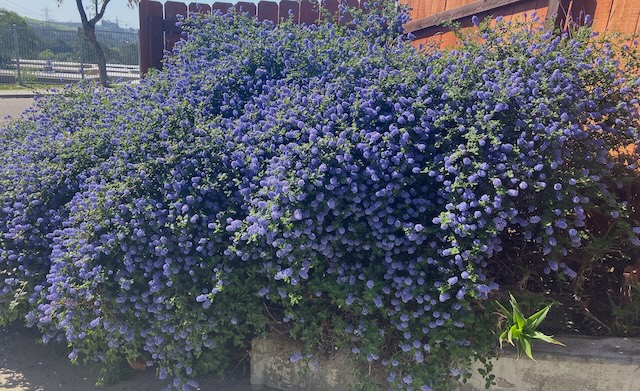
This gigantic California Lilac (Ceanothus) has survived and thrived against all odds. About seven years ago, I thought it had completely died; there was no hint of the plant at all — it had disappeared. Since dying plants are something I’ve gotten used to here in the southwest, I figured it had gone the way of many others…

However., one day as I randomly inspected the area, I saw something that strangely resembled a minuscule Ceanothus leaf, shiny and green. I kept my eye on it for a while and was amazed that it WAS that same Ceanothus plant — it had resurrected itself.

Look at it today! It’s taken over the entire area next to the driveway. Periodically, I cut it back because it grows so prolifically, I wouldn’t be able to get in the garage. Trimming doesn’t seem to bother it at all, as you can see.

What you can’t hear are the hundreds of bees it attracts and what you can’t smell is the fragrance of a blooming Ceanothus, powerful yet delicate.

Did you know? The flowers of certain Ceanothus species contain saponin, a natural compound that creates a soapy lather when mixed with water. 

Historically, Native Americans used Ceanothus flowers as a natural soap for washing hands and clothes.

To use Ceanothus as soap, simply gather the flowers, get your hands wet, and rub the flowers between your hands. The saponin will create a soapy lather. It really works!

It’s Apple Blossom Time

Apple blossoms smell heavenly!

Photos by Enchanted Seashells

After a decent two inches of rain, our weather turned unseasonably warm, nearly eighty degrees, which totally confused my apple trees and they began to furiously bud and flower, at least a month sooner than normal.

It looks like we might receive a bit more rain in the next couple of weeks but I hope it stays warm-ish so that every blossom grows into a juicy, delicious apple.

Good news/bad news time…

It had been a while since I injured myself but that’s no longer the case. The upper garden is mostly planted with California native plants. When it rains, they go crazy because winter is their time to shine.

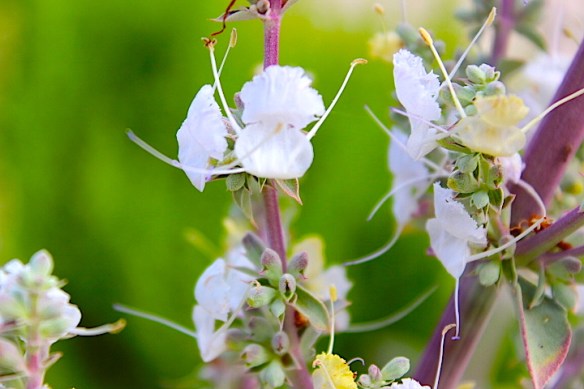
Flowering white sage

I noticed a white sage that needed to be pruned. As I ran down the steep set of stairs with a huge armful of freshly cut branches, I misjudged the distance because I couldn’t see where I was going, caught my shoe on the edge of a step, and before I could stop myself, I tumbled down to the ground.

This time I didn’t suffer any broken bones, just a sore shoulder (where I fell) and another injury to my knee (also where I fell). As luck would have it, this was the same knee that has already has a torn MCL, so now I’m limping AND again wearing a brace.

The good news is that the garden is nice and tidy…Happy Monday!

Trail Cam

To find the universal elements enough;
to find the air and the water exhilarating;
to be refreshed by a morning walk or an evening saunter…
to be thrilled by the stars at night;
to be elated over a bird’s nest or a wildflower in spring –
these are some of the rewards of the simple life.
~ John Burroughs

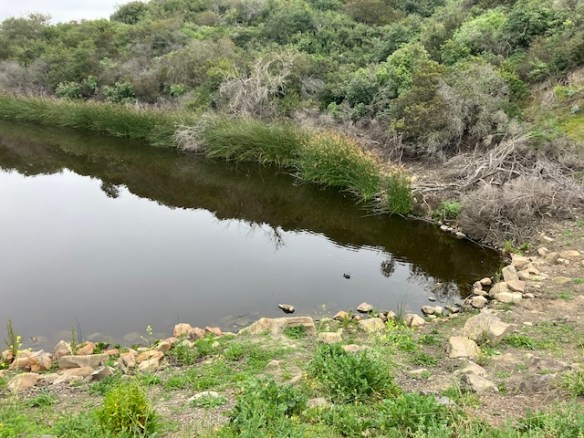
Join me on an early morning walk around the lake trails.

There’s a familiar fragrance of tule, which some people don’t like, but I love love the way it smells. Tule grows in dense stands along freshwater wetlands.

Indigenous peoples ate tule roots and seeds, while the reeds were used to make baskets, cord, sandals, and clothing. P.S. Here’s how to say it: “too-lee”

With all the rain we’ve had, everything was uncharacteristically green…as far as the eye could see…

Pretty Black-eyed Susan flowers!

It’s a human-made lake, not natural, intended to be a reservoir, but the ducks and coots don’t seem to mind a bit.

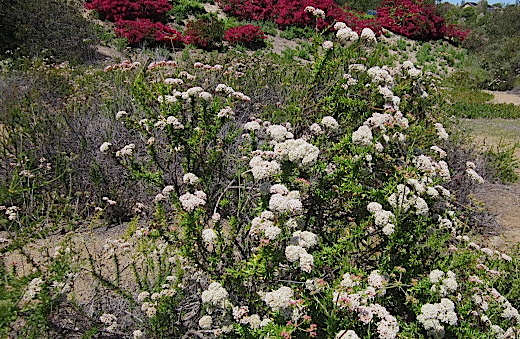
Native buckwheat.

I didn’t see any coyotes this time, but it was still a lot of fun!

Matilija Poppy

My son has the greenest thumb EVER. I lovelove the Matilija poppy but have never been able to keep a single plant alive, and this beauty is more than six feet tall in its first year. He told me that everyone who walks by stops to take pics and a selfie in front of this incredible specimen.

This morning a fried egg appeared in the backyard,
a startling yellow ball floating
on a white round of wide petals.
Officially: Matilija Poppy.
It hovers,
this hint of perfection,
above mostly unadorned foliage. — Kari Wergeland’

Romneya coulteri: A shrubby perennial that grows to eight feet, found on dry slopes and sandy washes in coastal sage scrub and chaparral, generally away from the coast (mountain foothills and Santa Ana Mountains). 

Like many others in this family this species is a fire follower. While it’s on the California Native Plant Society List 4.2, a watch list for species with limited distribution in California, it’s thriving in Washington state.

I guess I’ll keep trying until I achieve success.

Symphony in Yellow

Symphony in Yellow

An omnibus across the bridge
Crawls like a yellow butterfly
And, here and there, a passer-by
Shows like a little restless midge.

Big barges full of yellow hay
Are moored against the shadowy wharf,
And, like a yellow silken scarf,
The thick fog hangs along the quay.

The yellow leaves begin to fade
And flutter from the Temple elms,
And at my feet the pale green Thames
Lies like a rod of rippled jade.
–Oscar Wilde

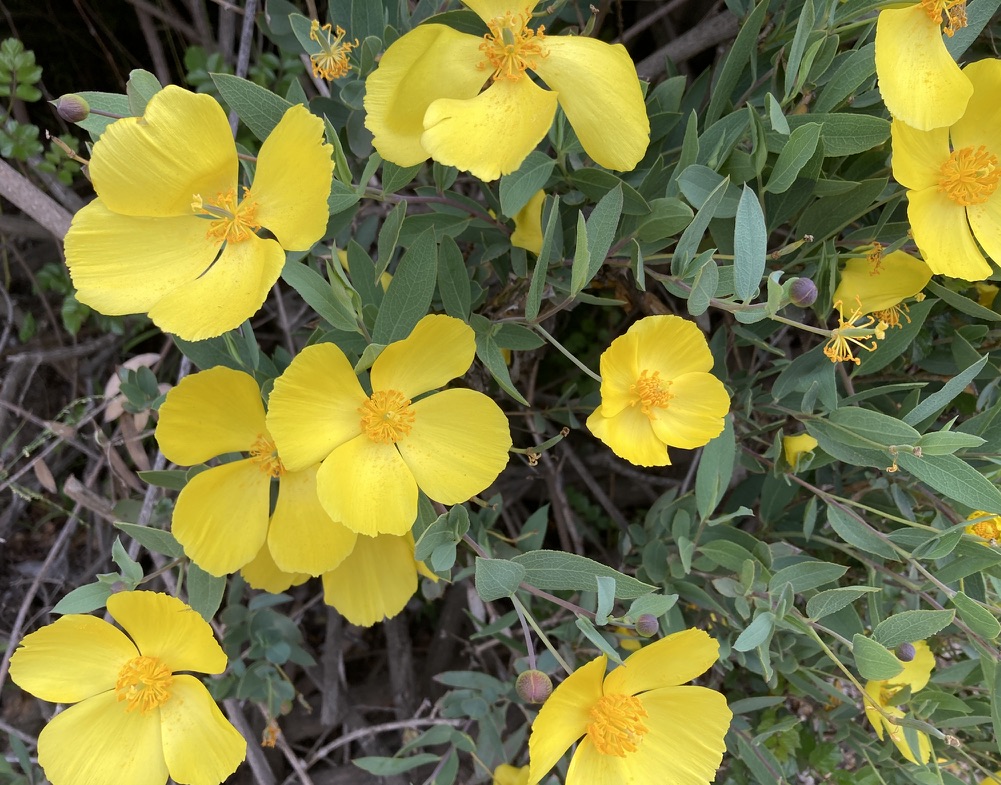
This Bush Poppy (Dendromecon rigida) is a California native shrub. It’s a tough and beautiful plant but only if planted in the right conditions. The Bush Poppy thrives on rocky clay slopes with excellent draining. If planted in sandier soils, it can handle supplementary water up to once a month. Prefers full sun. Flowers are beautiful, as are the long, thin, blue-green leaves.

Look at this lemony yellow azalea. I didn’t even know they came in yellow until I used the info app on my phone to identify this gorgeous girl. I think it’s actually called Rhododendron ‘Lemon Lights’.

Rose Gone WILD

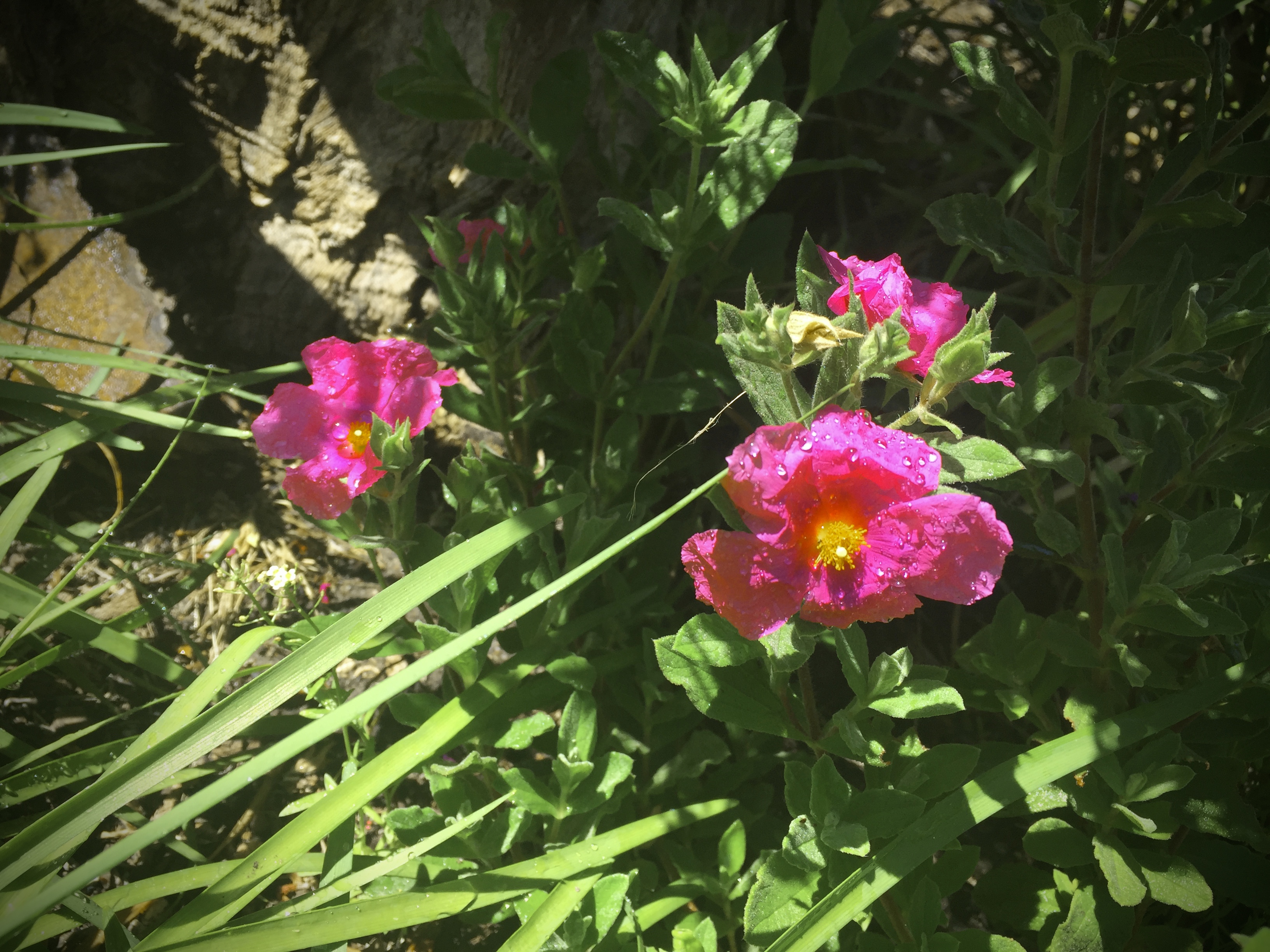
From my native garden in the front yard, where we planted everything but a lawn. We have white and purple sages, buckwheat, coffeeberry, lemonade berry, ceanothus, and a sprawling wild Rock Rose.

I loved the way the sun was shining on these hot pink blooms. No filter, nothing but natural beauty.

Rock Rose

The flower is used to make medicine and is commonly used in Bach flower remedies. Rock Rose is purported to treat panic, stress, extreme fright or fear, and anxiety; and for promoting calmness and relaxation.

The oleo-resin obtained from the leaves and stems is used as a commercial food flavoring in baked goods, ice cream, and chewing gum.

Leaves, flowers, and stems can all be harvested and used to make tea. I haven’t tried it yet, but I plan to do it soon.

My Beautifully Perfect Yellow Daisy

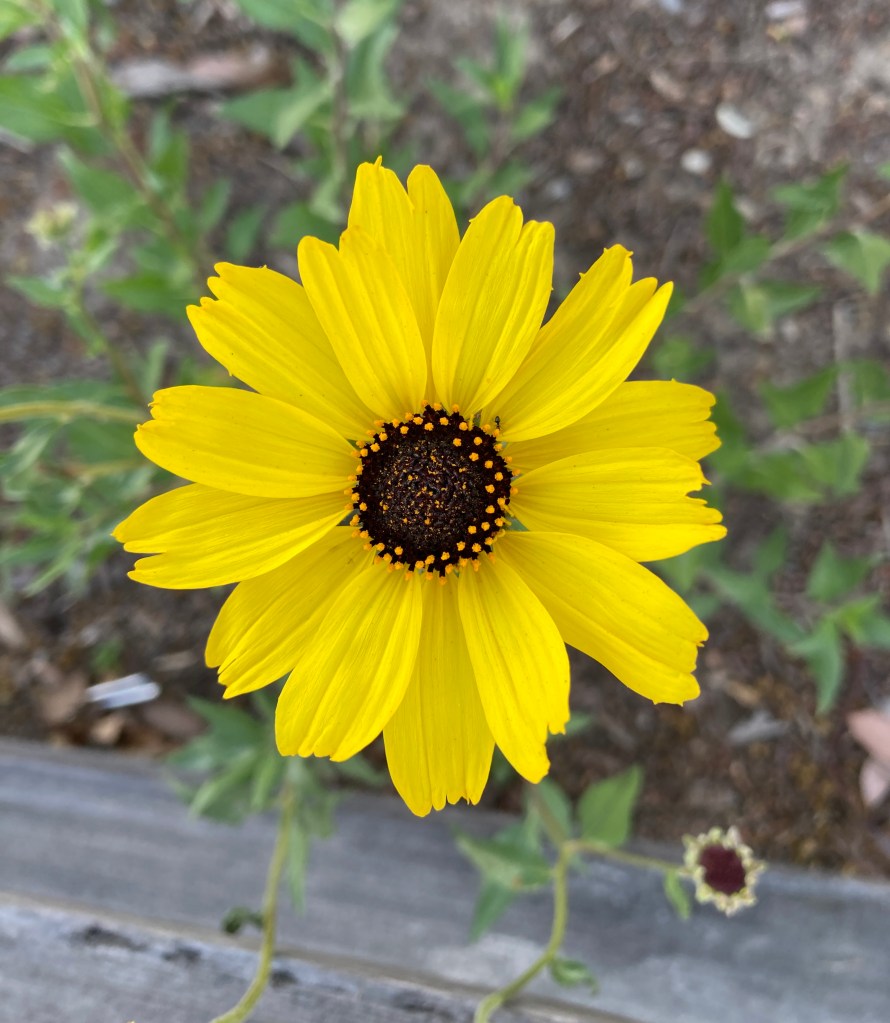
I didn’t intentionally plant this California native Black-eyed Susan (Rudbeckia hirta) — she’s a happy volunteer in the front garden, but I welcome her smiling face and bright yellow petals.

The Daisy follows soft the Sun

The Daisy follows soft the Sun—
And when his golden walk is done—
Sits shyly at his feet—
He—waking—finds the flower there—
Wherefore—Marauder—art thou here?
Because, Sir, love is sweet!

We are the Flower—Thou the Sun!
Forgive us, if as days decline—
We nearer steal to Thee!
Enamored of the parting West—
The peace—the flight—the Amethyst—
Night’s possibility!

Emily Dickinson

Rock Rose

I love roses of all kinds but this one has nothing to do with Rowdy Rosie; a nickname I acquired in another life during a brief stay in Steamboat Springs. (Read about it here: https://enchantedseashells.com/2013/07/02/the-story-of-rowdy-rosie/)

This one’s a hardy garden rose that does well in drought conditions.

Cistus is a genus of flowering plants in the rockrose family Cistaceae, of which there are about twenty varieties.
It’s a perennial shrub found on dry or rocky soils throughout the Mediterranean region, from Morocco and Portugal through to the Middle East, and also on the Canary Islands; they do really well in my SoCal garden.

I’ve had really good success propagating them, too. Here’s how I do it:

  1. Snip 6-inch cuttings off stems that have not yet flowered.
  2. Remove lower pairs of leaves, keeping only the topmost one or two pairs at the crest.
  3. Dipping the cuttings in powdered rooting hormones spurs root growth.

Perfect for a hot summer garden with no rain in sight.

fullsizeoutput_da1IMG_9234fullsizeoutput_da2