Local Event: Butterflies and Milkweed

Last year I attended the first ever North County Monarch Butterfly Festival. I’m glad to learn that it’s coming back again this Mother’s Day weekend.

The Festival highlights all aspects of the Monarch universe, from monarch-inspired arts and crafts to jewelry, clothing, biology, pollinator gardening, milkweed and nectar plant propagation and cultivating. Join discussions and presentations on a wide range of subjects, such as conservation and butterfly migration, habitat restoration and creation; talks on diseases and predators to gardening with native plants. It’s a great event for families with children’s activities and seed exchanges. (Event link below.)

In my garden, I thought my milkweed plants had died, but they miraculously returned and are doing well.

Planting milkweed is one of the easiest ways that each of us can make a difference for the Monarch. There are more than one hundred species of this wildflower native to North America. Here are just a dozen:

Find the rest of the info at this amazing site: http://butterfly-lady.com/twelve-native-milkweeds/?

Here’s the event link: https://www.eventbrite.com/e/the-second-annual-north-county-monarch-butterfly-festival-tickets-579540440057
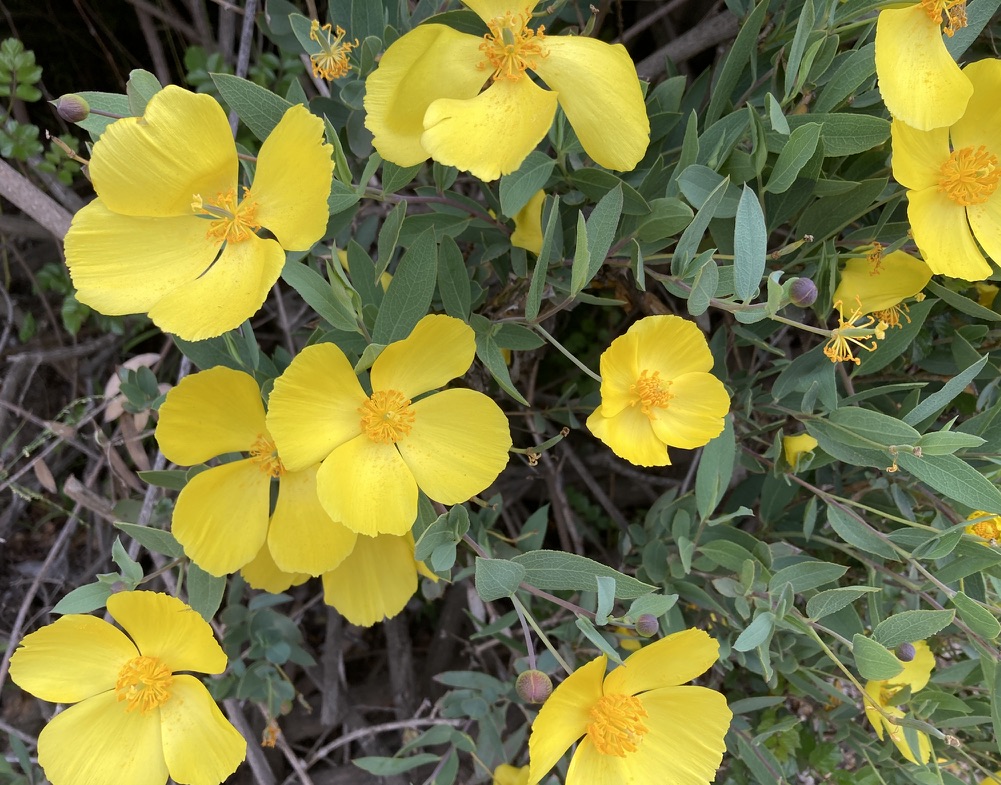
Symphony in Yellow

Symphony in Yellow

An omnibus across the bridge
Crawls like a yellow butterfly
And, here and there, a passer-by
Shows like a little restless midge.

Big barges full of yellow hay
Are moored against the shadowy wharf,
And, like a yellow silken scarf,
The thick fog hangs along the quay.

The yellow leaves begin to fade
And flutter from the Temple elms,
And at my feet the pale green Thames
Lies like a rod of rippled jade.
–Oscar Wilde

This Bush Poppy (Dendromecon rigida) is a California native shrub. It’s a tough and beautiful plant but only if planted in the right conditions. The Bush Poppy thrives on rocky clay slopes with excellent draining. If planted in sandier soils, it can handle supplementary water up to once a month. Prefers full sun. Flowers are beautiful, as are the long, thin, blue-green leaves.

Look at this lemony yellow azalea. I didn’t even know they came in yellow until I used the info app on my phone to identify this gorgeous girl. I think it’s actually called Rhododendron ‘Lemon Lights’.

Black Gold

I love to look at historical photos and was fascinated by the pervasive documentation of how little human respect there was (and still is) for our planet.

Whether it was harming the environment by tearing up the earth to find gold in 1848 which caused irreversible damage or pillaging and plundering the ground for oil, it’s tragic to see that we don’t seem to have learned much about co-existing in harmony with nature without polluting and destroying our world.

I remember when my parents would drive up to Los Angeles to visit relatives and I’d see a few oil derricks along the way, but nothing like this.

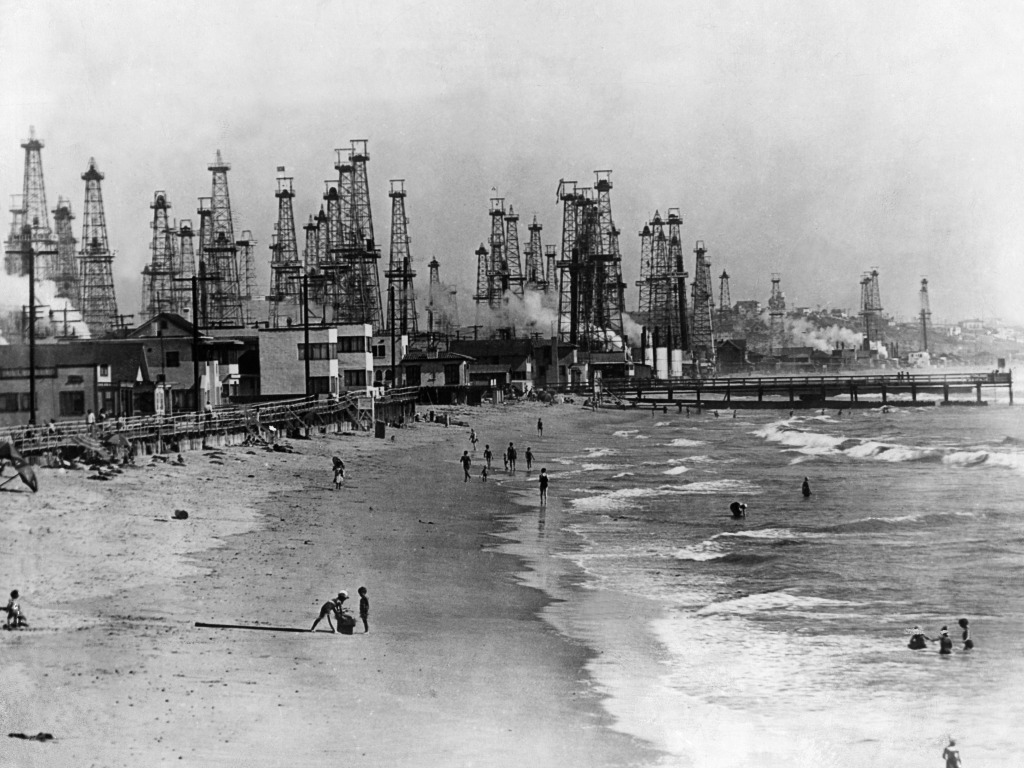
Venice Beach 1920

Though conventional oil reserves have dwindled, oil drilling in the Los Angeles area remains. Oil rigs dot the city but are often hidden from sight through the use of tall fences, clandestine structures, or by drilling in LA’s low-income neighborhoods.

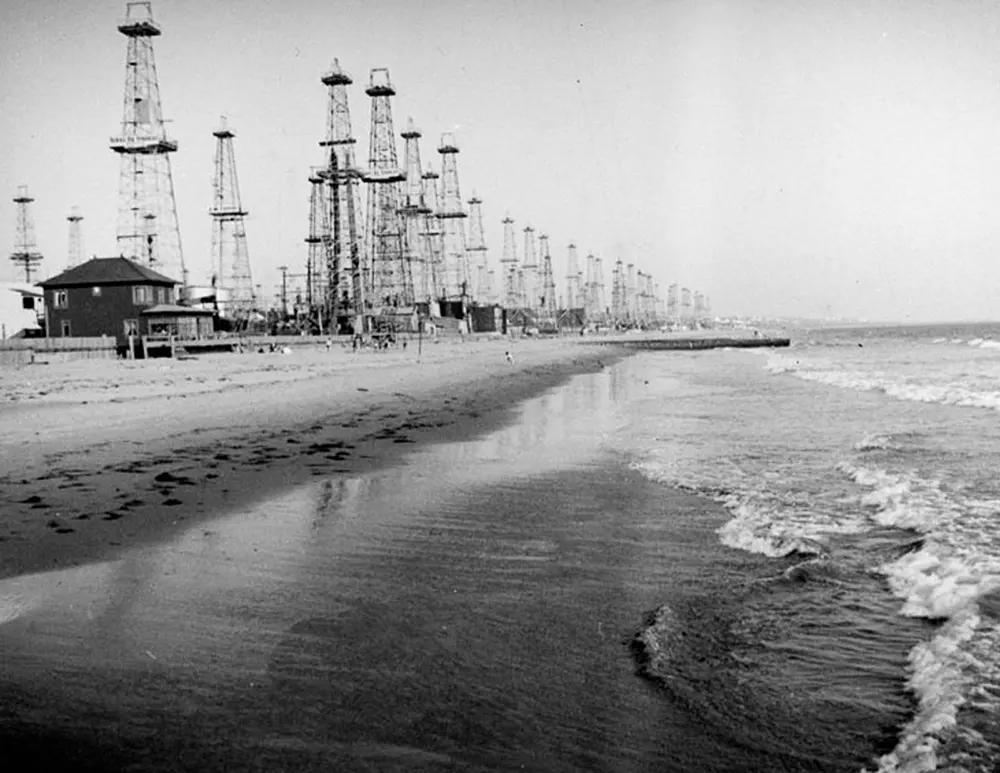
This is how Los Angeles Times described the Venice Beach–Del Rey oil field in 1930: Today oil derricks stand like trees in a forest… . Steam pile drivers roar on many a vacant lot… . One hundred and eighty permits to drill for oil have been given and twenty-five more are in procedure… . If this fever continues, as it gives every indication of doing, one reasonably may expect to see virtually the entire water-front line of private properties from Washington street to Sixty-sixth avenue or Playa del Rey dotted with a line of oil derricks.

Signal Hill oil field, Long Beach, 1937

Apparently, petroleum had already been in use by Native Americans for about 13,000 years. They relied on oil primarily as a lubricant but also as a sealant to waterproof canoes.

The coast along the Venice oilfield, in what is now Marina del Rey. 1937.

Following the initial oil discovery in California in 1872, Edward L. Doheny struck the massive Los Angeles oilfield in 1892, thirty-five miles south of the Pico Canyon.

Huntington Beach, 1937

FYI…It’s been reported that the recent runoff from California’s historic rainy season has exposed more gold around Placerville, the heart of gold country. Treasure seekers are dusting off their metal detectors and searching for the shiny stuff. With gold prices hovering at approximately $2,700 per ounce, it’s going to look like an episode of Aussie Gold Hunters out there.

Lots of great info at https://rarehistoricalphotos.com/

Rose Gone WILD

From my native garden in the front yard, where we planted everything but a lawn. We have white and purple sages, buckwheat, coffeeberry, lemonade berry, ceanothus, and a sprawling wild Rock Rose.

I loved the way the sun was shining on these hot pink blooms. No filter, nothing but natural beauty.

Rock Rose

The flower is used to make medicine and is commonly used in Bach flower remedies. Rock Rose is purported to treat panic, stress, extreme fright or fear, and anxiety; and for promoting calmness and relaxation.

The oleo-resin obtained from the leaves and stems is used as a commercial food flavoring in baked goods, ice cream, and chewing gum.

Leaves, flowers, and stems can all be harvested and used to make tea. I haven’t tried it yet, but I plan to do it soon.

Nothing But Nasturtiums

When I was in college, we lived across the street from a wild place, an abandoned and untended avocado grove blanketed with nasturtiums. Their long tendrils would wind up and around the gnarled trunks.

After school, my friends and I would sit under the trees and pick tiny avocados from the low hanging branches and gorge on them until we were full, and then we’d lie back in the pillowy nasturtium leaves and pretend we were forest fairies.

We’d sometimes weave orange and yellow tiaras through our hair, and always pick a bouquet to bring home.

I love their tangy but sweet fragrance and often add the flowers to salads, but only the ones from my garden that I’m sure are pesticide-free.

All the rain birthed my own enchanted nasturtium forest this year.

Fun at the Flower Fields 🌺 #LiveColorfullyFlowerFields

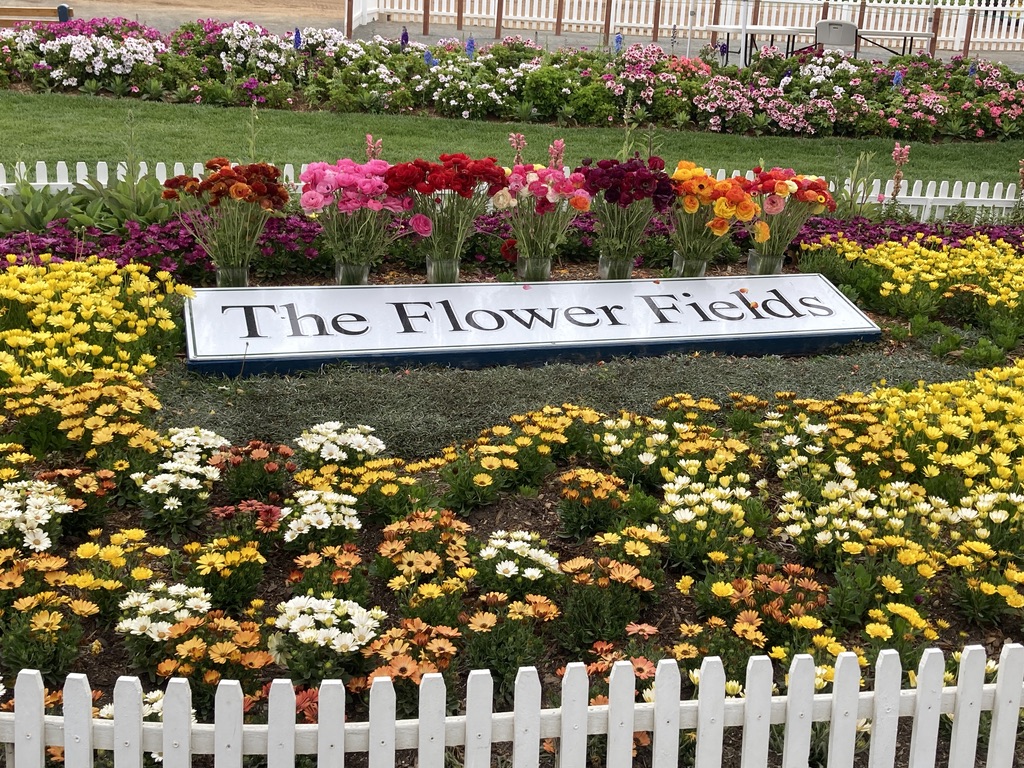
I remember when rows upon rows of a colorful flowering ranunculus tapestry was only a quirky, delightful curiosity we’d point at as we drove north along the freeway. Back then it was an annual locals-only kind of attraction and now The Flower Fields enchants visitors from all over the world.

I can’t believe that it took me this long to visit The Flower Fields in all its glory, but it’s a definite recommended destination. It was a truly enjoyable day and best of all, it’s simply impossible to take a bad photo there!

The Flower Fields are located off the freeway at Palomar Airport Road in Carlsbad. In addition to forty acres of beautiful ranunculus in peak bloom, there are tractor rides, wine tastings, food, yoga classes, a Mother’s Day picnic, and day-long educational and fun activities for children of all ages.

And a butterfly garden!

HISTORY:
The Flower Fields today are a direct result of nearly eighty-five years of floral cultivation that began with Luther Gage, an early settler and horticulturist who settled here in the early 1920s. Mr. Gage brought ranunculus seeds to the area and began growing them in his fields next to Frank Frazee’s small vegetable farm in South Oceanside. In 1933 Frank Frazee also started growing ranunculus and introduced his son Edwin to the art of seeding, cultivating, and irrigating this beautiful flower. 

This is what it used to look like — the fields of flowers grew close to the freeway:

1970s. Photo credit: Bob Gardner

INFO:
Open daily from 9:00am-6:00pm until Mother’s Day (Sunday,  May 14th, 2023)
Ongoing Specials (Starting March 6th)
Mondays – With the purchase of one adult or one senior/military, you receive one child’s ticket free (ages 3-10)|
Tuesdays & Wednesdays – Between 1:00pm-4:00pm, receive $2 off adults, seniors/military and children’s tickets.
Buy tickets online at theflowerfields.com

(Excluding the vintage photo, all photo credit to Enchanted Seashells.com)
@the_flower_fields 

Purple Pride

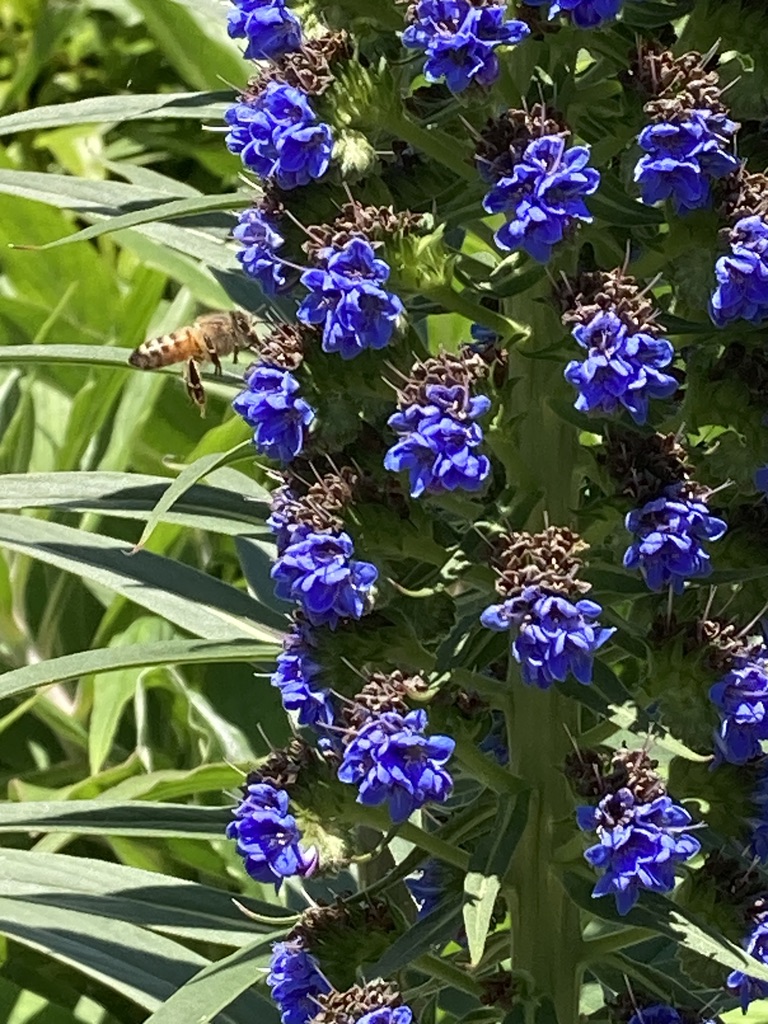
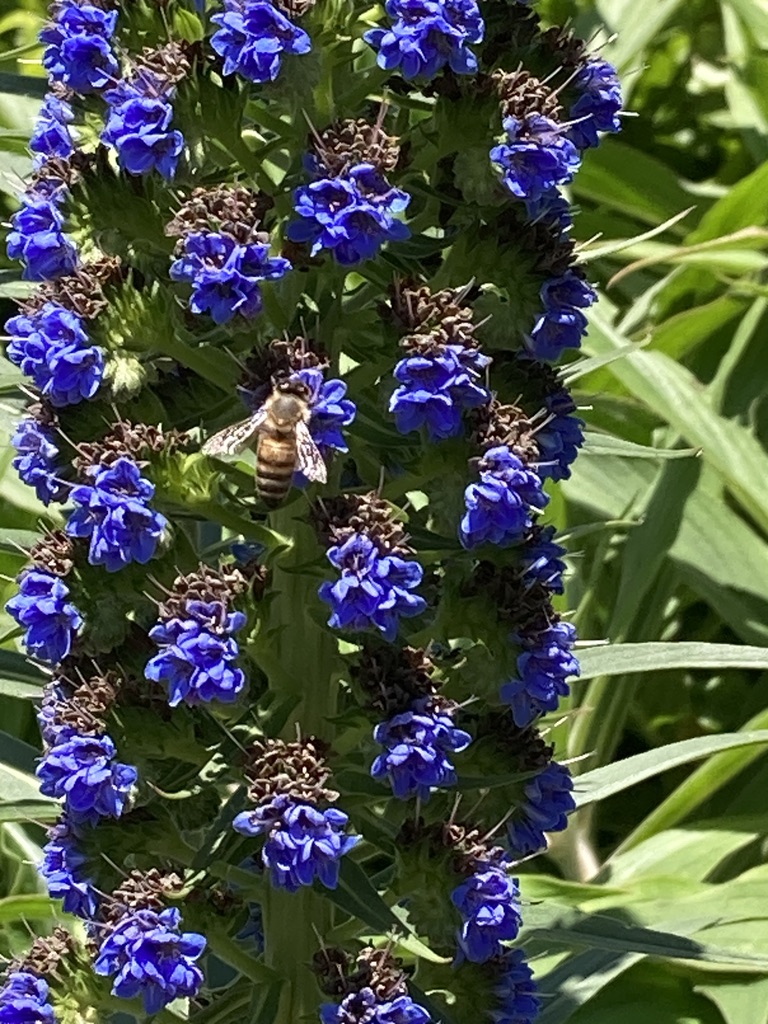
I’m referring to Pride of Madeira, the superstar of my garden!

This plant REALLY loves the environment here at Casa de Enchanted Seashells. I read that it’s becoming invasive in places along the coast and I can see how that could happen as it easily reseeds itself.

Native to Madeira Island, north of the Canary Islands, it’s a tough perennial and can survive all summer with little to no water. Since I think we’ve seen the last of our record-breaking rainfall here in SoCal, that’s exactly what they’ll have to do to survive.

And in a different part of the garden, a slightly different hue…It’s HUGE.

Bees love it too. So do hummingbirds and butterflies.

Pride of Madeira grows to about six feet tall and some of my specimens are twice as wide as they are tall.

I quite literally have dozens of baby Prides if anyone wants to plant them in their garden!

Sunday Snaps

After all the rain we’ve had here in Southern California, every bit of land is awash in springtime color.

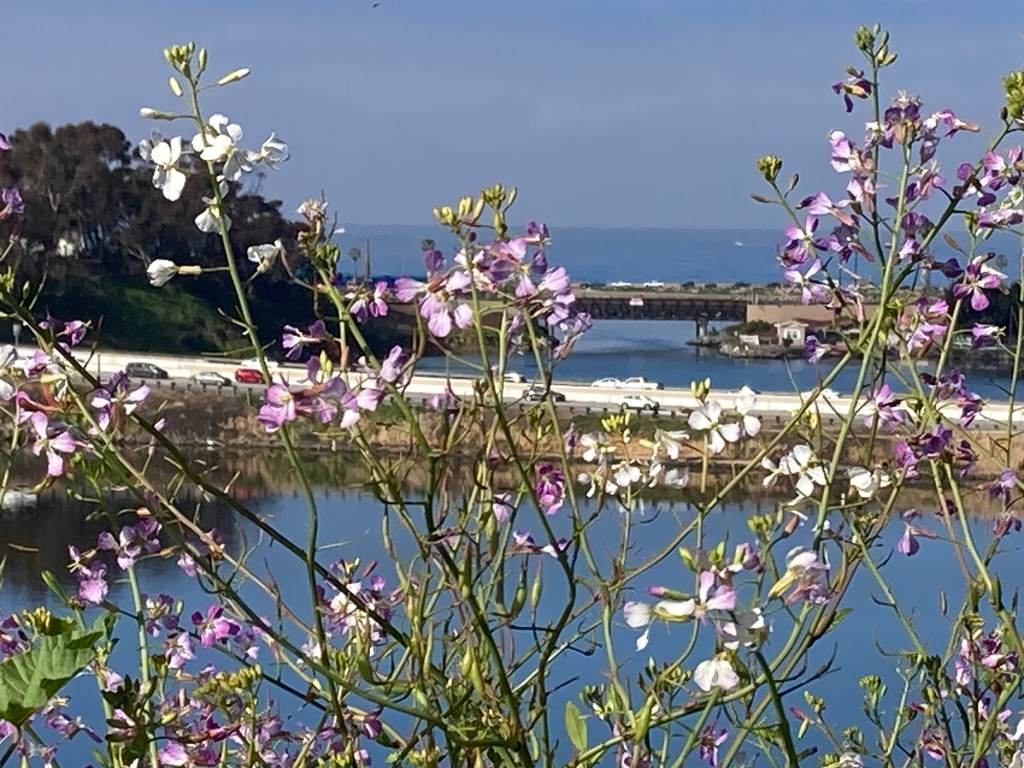
A picturesque view of the lagoon, train tracks, and Pacific ocean through Purple Mustard, an invasive weed:

I call this plant Beach Daisy, definitely a weed, if not also invasive…

And finally, I’m impossibly happy because the wildflower seeds I planted last year in my native garden decided to sprout and present me with lovely spires of lupine:

**All photo credit belongs to Enchanted Seashells.

Rainy Rocky Vibes

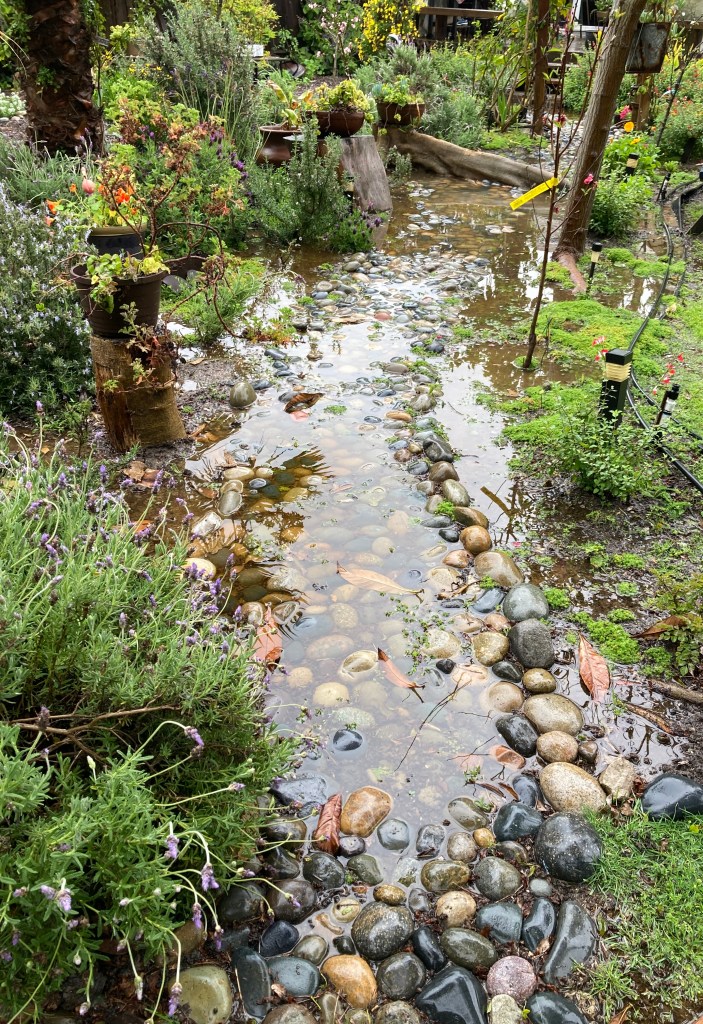
This is my one of my dry riverbeds. (The other one is in the front garden.)
I proudly carried each and every rock and placed them with loving intention.

It’s not so dry now! Yesterday’s relentless rain had other ideas.

Spring Garden Promises

Casa de Enchanted Seashells gardens are alive, blooming with color and fragrance.

In one week, since the last rain, most of the fruit trees are flowering and my florals are flourishing. It brings much joy to create a bouquet from the fruits of my own efforts, a labor of love.

This lavender is vibrant!

Peaches!

Plums!

More peaches!

Apples!

We’re expecting more rain this week. 2023 has been a crazy wet year in SoCal, but it’s just what we need to end the drought for a while. The only downside is horrible seasonal allergies, but that’s a small price to pay to live in paradise.