Amy Lee Nelson and Tina Rose Bridges, the daughters of Willie Nelson and Leon Russell, have officially joined forces to create a brand new duo, ALeeN ROSE.
Their debut single, “They’re There” features music icon Willie Nelson. According to PEOPLE, he wrote the song’s bridge, played guitar, and lent his unmistakable vocals. “Now it’s a full-on family song, as it should be,” Amy said.
The song is a loving tribute to Amy’s late brother Billy Nelson who died in 1991 and Tina Rose’s father, Leon Russell. Leon died in 2016.
“In my dreams, my daddy tells me stories / Of all the things I can do and who I could be / He takes my hand / says understand you’re still beside me/ I’m not gone/ We are waltzing inside this dream,” Tina Rose sings on her verse.
This is a sweet and beautiful song that honors their spirits and the memories that continue to guide them through life.
“Tina Rose called me one evening during lockdown and we spoke about the feelings of loss surrounding the death of her dad,” Amy Lee Nelson recalls, “I told her how I’ve found myself often saying ‘they’re there’ when speaking of loved ones who have passed. I shared with her a song that I had begun writing after having dream visions of my brother, Billy.”
She continues, “I asked her to write the second verse as a healing outlet for her pain and grief. I was blown away by the verse she brought back to me. But it still wasn’t finished and we weren’t sure where to take it. We asked my dad for help, and so he wrote the bridge. Now it is a full-on family song, as it should be.”
Willie Nelson and Leon Russell are two of the best and most individual songwriters and vocalists in any musical genre. Leon Russell was a musician, songwriter, and arranger who had been a first-call session man and producer even longer than he had been known as an individual performer.
In 1979, Willie Nelson and Leon Russell released their chart-topping double album, One for the Road. Although One for the Road is their only joint album, the two continued to perform together on stage over the years.
News of ALeeN ROSE’s “They’re There” release comes soon after Willie Nelson’s son, Lukas Nelson, performed a cover of Leon Russell’s “A Song for You” at Cain’s Ballroom in Oklahoma. The track’s release also coincides with what would have been Billy Nelson’s 68th birthday.
As you listen to “They’re There”, the respect and love is truly inspirational.
It oozes with generational talent. Their ability to translate feelings into a musical format is genuine and authentic. What an amazing way to carry on the legacy of two musical giants. I just know that Leon Russell would be so proud of Tina Rose.
After not being able to recall my dreams for a while, this one was so unsettling, I can remember most of the details. I don’t know what part of my brain decided to spew these strange thoughts…
The first image is of me in a hotel room with two cats. One was all black and the other was more fluffy and furry like a Maine Coon. There was a balcony with a sliding glass door which I kept closed and locked. I can’t explain why I was traveling and had made the poor decision to bring the cats with me — NOT something I’d do in real life. The cats were chipped but weren’t wearing collars or ID tags, also something I’d never do. My kitties always had stylish collars.
Maybe it’s the right time to explain that I don’t have any cats at the present time which makes this an even more bizarre dream scenario.
I felt extremely worried about them getting out of the room and getting lost. I have a distinct memory of feeling a lot of anxiety.
I don’t even like hotels because I think they’re inherently unsanitary and the impermanence of temporary lodging where hoards of strangers have been is unsettling. I love my homespace. (There’s really no place like home.)
I’d much rather camp or even sleep in a car than stay in a hotel, even a five-star one.
Funnily enough, even my dreamstate knew that!
After one night, I checked out of the hotel, carrying both of the cats in my arms, along with pulling my suitcase. I don’t know why I didn’t have cat carriers because that would have obviously made it all so much easier, right? I remember being so afraid that I’d drop one of them and they’d run off. The fear was palpable.
The next part of the dream took place at a camp site which I believe was in Yosemite. Someone had kindly set up a red tent along with a litter box. However, I was quite distraught, consumed with keeping the cats safely IN the tent so they wouldn’t run away. The thought of them lost in the woods was intensely disturbing.
In a state of wake/asleep, I thought to myself, who brings cats to places that they aren’t familiar with? The cats wanted to escape, pawing at the the tent stakes, and I was becoming overwhelmed.
I wasn’t having any fun, that’s for sure.
I don’t know what happened after that. There was no resolution to my dilemma because I woke up.
My entire morning was tainted with agitation, apprehension, and dread — not a calm and peaceful way to start the day, so I decided to research what that kind of dream might mean.
Now that I think about it, the fact that I made myself wake up BEFORE the kitties got out of the tent was the best possible outcome, because I couldn’t forgive myself (awake or asleep) if they got lost and I failed to protect them.
Here’s a few thoughts:
Two Cats: In dreams, pairs often represent duality or a decision you are currently weighing. Cats typically symbolize independence, intuition, or personal freedom.
Hotels represent temporary situations, transience, or being “away from home.” It suggests your subconscious is trying to process a situation that feels foreign, unstable, or out of your usual routine.
Feeling Overwhelmed: Too many cats in a contained space points to sensory overload. You may be juggling too many responsibilities or dealing with conflicting demands from others.
Campsite: Dreaming of multiple cats getting lost at a campsite typically reflects underlying anxieties about a loss of control or feelings of vulnerability. Because campsites represent unstructured environments and cats symbolize independence and intuition, this dream points to wandering emotions that are difficult to corral.
Getting Lost: Losing a pet in a dream often mirrors waking-life fears of abandonment, a lack of trust, or a feeling that you have lost control over certain aspects of your ilife.
All I know is that I hope I don’t have that dream again, and because I can’t seem to help myself, this dream made me think about Leon Russell’s song, Out In The Woods, about being lost in actual woods as well as the feeling of being lost in life.
When Leon wanted to learn the Zulu translation for being “lost in the woods”, he was told that there isn’t one because the Zulu don’t get lost in the woods.
At about the seven-minute mark , Leon explains the story behind the the chorus: “Doda koo panga-ma, doda koo kala, Doda koo panga-oo, kala shatini.” https://youtu.be/b7IYrFkYyJA?si=gY44_a3kn_11ls2d
Crazy random connection time…I read something on Facebook about Oak Park High School where I briefly attended before moving to California.
The post shared information about a former classmate who became a famous singer/songwriter; Marcy Levy/Marcella Detroit.
Because I’m obsessed and have a one-track-mind, I messaged her and asked if she had ever known Leon Russell because I knew he spent a lot of time in Detroit around the early ’70s.
Her response blew me away! Not only did she know Leon, she toured with him before going on tour with Eric Clapton and co-wrote some of Clapton’s songs, including my favorite, “Lay Down Sally.”
ERIC CLAPTON, OMG.
I’m not at all embarrassed to tell you that I asked her if Leon’s eyes were as amazing as everyone has reported, and her exact quote was, “Oh yes his eyes were incredible.” I have so many more questions. So many. I can be SO annoying.
As a teenager, Marcy had posters of Russell on her walls. She later achieved her goal of singing with him, joining his touring band as a featured female vocalist for the Stop All That Jazz album (which also featured The Gap Band).
Leon Russell wrote the song “Time for Love” for her. The two developed a personal and professional connection in the early 1970s, during which time they dated for approximately nine months.
Detroit has reflected on their relationship in interviews, noting that Russell was a childhood idol. She viewed him as an incredibly gifted songwriter, musician, and arranger. She specifically recalled him creating an amazing live arrangement of “Unchained Melody” for her to sing on tour.
We’re fortunate to see Marcy as a background singer with Ann Bell on the Midnight Special with Leon, too. It’s an amazing video:
One more brick in the path that leads to Leon. One more step.
Another mind blowing fact I learned is that one of Marcy Levy’s earliest gigs was opening for David Bowie! DAVID BOWIE!!!
She was also a member of the ground breaking award winning band “Shakespear’s Sister”. Their song “Stay” is the longest running number one hit for a female band in UK history remaining at number ONE for eight weeks, and Marcy recently appeared on THE MASKED SINGER UK. https://marcelladetroit.com/
At the time, I would have had no idea there was such talent lurking at OPHS. I certainly never accomplished anything that rises to Marcy’s level. Sigh. #failure
Enjoy all of these songs on this beautiful Friday before Mother’s Day.
Did you know about Dylan and Leon?
Leon Russell considered Bob Dylan to be one of the greatest songwriters of all time. He enjoyed playing on covers of his songs by other artists, and even produced Dylan Jazz, an album of jazz versions of Dylan songs for GNP Records in 1965.
Their friendship lasted decades. Leon Russell joined Bob Dylan for a series of U.S. dates during Dylan’s Never Ending Tour in the summer of 2011.
In March 1971 Leon was the producer as he and his group, The Tulsa Tops, worked with Dylan at Blue Rock Studios in New York. When I Paint My Masterpiece and Watching The River Flow were recorded live with no overdubs with Dylan on vocal as Leon played an acoustic grand piano, Jesse Ed Davis was on electric guitar, Carl Radle played electric bass with Jim Keltner on drums.
I prefer Leon Russell’s version (below) as I always do, but you can definitely hear Leon’s magical contribution here:
I discovered Steve Liddycoat isolated Leon’s piano umami here and it’s awesome:
When I Paint My Masterpiece studio outtake:
On the Mad Dogs and Englishmen tour, Leon and Joe Cocker sang a beautiful duet of Girl From The North Country to serenade Dylan who was in the audience. Listen to what Leon had to say about Dylan….
Bob Dylan is coming to my area in June. I’m sure all tickets are sold out, but I’d love to see him if anyone has a spare????
Lastly, Leon’s version of Dylan’s Masters of War is especially poignant today; as fresh as when Dylan originally recorded it in 1963.
Featured image found on Pinterest; credit to owner.
I discovered yet another talented musician who had Leon’s magic umami sprinkled onto his songs.
This time it’s Dave Mason, founding member of the rock band, Traffic, who recently passed away on April 19.
As he was forming his own public persona as a solo artist, Leon Russell continued to collaborate with other musicians.
As I re-listen to these Dave Mason songs, I can now detect Leon’s contributions; always distinctive, always the secret ingredient, the umami that enhanced the flavor of every melody and arrangement.
In my opinion, he was meant to be on center stage, never in the background and anonymous.
Special thanks to Leon Russell Superstar in a Masquerade. His YouTube channel is an encyclopedia about the Master of Space and Time. Featured photo curated from Pinterest.
I’m not sure I really liked this song when it first came out; perhaps it was a bit too “country” for this little hippie rocker chick, along with “Rhinestone Cowboy”, but the lyrics and melody stood the test of time, and then there’s LEON, or as he was known back then, Claude Russell Bridges.
I had no idea he was the pianist on this recording; another magical moment from the Master of Space and Time, the secret ingredient.
Here’s another version from 1983. They made a great team, part of the famous Wrecking Crew of first call studio musicians in Los Angeles during the 1960’s. I could watch his fingers on the piano all day every day.
Claude Russell Bridges (Leon Russell) would be eighty-four years old today and sadly, while he’s no longer here, it’s a good time to remember him through his musical genius. He was a gifted pianist, songwriter, arranger, bandleader, and producer–a visionary.
His beauty shines through, no matter his age.
This is a brief compilation of some of his water themed recordings:
Back To The Island (Leon Russell’s creation, NOT Jimmy Buffet)
Did you attend a #NoKings event in your area? In my little beachy town, I heard there were 15,000+ attendees, which is amazing. I wish I could have been there but I wasn’t feeling great; hopefully it’s just seasonal allergies and nothing more serious, so I didn’t go this time.
I still can’t wrap my head around where we are in this country; how our liberties are being decimated and the rights of women are becoming more and more non-existent, almost to the brutal point of Sharia Law extremism, and there doesn’t seem to be a solution or an end to the loss of democracy–or any adherence to the rule of law.
Even though I’m not at all mainstream religious and never have been, there’s a certain yearning to search for a rational reason to explain a deep sense of foreboding and the meaning of this unholy collective evil, like why is this universal dark night of the soul happening NOW? Is Wetikoan answer to the question?
So… it’s time for a little Leon Russell. If you know, you know.
One does not simply “listen to” or “hear” Leon’s music, it’s something you FEEL, deep in your soul on a cellular level. And THAT is the essence of faith, right?
He is SO beautiful…those eyes! The camera certainly loves him, too… the closeups are so CLOSE, lol.
…and an interesting and coincidental fact about (of course) Leon Russell.
Eleven years before there was even a hint of a thought about any baby, even one as wonderful as Angel Boy, Leon Russell released his self-titled debut solo album on March 23, 1970.
The album featured the classics: Delta Lady, Dixie Lullaby, A Song For You, Hummingbird, and Prince of Peace.
Leon played piano, guitar, bass guitar, and vocals. He was backed by an impressive list of friends, including Klaus Voormann, Mick Jagger, George Harrison, Ringo Starr, Alan Spenner, Charlie Watts, Bill Wyman, Delaney Bramlett, Eric Clapton, Jim Horn, Bonnie Bramlett, Steve Winwood, Jim Gordon, Chris Stainton, B.J. Wilson, Joe Cocker, and Merry Clayton.
What was I doing on March 23, 1970? I was in high school and I’m sure I bought that album as soon as it came out, probably at The Wherehouse or Licorice Pizza, two cool record stores that no longer exist.
He’s still the same person he’s always been; a voracious reader and writer, loves to garden, is kind to animals. He’s got a wicked sense of humor, and now that he’s a dad, he skateboards with the Angel Kids and finally realizes why I worried so much about his safety.
Could he really be all grown up? Nah, he’ll always be my Angel Boy and I’ll always be the proud Boy Mom.
There’s still too much ugliness in this world, so I’m going to keep my rosebud colored glasses on a bit longer…
When I realize how many songs Leon Russell contributed his magic to, how he was the secret ingredient in hundreds of popular tunes, I am continually in awe and amazed.
My mom and I used to listen and sing along to all of Gary Lewis & The Playboys songs. We loved the perfect piano playing and we never knew it was Leon. We didn’t have a CLUE but what we did sense was that whoever played the piano was special and magical. It wouldn’t be the same WITHOUT Leon’s contributions– as arranger AND pianist.
Gary Lewis once said that eighty percent of his success was due to Leon, but I believe it’s closer to one hundred percent. If you take away the piano, you’re left with nothing special.
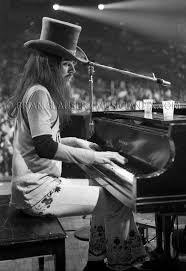
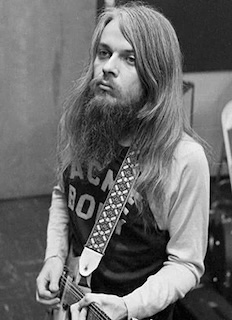
Leon morphed from this uber quiet, short-haired clean-cut session keyboardist to the coolest longhaired sunglass-wearing sexy visionary like a butterfly bursting out of a cocoon. The magic was always inside of him.
I didn’t write the following, but it’s worth sharing. (I did however, edit it a bit.)
If you listened to pop music in the 1960s, you heard Leon Russell play. You just didn’t know it.
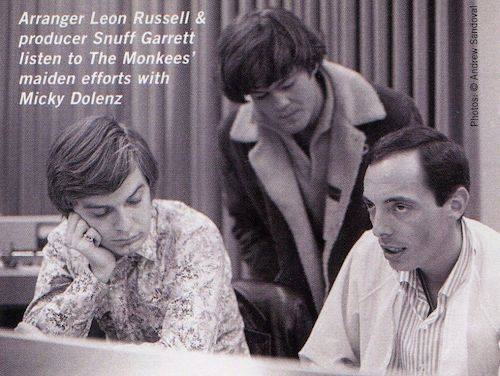
That piano on the Ronettes’ “Be My Baby”? Leon Russell. The Byrds’ early records? Leon Russell. Beach Boys sessions? Leon Russell. Phil Spector’s legendary “Wall of Sound” productions? Leon Russell was there, in a suit and tie, hair neatly trimmed, playing whatever was needed, and here with the Monkees.
For nearly a decade, Leon was one of the most sought-after session musicians in Los Angeles. Producers loved him because he could play anything—rock, jazz, country, blues, gospel. You could hum a melody and he’d give you the perfect piano part. You could describe a feeling and he’d translate it into music.
Producer Snuff Garrett said, “I could talk style with him and he’d do it. I’d name a record and go, ‘I like the piano on this…’ and he’d go, ‘Okay,’ and play it.”
Leon Russell was on hundreds of hit records. He was the secret ingredient in countless songs you’ve heard a thousand times.
And for years, almost no one knew his name.
Leon was born Claude Russell Bridges in 1942 in Lawton, Oklahoma with a birth injury (cerebral palsy on the right side) and began playing classical piano at age four. By fourteen, he was sneaking into Tulsa nightclubs with a fake ID, playing backup for Jerry Lee Lewis.
The fake ID belonged to a friend. The name on it was “Leon.” He kept it.
At seventeen, Leon moved to Los Angeles to chase his dream of making it in music. He studied guitar with James Burton, one of the best session players in the business. He worked constantly—sessions during the day, clubs at night, whatever paid.
And he was good. So good that by his early twenties, Leon Russell was playing on some of the biggest records of the decade.
He backed the Ronettes, the Crystals, Darlene Love. He played on Phil Spector’s famous Christmas album in 1963. He worked with the Byrds, Gary Lewis & the Playboys, Herb Alpert & the Tijuana Brass, the Beach Boys, the Ventures, Jan and Dean.
Herb Alpert later recalled that Leon would sit at the piano and say, “I don’t know what to play.” Then he’d “chime in with something special and affect the groove in a very Leon Russell way that was always unique.”
For years, Leon was brilliant, versatile, and completely invisible. A studio ghost. The guy in the suit playing piano while someone else got famous.
Then in the late 1960s, something changed.
Leon grew his hair long. He stopped wearing suits. He gathered a commune of musicians around him in the Hollywood Hills.
He stopped being the anonymous session player and started becoming Leon Russell—the artist–The Master of Space and Time.
In 1970, everything exploded at once.
Leon released his first solo album, simply titled Leon Russell. The musicians backing him? Eric Clapton. Ringo Starr. George Harrison. Not exactly unknown names.
That same year, he organized Joe Cocker’s legendary Mad Dogs & Englishmen tour—a massive, chaotic traveling circus of forty-plus musicians, complete with a full horn section, backup singers, and absolute mayhem. It was revolutionary. The tour became the stuff of legend, and Leon was the mastermind behind it all.
He wrote “Delta Lady” for Joe Cocker. It became a hit.
Then in 1971, Leon performed at George Harrison’s Concert for Bangladesh—one of the first major benefit concerts in rock history. He shared the stage with Harrison, Bob Dylan, Eric Clapton, and Ringo Starr. His medley of “Jumpin’ Jack Flash” and “Young Blood” was one of the standout performances of the night. He was ON FIRE.
Suddenly, Leon Russell wasn’t just a session player anymore. He was a star.
By 1973, Billboard named him the “Top Concert Attraction in the World.”
Read that again. The guy who had spent a decade playing anonymous piano parts was now filling stadiums on solo tours. His album Carney reached #2 on the charts. He was crossing genres effortlessly—rock, blues, country, gospel, bluegrass—and audiences couldn’t get enough.
He wrote songs that became standards. “A Song for You”—a tender, achingly beautiful ballad—has been recorded by more than 200 artists, including Ray Charles, Donny Hathaway, Whitney Houston, and Amy Winehouse. In 2018, it was inducted into the Grammy Hall of Fame.
Another of his songs, “This Masquerade,” was covered by more than 75 artists. George Benson’s version won a Grammy.
Leon founded Shelter Records in 1969, creating wild, creative environments where musicians could live and work together. He established studios in Hollywood and Tulsa, fostering creativity without boundaries.
He produced and played on sessions for Barbra Streisand, Bob Dylan, Frank Sinatra, Ike & Tina Turner, the Rolling Stones. He toured with the Stones. He collaborated with Willie Nelson. He wrote and recorded hits like “Tight Rope” and “Lady Blue.”
For a brief, brilliant period in the early 1970s, Leon Russell was one of the biggest names in music.
By the 2000s, Leon was playing smaller venues. The stadiums were gone. A new generation of music fans had never even heard of him. He kept touring—because that’s what he did, that’s who he was—but he was a legend from another era that the world had moved past.
He was still brilliant. He was still performing. But the spotlight had moved on.
In 2009, Elton John decided to do something about it.
Elton had idolized Leon since the beginning of his own career. When Elton was starting out in the early 1970s, Leon was already a star. Leon’s influence shaped Elton’s sound, his flamboyant showmanship, his entire approach to piano-driven rock.
Elton had always called Leon a mentor and an inspiration. So when he saw that Leon had been nearly forgotten, he reached out and asked him to record an album together.
The result was The Union, released in 2010. It was a collaboration between two piano-playing legends—one at the height of his fame, one who’d been overlooked for decades.
The album was critically acclaimed and Grammy-nominated. Cameron Crowe made a documentary about the creative process. And suddenly, people were talking about Leon Russell again.
Elton championed him publicly. He spoke about Leon’s genius, his influence, his importance to rock history. And in 2011, Elton inducted Leon into the Rock and Roll Hall of Fame.
That same year, Leon was also inducted into the Songwriters Hall of Fame.
After decades of being overlooked, Leon Russell was finally getting the recognition he deserved.
But by then, his health was failing. He’d had a heart attack. He had brain surgery, but was looking forward to another tour.
On November 13, 2016, Leon Russell died in his sleep at his home in Nashville. He was 74 years old.
Elton John posted: “My darling Leon Russell passed away last night. He was a mentor, inspiration & so kind to me. I loved him and always will.”
Leon Russell left behind an extraordinary legacy: 33 albums, at least 430 songs (probably more), collaborations with virtually every major artist of his era. He’d been directly involved with hundreds of bestselling records over a 60-year career.
But more than the numbers, Leon Russell represented something rare in music—a musician’s musician. Someone who could play anything, work with anyone, cross any genre. Someone equally at home backing Frank Sinatra in a suit or leading a hippie commune with wild hair and a beard down to his chest.
He proved you could be both the anonymous session player and the stadium-filling star. The guy in the background and the guy in the spotlight.
Leon Russell’s story is a reminder that the most talented people aren’t always the most famous—and that sometimes genius hides in plain sight for years before the world finally sees it.
He played on songs you’ve heard a thousand times without ever knowing his name.
Then he stepped into the light and showed the world what he’d been all along: a master. Curated from NoCapArchives
As someone posted on social media, “Besides beautiful Leon’s awesome talents and accomplishments, the purity of his heart shines through.” His disability didn’t hold him back; he’s an inspiration.
Check out the genius of Leon during the Homewood Sessions…it captured a priceless moment in time:
 Enchanted Seashells | Princess Rosebud