There’s some online discussion regarding whether or not novalunosis is a “real” word, but there’s no disagreement about the feeling of looking up in wonderment at the night sky.
Is Earth the only inhabited planet? With the vastness of the unexplored cosmos, is it even possible to think we are the only living, breathing, sentient creatures?
It’s an overwhelming feeling; novalunosis, but it can spark deep thoughts and conversations about infinity and the cosmos.
“The Cosmos is all that is or was or ever will be. Our feeblest contemplations of the Cosmos stir us; there is a tingling in the spine, a catch in the voice, a faint sensation, as if a distant memory, of falling from a height. We know we are approaching the greatest of mysteries.” — Carl Sagan
This year’s theme for World Kindness Day is “Be Kind Wherever Possible”, to highlight the significance of kindness to be practiced all over the universe and in each part of our lives.
The motivation behind World Kindness Day is to focus on the positivity and empathy that joins all of us. A crucial part of the human experience, kindness rises above political, racial, religious, gender, and geographical limits.
One of the themes of the Angels’ bedroom is “kindness” and I’ve hung these quotes on the wall, to persistently, if not also subliminally, get my message across.
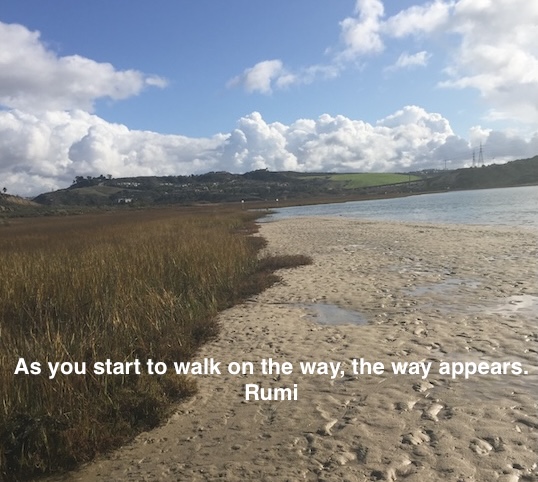
I don’t know how many times I’ve had the same conversation with Angel Boy 2.0 about Rumi’s Three Gates, especially regarding his little sister…
Before you speak, let your words pass through three gates At the first gate, ask yourself, “Is it true?” At the second gate ask, “Is it necessary?” At the third gate ask, “Is it kind?”
Best of all, Krispy Kreme is giving donuts away to the first 500, so I better leave now so I can get in line. I could use some of that sort of kindness!
Out beyond ideas of wrongdoing and rightdoing there is a field. I’ll meet you there. When the soul lies down in that grass the world is too full to talk about.
NOT the psychedelic kind that Huxley wrote about…but opening the door to self reflection with love and compassion.
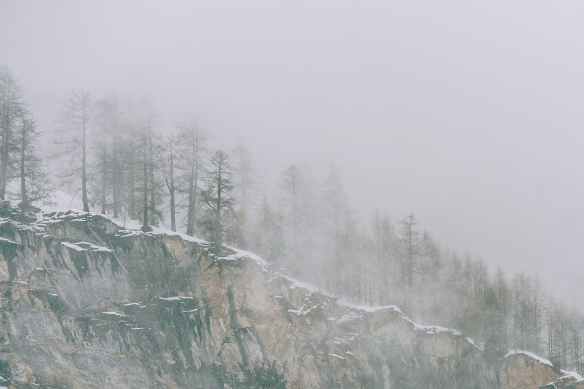
This photo looks like it could be one of my favorite places, a slot canyon in Grand Staircase-Escalante National Monument or here at Vermillion Cliffs, where I snapped this photo.
I love not hearing cars, sirens, air compressors, grinders, belt sanders, and the cacophony of other human discord.
What I most love hearing at night is the song of a coyote, the hoot of a Great-Horned Owl, and listening to my thoughts.
Since there’s been less human activity since the GREAT PANDEMIC OF 2020, I’ve come to enjoy the sounds of silence in my neighborhood.
Before I go to bed, I sit outside in total darkness on the deck. I look up at the sky and think about a poem I wrote in college about Orion; I guess I’ve always been drawn to the night.
This week, there were Lyrid meteor showers and even fireballs, but I missed them all. Still, it’s comforting knowing that they happened, even if I didn’t get to personally witness any.
Lately, there’s a new and beautiful addition to the songdogs and the owls.
It’s one of the only birds that sings at night in my area, the Northern Mockingbird.
The northern mockingbird is a world-famous singer, considered finer even than the famous nightingale of Europe.
The male sings a medley of songs belonging to other birds, repeating each phrase several times before moving on to the next.
Most songbirds learn all the songs they’ll ever sing before they’re a year old.
He learns the songs of other birds and incorporates them into his own songs. Mockingbirds also sometimes “sing” the sounds of people whistling, frogs croaking, and doorbells ringing.
Although all adult male mockingbirds sing during the day, only a bachelor sings at night.
Their night music is a beautiful love song. As soon as the mockingbird finds a mate, he stops singing at night. And that’s how we’ll know.
And then I started thinking about other types of beautiful music, like A little Night Music by Mozart (Eine Kleine Nachtmusik), Eine kleine Nachtmusik (Serenade No. 13 for strings in G major), K. 525, is a 1787 composition for a chamber ensemble by Wolfgang Amadeus Mozart. The German title means “a little serenade,” though it is often rendered more literally but less accurately as “a little night music.” The work is written for an ensemble of two violins, viola, and cello with optional double bass, but is often performed by string orchestras.
And finally, some Rumi:
Close the door of words that the window of your heart may open. To see what cannot be seen turn your eyes inward and listen, in silence.