
This blog is exactly like my personality: random…
One minute I’m searching for seashells or a rock that speaks to my heart or I’m reveling in a designer treasure found at the local consignment shop after a day protesting that orange POS and the fall of democracy, yet at the same time, on any given day, I’m a voracious reader, whether it’s chick lit or poetry or something that catches my eye on social media, all the while obsessing over Leon Russell, Master of Space and Time. There are definitely many tabs open on my laptop screen (and in my head).
Like this…thought-terminating clichés.
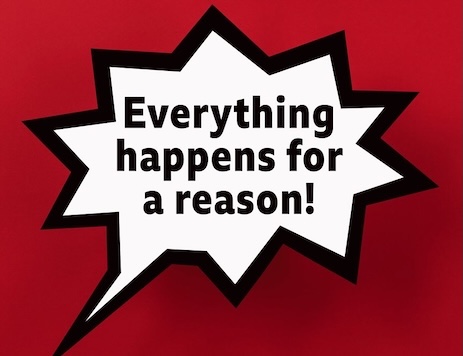
How many times have you heard this (or said it)? “Everything happens for a reason.” Did you find it helpful or frustrating? I find it frustrating and not helpful AT ALL. It makes me feel the person I’m talking to either doesn’t care about what I’m saying or is trying to act superior and patronizing.
For me, that attitude completely terminates the conversation. Sometimes I respond with “Does it really? Does everything REALLY happen for a reason?” but mostly I simply stop talking. There’s nowhere to go after that; for me It’s a convo-ender.
A thought-terminating cliché is a common saying or phrase used to shut down further critical thinking or debate about a topic. These phrases often present themselves as universally accepted truths or wisdom, discouraging deeper exploration or questioning. They can be used in various contexts, including conversations, debates, and even within workplaces or religious groups.
The term was popularized by Robert Jay Lifton in his 1961 book Thought Reform and the Psychology of Totalism, who referred to the use of the cliché, along with “loading the language”, as “the language of non-thought”.
It’s also known as a semantic stop-sign, a thought-stopper, bumper sticker logic, or cliché thinking and is a form of loaded language—often passing as folk wisdom—intended to end an argument and quell cognitive dissonance with a cliché rather than a point. Some such clichés are not inherently terminating, and only becomes so when used to intentionally dismiss, dissent, or justify fallacies.
1. “It is what it is.” Used to dismiss any deeper inquiry into a situation or problem.
2. “You’ll figure it out.” Used to avoid helping or being asked for help. Condescending.
3. “Boys will be boys.” – Used to excuse or dismiss male behavior, often inappropriate or immature.
4. “Let’s agree to disagree.” Used to end a debate without resolving the underlying disagreement.
5. “Everything happens for a reason.” Used to shut down further questioning about why something occurred.
6.””Only time will tell.” Used to avoid making a decision or judgment about a situation.
7. “Such is life.” Used to dismiss the complexities or frustrations of a situation as being typical or unavoidable.
8. “What doesn’t kill you makes you stronger.” Used to trivialize suffering or hardship without addressing its impact.
9. “God works in mysterious ways.” Used to stop questions about religious or moral issues that are difficult to explain.
10. “It’s a free country.” Used to justify questionable actions or opinions without further discussion.
11. “You can’t win them all.” Used to discourage further effort or reflection after a failure or loss.
12. “Better safe than sorry.” Used to justify overly cautious behavior without considering the consequences of inaction.
13. “Everything in moderation.” Used to avoid discussing the nuances or dangers of certain behaviors or choices.
14. “That’s just your opinion.” Used to dismiss someone’s perspective or argument without considering its merits.
15. “Let’s not rock the boat.” Used to discourage change or questioning of the status quo.
16. “This is the way we’ve always done it.” Used to resist change or new ideas without considering their potential benefits.
17. “Time heals all.” Completely puts a stop to any discussion that isn’t in agreement.
To transform thought-terminating clichés into conversation catalysts, we can create alternative phrases or questions that encourage further exploration and dialogue.
Here are some antidotes, each designed to open up rather than shut down conversations:
- Instead of “It is what it is”: Ask, “What factors have led to this situation, and how can they be addressed?”
- Instead of “Boys will be boys”: Query, “What behaviors are we accepting, and why, and how can we foster more responsible actions?”
- Instead of “We agree to disagree”: Suggest, “Let’s delve into our differing viewpoints to understand each other better.”
- Instead of “Everything happens for a reason”: Pose, “What can we learn from this situation, and how might it influence our future choices?”
- Instead of “Only time will tell”: Consider, “What potential outcomes can we anticipate, and how can we prepare for them?”
- Instead of “Such is life”: Reflect, “How does accepting this situation impact us, and are there aspects we can change or influence?”
- Instead of “What doesn’t kill you makes you stronger”: Explore, “What challenges are we facing, and how can we grow or learn from them?”
- Instead of “God works in mysterious ways”: Ask, “How can we find meaning or understanding in this situation?”
- Instead of “It’s a free country”: Discuss, “How do our individual actions impact others, and where do we draw the line between freedom and responsibility?”
- Instead of “You can’t win them all”: Consider, “What can we learn from this loss, and how can it inform our future efforts?”
- Instead of “Better safe than sorry”: Ponder, “What are the risks and benefits of our choices, and how do we balance caution with opportunity?”
- Instead of “Everything in moderation”: Question, “How do we find a healthy balance, and what does moderation look like in this context?”
- Instead of “That’s just your opinion”: Offer, “I appreciate your perspective. Can you share more about how you arrived at this viewpoint?”
- Instead of “Let’s not rock the boat”: Encourage, “What potential benefits and challenges could come from addressing this issue?”
- Instead of “This is the way we’ve always done it”: Propose, “What new methods or ideas could we consider to improve this situation?”
Curated from desireebstephens.substack.com/p/the-power-of-silence-unpacking-thought, Wiki




 Enchanted Seashells | Princess Rosebud