Night Owls 🦉

I share my world with coyotes, bobcats, raccoons, skunks, possums, lots of bunnies, even more rats, and an assortment of birds including scrub jays, mockingbirds, hummingbirds, hawks, egrets, and herons.

And owls.

Late at night I’m lucky to hear the hoots of a mating pair of Great Horned Owls in the tallest eucalyptus trees. It’s a soothing sound as I fall asleep, the hooting of owls in the distance.

Last night was different. I was awakened at 2:30 a.m. with the sound of that distinctive hoo-hoo-hoo only MUCH closer. Even through a closed window, it was LOUD, and so was the answering call.

This back and forth conversation didn’t stop for an hour and it was impossible to get back to sleep.

I learned that owls lay eggs in March, so maybe that’s what the chat was all about. My around the corner neighbor has an owl box, so that’s a logical thought.

Hopefully, they took turns hunting all the rats and mice around here, too.

Symbolically, hearing owls at night provides protective energy. The spiritual meaning of hearing an owl could be that it’s important to establish energetic boundaries.

Owls use their excellent hearing, keen eyesight, and silent wings to hunt and keep safe. So when our vision fails us in life, the owl’s call at night symbolizes protection and guidance. Hearing an owl at night can represent gaining a new direction in life.

Owls use their calls to claim their territory, to signal that there’s a predator nearby or to communicate with their partner.

The meaning of hearing two owls is related to spiritual enlightenment. An owl is the ultimate symbol of wisdom and maturity.

Two owls hooting is a sign that you’re in the middle of strong spiritual energies and you need to let them lead you into the changes your soul is going through.

It’s a reminder to open your heart and embrace the changes.

Higher forces have recognized it, so they’re sending you owls, as a dose of additional energy to move forward.

Owls are always carriers of important messages. If you’re wondering what it means to hear two owls late at night, the answer lies in the way you observe things around yourself.

Owls want you to change your perspective about recent events and try to discover why they really happened. There’s a hidden message behind it and you need to discover it.

If you hear an owl hooting near your house and wonder: “What does it mean when an owl hoots outside your house?”, the answer will cheer you up: an owl outside your house is considered to be a signal of good luck.

Owls are observed as highly spiritual animals and their hooting can only bring positive vibes to you.

Although different cultures have different interpretations of owl symbolism, almost every culture treats owls as a symbol of good luck and prosperity. joyceelliot.com

I’m tired today, but always find joy and gratitude in my wild friends.

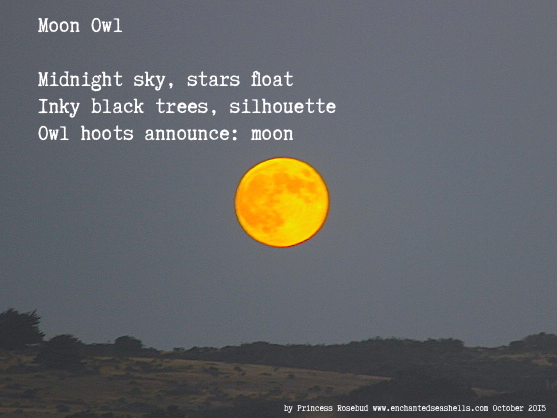
It’s almost time for the March full moon and the night sky is clear and bright.
Snow in Southern California?

A few days ago, we had a special weather alert telling us it actually might SNOW on the beach!

The temp dropped significantly. It had been raining off and on all day and I was SO hopeful, as excited as a first grader; sadly it didn’t snow here.

There were a few flakes several miles up the coast, and measurable snow just a bit inland, but nothing at Casa de Enchanted Seashells.

While I waited in anticipation for SNOW, I looked off in the distance and snapped this photo from my deck.

The perspective is a bit skewed as the apartments aren’t that close. They’re more than a few blocks away and the mountains are further than they appear here, too, actually about fifty miles east. I think it’s because I used a different camera lens and setting.

If you ignore the ugly and invasive apartments defiling my view, I think that’s Palomar Mountain covered in snow. It could also be the Lagunas; regardless, they both received several feet of snow while we had more than four inches of rain.

March certainly came in like a lion!

In The Garden: Lemonade Berry

This Lemonade Berry tree has almost completely taken over my front yard, surpassing our wildest intentions.

Once again, my brilliant Angel Boy didn’t think far enough into the future when we turned our front garden from lawn into a haven for California native plants.

Lemonade Berry (Rhus integrifolia) is an evergreen shrub or small tree. It tends to grow upright (10- 30 feet tall), but sprawls next to beaches. It’s often found in coastal canyons where it sometimes dominates entire hillsides. (YES!)

The Lemonade Berry’s petioles are pink or brownish and leaf blades are leathery. The flowers appear from February to May. The fruit is red to gray and has a tart flavor which gives the plant its name. Lemonade Berry is an important wildlife plant and the berries are a significant food source for birds and small mammals.

The Cahuilla and other California native peoples ate the fruits of the lemonade berry raw. They soaked the berries in water to make a beverage, and ground the dried berries into flour for a mush or to add to soup. It also has medicinal uses.

As Food:
Ripe berries of the sugar bush or lemonade berry can be soaked in hot water to produce a tart lemon-tasting beverage. Steeping in almost boiling water produces a stronger drink than steeping in sun-heated water. For a strong drink, you will need a ratio of one-part berries to two parts water.

These berries make a tart snack if picked right off of the bush, but only if sucked for their juice; the pulp is not swallowed. The berries have small hairs that can upset your stomach. Enjoy the bitter refreshing taste and spit the berry out when done.

Medicine:
Tea made from the stems can be used to treat coughs. The tea made from the bark, berries, or leaves steeped in cold water can be gargled for sore throats and cold sores.Caution: Some people are allergic to the bark, roots, and leaves, so use it sparingly the first time.

Some info curated from Santa Monica Mountains Trail Council

California Lilacs: Blooming Ceanothus

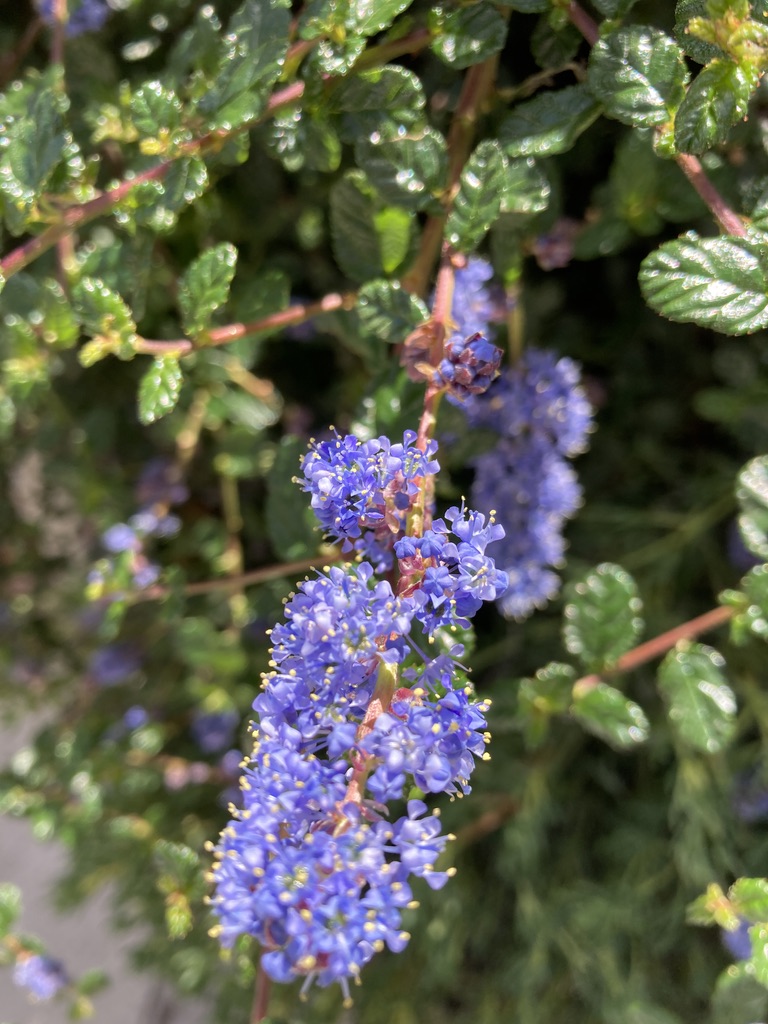
California Lilacs, or Ceanothus, are some of our most fragrant and colorful shrubs here in California. They are also evergreen and very drought tolerant.

Our extreme rain has caused my prize ceanothus plant to bloom like it’s never bloomed before.

What’s even more amazing is that a few years ago I thought it had died and planted other things in its place. When I noticed a few sprouted leaves, I decided to watch and see what happened.

Magic happened where I couldn’t see; beneath the topsoil.

Today, it’s taken over the entire area next to my driveway. It’s a testament to tenacity, determination, and perseverance; great qualities to emulate.

This ceanothus is so vibrant and alive that it takes my breath away.

House Finch Invasion!

Whether they’re House Finches or Robins doesn’t really matter. They are adorable!

I was standing at the kitchen sink washing dishes and looked out at an amazing sight. There were literally dozens of chirpy birds invading my garden, SO MANY I couldn’t even count them all.

I no longer have feeders because of my arch nemeses, RATS, so what they’re feasting on here is actually an invasive species, a Brazilian Pepper tree that somehow sprouted into the neighbor’s yard and they didn’t get rid of it like we did.

There’s no way I could capture as many as there are, but I’d say definitely more than fifty of these lovely red breasted birds are visiting Casa de Enchanted Seashells.

This makes sense because they’re eating red berries from the pepper tree.

They stayed for about an hour, saturating my world with their most delightful song and chirpy calls to friends and family. Every tree in the garden is full of these guys as well the rosemary and lavender bushes.

I’ve never seen anything like this. For me, It’s as exciting as spotting a pod of whales or dolphin. I’m grateful they chose my garden to visit. Pure joy!

Sparkle Sunday

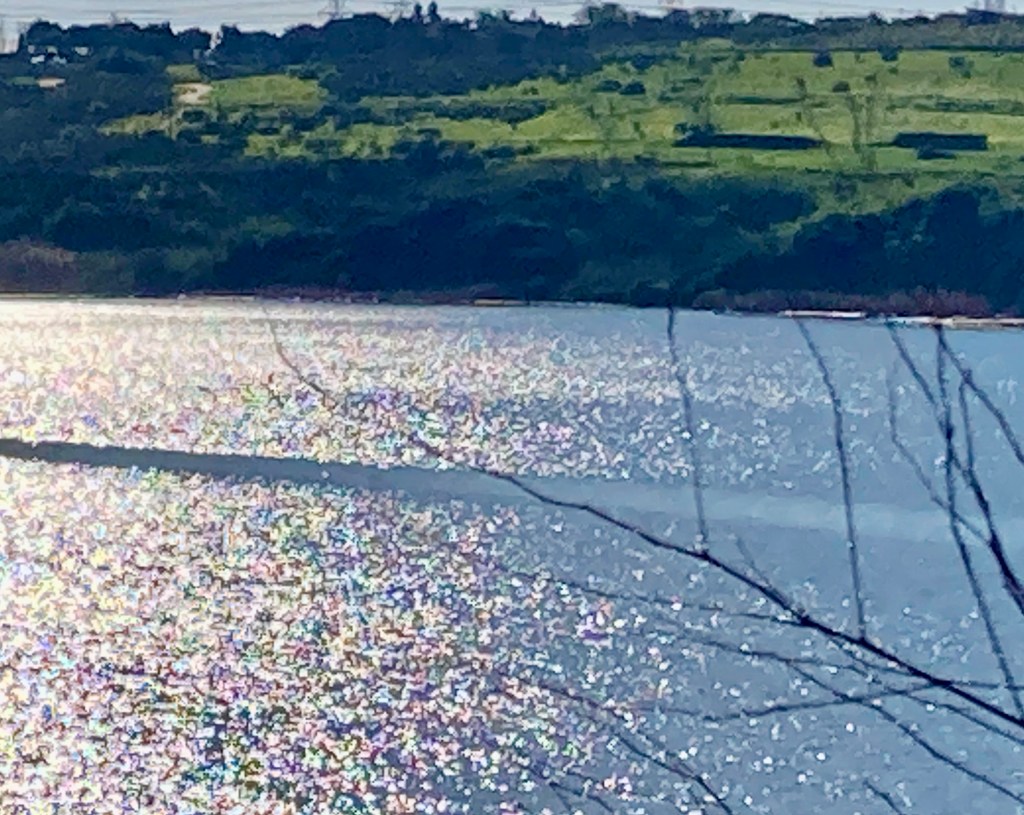
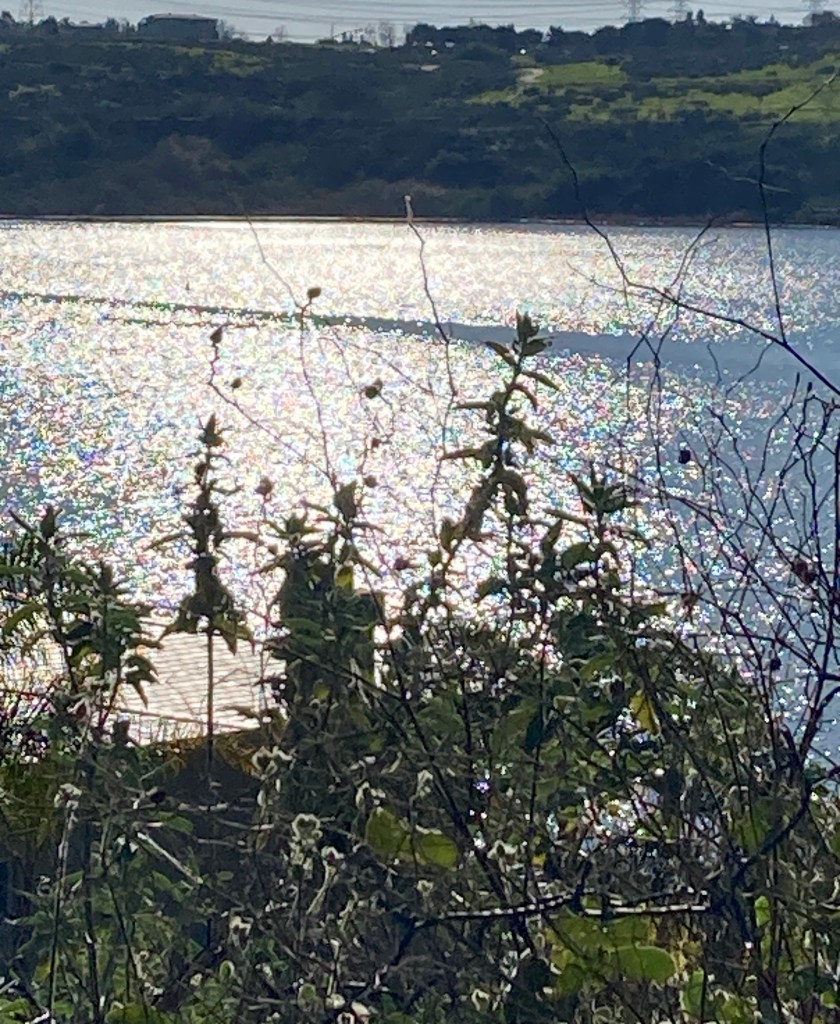
After the rain, the hills are technicolor green and the lagoon is full of shiny sparkles.

I think the line in the water is from the tidal flow, but I’m not 100% sure…

In The Garden: Cape Honeysuckle

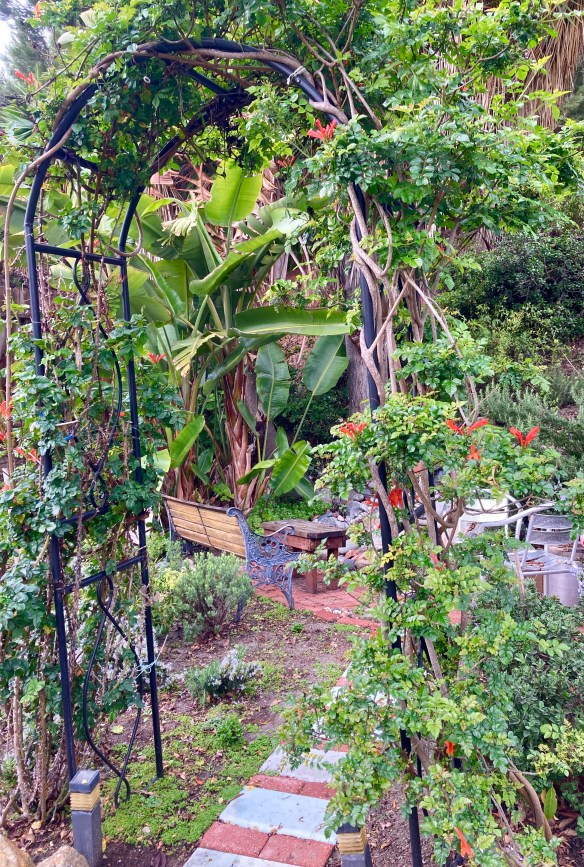
After a few very rainy days, it’s dry for a while until the next storm appears. I see a bit of blue sky as the contrasting backdrop to my Cape Honeysuckle trained to climb over an arbor.

The sweet nectar of its orange-red flowers attracts butterflies and hummingbirds.

The Cape Honeysuckle (Tecoma capensis) produces long, thin elongated fruit capsules that contain numerous seeds easily dispersed by the wind. 

It’s easy to propagate from a cutting, so I have lots of them growing in different parts of the garden.

Yup, there’s a lot going on in this photo; a path leading to a pond, the arbor of Cape Honeysuckle and Peppermint-Striped Climbing Roses, and a giant Bird of Paradise.

Everything needs some major work, but it’s a labor of love.

#WordlessWednesday

Come Home

Come home to nature. The forest is magical and full of sparkles.

Come home to the forest
Where time goes slow
and the breath is mellow
Where thoughts find rest
and calm comes to nest .
Come home to the woods
to be friends with trees
and listen to the breeze
to wander through trails
and mend your sails .
Come home to nature
when your heart is hurting
or your soul needs healing .
When something feels wrong
or you just need a place to belong .
The forest awaits
Come home, be healed …

-Bidushee Phukan-

Art by Elaine Bayley. Curated from Coyote Watch Canada

A Royal High Tide

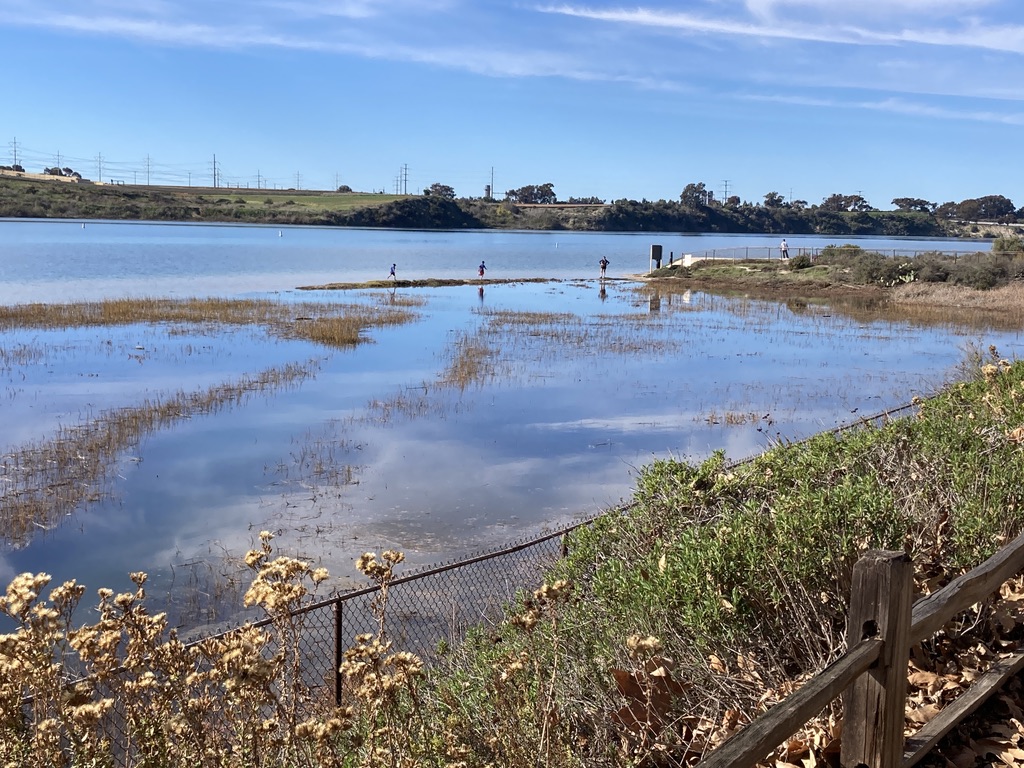
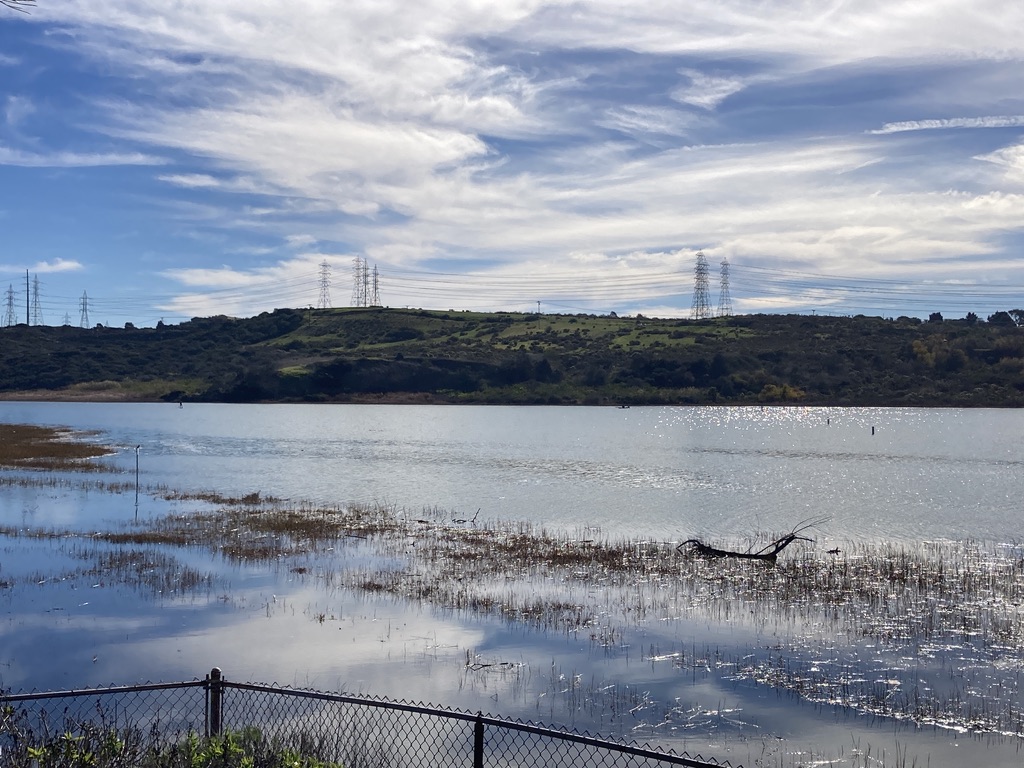
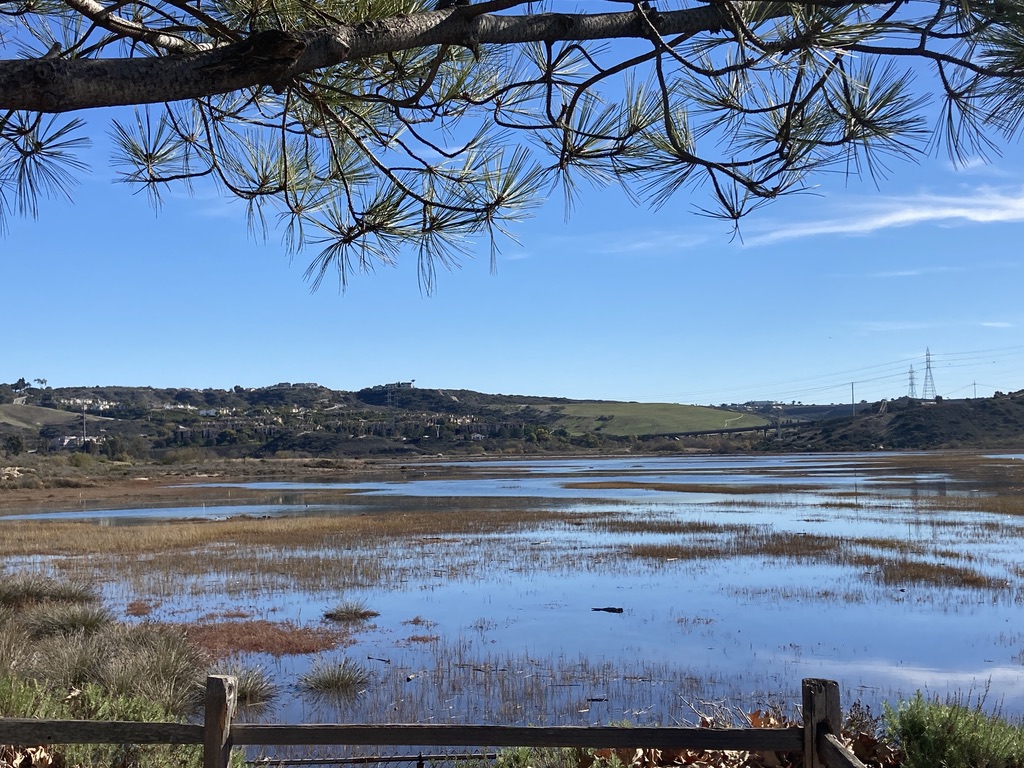
Last week’s King Tides created the unusual sight of flooded marsh and wetlands.

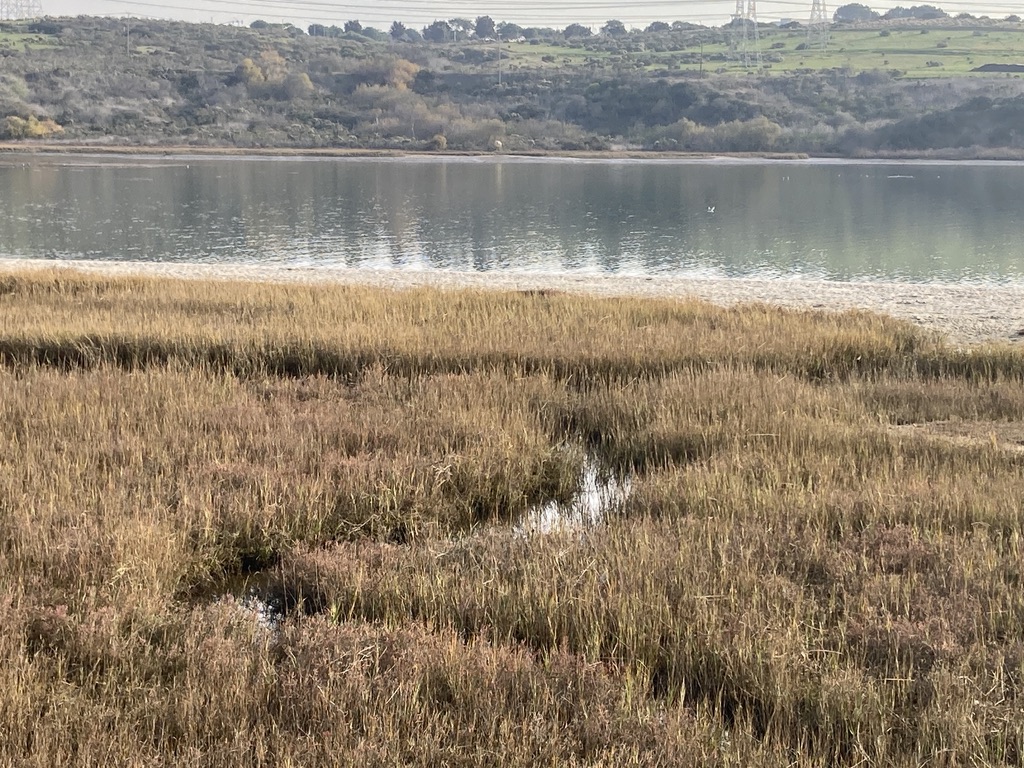
Here at Agua Hedionda, freshwater creeks drain into a low-lying area meeting the sea. The ocean pushes tides and sands against the land as the creek drains its fresh water and sediment into the sea. This mix of fresh and salt water forms a brackish environment. The salinity varies with the seasonal influence of rain and storms.

Sometimes the tide is so low, we can walk all the way around to the south side where there’s a sweet little beach, but not that day!

With all of this recent rain we’ve had (and more on the way), freshwater basins appear and fill the normally dry land surrounding the lagoon.

After all these years, this is still one of my favorite views. We see the lagoon, freeway, train tracks, and Pacific ocean.

Peace, Serenity, and Joy

That’s the feeling I get from an afternoon walk around Agua Hedionda Lagoon. It’s the kind of holiday celebration I love.

This is the perfect spot to breathe and contemplate centuries of Native American history.

For ten thousand years, these rolling hills and canyons surrounding the lagoon provided shelter and food with an abundance of native plants and trees.

Indigenous peoples spent their winters making salt and gathering shellfish for food, jewelry, tools, and trade.

To the Luiseño, this area was Palmai, or “place of big water.” The Luiseño culture is noted for its mysticism and religious practices.

From “Seekers of the Spring – A History of Carlsbad” by Marje Howard-Jones:
“It was a hot and dusty afternoon when Don Gaspar de Portola and Father Juan Crespi called a halt by the banks of a tidal lagoon. According to the padre’s journal for Monday, July 17, 1769, the party had left San Alejo to the south at three in the afternoon. They had traveled one league before descending into a valley where alders sheltered a deserted Indian village. ‘We named this valley San Simon Lipnica’, he wrote. Taking special exception to the scent of decaying fish and other debris, it was the soldiers who unwittingly christened the lagoon for posterity: ‘Agua Hedionda,” the ‘stinking waters’.”

The Native American peaceful coexistence with nature created a culture whose openness and adaptability left them vulnerable to aggressive invaders, another tragic story of desecration, destruction, and appropriation.