Another Portal, Another Open Door

Today is November 11 — 11/11 is a highly charged and meaningful date.

If we set aside conversation about whether numerology is real or manufactured, I believe it can’t ever hurt to attempt to positively set intentions for my greatest and highest good. I mean, isn’t that something to strive for on a daily basis?

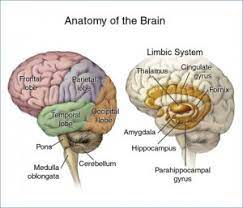
Scientifically, neuroplasticity is the brain’s ability to change and adapt due to experience; to modify, reorganize, and grow new neural pathways. One of my fave books on this subject is Buddha’s Brain: The Practical Neuroscience of Happiness, Love and Wisdom by Rick Hanson, Ph.D.

Yes, an old dog CAN learn new tricks!

Things we can do to capture the essence of this 11/11 portal and hopefully also bring gratitude into a daily practice.

  1. Vision Board…If you don’t already have one, now is the perfect time to create a vision board by collecting images, quotes, and symbols that represent your goals, dreams, and desires. Spend time on 11/11 meditating or visualizing your goals while looking at your vision board to reinforce your intentions.
  2. Affirmations…Write down positive affirmations related to your desires and intentions. These should be present-tense statements (I am, I have, etc.) that reflect what you want to manifest. On 11/11, repeat your affirmations aloud or silently, emphasizing your belief in their truth. You can do this during a dedicated meditation or throughout the day.
  3. Gratitude Journal…Start a gratitude journal and list the things you’re grateful for in your life. This practice can help you shift your focus to a positive mindset. On 11/11, carve out some time to express gratitude for what you have.
  4. Meditation and Visualization…Practice meditation on 11/11 to quiet your mind and open it to the power of manifestation. Find a quiet space, close your eyes, and focus on your breathing. After calming your mind, visualize your goals as if they’ve already been achieved. Feel the emotions associated with your success and immerse yourself in this positive state of mind.
  5. Set Specific Intentions…Write down your specific intentions. Be clear and precise about what you desire. Take your written intentions and place them in a special container, like a manifestation jar or envelope, and keep it in a visible place as a reminder of your goals. Open them up next 11/11 and see what has come to fruition.
    Curated from https://collective.world/5-powerful-ways-to-manifest-your-greatest-desires-on-11-11/ Art curated from Pinterest

Departure From The Norm

This post is a departure from what I usually write about because I just spent a few minutes gazing at this mindblowing optical illusion and I was totally freaked out, so I need to ask…

Does this work for everybody? The brain is a wondrous thing…

Schroeder stairs is an optical illusion, a two-dimensional drawing which may be perceived either as a drawing of a staircase leading from left to right downwards or the same staircase only turned upside down, a classical example of perspective reversal in psychology of perception. It’s named after the German natural scientist, Heinrich G. F. Schröder, who published it in 1858.

I Am 🩷

The practice of daily affirmations is a great way to reframe our mental patterns, shifting into positive thinking while learning to dynamically rewire our brain with neuroplasticity.


“I closed my eyes, took a calming breath and listened to my heart call I am… I am… I am…”

~Sylvia Plath The Bell Jar

(In 1982, Plath was posthumously awarded the Pulitzer Prize for her Collected Poems.)

Try these I am affirmations:

I am excited for this day.
I am so grateful to be alive.
I am lovable.
I am worthy.
I’m going to have a great day.
I am open to opportunities.
I am alive.
I am full of joy.
I am at peace.
I am positive.
I am safe.
I am a wonderful person.
I am happy and healthy.
I am.
🩷

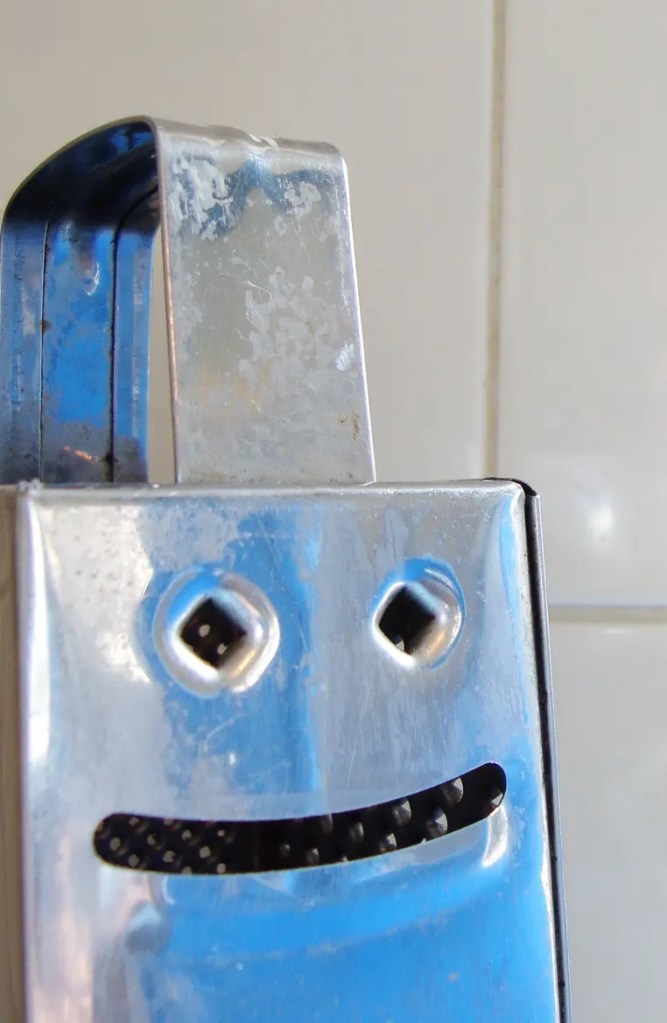
Word of the Day: Pareidolia

Pareidolia: (n.) the instinct to seek familiar forms in disordered images like clouds or constellations; the perception of random stimulus as significant.

Pareidolia is a type of apophenia, to see patterns in random data.

Pareidolia is the tendency for perception to impose a meaningful interpretation on a nebulous stimulus, usually visual, so that one sees an object, pattern, or meaning where there is none, like the Rorschach inkblot test.

Studies have shown that facial features aren’t the only thing that we see when we come across an illusory face. It was found that we also see age, emotion, and gender – and strangely enough the vast majority of these funny faces are perceived as male faces, like the man in the moon.

I’m sure my neuroscientist DIL would have a much more scientific and intelligent explanation than I do, but I find it fascinating to discover faces or animals in clouds or common objects.

Check out these examples:

From Bored Panda

How to Rewire Our Brain for JOY

Since my DIL is a neuroscientist, anything that relates to the brain and how it works is a topic of conversation around Casa de Enchanted Seashells.

According to Buddha’s Brain: The Practical Neuroscience of Health, Happiness, and Wisdom, we can change our mind–to change our brain–to change our mind.

The beauty of self-directed neuroplasticity means we really can teach old dogs new tricks.

Author Rick Hanson’s premise is that if we intentionally choose positive thoughts, we can change our life for the better.

Here’s an excerpt about JOY:

Internalizing the Positive

1. Turn positive facts into positive experiences. Good things keep happening all around us, but much of the time we don’t notice them; even when we do, we often hardly feel them. Someone is nice to you, you see an admirable quality in yourself, a flower is blooming, you finish a difficult project — and it all just rolls by. Instead, actively look for good news, particularly the little stuff of daily life: the faces of children, the smell of an orange, a memory from a happy vacation, a minor success at work, and so on. Whatever positive facts you find, bring a mindful awareness to them — open up to them and let them affect you. It’s like sitting down to a banquet: don’t just look at it — dig in!

2. Savor the experience. It’s delicious! Make it last by staying with it for 5, 10, even 20 seconds; don’t let your attention skitter off to something else. The longer that something is held in awareness and the more emotionally stimulating it is, the more neurons that fire and thus wire together, and the stronger the trace in memory.

“Focus on your emotions and body sensations, since these are the essence of implicit memory. Let the experience fill your body and be as intense as possible. For example, if someone is good to you, let the feeling of being cared about bring warmth to your whole chest.

“Pay particular attention to the rewarding aspects of the experience — for example, how good it feels to get a great big hug from someone you love. Focusing on these rewards increases dopamine release, which makes it easier to keep giving the experience your attention, and strengthens its neural associations in implicit memory. You’re not doing this to cling to the rewards — which would eventually make you suffer — but rather to internalize them so that you carry them inside you and don’t need to reach for them in the outer world.

“You can also intensify an experience by deliberately enriching it. For example, if you are savoring a relationship experience, you could call up other feelings of being loved by others, which will help stimulate oxytocin — the ‘bonding hormone’ — and thus deepen your sense of connection. Or you could strengthen your feelings of satisfaction after completing a demanding project by thinking about some of the challenges you had to overcome.

3. Imagine or feel that the experience is entering deeply into your mind and body, like the sun’s warmth into a T-shirt, water into a sponge, or a jewel placed in a treasure chest in your heart. Keep relaxing your body and absorbing the emotions, sensations, and thoughts of the experience.”

The Science of Gratitude

Counting your blessings and creating a list of things to be thankful for has a real foundation in science and might even change the way our brains work, according to a brain-scanning study in NeuroImage.

It brings us a little closer to understanding why these exercises have these effects. The results suggest that even months after a simple, short gratitude writing task, people’s brains are still wired to feel extra thankful. The implication is that gratitude tasks work, at least in part, because they have a self-perpetuating nature: The more you practice gratitude, the more attuned you are to it and the more you can enjoy its psychological benefits.

Feeling grateful is very good for you.

Time and again, studies have shown that performing simple gratitude exercises, like keeping a gratitude diary or writing letters of thanks, can bring a range of benefits, such as feelings of increased well-being and reduced depression, that often lingers well after the exercises are finished.

Changing our neural pathways of any old tapes we run of self loathing and lack of self worth and depression with replacement thoughts of being valuable, of deserving love and respect aren’t new ideas but they’re new to ME. Louise Hay is a well-known proponent of positive self talk and affirmations.

Recently, I started sporadically attending  free Friday mediation classes at the Deepak Chopra Center in La Costa because I thought I needed a little jump start to get to the next level of peace, harmony, joy, and NAMASTE.

After one of the sessions, I purchased Deepak’s little book, The Seven Spiritual Laws of Success. I just found a pdf of it here, if you are interested in reading it, too. It’s an easy read with valuable insights and suggestions.

I like knowing that I’m headed on a path toward increased compassion and gratitude, hoping to make the world just a little bit kinder by being more kind and grateful.

The Project of Happiness outlines seven steps toward the goal of a  joyful and fulfilled life.

me-2016

I’m grateful to all of you who read and follow my blog.

What are YOU grateful for today?

*Thanks to http://bulgariastories.com/2015/11/2612/ for JFK image