“The Sparrow” by Paul Laurence Dunbar

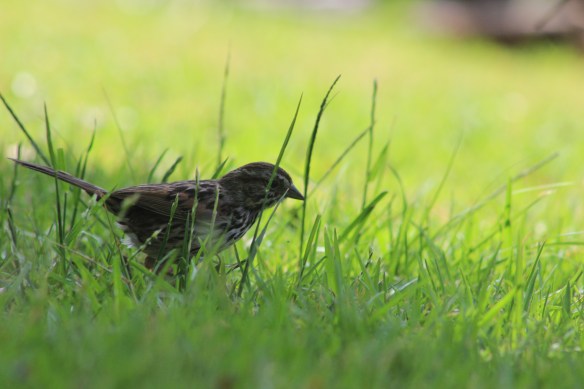
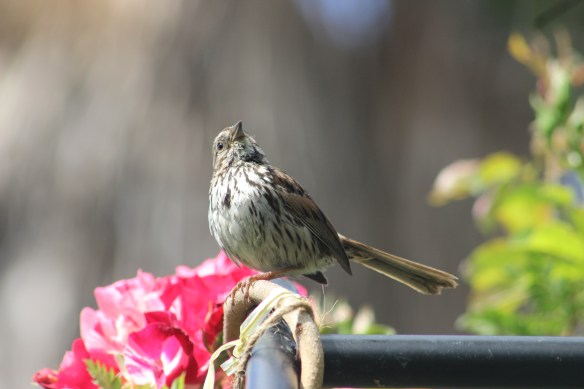
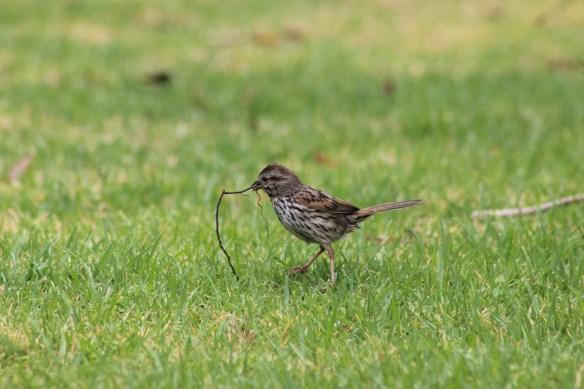
I love this little bird. It really seems like he likes to follow me around so I started to follow him and snap pics everywhere he hopped.  A special little friend for sure.

The Sparrow

A little bird, with plumage brown,
Beside my window flutters down,
A moment chirps its little strain,
Ten taps upon my window–pane,
And chirps again, and hops along,
To call my notice to its song;
But I work on, nor heed its lay,
Till, in neglect, it flies away.
So birds of peace and hope and love
Come fluttering earthward from above,
To settle on life’s window–sills,
And ease our load of earthly ills;
But we, in traffic’s rush and din
Too deep engaged to let them in,
With deadened heart and sense plod on,
Nor know our loss till they are gone.
Paul Laurence Dunbar – 1872-1906
IMG_6632IMG_6628IMG_6631IMG_6630IMG_6629IMG_6625IMG_6623IMG_6621IMG_6620IMG_6618

Remembering Maya Angelou

We lost her six years ago today, May 28, 2014.
I honor her wisdom, character, and resilient soul.

“A Woman in harmony with her spirit
is like a river flowing.
She goes where she will without pretense and arrives at her destination
prepared to be herself
and only herself ”

― Maya Angelou

fullsizeoutput_dd0

Elaine Bayley Illustrations


Some Enchanted Evening

Since Saturn, Venus, and Jupiter are all in retrograde, it’s time for a little magic with Chanel and sparkles. All dressed up for an enchanted evening at Casa de Enchanted Seashells with candles and romantic music…

And night after night,
As strange as it seems
The sound of her laughter
Will sing in your dreams.
This is THE song for me from South Pacific. Whose version do you like best?

…and Willie Nelson! I met him a few years ago. He was so kind and I got a hug, can’t believe I was brazen to ask for one, lol.

An evolution of blue

Since I’m pretty much a (willing) prisoner here at Casa de Enchanted Seashells just like we’re all enduring stay-at-home orders,  I decided to create a positive mindset and find the beauty inside and outside these four walls and my infinite garden.

Today, the sky is blueblueblue with occasional puffy clouds so I thought I’d focus on blue.

Cerulean, ultramarine, the shade of a Ceylon sapphire.More like a periwinkle blue, but still BLUE.

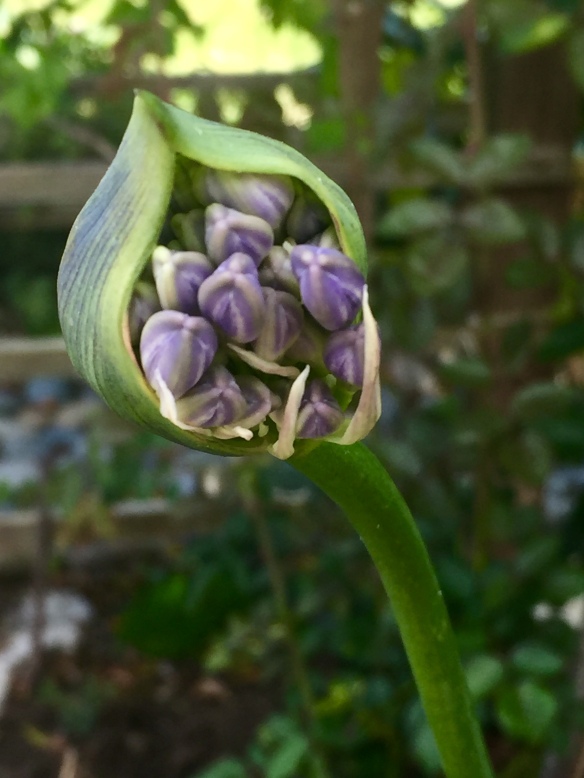
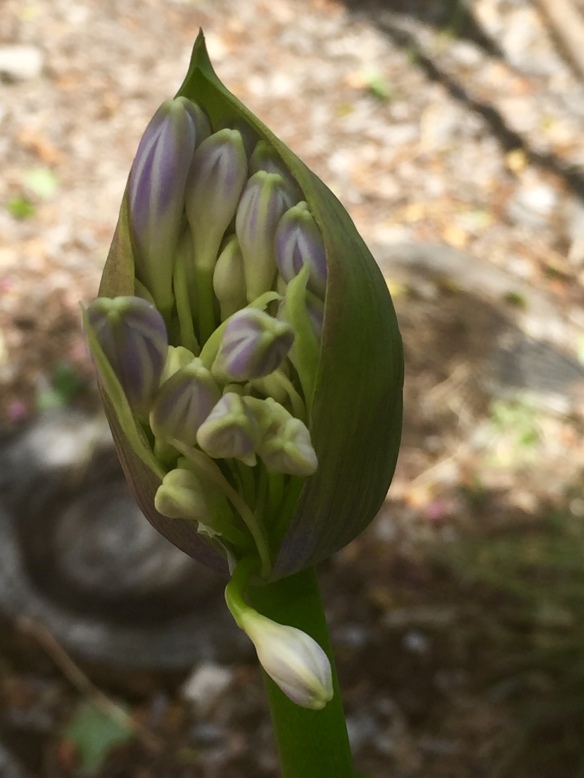
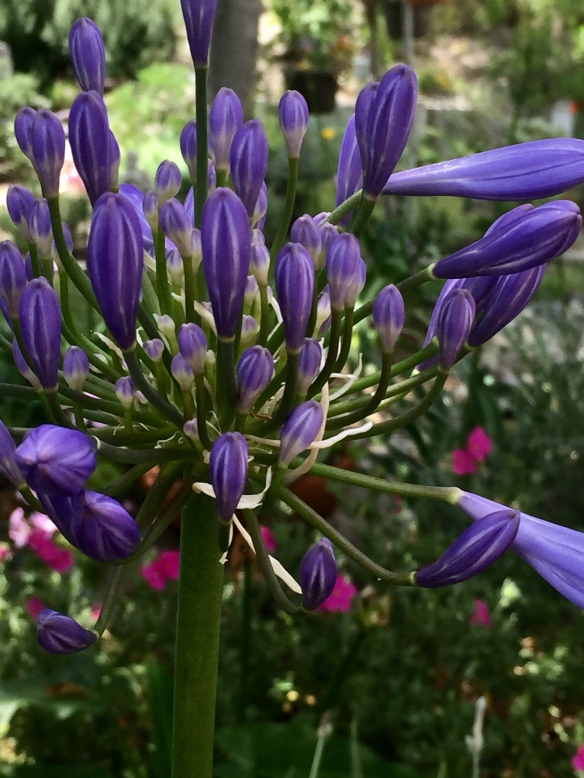
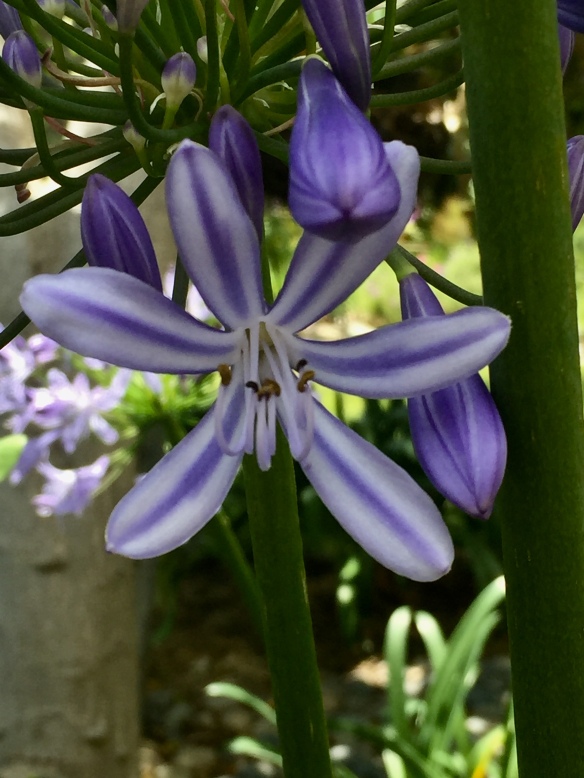
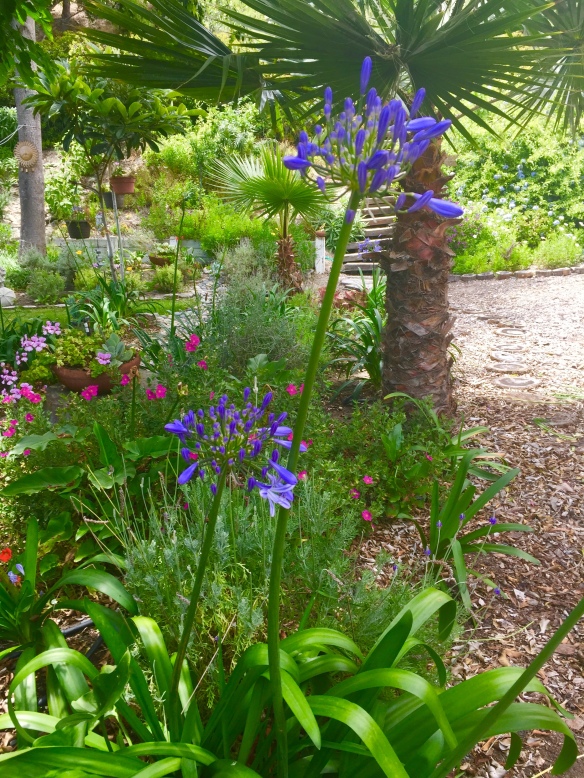
The blue of agapanthus, also known as Lily of the Nile, from bud to flower.

fullsizeoutput_dc3fullsizeoutput_dc2fullsizeoutput_dc6fullsizeoutput_dc5fullsizeoutput_dc4


The Stolen Child

I was going to write a funny post about how my son is occasionally as childish as his sometimes feral four-year-old but then I saw this poem and thought I’d instead elevate my intellect with Yeats.

“Come away, O human child!
To the waters and the wild
with a faery, hand in hand,
for the world’s more full of weeping than you can understand…”
W.B. Yeats

Here’s the entire poem:

The Stolen Child
Where dips the rocky highland
Of Sleuth Wood in the lake,
There lies a leafy island
Where flapping herons wake
The drowsy water rats;
There we’ve hid our faery vats,

Full of berrys
And of reddest stolen cherries.
Come away, O human child!
To the waters and the wild
With a faery, hand in hand,
For the world’s more full of weeping than you can understand.

Where the wave of moonlight glosses
The dim gray sands with light,
Far off by furthest Rosses
We foot it all the night,
Weaving olden dances
Mingling hands and mingling glances
Till the moon has taken flight;
To and fro we leap
And chase the frothy bubbles,
While the world is full of troubles
And anxious in its sleep.
Come away, O human child!
To the waters and the wild
With a faery, hand in hand,
For the world’s more full of weeping than you can understand.

Where the wandering water gushes
From the hills above Glen-Car,
In pools among the rushes
That scarce could bathe a star,
We seek for slumbering trout
And whispering in their ears
Give them unquiet dreams;
Leaning softly out
From ferns that drop their tears
Over the young streams.
Come away, O human child!
To the waters and the wild
With a faery, hand in hand,
For the world’s more full of weeping than you can understand.

Away with us he’s going,
The solemn-eyed:
He’ll hear no more the lowing
Of the calves on the warm hillside
Or the kettle on the hob
Sing peace into his breast,
Or see the brown mice bob
Round and round the oatmeal chest.
For he comes, the human child,
To the waters and the wild
With a faery, hand in hand,
For the world’s more full of weeping than he can understand.  —W.B. Yeats

Art curated from Pinterest

Infinite distance


Image may contain: 1 person
“Once the realization is accepted that even between the closest human beings infinite distances continue, a wonderful living side by side can grow, if they succeed in loving the distance between them which makes it possible for each to see the other whole against the sky.” Rainer Maria Rilke

Painting by Warwick Goble

From https://www.facebook.com/ravenous.butterflies/

After The Caterpillar…

May2020butterfly1The view from my kitchen window in the early morning light.

A perfectly symmetrical Monarch sunning herself on grape leaves.

Saturday.

Photo by Enchanted Seashells. Taken with my Canon Rebel T3i

Happy Birthday to MEEEEE!

Today blog is my not-so-humble brag about the original Angel Boy. I am so very proud of him.

I talk an awful lot about the second boy who stole my heart, AB 2.0, my curly haired free spirit/sprite and his equally magnificent sister, Angel Girl, but there is still the one who owns MOST of my heart, his daddy…

fullsizeoutput_db0…WHO WROTE A BOOK THAT GOT PUBLISHED!!!
Here’s the deets:

Title: THE GEOLOGICAL UNCONSCIOUS
GERMAN LITERATURE AND THE MINERAL IMAGINARY

https://www.fordhampress.com/9780823288113/the-geological-unconscious/

From the author…

“Already in the nineteenth century, German-language writers were contending with the challenge of imagining and accounting for a planet whose volatility bore little resemblance to the images of the Earth then in circulation. The Geological Unconscious traces the withdrawal of the lithosphere as a reliable setting, unobtrusive backdrop, and stable point of reference for literature written well before the current climate breakdown.”

“Through a series of careful readings of romantic, realist, and modernist works by Tieck, Goethe, Stifter, Benjamin, and Brecht, Groves elaborates a geological unconscious—unthought and sometimes actively repressed geological knowledge—in European literature and environmental thought. This inhuman horizon of reading and interpretation offers a new literary history of the Anthropocene in a period before it was named.”

“These close readings show the entanglement of the human and the lithic in periods well before the geological turn of contemporary cultural studies. In those depictions of human-mineral encounters, the minerality of the human and the minerality of the imagination become apparent. In registering libidinal investments in the lithosphere that extend beyond Carboniferous deposits and beyond any carbon imaginary, The Geological Unconscious points toward alternative relations with, and less destructive mobilizations of, the geologic.”

It might take me as long to read it as it took him to write it ‘cos it’s definitely going to stretch all of my working brain cells which are more used to reading chicklit by Jennifer Weiner or Sophie Kinsella, but it’s IMPORTANT to read things that are outside our comfort zone. WAY OUT.

This is the kind of book you need to read with a dictionary and Thesaurus very close by.

Sample page 121:

IMG_9262

Editorial Reviews:

“An impressive and accomplished study that delves deep into the layers of German mineralogical imagination from Goethe to Benjamin. Stones may not be able to speak, but they have found their spokesman. A pleasure to read.” (Geoffrey Winthrop-Young, University of British Columbia)

The Geological Unconscious offers subtle close readings of several canonical texts that receive provocative illumination from ecocriticism. The book’s focus on the instability of ground is insightfully paired with a consideration of how already in the nineteenth century literary style and narrative register geological time and planetary wounding.” (Catriona MacLeod, University of Chicago)

UPDATE: Author Dr. Jason Groves is a tenured professor at the University of Washington in Seattle. He is cotranslator of Werner Hamacher’s Minima Philologica.

Home Sweet Home

In quarantine? Isolation? Distancing?

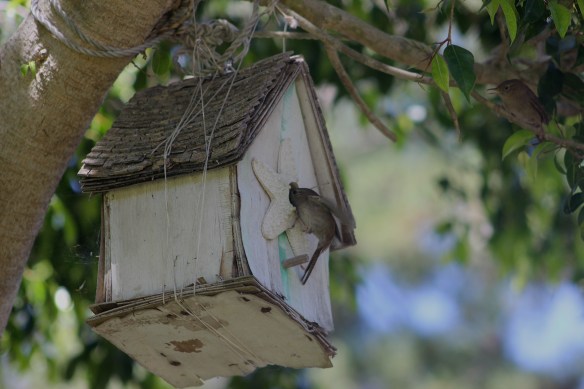
Happy to have a home to go home to, no matter what it looks like, that’s the message I’m getting from this little bird, being grateful for what we have.

Every spring, for years and years, this dedicated vireo mom builds and rebuilds her home in my garden. If I count them all up, I’ve been grandma to approximately one hundred babies.

As you can see, her home looks a bit shabby. It really needs to be repainted and I attempted to fix the bottom with string because it was starting to fall apart. I’m not much of a handyman (woman) but it’s OK for now.

vireo May 2020 3

Going home

vireo may 2020 2

Checking out the view

vireo may 2020 1

Breakfast is ready!

Moon Glow

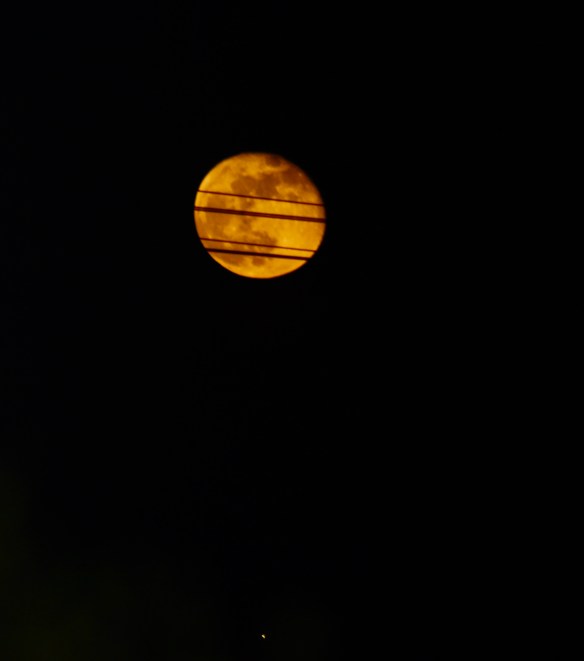
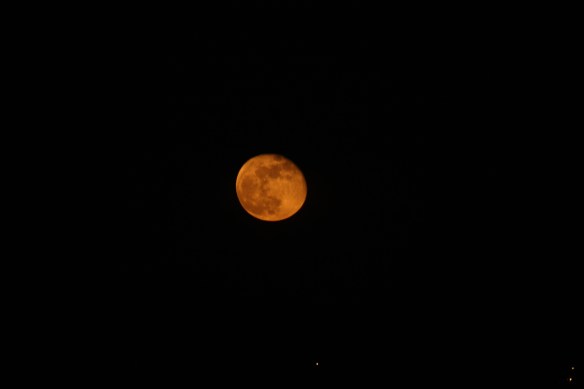
I forgot how much I love to take pics; the May Flower Moon was the perfect time to get out my good camera. I don’t have the most expensive lens, but it’s still beyond cool how much detail can be seen 239,000 miles away.

Thanks to Angel Boy 2.0, I guess I’m an avid planet watcher now. He’s fascinated by astronauts and the sky. We often take him to the science center; he has a dozen books about the planets and the moon walk, and can recite all of the nine planets.

On those rare days when the sun and the moon are visible at the same time, it’s a treat to see how excited he gets. “Both of them, Grandma, at the SAME TIME!”

These pics were snapped with a Canon Rebel T3i; no tripod.

I thought the power lines added an artistic touch. The color was amazing; no filter or editing.

fullsizeoutput_da9

IMG_6586IMG_6587