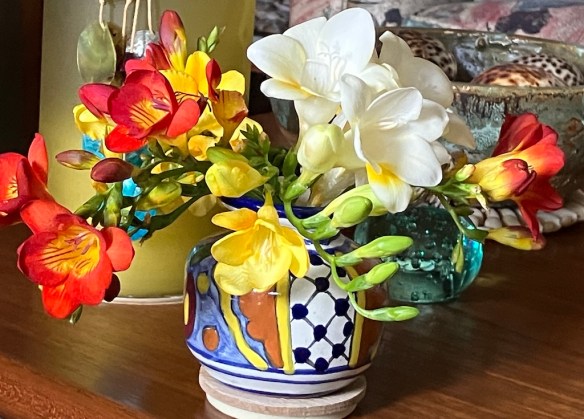
I really wish you could close your eyes and inhale the fragrance of these freesias. Our weather’s been hot here in SoCal and all the flowers bloomed at the same time.
Photo by Enchanted Seashells
Isn’t that vase adorable? I found it at a thrift shop and it’s one of my favorite things.
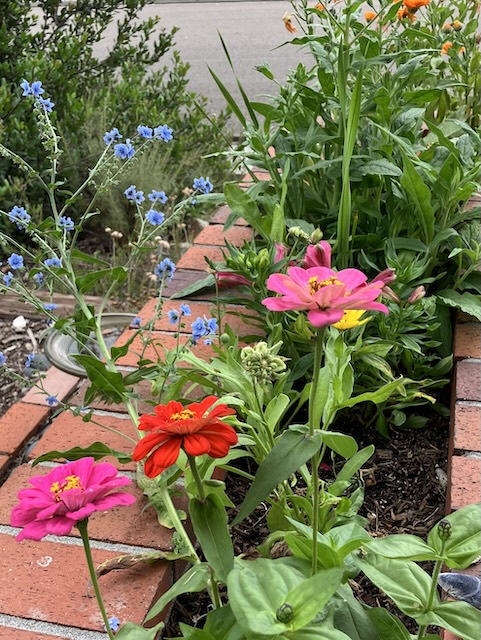
Sometimes you never know what’s going to thrive in your garden when seeds are sown, but this year’s zinnias have been spectacular. I’ll save all the seeds and try again since she’s really happy where I planted her near the front door.
This beauty brings so much joy! I especially love her little coronet of yellow flowers.
Photo by Enchanted Seashells
Zinnia is named after Johann Gottfried Zinn, a German botany professor who discovered these plants and brought them back to Europe in the 1700s.
The center of a zinnia is made up of disk florets, which are tiny flowers that form a cluster in the middle. These disc florets are surrounded by larger, petal-like structures called ray florets.
The circle of yellow florets is where the nectar is located. It’s where bees pollinate as they collect nectar and pollen. The center of the flower will start to grow larger as the seeds start to form. YAY!
Here’s a little sprinkle of alchemy from Mother Earth.
I grew these flowers: Forget-Me-Not, Zinnia, Calendula…with seeds collected from last season’s blooms. It’s a satisfying project to participate in the circle of life, almost like I gave birth to them, which in a way, I did.
It’s not just me: A query about saving one’s seeds reveals this: Harvesting garden seeds offers a deep connection to the natural world, to become more self-sufficient, and to witness the unique adaptations plants make over time to their specific environment. It also provides a sense of continuity and independence from commercial seed companies.
Yes! I do so love FREE things!
I try to save as many seeds as I can in the veggie garden, too. Cilantro and tomatoes perform well, as do certain types of lettuce. Cucumbers and members of the squash family won’t produce true to type if they’re hybrids, but it’s fun to experiment.
June is full of color around here. Soon enough, it’ll be too dry and everything will turn drab and brown, but the joy continues because I’ll salvage the seeds for next spring. It’s the circle of life all over again!
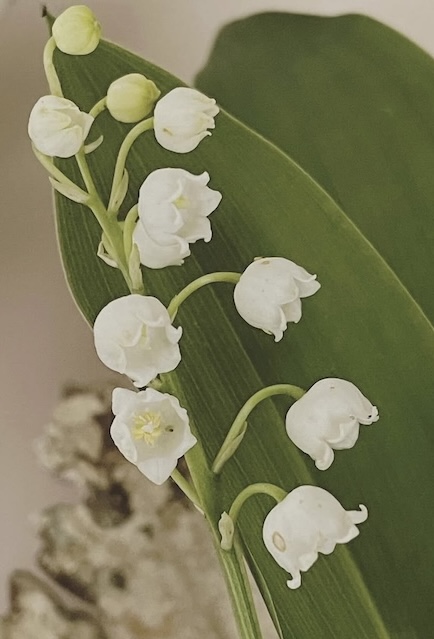
May’s birth flower is Muguet de Bois, Lily of the Valley. Every year on my birthday, my mom would give me a brand new set of Coty perfume and dusting powder. I felt SO grown up! I savored its divine fragrance as long as I could, and then stashed the empty bottle in my drawers to scent my clothes.
A favourite flower in my garden to see, if you ask me, just has to be The Lily of the Valley. Known to be the May Lily, this sweet scented, dainty white bell represents a return to happiness and innocence. How delighted I be to see my Lily of the Valley, as blooming it be in ye month of May. Often found neath leafy bushes, or hidden away within the nooks and crannies. Tread carefully mind. As under its flapping green leaves you’ll find its wee white bells dangling on a tiny stem. The Lily of the Valley symbolises Pure Love…They say Lucky in Love it be that’s why it be tradition for brides to have Lily of the Valley amongst their wedding flowers. There be many an old Myth told about the faery folk and the Lily of the Valley. In Ireland it is known to be “The Faery Ladder”.
Little thoughts written by Athey Thompson Photos taken at home by Athey Thompson
This is an update to a previous post about transplanting this awesome Peppermint Party Climbing Rose. It’s been a couple years and she’s really blossoming and super spicy!
I don’t give her too much attention except for a hard prune every January, and cross my fingers that she’ll grow back healthy and happy.
I took this photo when it was sunny. I woke up to rain which was totally, unexpectedly, but absolutely welcome, especially since we haven’t had any sky water is quite a while. Any little bit helps.
This was one of my most successful transplanting of a mature plant. I moved this Peppermint Party Climbing Rose from one arbor to another and it’s been thriving ever since.
Late afternoon sun on these stripey petals caught my eye:
Confession: I’m a hoarder, not crazy enough to be featured on an episode of that TV show, but I really, really hate to throw things away and I love to acquire STUFF.
For example, I have a lovely collection of empty boxes because YOU NEVER KNOW when you’re going to need one, right?
I don’t know if this is true where you live, but here, there’s a local group that gives all kinds of things away FOR FREE, which is total crack for a hoarder. Did I mention that it’s FREE?
They give away everything from furniture to clothing to toys to appliances. In many cases, the gifted items are valuable, like the cashmere scarf I received, also a set of Russian lacquerware.
Since I joined the group, my ratio of receiving to gifting is about 90 to 10. It’s REALLY difficult for me to relinquish anything because, exactly like those boxes, what if I want or need it again some day in the future? But I do and have posted items, especially things the kids no longer need; highchairs, baby clothes, stuff like that.
It’s equally difficult for me to not bring home everything that’s offered because I like to think I’m rescuing whatever it is from being discarded. I often initiate a conversation with myself (not out loud, IN MY HEAD) about whether I reallyreallyreally NEED what’s offered, or if can I live without it. Most of the time, I’m rational haha, but not always. (The very act of talking to myself sounds kinda crazy if I think about it.)
I’ve brought home lots of plants, planter pots, and other garden items, little boxes similar to what I already collect, a giant dollhouse for the Angel Kids; also toys and even bicycles for them.
Recently, we re-gifted the dollhouse. The Angel Kids and I had a discussion about the future of it. They both said they had enjoyed playing with the house but it was time to give to a new home and other children, so I did, with their blessing.
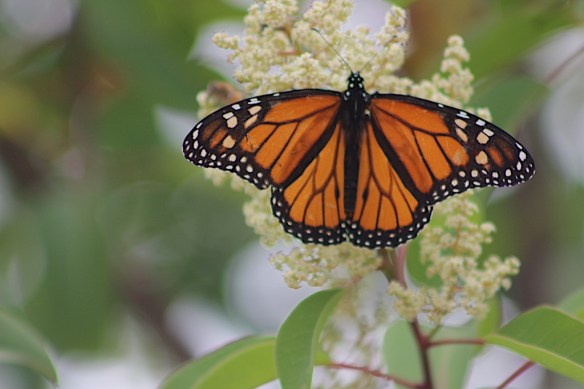
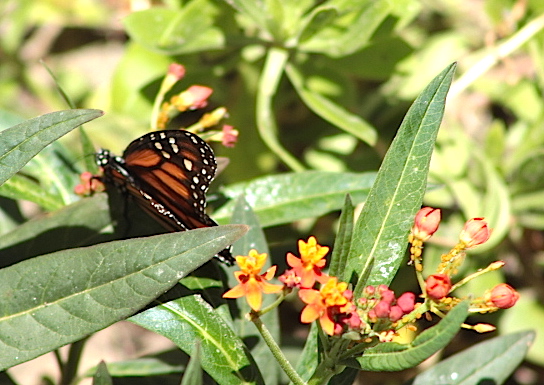
This time, someone was giving away milkweed seedlings SHE had rescued from our local community garden. Another gardener was going to toss them out, but she saved them and transplanted into little cups.
Photo by EnchantedSeashells
This kind woman posted on the site that she had plenty to share and I responded. There were enough for multiple people which is great because we all care about helping butterflies.
Photo by EnchantedSeashells
The woman messaged me her address which was literally only about three minutes away and I headed over there.
Here’s the problem: She lives in a new housing complex with a million apartments. Her very detailed map didn’t help me as I get typically become hopelessly lost in similar situations. I drove around and around for a while and couldn’t find the location where the plants were waiting for me at the front door.
As I usually do, I became a bit disoriented when I get lost, and dejected, I drove home. My navigation skills are sorely lacking and I felt incredibly stupid. I messaged her my apologies and reason for not showing up and suggested she choose another person.
Instead of doing that, this woman that I don’t know — a complete stranger — offered to bring the milkweed to me! It was such a kind gesture that it blew my mind.
I gave her my address and she came by a couple hours later with the plants and we had a lovely chat.
With all the horrible news coming out of our nation’s capital, it’s heartwarming and affirming to realize that there are still good people in the world, those who will go out of their way to help a neighbor AND help save butterflies.
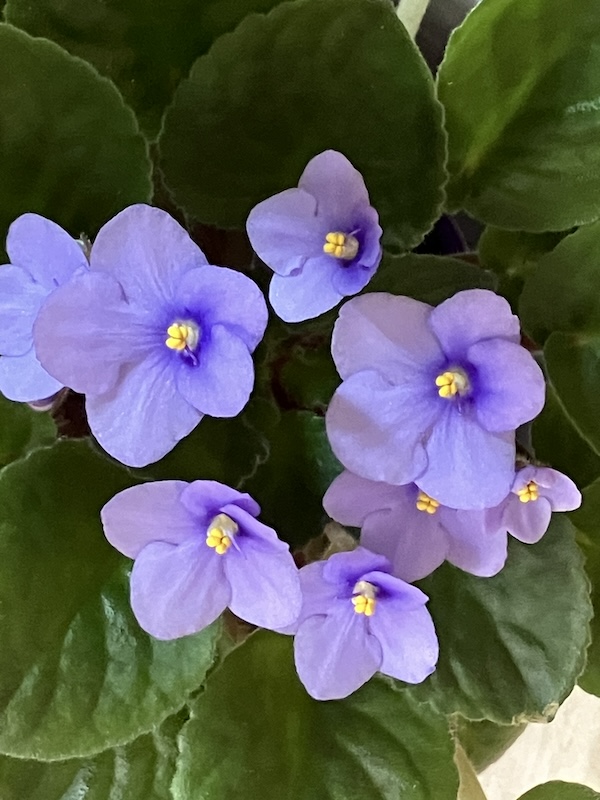
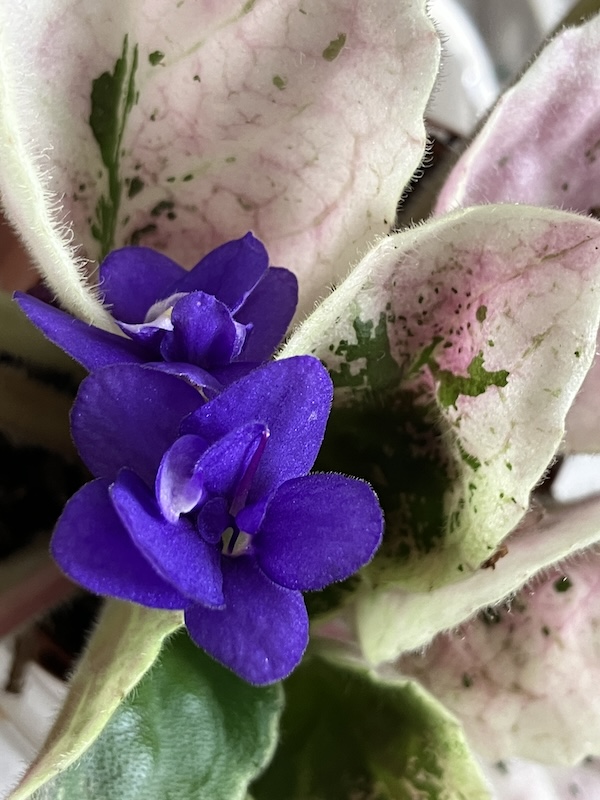
My plant obsession isn’t all about monsteras and fiddle leaf figs, I lovelove African Violets, too.
The African violet symbolizes devotion, faithfulness, and commitment. They’re also supposed to be great for indoor air purification because African violets absorb toxins.
They appear delicate and precious but they’re actually quite hardy and sturdy and not really high maintenance at all, at least not in my opinion. The flowers last for a long time.
Their botanical name is Saintpaulia and they belong to the Gesneriaceae genus. I started propagating my own violets a few years ago. Creating new life gives me a great deal of pleasure, plus it’s pretty easy, so there’s a high success rate.
A couple of my very own babies are flowering. I’m so proud of them!
They’re not too finicky or hard to take care of if you follow a few tips:
❀ Don’t water from the top and try not to get the leaves wet.
❀ They love bright, indirect light.
❀ Fertilize about once a month.
❀ Some websites suggest an Epsom salt drench every two weeks to assist flowering.
❀ Remove dead or faded flowers.
❀ They don’t like to be too wet or too dry, I use filtered water because our SoCal tap water is disgusting.
❀ It’s almost funny but the best performing violets are in the smallest pots, much smaller than you’d think for dinner plate sized foliage.
❀ Propagating is simple. The traditional method of propagating violet leaves is to place the stem into water until roots begin to grow. Select a healthy leaf. It doesn’t take very long for roots to form.
A couple months ago, a neighbor was planning to discard half a dozen orchids she thought were dead or dying and asked me if I wanted them before they ended up in the trash.
That really broke my heart, as I have a soft spot for animals and plants (and a few humans) that might benefit from some kindness and attention, so I took them all.
When I brought them home, they were sad little things; dried up, starving, and so thirsty that I could feel their pain, so I immediately submerged them in filtered water and set them in a quiet and shady place to drink all they needed.
I pruned some of the withered bits, found pretty pots for all, and decided to give them some time to heal in a loving environment.
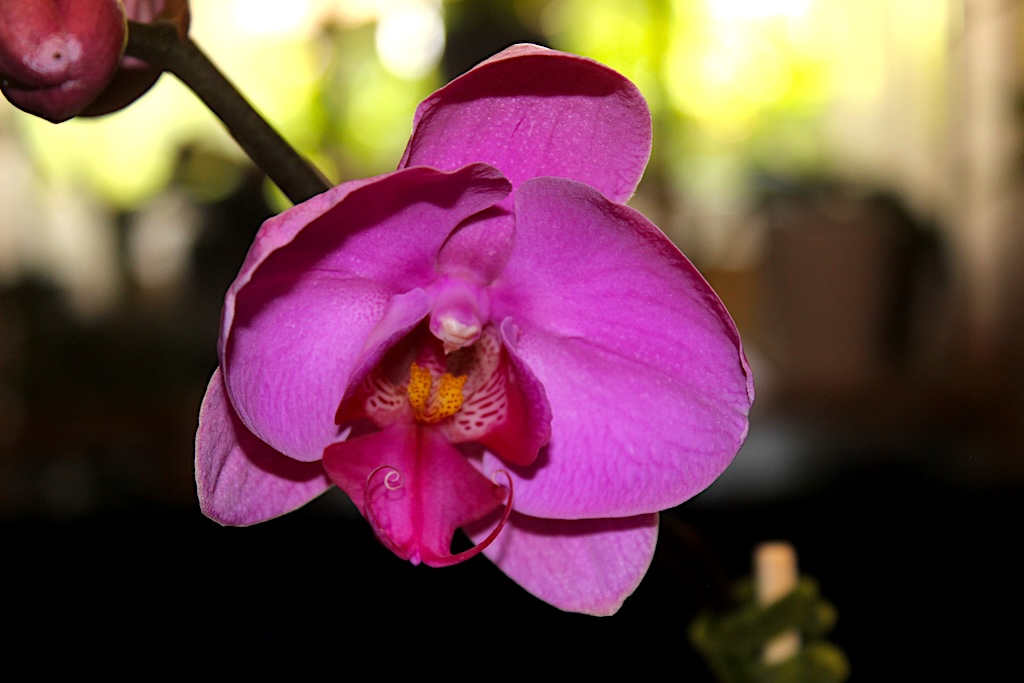
This is the first orchid that has rewarded my caregiving with a spike of stunning color!
Let me introduce my rescued baby, a pink Phalaenopsis Elastic Love, also called Moth Orchid.
She is SUCH a drama queen and thrives as the center of attention!
The remainder of the rescues all have new growth and are throwing spikes, too, which brings an overwhelming sense of joy! All they needed was a little tender, loving care.
What an absolutely amazing way to start a new month!
I spent a frustrating couple of hours attempting to install new, adhesive shelf liners in the kitchen and bathroom. If you’ve ever done the same, frustrating doesn’t even describe the feeling of trying to smoothly stick the paper without bumps, lumps, or having it fold over and stick to itself. I did a HORRIBLE job, gave up, admitted defeat, and put all the items back under the bathroom and kitchen sinks to cover up the mistakes. I hate to fail at a task, but this was a fight I couldn’t win. That’s two hours of my life I’ll never get back, that’s for sure.
After a much needed break with a mug of lovely ginger tea, I reviewed some of my favorite photos snapped in the last few days:
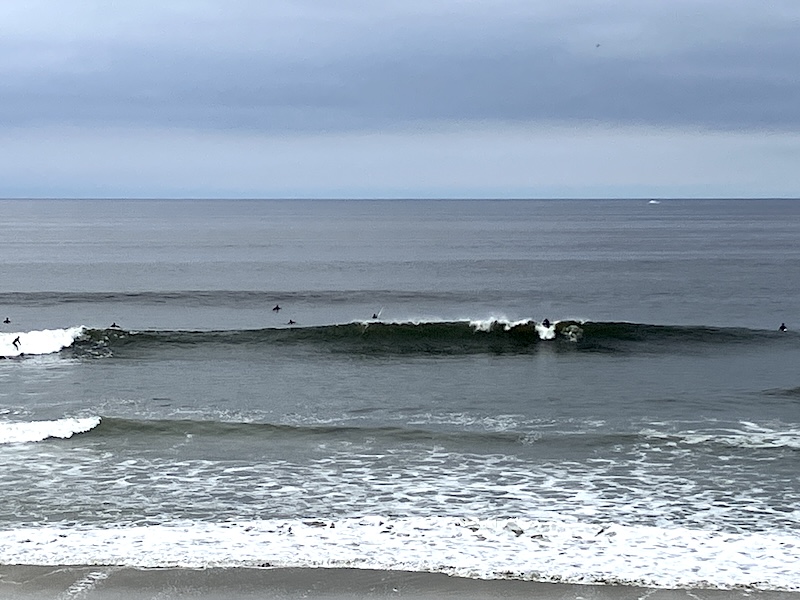
Another photo I sent to the original Angel Boy to make him miss SoCal surfing and come down for a visit!
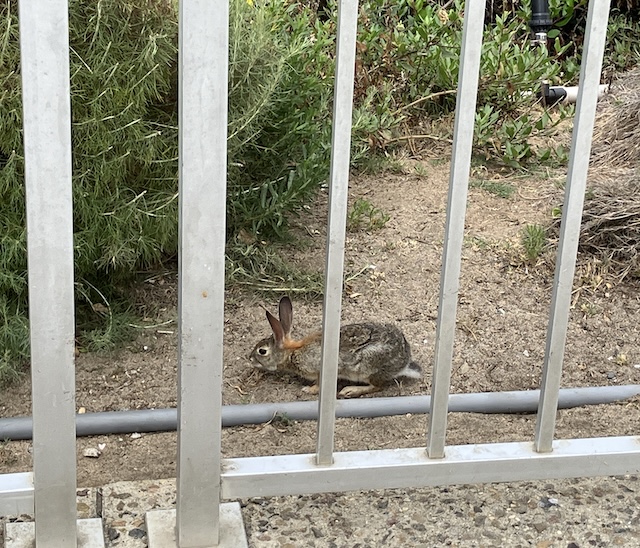
While I was looking at the surf, a bunny behind bars came to visit.
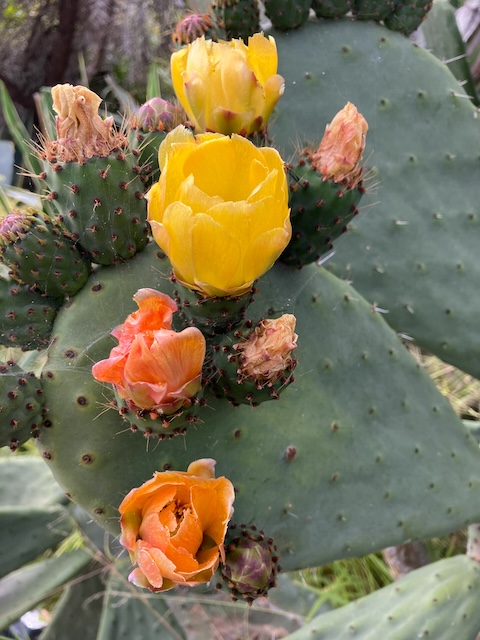
I was enchanted by pretty cactus flowers all in a row.
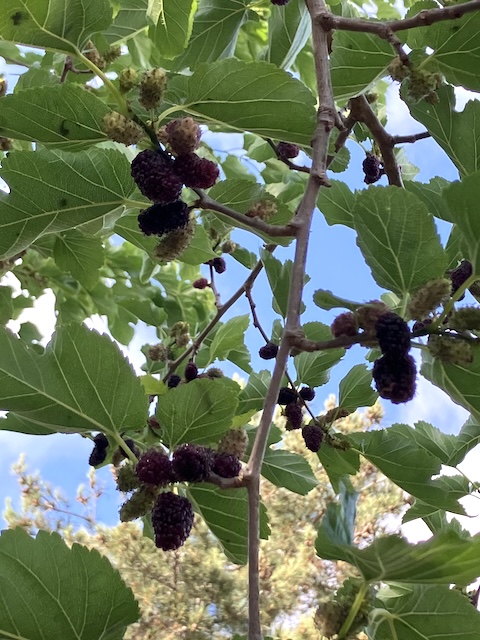
My mulberry tree is going crazy this year. In the past, I’ve harvested and made jam and frozen quarts and quarts of them for cobblers and to sweeten smoothies, but I’m not taking on that burden this year. That leaves more for the birds and the RATS. Eww.
Flowers always make people better, happier, and more helpful; they are sunshine, food, and medicine for the soul.”– Luther Burbank
With no rain in sight, my plants are becoming thirsty and I have to water them so they don’t dry out. I stopped for a minute to contemplate the droplets on a perfectly perfect Shasta daisy.
Nature is amazing. Everything is related to everything. Nothing is simply what it seems.
Many flowers exhibit a petal count that corresponds to Fibonacci numbers. Shasta daisies have twenty-one. This is something I didn’t even know about until recently. If they taught it in school, it’s another one of those days when I wasn’t paying attention.
In the 13th century an Italian mathematician, Leonardo de Pisa, better known today as Fibonacci, published a book called Liber Abaci. He introduced a number sequence that became known as the Fibonacci sequence. Starting with 0 and 1, each new number in the sequence is the sum of the two before it. 0, 1, 1, 2, 3, 5, 8, 13, 21, 34, 55, 89, 144, 233, 377.
The golden mean or the golden ratio is a special number found by dividing a line into two parts.
The golden mean and the Fibonacci spiral are connected to life, even spiritual life. They can be found in nature in the number of petals of flowers, the way the tiniest stem unfurls, in spirals in seashells, and more.
The golden proportion of 1.618 is found in key proportions of the body in humans, animals, insects, and in DNA. Our perceptions of beauty support that phi is a factor in what we find attractive.https://energeticgeometry.com/
That’s a pretty weighty concept for my brain to absorb or even understand. The possibilities seem endless, one more mystery of the universe.
I’m an uncomplicated person. All I know for sure is that I love the way Shasta daisies spread to fill in the empty spaces like they fill my heart and make me happy.
“Deep in their roots, all flowers keep the light.” – Theodore Roethke.






 Enchanted Seashells | Princess Rosebud