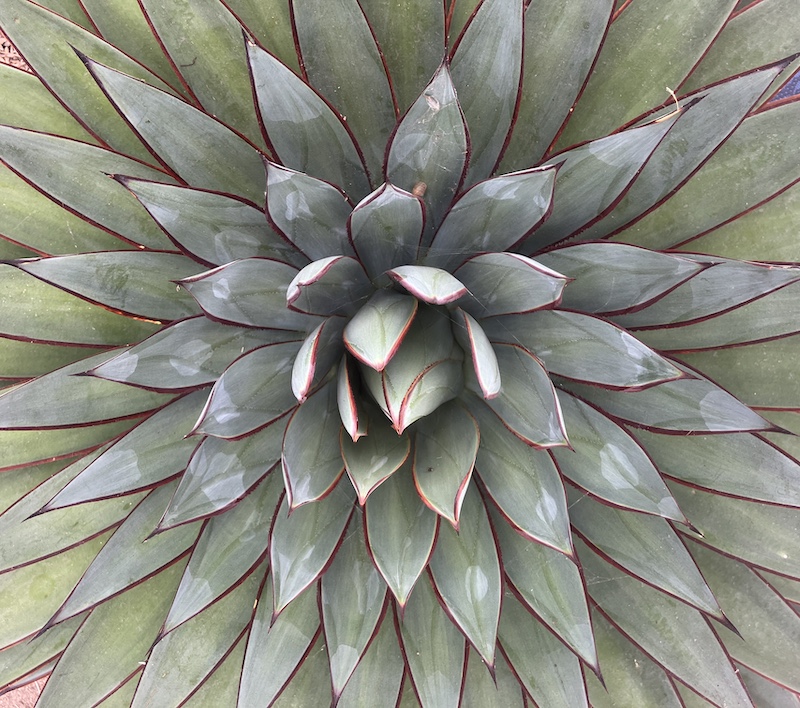
I think that I shall never see A poem lovely as a tree. –Joyce Kilmer
I looked up from weeding the veg garden at green leaves and the bluest sky kissed by the sun. There’s a bird singing somewhere in there but I couldn’t locate it.
It was a warm night and the patio doors were open…
I’m used to hearing coyotes and the occasional hoot of a pair of Great Horned Owls that live in the ‘hood, but last night I heard what could only be described as a MONKEY — but that’s crazy, right?
I turned off the TV, grabbed my phone, and pointed it outside.
You can hear it too, the monkey sounds in tandem with very faint owl hoots. The hoots didn’t get picked up as I was recording though the screen door, so you might not catch it. Definitely turn up the volume.
I did some research: What is a bird that sounds like a monkey — and thanks to the brilliance of Google, a zillion results popped up.
It turns out that I might have been lucky enough to hear a Barred Owl, which is more rare here. Or it’s another vocalization from the Great Horned Owl, one I’ve never before heard.
Barred Owls are huge, between 16 to 25 inches long, with a broad wingspan of up to 60 inches. Since I’m five feet tall, I cannot even fathom that.
Whoever it was, I’m overjoyed! It’s one more animal friend helping to rid my garden of disease-ridden rodents. Bon apetit!
Apologies again for the crappy video, as this was my screen door and I couldn’t turn off the flash because I didn’t want to mess around and lose the capture.
So what is it? Monkey? Owl? Monkey Owl? Or something else?
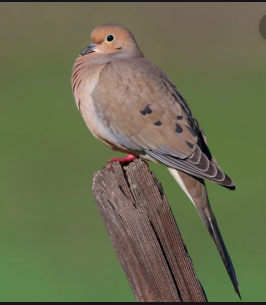
I hardly ever see my backyard friends during the day so this was a huge surprise, even more so because I was actually outside at the time.
I have no idea how I missed observing this beauty in real time, but it was such a treat to check the camera and discover my silent visitor up on the hill.
Isn’t his coloring beyond beautiful? I can’t wait to see him again…
The mournful song of my little dove reminded me of a poem by Becky Hemsley.
She walked along the pathway And she hadn’t walked for long When she met a little bird Who sang a melancholy song She listened for a moment To his sad, enchanting sound And she asked him why he sang his song When no-one was around “I sing to tell the forest That the day has just begun And I join the morning chorus As we’re welcoming the sun I sing so all the other birds Will know they’re not alone And I hum to all the trees To help their leaves and branches grow I sing for all the creatures As they go about their day And I whistle warnings to the sky That clouds are on their way” But why,” she asked him gently “Is your song so bittersweet? Why does it sound like longing And like yearning when you tweet?” “I sing to feel less lonely,” Said the tiny, little bird “And I tweet into the quiet Just so I can feel heard For when the sun is busy, When the other birds have flown, When the trees are climbing skyward Then I’m left here on my own And I sing to ask the questions That are tearing through my mind But I don’t know what I fear the most Silence… or the reply”
Before I even begin my strange tale, I want to be sensitive to negative colloquialisms such as “‘Burying the hatchet’.
The use of this term trivializes the ancient peace-making ceremony in which two fighting nations symbolically buried or cached their weapons of war.
Offensive language like this is a result of centuries of violence and continues to perpetuate stereotypes that have real-life impacts on Native communities.
Indigenous Peoples and their cultural traditions are real and deserve respect. They are not historical artifacts, caricatures, or mascots. (radicalcopyeditor.com)
But I don’t know how else to describe what I just found in my garden…an actual buried hatchet.
Look at it!
It’s a joke from the Universe, right?
I have no idea how long it’s been there or how it became buried near a path that leads to some steps to the second level.
I can’t even figure out how, after all this time, it became UNburied enough for me to notice that bright blue handle.
So with deepest respect, I brushed away the dirt around the buried hatchet.
I’m not sure what to do next. Dig it up? Leave it there? Anyone care to hazard a guess about what it means?
This giant followed me around the garden all afternoon. I’ve never seen this particular butterfly before, but I think he was attracted by my solar powered pond fountain, and that makes me very happy.
The Western Giant Swallowtail wingspan is about 5.5 to 7.4 inches, depending on gender.
I took a lot of great photos with my Canon but was disappointed to have some kind of error message with the SD card, so I can’t share those more pristine images.
The swallowtail butterfly is believed to represent transformation and embodiment of souls who have crossed over to the spiritual realm. It has also long been an animal that symbolizes joy, freedom, and honour of the soul.
Additionally, in many cultures, the swallowtail butterfly is believed to be a messenger of pleasant news and luck.
I don’t really know what possessed me to look out my bedroom window at 8pm last night, but I’m glad I did because I was able to meet my new garden visitor, Pepe LePew!
I took this not great photo through the window because I didn’t want to scare my new skunk friend. He strolled through the lawn, dug some grubs out of the soil, and was generally a kind and considerate guest.
Best of all, he’s now joining the other predators like my bobcat, coyote, hawk, owl, possum, and the occasional roadrunner to de-rat my backyard. Even raccoons feast on rats now and again, so I hope my animal family enjoy all they find. I’m exceedingly grateful for their efforts!
The spiritual meaning of seeing a skunk is often associated with self-awareness, introspection, boundaries, and self-respect. Skunks are known for their ability to protect themselves with their strong scent when threatened, symbolizing self-defense and independence.
I was enchanted by the yellow to intense lipstick red blooms against the bright green leaves on this crocosmia. Hummingbirds, butterflies, and bees love them, too!
It’s said that dipping dry crocosmia flowers in water releases a saffron-like aroma. Crocosmia plants grow from corms, which are closely related to bulbs.
The spiritual meaning of this beautiful plant encourages us to playfully engage our emotional strength, power, and will to express ourselves confidently and with enthusiasm.