Word of The Day: Takiwātanga (Along With a Whole Lot of Other Stuff)

Yom Kippur starts at sundown and now we are embroiled in a government closure because the repubs are all insane and will do anything to NOT release the Epstein files, apparently at any cost.

Did you see the debacle of the gathering of generals in Virginia who had to sit there and listen to the felon and his drunken lapdog? Good for them for not applauding and for looking stoic and aghast. Maybe there’s SOME hope for us. Maybe.

Lately, we’ve heard a lot of talk from the orange POS and his worm-brained head of Health and Human Services (what a joke) about acetaminophen causing autism. The brand Tylenol came out with a classy response.


When I was in the teaching program, one of my student teaching experiences was in a classroom where the students had some form of autism. This was an area that I planned to focus on as an educator. I never pursued it, but I learned that all children learn in different ways and it’s up to teachers and parents to respect the differences and help them achieve academically as well as being compassionate to these special little beings.

The Māori word for autism is Takiwātanga, which translates to “in their own time and space”. Created by Māori linguist and rangatira (chief) Keri Opai, this term was developed to describe the unique experience of individuals on the autism spectrum. It reflects the idea that autistic people have their own unique timing, pacing, and way of experiencing the world. 

This sounds like the perfect time for another version of “A Song for You” by the Master of Space and Time, Leon Russell, of course. So mercurial, he added something special to every performance, in his own time and space.

Word of The Day: Quiddity

It’s been a while since I posted about interesting and often archaic words that contribute to a fuller, richer vocabulary. Even though it’s been less than a year since that orange POS somehow took power, this country has turned into a shitshow of one horrible event after another and that seems to eclipse any sense of normalcy. 

Anyway…here’s one that’s quirky and will hopefully take our minds off this ugly reality for a minute or two.

Quiddity is such a great word: it’s the essence or unique nature that makes something the kind of thing it is and makes it different from any other.

Vague and not vague at the same time — I can sort of comprehend it only if I don’t allow my brain to delve too deeply into the intricacies of the meaning because then it becomes overwhelming and my mind takes off onto strange and faraway little tributaries. Sometimes it’s best not to overthink things.

From Shakespeare’s Hamlet, “Where be his quiddities now…?

To me: “Her passion for Leon Russell’s music is as much a quiddity as her curly hair.”

More examples:

“Many people share the quiddity of dipping their fries into their milkshakes.” which is a waste of a good milkshake and a good french fry.

For there is no knowledge of things insofar as they are external in effect, but insofar as their nature and quiddity is grasped by the mind.

When a politician avoids answering a question while pretending to answer it, he often does it using quiddity, or by bringing up irrelevant and distracting points.

Quiddity is a usefully sneaky tool if you want to evade an argument or question, and it’s often used by people like lawyers in court and teenagers angling for later curfews.

The noun quiddity has a philosophical meaning too, “the essential nature of something,” or the unique thing that makes it what it is. The Medieval Latin root, quidditas, translates literally as “whatness.”

I think we all need to incorporate quiddity into our daily language, written and verbal, don’t you?

Featured image from Pinterest

Non-Thought: Thought-terminating Clichés Are All Around  

This blog is exactly like my personality: random

One minute I’m searching for seashells or a rock that speaks to my heart or I’m reveling in a designer treasure found at the local consignment shop after a day protesting that orange POS and the fall of democracy, yet at the same time, on any given day, I’m a voracious reader, whether it’s chick lit or poetry or something that catches my eye on social media, all the while obsessing over Leon Russell, Master of Space and Time. There are definitely many tabs open on my laptop screen (and in my head).

Like this…thought-terminating clichés.

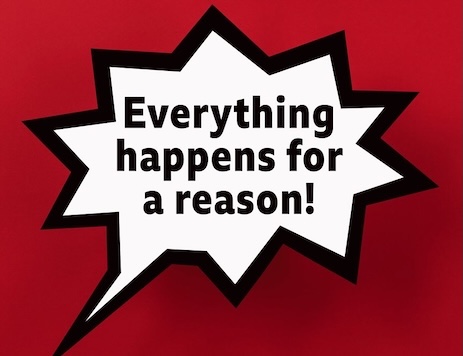
How many times have you heard this (or said it)? “Everything happens for a reason.” Did you find it helpful or frustrating? I find it frustrating and not helpful AT ALL. It makes me feel the person I’m talking to either doesn’t care about what I’m saying or is trying to act superior and patronizing.

For me, that attitude completely terminates the conversation. Sometimes I respond with “Does it really? Does everything REALLY happen for a reason?” but mostly I simply stop talking. There’s nowhere to go after that; for me It’s a convo-ender.

A thought-terminating cliché is a common saying or phrase used to shut down further critical thinking or debate about a topic. These phrases often present themselves as universally accepted truths or wisdom, discouraging deeper exploration or questioning. They can be used in various contexts, including conversations, debates, and even within workplaces or religious groups. 

The term was popularized by Robert Jay Lifton in his 1961 book Thought Reform and the Psychology of Totalism, who referred to the use of the cliché, along with “loading the language”, as “the language of non-thought”.

It’s also known as a semantic stop-sign, a thought-stopper, bumper sticker logic, or cliché thinking and is a form of loaded language—often passing as folk wisdom—intended to end an argument and quell cognitive dissonance with a cliché rather than a point. Some such clichés are not inherently terminating, and only becomes so when used to intentionally dismiss, dissent, or justify fallacies.

1. “It is what it is.” Used to dismiss any deeper inquiry into a situation or problem.

2. “You’ll figure it out.” Used to avoid helping or being asked for help. Condescending.

3. “Boys will be boys.” – Used to excuse or dismiss male behavior, often inappropriate or immature.

4. “Let’s agree to disagree.” Used to end a debate without resolving the underlying disagreement.

5. “Everything happens for a reason.” Used to shut down further questioning about why something occurred.

6.””Only time will tell.” Used to avoid making a decision or judgment about a situation.

7. “Such is life.” Used to dismiss the complexities or frustrations of a situation as being typical or unavoidable.

8. “What doesn’t kill you makes you stronger.”  Used to trivialize suffering or hardship without addressing its impact.

9. “God works in mysterious ways.”  Used to stop questions about religious or moral issues that are difficult to explain.

10. “It’s a free country.” Used to justify questionable actions or opinions without further discussion.

11. “You can’t win them all.” Used to discourage further effort or reflection after a failure or loss.

12. “Better safe than sorry.” Used to justify overly cautious behavior without considering the consequences of inaction.

13. “Everything in moderation.” Used to avoid discussing the nuances or dangers of certain behaviors or choices.

14. “That’s just your opinion.”  Used to dismiss someone’s perspective or argument without considering its merits.

15. “Let’s not rock the boat.” Used to discourage change or questioning of the status quo.

16. “This is the way we’ve always done it.” Used to resist change or new ideas without considering their potential benefits.

17. “Time heals all.” Completely puts a stop to any discussion that isn’t in agreement.

To transform thought-terminating clichés into conversation catalysts, we can create alternative phrases or questions that encourage further exploration and dialogue.

Here are some antidotes, each designed to open up rather than shut down conversations:

  1. Instead of “It is what it is”:  Ask, “What factors have led to this situation, and how can they be addressed?”
  2. Instead of “Boys will be boys”:  Query, “What behaviors are we accepting, and why, and how can we foster more responsible actions?”
  3. Instead of “We agree to disagree”:  Suggest, “Let’s delve into our differing viewpoints to understand each other better.”
  4. Instead of “Everything happens for a reason”:  Pose, “What can we learn from this situation, and how might it influence our future choices?”
  5. Instead of “Only time will tell”:  Consider, “What potential outcomes can we anticipate, and how can we prepare for them?”
  6. Instead of “Such is life”:  Reflect, “How does accepting this situation impact us, and are there aspects we can change or influence?”
  7. Instead of “What doesn’t kill you makes you stronger”:  Explore, “What challenges are we facing, and how can we grow or learn from them?”
  8. Instead of “God works in mysterious ways”:  Ask, “How can we find meaning or understanding in this situation?”
  9. Instead of “It’s a free country”:  Discuss, “How do our individual actions impact others, and where do we draw the line between freedom and responsibility?”
  10. Instead of “You can’t win them all”:  Consider, “What can we learn from this loss, and how can it inform our future efforts?”
  11. Instead of “Better safe than sorry”:  Ponder, “What are the risks and benefits of our choices, and how do we balance caution with opportunity?”
  12. Instead of “Everything in moderation”:  Question, “How do we find a healthy balance, and what does moderation look like in this context?”
  13. Instead of “That’s just your opinion”:  Offer, “I appreciate your perspective. Can you share more about how you arrived at this viewpoint?”
  14. Instead of “Let’s not rock the boat”:  Encourage, “What potential benefits and challenges could come from addressing this issue?”
  15. Instead of “This is the way we’ve always done it”:  Propose, “What new methods or ideas could we consider to improve this situation?”

Curated from desireebstephens.substack.com/p/the-power-of-silence-unpacking-thought, Wiki
Word of the Day: Yutori

The concept of yutori speaks to me, especially right now in this scary political climate of gestapo-like kidnappings, Alligator Auschwitz, and a real sense of anticipatory dread.

“Yutori” (ゆとり) is a Japanese concept that broadly translates to spaciousness, room, or breathing room. 

It’s about creating intentional space in one’s life, both physically and mentally, to allow for relaxation, reflection, and a sense of ease. 

This can involve anything from leaving for appointments early to allow for a buffer, to simply taking moments throughout the day to pause and breathe

Yutori aligns with mindfulness practices and encourages a more balanced and less stressful approach to life. For me, that means going outside, watching a magnificent beachy sunset, cleaning the house, thoughtfully organizing a drawer — or my massive seashell collection.

Word of The Day: Tsundoku

This is the post I planned for Monday before we had that 5.2 earthquake. Since then, terra firma has been quiet around here, but I did finally install the earthquake warning app to be ready for the next one.

Here’s the word of the day…tsundoku.

I had no idea there was a specific word to describe a pile of unread books.

In Japanese, “tsundoku” means collecting books and letting them pile up, not for neglect, but for the joy of knowing they’re there, full of untold stories.

The word “tsundoku” is a combination of “tsunde-oku” (to let things pile up) and “dokusho” (reading books). 

My professor son has stacks of books all over his house and is guilty of acquiring as many books as he does plants for the garden. Half of them are for teaching and the others are for pleasure, he says. They live sort of near the guy who won a lot of money on Jeopardy, Tom Nissley, and he opened Phinney Books, which is cool. Both of the kids have shelves of books, too, so it runs in the family.

Here’s what’s on my bedside table. I confess that I actually NEVER read AB’s book in its entirety, but since I proofed the first draft, there’s a bit of me in there somewhere. Of course there’s Leon (I know, I’m so predictable) and gifted books about crystals and gardening. I didn’t include all my chick lit books because they’re immediately devoured. I get most of those secondhand from DIL because we enjoy the same authors. She’s a neuroscientist and those reads are a way for her brainy brain to unwind.

My stack of ladies-in-waiting.

What titles are in your tsundoku?

Word Of The Day: Lagom

Here’s a thoughtful word to help us increase happiness and reduce stress with balanced living.

Lagom, pronounced ‘lah-gom,’ is a unique Swedish term that roughly translates to “just the right amount” or “not too much, not too little.”

It’s the art of finding a perfect balance in all aspects of life – work, study, socializing, and even relaxation. In tennis, it’d be the sweet spot. It’s similar to hygge, but different.

To my child-like self, it reminds me of Goldilocks and the Three Bears, as she searched for just the RIGHT bowl of oatmeal, chair, bed…

The concept of lagom can be found all around us and can coexist with another theory called the Goldilocks Principle or the Goldilocks Zone. Our planet earth is said to be in the Goldilocks zone, neither too far nor too close to the sun, in a “just right” place that is perfect to support life. A Goldilocks economy is when there’s enough growth to sustain the economy but not too much growth that causes high inflation. In politics there’s the well-known extremes of the left and right and the (all too quiet) center. The Goldliocks principle can be found everywhere.  Maimonides speaks of the Goldilocks principle when he advocates for the middle road in most areas of life, a sustainable and healthy balance that doesn’t go too far to either extreme. shabboshouse.org

How do you embrace the principles of lagom?

Featured photo curated from Pinterest.

Word Of The Day: Effulgent

Effulgent comes from Latin meaning “out” and fulgere meaning “to shine”. A light that is effulgent shines brightly.

A personality that is effulgent radiates warmth and goodness.

The effulgent glow of the sunset painted the sky in hues of pink and orange.

Photo by Enchanted Seashells

Photo by Enchanted Seashells

More effulgence….


Photo by Enchanted Seashells

Goethe’s Wisdom

I’m not sure there’s a whole lot to celebrate this year; I don’t feel entirely full of the joy of the holidays, and I’m not all that excited about buying presents for anyone. The depressing election results seem to have cast a pall on our future and what’s going to happen in just a few short weeks.

I found these Goethe quotes which make a lot of sense to me right now. Even though I really only know about Goethe because of my German professor Angel Boy, and despite the fact that Goethe died in 1832, his words are timeless…

Man sieht nur das, was man weiß.” (You only see what you know.)

“We do not have to visit a madhouse to find disordered minds; our planet is the mental institution of the universe.”

“The soul that sees beauty may sometimes walk alone.”

“You must, in studying Nature, always consider both each single thing and the whole.”

It is said that the following words were Goethe’s last as he lay on this deathbed, “More light, more light! Open the window so that more light may come in.” 

Johann Wolfgang von Goethe is widely regarded as the greatest and most influential writer in the German language, his work having a profound and wide-ranging influence on Western literary, political and philosophical thought from the late 18th century to the present day.

Word of The Day: Komorebi

Komorebi is a Japanese word that’s more of a feeling, that of “sunlight leaking through trees”. It describes the loveliness and wonder of rays of light dappling through overhead leaves, casting shadows on the forest floor.

Photo by Johannes Plenio on Pexels.com

There is a profound peace and sense of tranquility with komorebi. It creates a mood of calming gentle energy, reminding us of our connection to the earth.

Komorebi is comprised of several parts of different words: “Ko” means tree or trees. “More” means: something that comes through, something that shines through or seeps through. “Bi” means: sun or sunlight.

I’m grateful for these transitory moments of beauty, as if time stands still in abeyance of SOMETHING, as we observe nature’s simple but profound tenuity and we can deeply, finally– fully breathe.

Word Of The Day: Sisu

Friends and I are in a state of shock and mourning for the death of democracy as well as being really angry at the outcome of the election. We’re trying to process the enormity of this presidential election and how our lives are going to be forever negatively impacted by what’s to come, including Project 2025.

We also don’t know why a recount wasn’t immediately demanded, why Kamala Harris conceded so quickly, and why it seems as if that orange POS convicted felon will escape all accountability for his crimes. Jack Smith TRIED. Where is justice? Remember January 6? I’m still sad, still angry.

E. Jean Carroll and Mary Trump warned all of us:

My go-to solution of a little retail therapy at the dollar store didn’t help. This situation is deeply depressing.

I’m not sure I’m ready to hear this, but I discovered the Finnish word/concept of “sisu”, It means strength of will, determination, perseverance, and acting rationally in the face o adversity.

We’re going to need all of that to continue to fight the good fight. Darkness is being exposed all over the universe.

Sisu is not momentary courage, but the ability to sustain that courage. It’s a word that can’t really be fully translated.

From Wiki: Sisu is extraordinary determination in the face of extreme adversity, and courage that is presented typically in situations where success is unlikely. It expresses itself in taking action against the odds, and displaying courage and resoluteness in the face of adversity; to decide on a course of action and adhering to it even if repeated failures ensue.

The English “gutsy” invokes a similar metaphor (one also found in other languages): the Finnish usage derives from sisus, translated as “interior”, and as “entrails” or “guts” or “intestinal fortitude”. Another closely related English concept evokes the metaphor “grit”.

That’s what we need right now: GRIT. GUTS. DETERMINATION. COURAGE.

And don’t forget to breathe.

  ·