Finally, the rains have begun. It’s a good time for a little self reflection along with some deep closet purging, sort of a sad but keep busy kind of day.
Be a witness, not a judge. Focus on yourself, not on others. Listen to your heart, not to the crowd. Rumi
Be a witness, not a judge. Focus on yourself, not on others. Listen to your heart, not to the crowd — Rumi 🤍
As I clean/purge, I’m listening to Leon Russell (of course) and his song, Manhattan Island Serenade, is perfect for a rainy day. Fact: there was a real thunderstorm while he was recording and Leon included it. Why? Because he’s the Master of Space and Time, that’s why…
Today is the anniversary of Leon’s death, November 13, 2016.
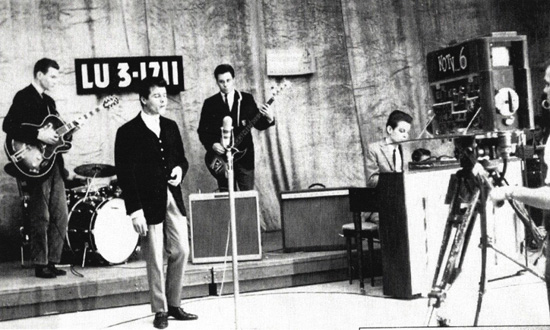
Here’s where it began — Leon was sixteen years old in this KOTV photo from the 1958 March of Dimes Telethon. Left to right, Tommy Crook, drummer Chuck Blackwell, Jimmy ‘Junior’ Markham, Bill Raffensperger and (Leon) Claude Russell Bridges.
From Tulsa Today
Leon Russell will always be the one and only visionary and musical magician, The Master of Space and Time, and we’re still mourning him.
A Song For You is one of the most beautiful and iconic songs ever composed and no one can perform it like Leon.
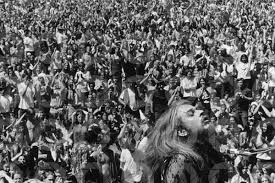
Mad Dogs and Englishmen, the 1971 concert film mostly about a Joe Cocker tour, was just released on YouTube. The timing of this release coincides with Joe Cocker being inducted into the Rock and Roll Hall of Fame on Saturday.
Joe Cocker was an English singer who rose to fame in the 1960s after his performance at Woodstock. Known for his distinctive voice and dynamic stage presence, Cocker was a gifted interpreter of other artists’ work. His cover of the Beatles’ “With a Little Help from My Friends” at Woodstock became his signature song and an anthem of the era. Cocker’s other notable covers include “Feelin’ Alright”, “The Letter”, and Leon Russell’s “Delta Lady”.
Leon of course
Joe Cocker’s management had organized a tour of the U.S. for him but he was left without a band. His producer at A&M records was Denny Cordell, who happened to be starting his own label with Leon Russell called Shelter Records.
Cordell and Cocker asked Leon to assemble a band for the tour, and Leon agreed only if they could do it like no one had done before.
Through his many connections to outstanding musicians through thousands of studio sessions with the Wrecking Crew, Leon was quickly able to gather together an ensemble of more than twenty musicians, including three drummers, and a backing choir. Leon was the lead guitarist, pianist, arranger, band leader, and musical director.
Leon said, “I will put together the band and I’ll do the arrangements and I’ll do everything but I have to be driving this bus. Nothing will go on unless I say so.” https://musicdayz.com/
Leon also insisted that a camera crew follow the tour, which became the Mad Dogs and Englishmen documentary film, one of the essential rock n roll films that depicted that era of music.
It became the Leon Russell show because his powerful charisma was undeniable.
From musician Chris Stainton, “I admire Leon Russell so much. He’s an exquisite piano player, especially in that Louisiana style. He was so hot then, at the top of his playing ability. When Leon played piano, I’d play organ, and then I’d switch to piano when Leon took over on guitar.”
The tour would become legendary and the ensuing live album would reach #2 on the U.S. Billboard Top 200. Performances of The Band’s “The Weight,” Traffic’s “Feelin’ Alright,” and The Box Tops’ “The Letter” highlighted the setlist that was capped off by a wild and rousing rendition of Leon’s own “Delta Lady.” Leon and Joe would duet on their version of Bob Dylan’s “Girl from the North Country.”
The tour served as an opportunity for Leon to showcase his own material, as he would be given stage time to perform “Hummingbird” and “Dixie Lullaby,” which were both to be released on his debut album.
Mad Dogs and Englishmen introduced Leon to the world. Although headlined by Joe Cocker, it wouldn’t have been possible without the visionary genius of Leon Russell as Master of Space and Time.
While the tour catapulted both Leon and Cocker into the pinnacles of rock n roll stature, the magnitude served as a rift between the two of them, and they would choose to pursue their careers separately from that point forward.
To this day, however, the two will be forever connected as having orchestrated one of the great happenings in the history of rock music. (From LeonRussell.com)
My favorite part starts at 4:03 and it’s Leon taking charge just being Leon and leading Will The Circle Be Unbroken.
I don’t know who owns the rights to the rest of the video, but there reallyreally needs to be another documentary, this time showcasing Leon Russell’s live performances, including Hummingbird, Dixie Lullaby, and the duet with Joe Cocker of Dylan’s Girl From The North Country, along with Leon’s amazing arrangement of Cry Me A River.
George Harrison invited Leon Russell to play piano on Badfinger’s third album in the summer of 1971. The piano part complemented Pete Ham’s and Harrison’s dual slide guitars on “Day After Day.” (Church Studio)
I always loved the way the piano sounded on this tune and when I found out that it was Leon I was blown away. It’s like so many songs I’ve loved over the years only to discover that Leon’s contribution was the magic that made them so memorable.
“He just sat down, closed his eyes, and played the part in one take.”
According to sound engineer Richard Lush, Russell nailed the “Day After Day” piano line almost instinctively.
I’m repeating a comment from YouTube about this recording. “George Harrison asked Leon Russell to add the piano accompaniment. They played the tracks that had already been laid down, as Leon sat in the studio by himself. After listening to it once, he sat at the piano with his eyes closed. George thought he had fallen asleep and said Leon’s name a couple of times over the speaker. Leon held his hand up and then a moment later told them he was ready and to roll tape. He played the part in one take. Don’t know if it’s true, but a cool story.”
Russell – like so many greats – had an almost spiritual sense for when not to play, and on “Day After Day” he seems to materialize only at the emotional inflection points. He doesn’t play on the piece – he haunts it, and once done, disappears from the song again like incense in a draught. He is a spectral presence, and this plays on my imagination as a strange portent for the tragedy that would befall Badfinger the band. https://danegiraud.substack.com/
Of course it’s true. I’m not at all surprised. Leon was a visionary, a musical genius, and will always and forever be the master of space and time.
PS I know there was a tragic end to Badfinger but this isn’t an exposé, just another example of the hundreds of songs that were all the better because of Leon Russell’s magic touch.
“Magical places are always beautiful and deserve to be contemplated. Always stay on the bridge between the invisible and the visible.” Paolo Coelho
Found on Pinterest
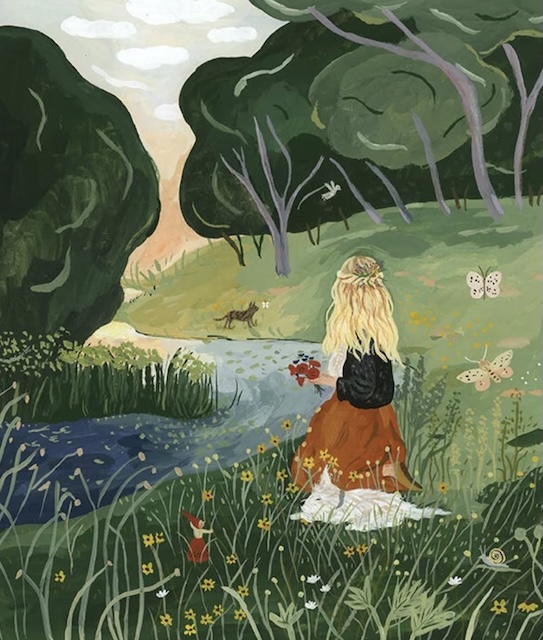
This is heavenly…no phones, no social media, no distractions; simply a butterfly-filled meadow alongside a sunshiny, babbling brook.
This pic reminds me of one of my favorite songs by (who else) Leon Russell, Down On Deep River. It evokes the perfect, serene mood…
“Hear the crickets singing for a mile And the sound of the bullfrogs make you smile So lead me beside the still waters Let me love you down on deep river.
Won’t you sit by my side And hold to my hand and love me all the way?
And we’ll leave all the highways far behind And just take a little blanket with the wine.”
Did you know that the Master of Space and Time had a long association with The Rolling Stones? He arranged and played on many of their songs, as well as performed covers that I feel were superior to the Stones in every way, but then, I’m totally biased.
Photo found on Insta
Here’s a few examples:
I’m pretty sure that’s Leon counting 1-2-3.
Leon also provided piano and horn arrangements. You can always tell it’s Leon by his signature glissandos.
Here’s an early version of Wild Horses with Leon Russell on the organ during a session for Sticky Fingers 12/04/1969-70.
And my favorite version of Wild Horses by Leon on Stop All That Jazz.
Leon referred to himself as a blues hound. In one interview, he said some musicians he worked with suffered from “jazz damage”. When Leon Russell referred to “jazz damage”, he was jokingly expressing his concern about music producer Tommy LiPuma’s extensive work with smooth, commercialized jazz artists and how that might have diminished his feel for blues and rock.
Here’s more:
In a 2014 interview about his album Life Journey, Russell recalled telling producer Tommy LiPuma, “I was concerned he might have jazz damage.” His reasoning was that LiPuma had previously produced successful records for jazz-pop artists like George Benson, Diana Krall, and Natalie Cole, which Russell saw as a departure from the grittier, blues-based music he favored.
His comment was not a condemnation of jazz as a whole but rather a witty, playful remark referencing his own background. LiPuma proved Russell’s fear was unfounded. The two had a productive collaboration and Leon happily noted that LiPuma was an “old blues hound like me, which was great”.
Lately, I’ve been thinking about T-I-M-E. Time flies. I hate to be late; I like to be ON TIME. Does time really exist at all or have we been brainwashed to think iit does?
Too much thinking about time as ephemeral makes me anxious. Too much thinking about anything does the same thing. My non-logical mind has determined that TIME itself isn’t the issue; THINKING about it IS and it makes my brain melt, just like Dali’s clocks.
Salvador Dalí
“Time doesn’t exist, clocks exist. Time is just an agreed upon construct.” — David Foster Wallace
“It takes just one unattended moment for an hour to pass.” ― Sherod Santos,Square Inch Hours: Poems
Santos was born in South Carolina, graduated from San Diego State University, and studied at the University of California, Irvine. I never met him when I attended SDSU, but I knew ABOUT him; all of us who studied creative writing and poetry knew about “Rod” Santos and W.S. Merwin and Glover Davis, who was actually my professor.
David Foster Wallace was an acclaimed American writer known for his fiction, nonfiction, and critical essays that explored the complexities of consciousness, irony, and the human condition. Wallace wrote the novel Infinite Jest.
“The Persistence of Memory” is an iconic 1931 surrealist oil painting by Salvador Dalí, famous for its “melting” clocks draped over a desolate, dream-like landscape inspired by his Catalonian home. The painting uses a paranoiac-critical method to explore the subconscious, with the distorted clocks symbolizing the fluidity and subjectivity of time, influenced by Freudian psychology and potentially Einstein’s theory of relativity. From Google.
Could Leon Russell’s version of As Time Goes By be the best ever? I think so…mature Leon was awesome, too.
Because both of the Angel Kids’ eyes literally roll back in their heads when I make them listen to Leon Russell music, I found a slightly obscure song called “Too Much Monkey Business”. It’s more spoken than sung, like a precursor to rap music, and was written by Chuck Berry in 1956.
I played it and the Angels started singing along, as it’s a very catchy tune. I’d call out “How much monkey business” and they’d respond, “Too much monkey business!”
This song is totally earworm-worthy because they couldn’t stop singing it to themselves. All day long, during breakfast and helping to organize their books so we could donate some, I heard them quietly repeat “too much monkey business”, or “too much for me to be involved in.”
I said, “Cool song, huh?” as I planned my final move in my neverending quest to make them love Leon as much as I do.
When we sat on the sofa together after dinner playing card games, I asked Siri to play “Too Much Monkey Business” by Leon Russell and AB said, “Wait, that was LEON? It didn’t sound like him!” I replied, “That was my little joke. You had no idea you were singing one of his songs hahahahaha!”
Too late to stop it from happening; the lyrics are firmly embedded in their brains. They changed the words to: “How much Grandma business?” and “Too much Grandma business.”
They grudgingly agreed it was GOOD but asked me to pleasepleaseplease stop dancing because I was embarrassing them. I can only imagine the many ways I’ll be an embarrassment when they’re teenagers. It’s a rite of passage. They can ask their dad for confirmation.
Those kids are uber funny but I won. They’re now listening to and appreciating the Master of Space and Time–in spite of themselves. My work here is done.
Runnin’ to and fro, hard workin’ at the mill Never failed in the mail, yet come a rotten bill Too much monkey business, too much monkey business Too much monkey business for me to be involved in
Salesman talking to me tryin’ to run me up a creek Say, “You can buy it, go on, try it, you can pay me next week” ah Too much monkey business, too much monkey business Too much monkey business for me to be involved in
Blonde-haired, good lookin’ tryin’ to get me hooked Want me to marry, get a home, settle down, write a book, ha Too much monkey business, too much monkey business Too much monkey business for me to be involved in
Same thing every day, gettin’ up, goin’ to school No need to be complainin’, my objections overruled, ah Too much monkey business, too much monkey business Too much monkey business for me to be involved in
Payphone, somethin’ wrong, dime gone, will mail I ought to sue the operator for tellin’ me a tale, ah Too much monkey business, too much monkey business Too much monkey business for me to be involved in
I been to Yokohama, been fightin’ in the war Army bunk, army chow, army clothes, army car, ah Too much monkey business, too much monkey business Too much monkey business for me to be involved in
Workin’ in the fillin’ station, too many tasks Wipe the windows, check the tires, check the oil, dollar gas, ah Too much monkey business, too much monkey business I don’t want your botheration, get away, leave me be




 Enchanted Seashells | Princess Rosebud