| Penumbra: a shadowy, indefinite, or marginal area |
I sent you a present last night you know Though it didn’t address you by name It was all of those meteors showering, dancing And falling to earth like the rain
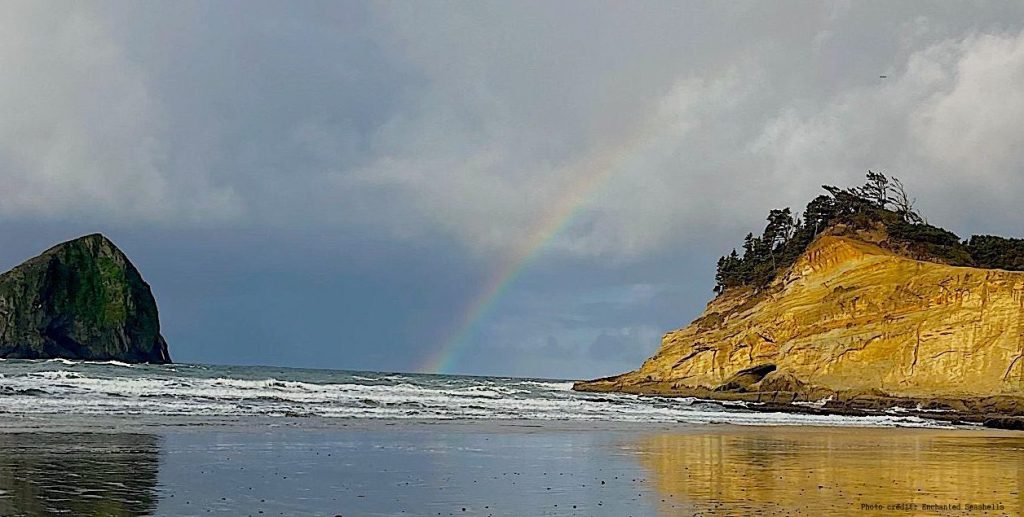
I wrote you a letter last week you know But it won’t have arrived in the post I wrote on the bright coloured curves of a rainbow The reasons I missed you the most
I sent you a message just yesterday But it wasn’t a message in words For I spoke to the wind and I taught her our song And I asked her to make sure you heard
I drew you a picture last Tuesday But you may not have noticed it there For I drew round the clouds with the rays of the sun So they glowed as they hung in the air
No, you may not get gifts like you used to Or get messages stored on your phone But I’ll make sure I’m sending something each day So you know that you’re never alone
And tomorrow I’ll paint something wonderful I don’t know quite yet what it will be But I promise you’ll know when you see it That it’s sent just to you
This is the last day of April. Tomorrow we celebrate Beltane and May Day, and while we can weave flowers in our hair and dance around the maypole, it’s also also called Workers’ Day or International Workers’ Day, to commemorate the struggles and gains made by workers and the labor movement.
May Day is a far cry away from the international call of distress, mayday. I always wondered where that term emanated from. For some reason, SOS didn’t work, so it seems as if mayday was attributed to Frederick Stanley Mockford, a senior radio officer in the RAF. In 1927, the United States formally adopted it as an official radiotelegraph distress signal, explaining that mayday corresponds “to the French pronunciation of the expression m’aider.” It’s simple meaning in English is “help me.”
Beltane is a Celtic annual festival to signify the return of the light.
Whether you light bonfires, decorate your homes with May flowers, or make May bushes, have a Happy Beltane and May Day!
In May Yes, I will spend the livelong day With Nature in this month of May; And sit beneath the trees, and share My bread with birds whose homes are there; While cows lie down to eat, and sheep Stand to their necks in grass so deep; While birds do sing with all their might, As though they felt the earth in flight. This is the hour I dreamed of, when I sat surrounded by poor men; And thought of how the Arab sat Alone at evening, gazing at The stars that bubbled in clear skies;
And of young dreamers, when their eyes Enjoyed methought a precious boon In the adventures of the Moon Whose light, behind the Clouds’ dark bars, Searched for her stolen flocks of stars. When I, hemmed in by wrecks of men, Thought of some lonely cottage then Full of sweet books; and miles of sea, With passing ships, in front of me; And having, on the other hand, A flowery, green, bird-singing land. William Henry Davies 1871–1940
April is almost over and I nearly forgot it was National Poetry Month!
I think that I shall never see A poem lovely as a tree. Joyce Kilmer
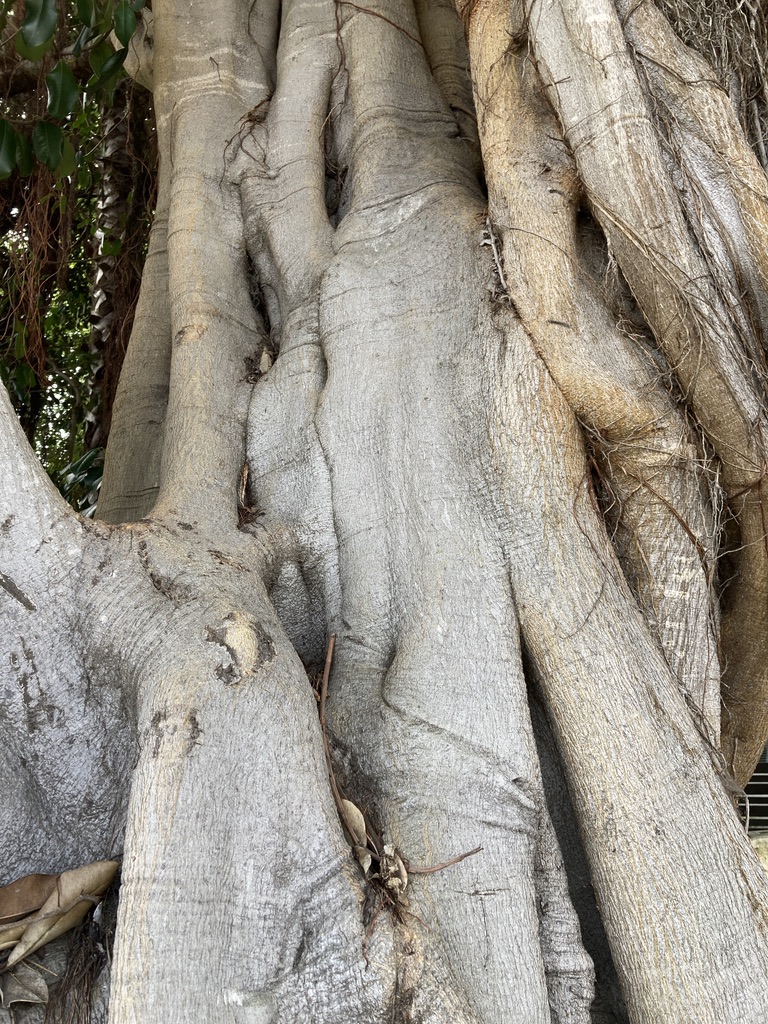
I looked up at this gnarled but lovely twisty eucalyptus tree trunk and ran my fingers down her bark/skin. It was roughly textured but felt solid and safe. Notice all the nooks and crannies to shelter birds and other living creatures.
(I know that one is not really supposed to end a sentence with “in”, but the proper way sounded stilted and phony, so I made a decision based on this information: “never ending a sentence with a preposition is a myth. It’s something wrongly attributed to English that is actually a real rule in Latin.”)
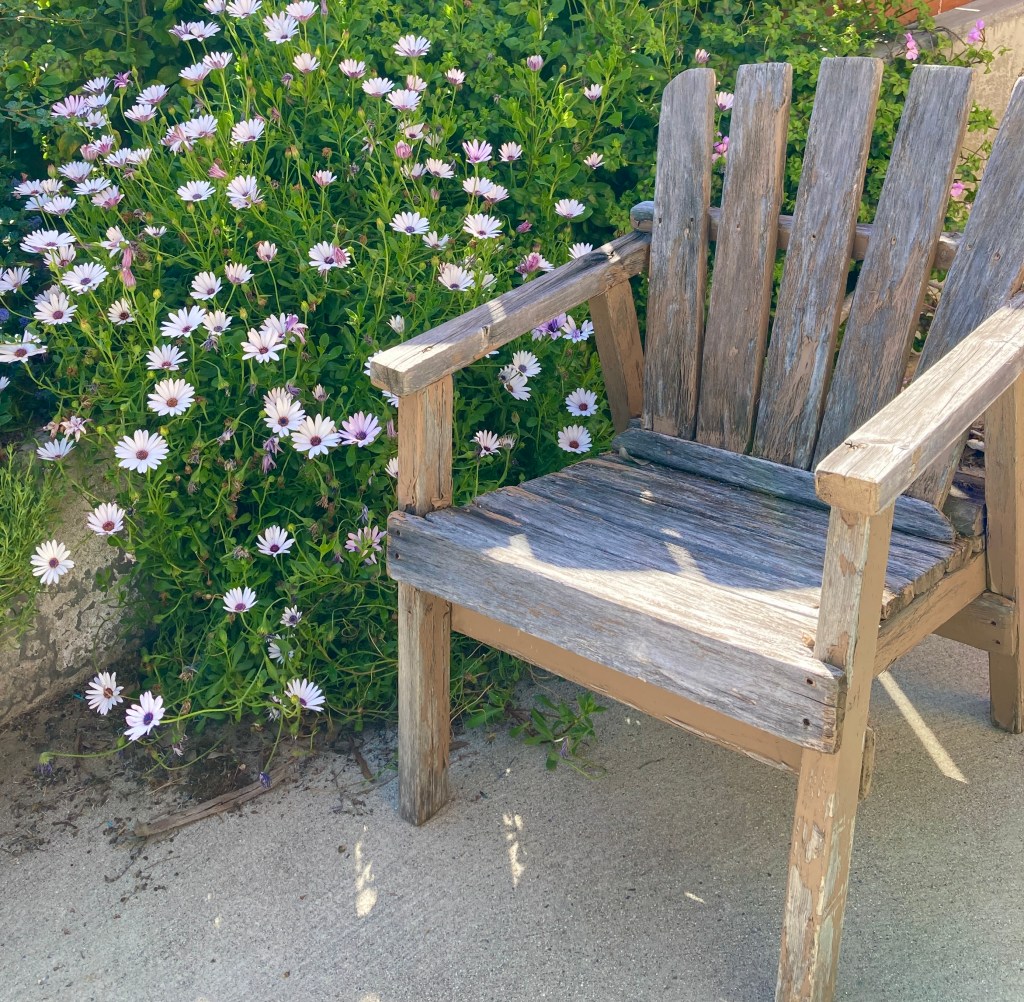
So…on a walk a couple years ago, I found this chair with its turquoise-painted partner tossed out on the street. They looked lonely and sad, so I went home to get my car and rescued them both.
I placed the chairs on the side of the house with every intention of brightening them up with a new coat of paint but their weary and worn character grew on me. I’ve left them to naturally weather every storm just as they are — honest and true — with nothing to camouflage their straightforward authenticity.
I like them just the way they are.
Funny enough, I get a lot of compliments from neighbors who walk by and comment about how they love the artful way the flowers seem to embrace this simple old chair.
The Chair That No One Sits In
You see them on porches and on lawns down by the lakeside, usually arranged in pairs implying a couple
who might sit there and look out| at the water or the big shade trees. The trouble is you never see anyone
sitting in these forlorn chairs though at one time it must have seemed a good place to stop and do nothing for a while.
Sometimes there is a little table between the chairs where no one is resting a glass or placing a book facedown.
It might be none of my business, but it might be a good idea one day for everyone who placed those vacant chairs
on a veranda or a dock to sit down in them for the sake of remembering whatever it was they thought deserved
to be viewed from two chairs side by side with a table in between. The clouds are high and massive that day.
The woman looks up from her book. The man takes a sip of his drink. Then there is nothing but the sound of their looking,
the lapping of lake water, and a call of one bird then another, cries of joy or warning— it passes the time to wonder which.
William James Collins, Poet Laureate of the United States from 2001 to 2003.
This poem by Mary Oliver makes me think of the Pacific Northwest where blackberries grow freely on every fence and in every alley and all along the path we take to walk to the Salish Sea.
The Angel kids, as they carefully pick blackberries to avoid thorns, their faces and hands stained purple, turn now and again to share, “Here’s a nice big one for you, Grandma!”
August
When the blackberries hang swollen in the woods, in the brambles nobody owns, I spend
all day among the high branches, reaching my ripped arms, thinking
of nothing, cramming the black honey of summer into my mouth; all day my body
accepts what it is. In the dark creeks that run by there is this thick paw of my life darting among
the black bells, the leaves; there is this happy tongue.
Isn’t this the most vibrant orange? I’m in love with this little guy.
Flame Skimmer, Libellula saturata.
Dragonfly species that are orange include a variety of skimmers, such as the flame skimmer, firecracker skimmer, golden-winged skimmer, or Needham’s Skimmer.
Orange dragonflies can symbolize joy, creativity, wellness, and sensuality. This relates to the second/sacral chakra, which is orange.
There is magic all around, if you stop and look.
As Robert Bly said, “To be wild is not to be crazy or psychotic. True wildness is a love of nature, a delight in silence, a voice free to say spontaneous things, and an exuberant curiosity in the face of the unknown.”
It seems to me that we’re all still worried about this and that and everything else; I was grateful to see Mary Oliver pop up at the right time to share her wisdom–as always.
Don’t worry though, I still won’t sing–nobody wants to hear THAT, so I’ll leave it to the birds.
I Worried
I worried a lot. Will the garden grow, will the rivers flow in the right direction, will the earth turn as it was taught, and if not how shall I correct it? Was I right, was I wrong, will I be forgiven, can I do better? Will I ever be able to sing, even the sparrows can do it and I am, well, hopeless. Is my eyesight fading or am I just imagining it, am I going to get rheumatism, lockjaw, dementia? Finally, I saw that worrying had come to nothing. And gave it up. And took my old body and went out into the morning, and sang.
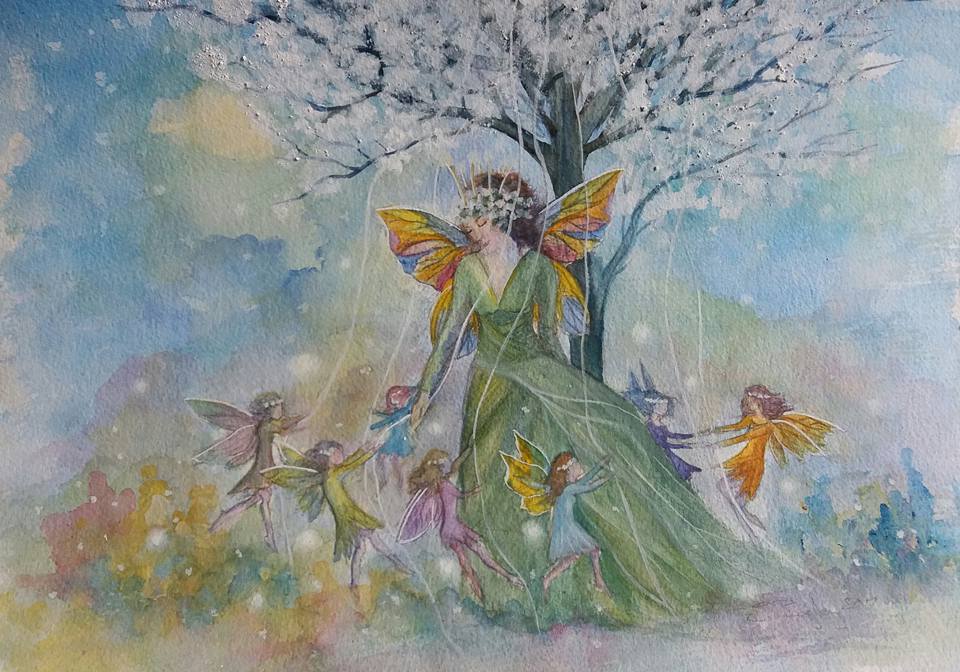
Wishing everyone a light-filled thinning of the veil on this Samhain.
Angel Boy 2.0 is a firefighter this year (thanks to this Grandma for choosing the perfect costume) and Angel Girl is either going to be a mermaid a la Fancy Nancy or a spider. And me? I’m always a princess…
Halloween
Upon that night, when fairies light On Cassilis Downans dance, Or owre the lays, in splendid blaze, On sprightly coursers prance; Or for Colean the route is ta’en, Beneath the moon’s pale beams; There, up the cove, to stray and rove, Among the rocks and streams To sport that night. Robert Burns-1759-1796
I love seeing the moon during the day even though it’s so very confusing.
Daytime Moon
In the morning When the sun Is shining down On every one, It’s very strange To see the moon, Large and like A pale balloon, Drifting over Roof and tree Without one star For company… ~ Dorothy Aldis, American children’s author and poet (1896-1966).
Update Mother’s Day 2020: I wrote this post about my son lightyears prior to Angel Boy 2.0. because without him, I wouldn’t be a mommy at all.Since the birth of his baby sister, AB 2.0 and I repeat this conversation pretty much every single time we speak or we’re together. (A little needed reassurance about his place in the world.)
“Who’s my very favorite boy?”
“I am, Grandma!”
And who’s my second favorite boy?”
“DADDY IS. DADDY IS!”
“You’re right! Now…who’s my favorite GIRL?”
“CharChar is, right, Grandma?”
“You got it, T. And then who’s my second favorite girl?”
“MOMMY MOMMY MOMMY!”
Just keeping it straight for the second little boy who is my heart.
(P.S. My poem was published in Waterways: Poetry in the Mainstream Volume 34 #4)
The Yellow Steamroller
So much depends
upon
a yellow
steamroller
buried
in the dirt
behind the shed
On one bitterly cold wintry afternoon, I embarked on a major yard cleanup project. I raked all the pine needles shaken loose during the fury of Alaska-borne winds that roared down the coast to Southern California.
Metal rake clanged against metal.
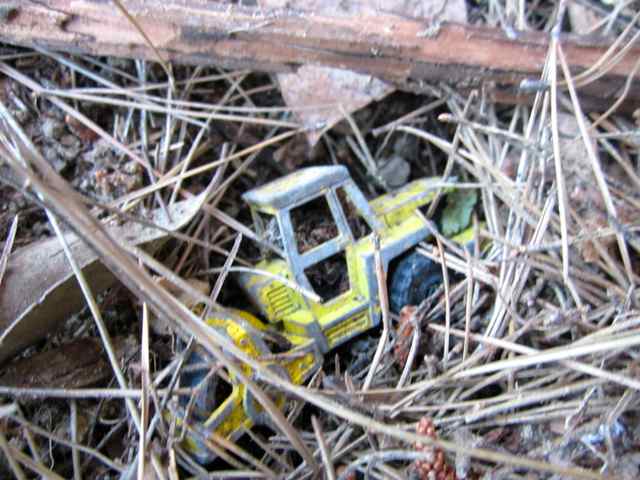
Then I saw it, a bright yellow igniting the dirt and pine needles, suffused with a gleaming radiance through the brown.
I threw down the rake, crouched on all fours, and with bare fingers dug through the wet fecund soil to uncover an abandoned yellow Matchbox toy from the spot where there once was a sandbox that my son’s dad built for him when we first moved to this house in 1985.
I discovered in situ a three-inch wide artifact imbued with all the wonder of my perfect four-year-old child, the same age that my grandson is right now, thirty-five years later.
I gently brushed away decades of encrusted soil and sand.
I was engulfed in wave after wave of memory.
I was there. Really there. 1985.
I saw him–my precious four-year-old son in this beautiful huge sandbox filled with fresh, clean sand.
I watched him as I often watched him from the bay window in the kitchen overlooking the backyard where I would wash dishes and keep an eye on him, keeping him safe–always keeping him safe–as he played in the sand with his dump trucks and cherry pickers and this steam roller and his buckets and plastic cups and forks and sticks with his cats and dog always near, and the loveliness of the memory set me on my heels and I cried.
Happy tears for the exquisite soft rosy glow of healthy well-fed cheeks, the deep Imperial jade green eyes, the curls that were my curls, my boy, my angel love.
The boy whose every breath contains a whisper of the intangible all encompassing LOVE I possess for this being who was a part of me before he was a part of the earth and sun and sky and sand.
The boy who is — and always will be — my heart.
I shut my eyes tight to keep the pictures from disappearing, but the ephemeral/evanescent impressions floated away with the tears that spilled out for the remembering of the beauty of a luminous child playing in a sandbox, singing to himself and constructing sand sculptures of the future, or, in his case, building words and spinning thoughts and erratica.
Those grains of sand that between his fingers mashed and smashed into forts and tunnels were the detritus of the granite from whence his brain reformed them grain by grain into skyscrapers of words and sentences that flow like a path from the back door to the sandbox.
And what eventually happened to the steamroller? It’s still here in the garden, living a new life helping another curly haired, green eyed little boy weave his own stories…




 Enchanted Seashells | Princess Rosebud