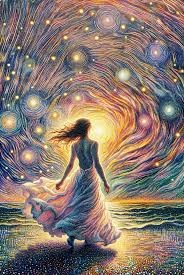
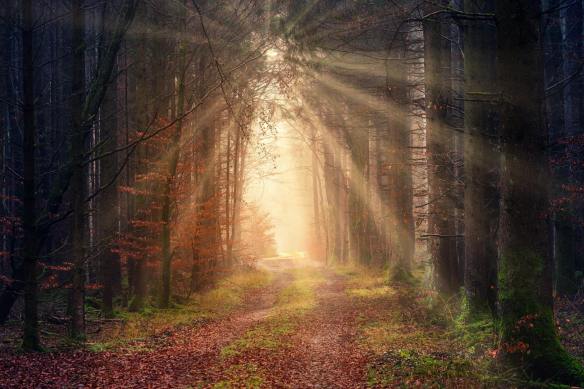
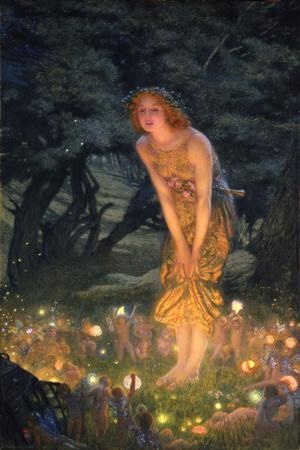
I heard a whisper Coming from the trees And, in that moment I was gone Gone away To return, to where I’d come from.
A little Poem by Athey Thompson Taken from A Little Pocket Book of Poems by Athey Thompson Photo credit to Enchanted Seashells of magical tree at Big Sur
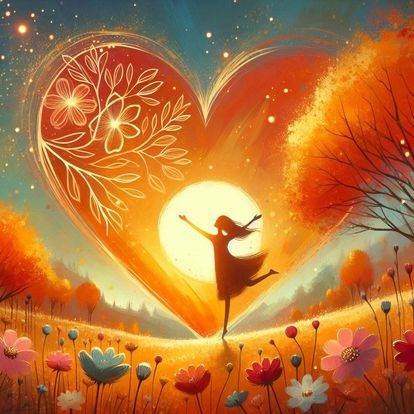
Yesterday’s angst is over; problems solved — today is Friday the 13th, a day that was once considered unlucky until we learned that its negative image is rooted in the patriarchy suppressing the power of the female.
Rather than being afraid of Friday the 13th, especially since its ruled by Venus, we could instead manifest its magic as a day to connect to our beauty and nature.
For me, that’s always been the easiest route; my animal family is all about love. This IS home, along with art and a poem.
I shall Gather up All the lost souls That wander this earth All the ones that are alone All the ones that are broken All the ones that never really fitted in I shall gather them all up And together we shall find our home
“Gather up” A Poem written by Athey Thompson Taken from A Little Book Of Poetry Art by Elaine Bayley curated from Pinterest
“Whence October is upon us, There shall be magic in the air, why it shall be everywhere. All ye leaves shall fall as Autumn does call. And as the faery folk are now gathering up and foraging, tonight I shall be leaving them a wee offering. Why, I shall leave them a few freshly hand picked Bramble berries & a wee tipple of Whiskey, Oh why how merry they shall surely be.” –Athey Thompson
First I’m hot and then I’m freezing. I confess that I’m having a hard time locating the magic in October. Not yet.
Because I wasn’t very smart last year and didn’t get a pneumonia vaccination, I ended up really sick with the most horrible case of double (bi-lateral) pneumonia, so bad that but for the fact that I’m incredibly stubborn, I would have been hospitalized,
THIS time I got the vaccination, reluctantly, because I always endure side effects for about thirty-six hours: headache, chills, fever. Most people only experience a sore arm but my immune system likes to give me a more ambitious taste of reality.
That’s why I’m now wrapped up in a blanket on the sofa, drinking ginger tea and binge-watching my new obsession, Blue Heelers, an Australian TV show from the 90s about the daily lives of Victorian police officers working at a police station in the fictional small town of Mount Thomas.
I think I’ve pretty much exhausted all the available British shows, so I had to search in a completely different hemisphere. Yes, it’s outdated with the gigantic brick-like cell phones, floppy disks, and scrunchies, but I’m learning a lot of new words like “mozzy” for mosquito, “esky” for Eskimo cooler, “slab” for six-pack of beer, “good on ya” and “you beauty“. I had to look up “it’s my shout, mate” to learn it means whoever said it will pay for the next round of drinks.
Previously my DIL and I loved A Place To Call Home, Rake, The Newsreader, The Doctor Blake Mysteries, and of course, Bluey.
I’m bracing for more vaccinations next week because it’s better to have a robustly active immune than the alternative. The first Covid vaccine sent me immediately to urgent care with an allergic reaction (read about that here) but the rest of them have been well tolerated except for the thirty-six hours of subsequent hell.
And, one day We shall look back and see It was always those little moments That mattered the most Those little fleeting moments Of innocence Of happiness Of laughter and dance.
A few years ago UC Berkeley hosted an Eco-Poetics Conference. My son was invited to participate and while there he was honored to meet the poet, Robert Hass.
Hass served as Poet Laureate of the United States from 1995 to 1997. He won the 2007 National Book Award and shared the 2008 Pulitzer Prize for the collection Time and Materials: Poems 1997-2005. In 2014 he was awarded the Wallace Stevens Award from the Academy of American Poets.
I love the way his mind works, it’s as simple as that.
From Hass: “This poem is called measure – I think it belongs to my learning as a young writer as to where I felt poems were coming from.”
Measure
Recurrences. Coppery light hesitates again in the small-leaved
Japanese plum. Summer and sunset, the peace of the writing desk
and the habitual peace of writing, these things form an order I only
belong to in the idleness of attention. Last light rims the blue mountain
and I almost glimpse what I was born to, not so much in the sunlight
or the plum tree as in the pulse that forms these lines.
FYI: Enjambment…From the French meaning “a striding over,” a poetic term for the continuation of a sentence or phrase from one line of poetry to the next. An enjambed line typically lacks punctuation at its line break, so the reader is carried smoothly and swiftly—without interruption—to the next line of the poem.
| Penumbra: a shadowy, indefinite, or marginal area |
I sent you a present last night you know Though it didn’t address you by name It was all of those meteors showering, dancing And falling to earth like the rain
I wrote you a letter last week you know But it won’t have arrived in the post I wrote on the bright coloured curves of a rainbow The reasons I missed you the most
I sent you a message just yesterday But it wasn’t a message in words For I spoke to the wind and I taught her our song And I asked her to make sure you heard
I drew you a picture last Tuesday But you may not have noticed it there For I drew round the clouds with the rays of the sun So they glowed as they hung in the air
No, you may not get gifts like you used to Or get messages stored on your phone But I’ll make sure I’m sending something each day So you know that you’re never alone
And tomorrow I’ll paint something wonderful I don’t know quite yet what it will be But I promise you’ll know when you see it That it’s sent just to you
This is the last day of April. Tomorrow we celebrate Beltane and May Day, and while we can weave flowers in our hair and dance around the maypole, it’s also also called Workers’ Day or International Workers’ Day, to commemorate the struggles and gains made by workers and the labor movement.
May Day is a far cry away from the international call of distress, mayday. I always wondered where that term emanated from. For some reason, SOS didn’t work, so it seems as if mayday was attributed to Frederick Stanley Mockford, a senior radio officer in the RAF. In 1927, the United States formally adopted it as an official radiotelegraph distress signal, explaining that mayday corresponds “to the French pronunciation of the expression m’aider.” It’s simple meaning in English is “help me.”
Beltane is a Celtic annual festival to signify the return of the light.
Whether you light bonfires, decorate your homes with May flowers, or make May bushes, have a Happy Beltane and May Day!
In May Yes, I will spend the livelong day With Nature in this month of May; And sit beneath the trees, and share My bread with birds whose homes are there; While cows lie down to eat, and sheep Stand to their necks in grass so deep; While birds do sing with all their might, As though they felt the earth in flight. This is the hour I dreamed of, when I sat surrounded by poor men; And thought of how the Arab sat Alone at evening, gazing at The stars that bubbled in clear skies;
And of young dreamers, when their eyes Enjoyed methought a precious boon In the adventures of the Moon Whose light, behind the Clouds’ dark bars, Searched for her stolen flocks of stars. When I, hemmed in by wrecks of men, Thought of some lonely cottage then Full of sweet books; and miles of sea, With passing ships, in front of me; And having, on the other hand, A flowery, green, bird-singing land. William Henry Davies 1871–1940
April is almost over and I nearly forgot it was National Poetry Month!
I think that I shall never see A poem lovely as a tree. Joyce Kilmer
I looked up at this gnarled but lovely twisty eucalyptus tree trunk and ran my fingers down her bark/skin. It was roughly textured but felt solid and safe. Notice all the nooks and crannies to shelter birds and other living creatures.
On a walk a couple years ago, I found this chair with its turquoise-painted partner tossed out on the street. They looked lonely and sad, so I went home to get my car and rescued them both.
I placed the chairs on the side of the house with every intention of brightening them up with a new coat of paint but their weary and worn character grew on me. I’ve left them to naturally weather every storm just as they are — honest and true — with nothing to camouflage their straightforward authenticity.
I like them just the way they are.
Funny enough, I get a lot of compliments from neighbors who walk by and comment about how they love the artful way the flowers seem to embrace this simple old chair.
The Chair That No One Sits In
You see them on porches and on lawns down by the lakeside, usually arranged in pairs implying a couple
who might sit there and look out| at the water or the big shade trees. The trouble is you never see anyone
sitting in these forlorn chairs though at one time it must have seemed a good place to stop and do nothing for a while.
Sometimes there is a little table between the chairs where no one is resting a glass or placing a book facedown.
It might be none of my business, but it might be a good idea one day for everyone who placed those vacant chairs
on a veranda or a dock to sit down in them for the sake of remembering whatever it was they thought deserved
to be viewed from two chairs side by side with a table in between. The clouds are high and massive that day.
The woman looks up from her book. The man takes a sip of his drink. Then there is nothing but the sound of their looking,
the lapping of lake water, and a call of one bird then another, cries of joy or warning— it passes the time to wonder which.
William James Collins, Poet Laureate of the United States from 2001 to 2003.
This poem by Mary Oliver makes me think of the Pacific Northwest where blackberries grow freely on every fence and in every alley and all along the path we take to walk to the Salish Sea.
The Angel kids, as they carefully pick blackberries to avoid thorns, their faces and hands stained purple, turn now and again to share, “Here’s a nice big one for you, Grandma!”
August
When the blackberries hang swollen in the woods, in the brambles nobody owns, I spend
all day among the high branches, reaching my ripped arms, thinking
of nothing, cramming the black honey of summer into my mouth; all day my body
accepts what it is. In the dark creeks that run by there is this thick paw of my life darting among
the black bells, the leaves; there is this happy tongue.