Since the ash tree endured its yearly abscission, I raked fallen leaves for the very last time and have been enjoying this disrobed version until late afternoon when I noticed the branches were once again full; not of leaves, but of dozens of happy, chirpy little birds adorning every space.
So completely adorable.
One by one, they flew away, and the tree was once again barren.
I’m a day late, but couldn’t resist sharing my talented friend’s beautiful photo of the moon early this morning at sunrise.
Photo courtesy of Mick Yarbrough
November’s full moon was traditionally called the Beaver Moon by a number of Native Americans and colonial Americans. Many Native American groups used the monthly moons and nature’s corresponding signs as a calendar to track the seasons.
Why the “Beaver” Moon? This is the time of year when beavers begin to take shelter in their lodges, having laid up sufficient stores of food for the long winter ahead.
The November full Moon has also been called the Frost Moon and the Freezing Moon. Judging by the chilly weather that becomes more and more common at this time of year, it’s not hard to understand how these names came about! Another name, the Digging (or Scratching) Moon, evokes an image of animals scratching at the fallen leaves, foraging for fallen nuts or remaining shoots of green foliage—with the implication that winter is on its way.
Here in SoCal, it’s been warm and sunny during the day, but getting colder at night.
After I removed the messy, encroaching ficus tree, I decided to replace the empty space with something edible.
I selected a pomegranate, Valencia orange, and a fig. I chose the Diana variety because it looked so adorable, almost like it was decorated for the holidays.
I know you’re supposed to remove any fruit the first year because it’ll encourage stronger root growth, but I’m going to let these guys ripen first and eat them.
This golden fig is soft and ready to eat; incredibly sweet–tropical with hints of banana and pineapple.
What’s funny is that I learned that fig is a member of the ficus family, so to avoid any invasive root damage, I planted it about fifty feet away from the house. The guy at the nursery said that would be far enough away to be safe.
Extreme closeup. Interesting and sort of gross, too.
So yummy, not too crunchy with seeds like other figs. It was absolutely delicious and juicy. Dried figs are great, but this one fresh off the tree was such a treat!
This is the end of the month, almost the end of the year, and tomorrow’s full moon will beguile us with a spectacular lunar eclipse.
Evergreen; exactly like Jon. Relevant and funny with painful truths. Gratitude turns what you have into enough; stay safe and healthy, vegan or not! Happy Thanksgiving 2020!
He sat for the longest time on a volunteer Brazilian peppertree. The original tree was removed because it’s an invasive species, but also resilient and obnoxious, an aggressive woody weed which displaces native vegetation and rapidly invades disturbed sites.
To A Mocking Bird
The name thou wearest does thee grievous wrong; No mimic thou: that voice is thine alone. The poets sing but strains of Shakespeare’s song; The birds, but notes of thine imperial own.– Henry Jerome Stockard
The call of love sounds very hollow among these immobile rocks. -Gustav Mahler
I love rocks as much as I love seashells. I’m drawn to all shapes and sizes, colors and textures. Each one has a story to tell. They’re alive; warm from absorbing the sun, cool to the touch when it’s chilly, and shiny wet when it rains. They change but stay the same. I can trust them and that’s important to me.
Rocks are composed primarily of grains of minerals, crystalline solids formed from a chemical compound arranged in an orderly manner. The aggregate minerals forming the rock are held together by chemical bonds. Immutable bonds of love.
This is my very own dry river bed. I hauled each and every rock with my own two hands; thousands of them; a true labor of love.
Like a ship that runs aground because of low tide or unseen rocks or fog or navigational errors, our beautiful heart can be damaged when blood flow is restricted or when it flows unregulated.
Heart/wrecked.
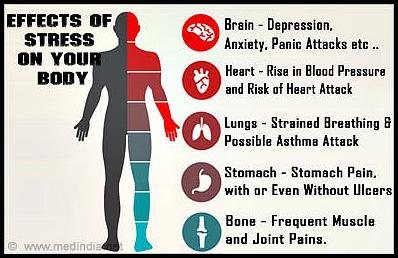
I grew up hearing the term, “Stress kills.”
I was never quite sure what that meant, but then I did when it happened to me.
After a seemingly nonstop barrage of a personal stressful situation–like a ship hitting the rocks over and over again–it all finally took an undeniable toll on my physical health.
One of my favorite places to live is in the state of Denial, but I’ve been forced to temporarily move to a new town called Reality. Hopefully, I’ll just visit there for a bit until I can come home again.
After experiencing some intermittent and strangely terrifying heart pains, I went to the doc who took my blood pressure and was concerned about the results. It was super high. I had always had enviably LOW blood pressure since I exercise regularly, am vegan and never smoked, so this raised concerns.
Over the course of a couple weeks, my BP was checked daily and it stayed consistently high; dangerously high, which only made me more anxious and more stressed, and at one of the office visits, I started hyperventilating and had a panic attack. (Super embarrassing for the doc and absolutely mortifying for me.)
This led to an order for an Echocardiogram along with all the other heart-focused tests. The echo was done at a local hospital–a definite trigger. No one wants to go to a hospital at any time, but especially during Covid. It seemed like I was being admitted, with a wrist band and lots of little stickers, and I was devastated.
I almost bolted out of the front door at that point, but I persevered. I can share with you that it’s a scary time when you have to figure out why you don’t feel great. I’ve been a medical advocate for several loved ones, but it’s radically more difficult when you have to care for yourself. Poor me.
The technician was amazing, especially considering I tormented her with a million questions. I know enough about medical stuff to see that she was concentrating on a certain area of my heart. I really appreciated her patience with me and her detailed explanations during the hour-long ordeal.
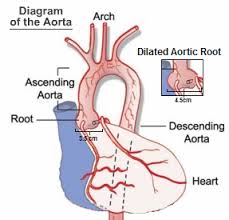
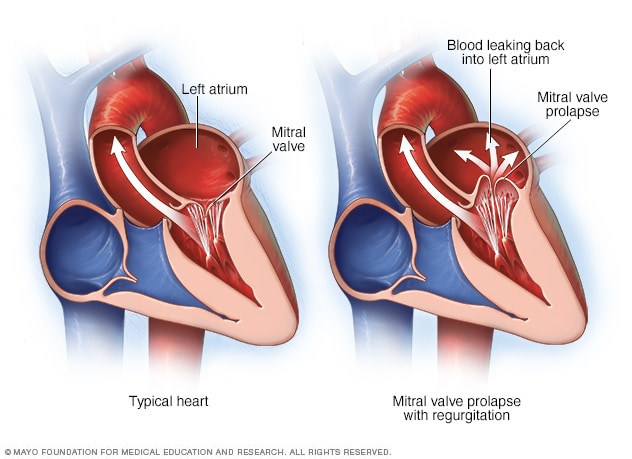
The results showed a dilated aortic root valve and regurgitation of the mitral valve.
What this means is that the accumulation of stress and panic attacks and PTSD that I’ve endured during the last four years manifested medically and physically and caused structural damage to my heart.
“Severe physical or emotional stress increases blood pressure to the point where the tensile limit of the aortic tissue is overwhelmed, causing the rupture.”
“Over time, certain conditions, such as high blood pressure, can cause your heart to work harder, gradually enlarging your heart’s left ventricle.”
“Mitral valve regurgitation can cause complications such as atrial fibrillation, in which the atria of the heart don’t contract well. This leads to increased risk of stroke. Also, elevated blood pressure in the lungs (pulmonary artery hypertension).”
Hypertension makes the blood push harder against the valve and causes it to dilate, enlarge, and that’s pretty much the same scenario for the mitral valve, which seems to be the cause of the intermittent chest pain.
I’ll need to be monitored regularly because if I can’t control the stress/blood pressure and the valves stretch to a dangerous size, the only solution is surgical intervention–or death.
Reducing stress and hypertension can possibly keep the valves from enlarging any further, but the damage is done–nothing will make them reduce in size back to normal, except surgery.
Let me tell you that it’s true. Stress kills.
Now I’m off to change course, take some magnesium, eat more beets, meditate, calm down and regulate my breathing so that I don’t have a stroke or an aneurysm.