Festival of Lights | Happy Hanukkah! | Chag Sameach 🕎 

Tonight’s the first night of Hanukkah and Hello Kitty reminds us to let our light shine!

Our Jewish Festival of Lights lasts for eight days and nights in honor of a 2,000-year-old miracle in which light won out over darkness.

During Hanukkah 1931, Rachel Posner, wife of Rabbi Dr. Akiva Posner, took this photo of the family Hanukkah menorah from the window ledge of the family home looking out on to the building across the road decorated with Nazi flags.

While it’s definitely a time for serious reflection, it’s also all about fun with latkes, gold coins, dreidels, lots of presents, and this iconic song by Adam Sandler:

Last year’s post about Hanukkah has a lot more info about the historical significance https://enchantedseashells.com/2022/12/19/whats-hanukkah-all-about/

Etidorhpa | Aprhodite

Have you heard of this novel?

Etidorhpa: The End of Earth (1895) by John Uri Lloyd

Complete subtitle: “The strange history of a mysterious being and the account of a remarkable journey as communicated in manuscript to Llewellyn Drury who promised to print the same, but finally evaded the responsibility which was assumed.”

This is so strange. I can’t remember how or when I scrolled past this title but it reminded me of when I was little, my dad started talking about this book. He read the title to me and, since we both loved wordplay, helped me read it backwards to reveal the mirrored magic.

I can’t remember anything else about our conversation other than that, and I don’t have the book and don’t know what happened to it, so it’s simply an amorphous slip of a memory.

 it was written over a hundred years ago yet it contains absolutely profound theories about electromagnetism and gravity.

Since my dad was an attorney and lived among facts, reality, and documentation, it’s interesting to learn that he was drawn to the esoteric, but he was REALLY smart and loved to read, so maybe he was more complex than I realized.

According to Wiki, Etidorhpa belongs to a subgenre of fiction that shares elements of science fiction, fantasy, utopian fiction, and scientific (or pseudoscientific) speculation. Jules Verne’s Journey to the Center of the Earth is the most famous book of this type, though many others can be cited. It imagined another world in the center of a hollow earth. Since Lloyd was a pharmacologist, his novel has provoked speculation that drug use may have contributed to its fantastic and visionary nature.

The book is available here: https://www.gutenberg.org/files/37775/37775-h/37775-h.htm

I started to read the first chapter. For me, it’s not an easy read, not like my romantic chicklit, so it hasn’t really grabbed my interest, other than as a vague but sweet moment in time with my dad.

If you have read it, or intend to, let me know what you think, and WHY Aphrodite is important…

Searching

“I am out with lanterns, looking for myself.” — Emily Dickinson

Curated from Pinterest. Unknown. Credit to the artist.

Reading is EVERYTHING

“A child who reads will be an adult who thinks.” Unknown

I always have a book with me, my son always has books with him, and I always have books in the car.

Any time I hear, “I’m bored”, my response is “go read a book.” I said this even before he could actually READ, to encourage the good habit.

Later, I’d tell him to pick out all the sight words he’s learned; it, he, she, the, but…and then we built on those skills by sounding out other words phonetically.

I love functional reading too, and often pretend (lie) that I don’t have my glasses on so I can’t see a recipe or directions and ask him to help me out. He takes the bait every single time and that makes me very happy. To be completely accurate, almost every time. There is that one time he brought my reading glasses to me and that kinda sorta called my bluff, but I simply thanked him for finding them and found a better hiding place next time.

Even his Pokemon cards spark reading skills. “I can read this, Grandma” and I honestly didn’t believe him (there were some big words). Of course I didn’t reveal my skepticism and when he read the back of the cards, truly read them, I gave him a giant hug.

Recently, driving home from the airport with everyone in the car, we heard Angel Boy’s voice in the back seat. He had picked up one of the books I leave on the seat and was reading to his sister.

We all looked at each other in wonderment because this hadn’t happened before. Angel Girl was intently listening to the story and we were speechless with the joy of it, as we’re all big readers who know the importance of learning to read.

When the book was finished, we praised his ability and kindness toward his sister, who asked for the story to be read to her again. And he did. It was a win-win for both of them. And us.

Reading is everything.

“Reading is the gateway for children that makes all other learning possible.” – Barack Obama

The Velveteen Rabbit

I read The Velveteen Rabbit to both Angels and I’m not sure they loved it as much as I did, but it did give us an opportunity to have a chat about my favorite part.

T ran to his bedroom to find his dad’s teddy which now belongs to the kids, so I think they understood the story’s valuable message.

“Like this, Grandma?” “Where Daddy’s puppy chewed on Teddy’s ear?”

“Exactly!” “Teddy’s been loved a lot, hasn’t he?”

T brought Teddy to Dad so he could give him an extra hug. “Hug him, Daddy. He misses you.”

I wish I had a photo of that precious moment, but it’s captured in my heart forever.

“You become. It takes a long time. That’s why it doesn’t happen often to people who break easily, or have sharp edges, or who have to be carefully kept. Generally, by the time you are Real, most of your hair has been loved off, and your eyes drop out and you get loose in your joints and very shabby.
But these things don’t matter at all, because once you are Real you can’t be ugly, except to people who don’t understand.”

Margery Williams Bianco – The Velveteen Rabbit, 1923.

What I’m Reading: The Bowl of Light

Aloha and mahalo…

Year’s end often brings reflection and this book about light is a gratifying metaphor for ending 2022 and starting fresh with a full bowl of love and light in 2023.

The symbol of a bowl of light holds a relevant message to help us explore our limitations, how we can commit to releasing them, and learn to live in harmony.

I wrote about this book in Giving Thanks and since then, I received it as a thoughtful gift and I’m enjoying it so much that I wanted to share it with everyone.

In 1996, a revered Hawaiian elder befriended an American anthropologist, and from their rare and intimate rapport, something miraculous emerged. Through the words and teachings of the kahuna wisdom-keeper Hale Makua, Dr. Wesselman was gifted with an enhanced perspective into the sacred knowledge of ancient Hawaii.

Author Hank Wesselman, PhD, is a paleoanthropologist and shamanic teacher who has worked with noted anthropologists investigating the mysteries of human origins in Africa.

Before his passing, elder Makua encouraged Dr. Wesselman to convey much of what had passed between them to the wider world, giving him permission to share his spiritual knowledge, including:

The Bowl of Light—how we can restore our natural divine radiance
• The three directives of the spiritual warrior—love with humility, live with reverence, and know with self-discipline
• Rituals for communing with nature, receiving wisdom from the spirit world, purifying our consciousness, and more
• The Ancestral Grand Plan—exploring the path our ancestors set in motion millennia ago, and how the Plan is playing out across the world today

***

Along with the the ancient Hawaiian practice of Ho’oponopono about forgiveness, there’s a lot of wisdom we can gain from native Hawaiian culture.

“I’m sorry, Please forgive me, Thank you, I love you.”

***

I started to research more of the island’s ancestral traditions and discovered the Huna Principles from Kauai, one of the most beautiful places on this planet.

Ho’ihi . . . Respect

The seven principles of Huna were passed down as part of another Hawaiian family’s oral tradition – the Kahili family of Kauai and these have been presented in a contemporary form by Serge Kahili King. The story of the Bowl of Light provides an illustration of these Huna principles in action as follows:

Ike: Awareness

The story teaches us to become aware of how the choices we make can affect us for better or worse. It is valuable to become aware of the extent that your own bowl is comprised of stones or light. Awareness provides the starting point for change.

Kala: Freedom

We can limit and constrain ourselves to such a point that it is as though we stop growing, we get stuck. When we experience, and hang onto, emotions such as fear, anger and jealousy, it is like we are dropping another stone into our bowl which means we experience less light. We can also free ourselves from such limitations and flourish. We have the ability to release limitations.

Makia: Focus

We choose where to focus- either towards empowering feelings and behaviours or away from feelings and behaviours that disempower us. The choice is ours in any given moment.

Manawa: Presence

The light is always there, even if at times it seems to be fully obscured by stones. If we so choose, change can be quick and it is never too late to change. We can simply turn the bowl upside down and let go of the all the stones and make room for the light.

Aloha: Love

Love and heart-centered practices increase our strength and well-being. To love is to be happy with – we experience light to the extent that we focus on aloha – light and stone cannot occupy the same space. To the extent that we have light in our bowl, we are connected to our true nature and spirit. We are all connected and our own individual light contributes to lighting the world for everyone.

Mana: Power

We have the power to make changes in our life for the better. It is up to us to take responsibility and be the authority in our own life.

Pono: Effectiveness

The tale is a metaphor for living effectively. It reminds us how we can be pono – in a state of harmony with oneself, others, nature and life itself.

Pete Dalton ©2020.  This article first appeared on Aloha International.
Talking About Coyotes | Compassionate Coexistence

From the wonderful people at Project Coyote, download a free ebook to learn more about the beautiful songdog: Coyotes in our Midst:
https://projectcoyote.org/resources/books/?eType=EmailBlastContent&eId=8962dc96-ad12-412d-9113-cb717cf36b2c

And definitely watch this video encouraging the concept of compassionate coexistence:

How to Rewire Our Brain for JOY

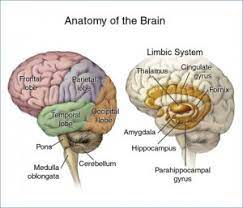
Since my DIL is a neuroscientist, anything that relates to the brain and how it works is a topic of conversation around Casa de Enchanted Seashells.

According to Buddha’s Brain: The Practical Neuroscience of Health, Happiness, and Wisdom, we can change our mind–to change our brain–to change our mind.

The beauty of self-directed neuroplasticity means we really can teach old dogs new tricks.

Author Rick Hanson’s premise is that if we intentionally choose positive thoughts, we can change our life for the better.

Here’s an excerpt about JOY:

Internalizing the Positive

1. Turn positive facts into positive experiences. Good things keep happening all around us, but much of the time we don’t notice them; even when we do, we often hardly feel them. Someone is nice to you, you see an admirable quality in yourself, a flower is blooming, you finish a difficult project — and it all just rolls by. Instead, actively look for good news, particularly the little stuff of daily life: the faces of children, the smell of an orange, a memory from a happy vacation, a minor success at work, and so on. Whatever positive facts you find, bring a mindful awareness to them — open up to them and let them affect you. It’s like sitting down to a banquet: don’t just look at it — dig in!

2. Savor the experience. It’s delicious! Make it last by staying with it for 5, 10, even 20 seconds; don’t let your attention skitter off to something else. The longer that something is held in awareness and the more emotionally stimulating it is, the more neurons that fire and thus wire together, and the stronger the trace in memory.

“Focus on your emotions and body sensations, since these are the essence of implicit memory. Let the experience fill your body and be as intense as possible. For example, if someone is good to you, let the feeling of being cared about bring warmth to your whole chest.

“Pay particular attention to the rewarding aspects of the experience — for example, how good it feels to get a great big hug from someone you love. Focusing on these rewards increases dopamine release, which makes it easier to keep giving the experience your attention, and strengthens its neural associations in implicit memory. You’re not doing this to cling to the rewards — which would eventually make you suffer — but rather to internalize them so that you carry them inside you and don’t need to reach for them in the outer world.

“You can also intensify an experience by deliberately enriching it. For example, if you are savoring a relationship experience, you could call up other feelings of being loved by others, which will help stimulate oxytocin — the ‘bonding hormone’ — and thus deepen your sense of connection. Or you could strengthen your feelings of satisfaction after completing a demanding project by thinking about some of the challenges you had to overcome.

3. Imagine or feel that the experience is entering deeply into your mind and body, like the sun’s warmth into a T-shirt, water into a sponge, or a jewel placed in a treasure chest in your heart. Keep relaxing your body and absorbing the emotions, sensations, and thoughts of the experience.”

Looking For a Great Read? Here’s One: The Lost Girls of Paris

If you’re searching for something to read, here’s a suggestion…

From Pam Jenoff, author of The Orphan’s Tale, The Lost Girls of Paris is a remarkable yet tragic story of friendship and resolute spirit by a ring of female spies trained in Britain during World War II.

Way more brave than I could ever hope to become, this book is vividly rendered and inspired by true events. Jenoff shines a light on the incredible heroics of these spies and weaves a mesmerizing tale of courage, sisterhood, and the great strength of women to survive almost anything in the face of danger.

But really, who knows how we might answer the call to save our children from another Nazi-like regime, right? As we all aware, mama bears are tenacious and fierce!

Side by Side | Cormac McCarthy vs Sophie Kinsella

This time I was unlucky enough to be in the middle although in sniffing distance of first class. I cherished the almost princess moment with my wistful view of the curtains that separated THEM in their rarified air from US, the hoi polloi.

To my left was an older-than-me male; slightly obnoxious. He moved around a lot, didn’t settle down, and then THIS: he attempted to man-usurp the shared armrest.

OH NO HE DINT.

I might be all of five feet tall and my feet might BARELY reach the floor, but NOBODY has the right to hog the shared armrest. Bad form, lack of etiquette, and not on my watch, buddy.

I strategically waited until he reached down to get something from his under-the-seat bag and I FIRMLY planted MY arm on the arm rest. HAH! I thought to myself, that’ll teach him. I let him have it back after I felt my point had been made and received.

He finally decided to nap and covered himself with his jacket which invaded MY territory, so I shoved it back over to his side- that’s when I got “Sorry.” After about fifteen minutes or twenty minutes, I must confess that I took a certain amount of pleasure in waking him up so I could use the restroom. Just a CERTAIN amount of joy, not a lot. Not too much. (Tee hee.)

Harrumph. Don’t ever mess with a short curly haired girl, old man.

To my right was a young guy who had an edition of Cormac McCarthy’s Blood Meridian wedged in the little pocket attached to the seat in front. It stared at him, unblinking, willing him to pick it up and read, but for two hours he resisted the allure of McCarthy and the urge to absorb those tortuous words. First he tweeted A LOT and then he fell asleep, woke up, and cracked open the novel. I wonder if he had any idea what he was getting himself into, and felt like telling him this might NOT the best time to read McCarthy as he’s the antithesis of a light, not-too-demanding author, but I kept my own counsel this time. His mistake, though. Cormac is the stuff of nightmares.

On the other hand, I was firmly immersed in one of my fave authors, Sophie Kinsella. This time it was her 2017 book, My Not So Perfect Life. It was like drinking the perfect cocktail on a balmy summer evening. Kinsella rarely disappoints and I was immediately drawn into the characters, their situations, and relationships. Like all great reads (in my opinion) it ended with the main character finding her happily-ever-after true love.

I read nonstop until we landed.

Home. There’s no place like it.