Old-Fashioned Blueberry Pie (Vegan)

A while back, I made a blueberry pie because I had too many blueberries that needed to be used up and a pie seemed like the perfect solution.

The original Angel Boy said it was the best pie he had EVER eaten, which is saying a lot, because he doesn’t really care very much about desserts. The crust was crisp and flaky; even the bottom turned out golden browned, not at all soggy.

Mom and the Ferals (no longer Angel Kids) loved it too, so much that the last piece of pie had to be carefully divided between the four of them so everyone had a final taste.

After I received those glowing compliments, I decided to make it again, and hope I can replicate the delicous-ness.. I know that some people have a problem with lattice-topped pies, but it’s really quite simple, and is really the best top for a blueberry pie.

I don’t think there’s any point in posting my recipe for a crust as there are literally thousands of recipes with how-to videos on YouTube. My suggestion is to either make your own favorite recipe or buy a ready-made crust, which I’ve never actually done, but know people who have. This is the one and only time I use Crisco shortening because I hate butter crusts. I think butter flavor detracts from whatever pie filling is used, whether it’s fruit or lemon meringue or chocolate. I’ve also tried oil-based crusts but they end up way too chewy and gross, so Crisco works for me.

My filling is about five cups of fresh blueberries (these were organic), a couple tablespoons of lemon juice, 1/2 cup white sugar, and two hefty tablespoons of cornstarch, although you could use flour too. The purpose is to thicken the juicy berries and create a heavenly pie.

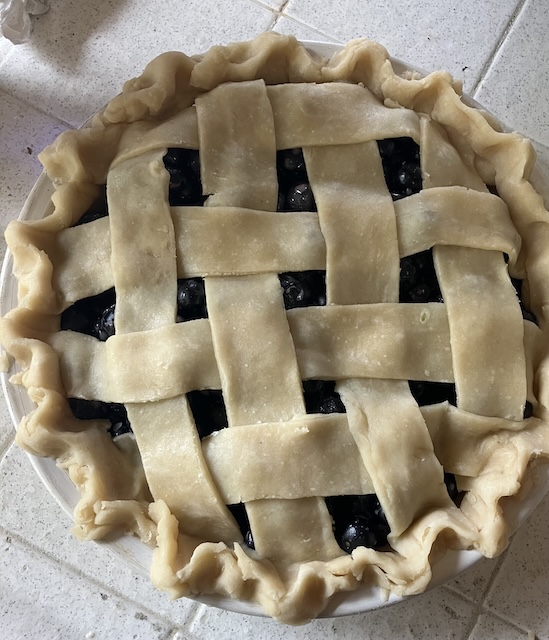
The lattice is beyond simple, and there are also many online directions. I’ve been doing it for so many years that it only takes a few minutes to weave the lattice over the berries.

Because pies have a tendency to bubble over and create a huge mess in the oven, a tip that I use is to place some parchment paper on a baking sheet and place the pie on that.

Ready for the 400 degree oven!

Photo by Enchanted Seashells

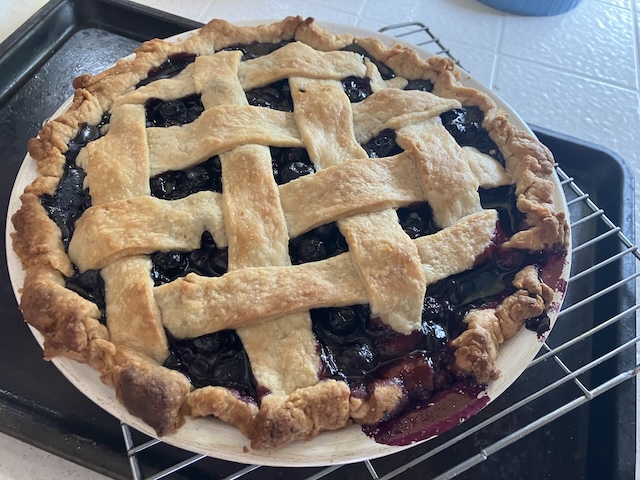
After baking for about 40 minutes, it needs to cool so I can have a giant slice!

Photo by Enchanted Seashells

P.S. It was DELICIOUS, not too sweet, and the crust was amazing!

The Compleat Apple Pie…Deconstructed

Out of the mouths of babes, literally...”Grandma says that if you think you’ve added enough cinnamon, you HAVEN’T—add more!” That’s the secret to the best ever apple pie.

Re-posting from a few years ago, one of my family faves, and now the grandkids help! Well, one of them does…the other one is just like his dad and waits until it’s baked so he can eat it.

If you are one of the many boys and girls (OK, adults) who’ve never made an apple pie from scratch and you don’t want to meet the Grim Reaper without having made at least one perfect apple pie, you’ve come to the right place.

I’m right here, holding your hand, gently walking you through all the steps and twists and turns to create the best apple pie you will ever eat. Guaranteed.

I know you can do it! Once you’ve mastered one pie start to finish, you will never be afraid of a little old piecrust again. Pinky swear.

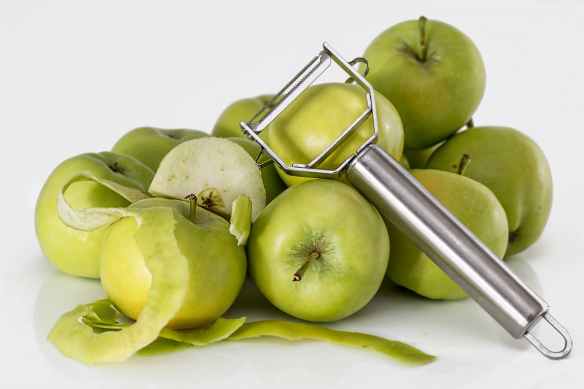
I like Granny Smith or Pippin apples for pies. Normally, that would be the green ones. Depending on the size of the apple, I like to use between 6-8 apples per pie.

I enjoy making my pies the old fashioned way. I peel and slice the apples.

Photo by Pixabay on Pexels.com

Squeeze a little lemon juice over the slices for a pop of flavor and it’ll help keep the apples from turning brown. Unless I’m making apple jelly, I put the peels in the compost bin, and so should you!

apple3

This is one time when I use white sugar and don’t feel guilty about it–about 1/2 cup or to taste. Some apples need more sweetness, some need less.

The most important ingredient is cinnamon. The right amount of cinnamon elevates the apple pie to a higher level.  I use approximately 3-4 tablespoons. The kids (and dad) do a lot of tasting, so it’s a good idea to add a little at a time and taste as you go. We love a LOT of cinnamon!

apple5

When you feel that your apples and sugar and cinnamon have reached the zenith of blissful co-existence, sprinkle one tablespoon all-purpose flour over the apples and mix lightly.

Don’t be afraid, don’t desert me before the dessert is complete–watch and learn!

apple8

I like my mom’s favorite cookbook for old-fashioned recipes.

It’s not that difficult. It’s like many things in life. Once you try something new and master it, you lose the fear of the unknown.

The Crust
It’s not rocket science. This is a tried and true basic recipe for a two-crust pie. I don’t like to use butter in this crust because I don’t want any other flavors to ruin the apple+cinnamon perfection. I know you can use a food processor and it cuts the time in half but sometimes the most satisfying part of baking is to be fully immersed in the process as much as the final results!

For a nine-inch pie pan:
Mix together…
2 cups all purpose flour
3/4 teaspoons salt
Cut in…
2/3 cup shortening (This is one and only recipe where I use Crisco)
Sprinkle with…
Four tablespoons water (more if necessary)

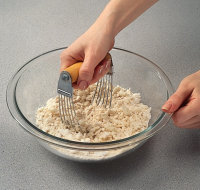
What does “cut in” mean? It means you need to distribute the shortening into the flour so that the particles become the size of peas. This is what makes pastry flaky. Use a pastry blender to cut shortening into flour. If you don’t have one, use two knives and this technique: holding a knife in each hand with blades almost touching, move knives back and forth in opposite directions in a parallel cutting motion. The side of a fork or a wire whisk works, too.

pastry-blender
apple12

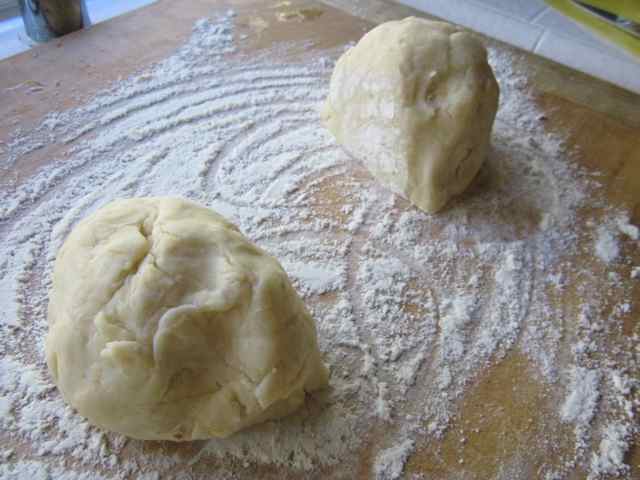
Mix only until all ingredients are worked in. If you overwork pastry dough, it’ll become tough. Sprinkle the water in a tablespoon at a time, mixing lightly with a fork until all the flour is moistened. Gather dough together and press into two balls for the upper and bottom crust.

At this point, if you have time, cover and chill for about thirty minutes or so.

Flour the board or counter and the rolling pin so the dough won’t stick. There are all kinds of fancy schmancy rolling pins–I’ve been really happy with this old wooden one. Flatten the balls with your hand. Roll each ball into a sort of circle; don’t go all crazy thinking it has to be perfect at this point. If it breaks or tears, just pinch and push it back together–about 1/8 inch thick. For an apple pie, I think the bottom crust needs to be a bit more sturdy than the top crust, and roll into a circle two inches larger than pie plate.

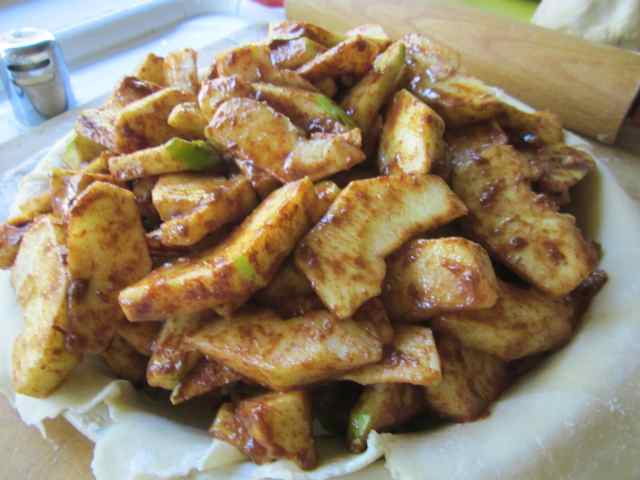
Pile high with the yummy apples.

apple15

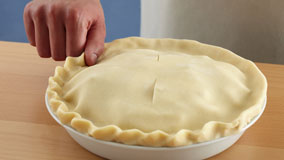
Redo the same steps with the other round for the top crust. Cut off the extra dough that hangs over–leaving enough to fold under.

piecrustedges

You can either crimp the edges…or use a fork. Dip fork tines in flour; press tines onto edge of dough. Poke with fork or knife all around to release steam as it bakes.apple18

I wanted to add an enchanted seashell embellishment to the final version.

apple16

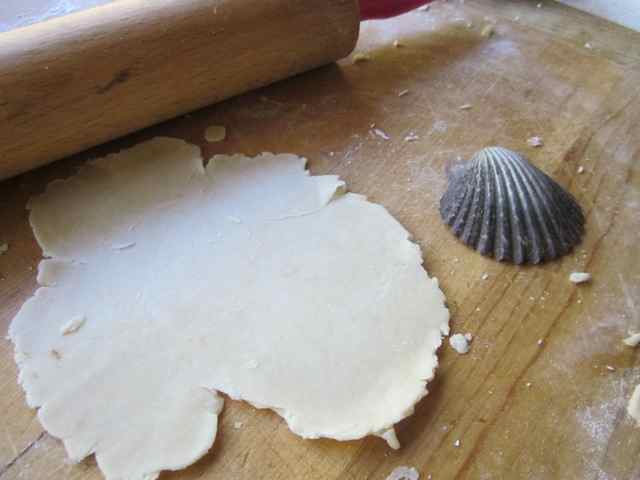
I molded leftover dough over a scallop shell, cut off the excess, and placed it on the pie.

apple17

It will bake quicker than the pie–remember to take it out after about ten minutes and place it back on the pie before serving.

I always bake pies on a cookie sheet because they will invariably ooze and turn your oven into a burning, sticky, smoky mess that can set off a smoke alarm and that’s always annoying!

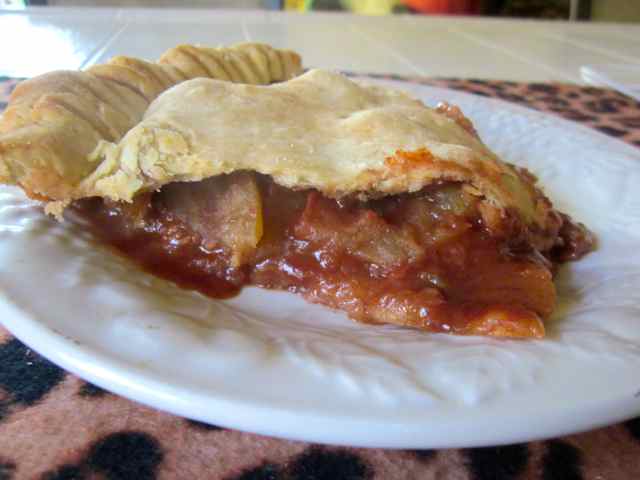
Bake at 425 degrees for about 45 minutes or so until it’s bubbly and the crust is beautifully browned, long enough so that the bottom crust is completely baked and not soggy.

The Finished Product

apple20

Yummy!

apple21

Most photos by Enchanted Seashells
Mediterranean Bulgur Salad: My New Food Obsession

Memorial Day seems to mean that summer is just around the corner. If you’re looking for a tasty addition to your menu for warm weather eating, try a bulgur salad.

I’ve been eating it every day because when I find something I like, that’s what I do. It’s a perfect summery meal because there’s no need to cook fine bulgur; all you need is boiling water.

I know it’s a crowd pleaser because when I first experimented with the recipe, I placed a bowl on the table while the original Angel Boy was waiting for his lunch (they never grow up, haha).

As my forever best official taster, I asked him to try it and expected he would serve himself a small portion, but when I returned a few minutes later with the rest of his food, a giant tuna melt packed with avocado and veggies, he had devoured all of it and asked for more!

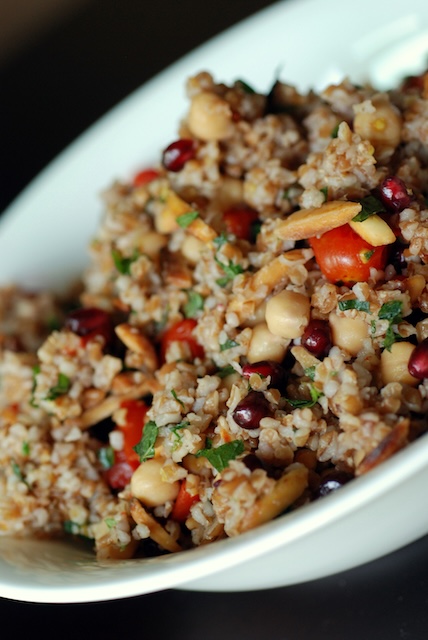
Not my photo, curated from Pinterest. Credit to the owner.

With fresh herbs, chopped vegetables, and a chickpea option, this bulgur salad is hearty enough to serve on its own or as a healthy side dish.

Mediterranean bulgur salad recipe is substantial, healthy, and full of flavor. I like to make it over the weekend and keep it all week for easy lunches.

Bulgur is a chewy, nutty-tasting grain made from whole wheat kernels that have been parboiled, dried, and cracked. In addition to being delicious, it’s packed with fiber and protein, rich in vitamins and minerals, and low in fat and calories. 

There’s a fair bit of prep work but it all combines quickly.

Mediterranean Bulgur Salad

Ingredients
1 cup fine bulgur
⅓ cup diced red onion
1 large clove garlic, finely minced (I omitted this)
1 red bell pepper, diced
1 small cucumber, seeded and diced
2 ribs celery, diced
I chopped tomato
½ cup finely chopped fresh mint
⅓ cup finely chopped fresh cilantro or parsley
1/2 cup pomegranate seeds.
¼ cup extra-virgin olive oil, more as needed.
¼ cup fresh lemon juice, from 2 lemons
½ teaspoon freshly ground black pepper
1/2 teaspoon Himalayan salt.
Optional: 1 can chickpeas, drained and rinsed
Optional: crumbled feta

Directions:
Bring a pot or kettle of water to a boil. Place the bulgur in a large bowl with ½ teaspoon salt. Pour 1¼ cups boiling water over bulgar. Cover the bowl tightly with plastic wrap and top with a towel to keep the heat in. Let sit for 15 to 30 minutes, or until all of the water is absorbed. Let cool, then fluff with a fork.

In another large bowl, whisk together the oil, lemon juice, garlic, pepper, and salt. Add the cooled bulgur and all the other ingredients. Toss well, then taste and adjust seasoning if necessary. Chill until ready to serve. Sprinkle with crumbled feta, if desired. Serve cold or room temperature on a bed of arugula and garnish with a sprig of fresh mint.

Option: If you need to be gluten-free for any reason, an easy swap for the bulgur is cooked quinoa.

Fun facts: I was surprised to learn that this is also called the Jennifer Aniston Salad for some reason, but it existed long before she became famous on Friends.

Rice Quest: The Artistry of a Perfect Bowl of Rice

Here’s another post that actively ignores the bizarre world we live in. I’ve managed to compartmentalize it all down to a single grain of rice.

Unless you’re making sushi, no one likes to eat sticky, gummy rice. YUCK. Last night was a watershed moment in my kitchen.

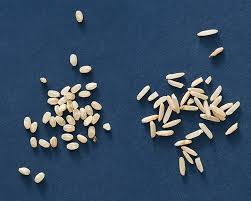
Sometimes I don’t want to eat “healthier” brown rice. Sometimes only white rice will satisfy that inner craving. This time I perfected stovetop rice. Every grain was separate, fluffy, and exquisite; a joy to eat.

***The key is to rinse as much of the surface starch as possible before cooking.

  • Always rinse white rice under cold water until the water runs clear. This prevents the grains from becoming sticky or clumpy.
  • For most types of white rice, use a ratio of 1 part rice to 1.5–2 parts water.
  • Never lift the lid while the rice is simmering. Steam escapes and ruins the texture.
  • After rinsing the rice, bring to a rolling boil. Reduce the heat, cover tightly with a lid, and let simmer for about thirteen minutes.
  • Turn off the heat and let it rest for a few minutes, then fluff with a fork.

I usually add tofu and a variety of veggies to the pot before cooking, so this is a true one-pot meal.

HOWEVER, I learned that it’s not a great idea to make a giant pot of rice and eat it for several days because it can make you really sick.

Did you know about this?

“The culprit behind reheated rice syndrome is a spore-forming bacteria called Bacillus cereus. Unlike common foodborne bacteria like Salmonella and E. coli, cooking or reheating your food won’t protect you from a Bacillus cereus infection because the toxins are heat-resistant and the spores can also survive cooking or digestion and can afterward begin growing on food or in your intestines. 

“It survives the initial cooking process as a spore and if it’s left out a room temperature, it’ll produce toxins,” says Emily Hovis, an assistant teaching professor at the University of Washington School of Public Health, as well as a former food safety specialist for the Washington State Department of Health. “So even when you reheat it, you’re killing the vegetative cells, you’re not destroying the toxins.” 

Most people can handle a small amount of these toxins, but if Bacillus cereus multiplies enough in the “danger zone” of between 40°F and 140°F, it can make you sick.  

“People will get a really terrible vomiting illness because of this bacterial toxin that’s in their food,” says Hovis. It can also cause cramps and diarrhea.

Symptoms from Bacillus cereus form within 6 to 12 hours, which is faster than most foodborne illnesses. You can expect nausea, cramps and lots of barf. The bacteria can also cause severe diarrhea if it multiplies in your intestine and produces toxin. Either way, you’ll be spending a lot of time in the bathroom.”

Some tips to avoid a Bacillus cereus infection: 

When in doubt, throw it out.

Cook smaller portions of rice instead of big batches.  

Don’t leave rice out for more than an hour or two (the “two hour rule” applies to all cooked foods).

If you do make a big portion, break it up into smaller storage containers before refrigerating. Don’t put a hot, covered pot of rice in the fridge that will trap heat and take a long time to cool. 

After storing rice in smaller containers, put it right in the fridge; you don’t need to wait for it to cool down first.  

Eat leftover rice within a few days, or even before that depending on your personal risk tolerance. 

…and like my mom used to say, “If in doubt, toss it out!”

Info curated from https://rightasrain.uwmedicine.org/body/food/leftover-rice-bacillus-cereus-food-poisoning…Photo from Pinterest

Easy Homemade VEGAN English Muffins

I love soft and chewy English muffins but they seem to be full of chemicals and dough conditioners and preservatives, so I thought I’d bake a batch of them since I’ve lately had some baking successes.

Did you know that English Muffins need no oven? They cook on the stovetop and it couldn’t be easier to whip up a batch.

In fact, it’s SO easy. I’m not going to bore you with too many photos to document every step; you can find them all over the internet if you need a more in-depth how-to.

Homemade English Muffins are crispy, chewy, golden brown, and full of nooks and crannies.

ENGLISH MUFFINS

-3 cups all purpose flour
-2 teaspoons yeast
-2 teaspoons sugar
-1/2 teaspoon salt
-1/2 teaspoon baking soda (this is what creates the nooks and crannies!)
-2 TBS neutral oil
-1 cup + 2 TBS warm water
-1/3 cup cornmeal. (cornmeal gives muffins their authentic texture.)

I used my stand mixer which made the whole process way less time consuming, but you can definitely use a hand mixer or go totally old school and mix it all by hand, which will take longer, but is actually quite satisfying…your choice.

  1. Add all ingredients EXCEPT the cornmeal to the mixing bowl. I used the dough hook. Mix on medium for about 7-10 minutes until the dough comes together in a sweet little elastic ball. Only add a drop or two of more water if it looks too dry.
  2. Place the dough into an oiled bowl, cover and let rise for about an hour or so until doubled in size.
  3. While the dough is rising, line a large baking sheet with parchment paper and coat it with the cornmeal.
  4. When the dough is doubled in size, it’s ready to roll out. Empty the dough onto a floured board and roll out to about an inch thick.
  5. Using a three-inch cookie cutter or a glass dipped in flour to prevent sticking, cut out about eight muffins. You can re-roll any remaining dough to use it all up.
  6. Place on the cornmeal sprinkled baking sheet, and dust the tops of the muffins with more cornmeal.
  7. Lightly cover with a towel and let rise again for about 30-45 minutes.
  8. Toward the end of the rise, heat a griddle, cast iron pan, or frying pan over medium heat. Do NOT oil the pan.
  9. When the muffins are puffy, gently place the muffins on the griddle. Cook undisturbed for about 7 minutes until a peek reveals the proper deep golden brown color. Turn and cook for another 7 minutes or until you see that same mouthwatering color.
  10. Transfer to a wire rack and let cool. You can refrigerate or even freeze them, but trust me, they won’t last that long.
  11. They’re easy to fork-split and toast.

I was in a hurry to taste the finished product so I didn’t take the time to perfectly roll and cut, so they’re not uniform in size.

They’re easy to fork-split and toast. These are definitely not the prettiest English Muffins, but they’re oh so delicious with vegan butter and raspberry jam.

Easy Vegetable Soup + Best Ever Focaccia, The Star of The Show!

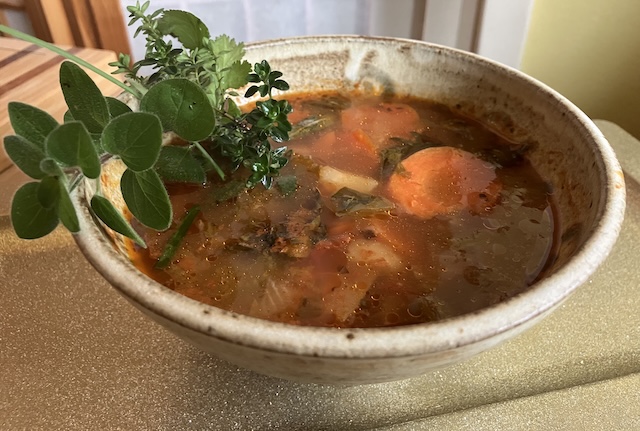
I hope everyone enjoyed a peaceful Christmas as we count down to 2026! Here in SoCal, we had 56 mph wind gusts along with heavy rain for most of Christmas Eve, which made for a cozy holiday.

It seemed like a great time to choose soup as a first course. For whatever reason(s), as often as I make variations of this recipe, the end result is inconsistent. Sometimes it’s great, sometimes NOT.

This time, I nailed it! The flavor was absolutely PERFECT, exactly what I had hoped for, and I decided to dust off my baking chops and make individual herby focaccias to accompany it.

I don’t know if it’s because of their diminutive size or the infused herbal fragrance, but these are seriously the best — every single bite is simultaneously crusty and chewy — flawless perfection.

I tend to make gigantic batches of soup, enough to feed an army, so this time I thought I’d scale it down to a more manageable amount.

Easy Veggie Soup
🌿 Saute 1/2 onion, a couple ribs of celery, and 1/2 bell pepper.
🌿 When onions are translucent, add two teaspoons of vegan Better Than  Bouillon.
🌿 Cook for a few minutes and add 8 cups of water, along with two bay leaves.
🌿 Add two or three sliced carrots.
I think this is where the magic happened. For some reason, I was out of tomato paste AND canned tomatoes. I didn’t feel like going to the store and was lucky enough to find a jar of marinara sauce in the pantry so I added about 3/4 cup, stirred, and brought it back to a low simmer.
🌿 Let it cook for a couple hours or so, adding more water as necessary.
🌿 Cut one or two potatoes into bite sized pieces and add along with a can of beans (any kind will work, I used garbanzo beans).
🌿 Simmer until potatoes are soft, adding more water as needed for desired soupiness.
🌿 Finally, add 1/2 cup alphabet pasta, some garden herbs, a bit of Hawaiian sea salt and pepper.
Options: Add cubed tofu, more beans…or blend for a smoother consistency.

🌿🌿🌿 🌿🌿🌿 🌿🌿🌿 🌿🌿🌿 🌿🌿🌿 🌿🌿🌿 🌿🌿🌿 🌿🌿🌿 🌿🌿🌿 🌿🌿🌿

Individual Focaccia
*
1 teaspoon active dry yeast
* ¾ cup warm water 
* 1 ⅔ cups all-purpose flour
* ¾ teaspoon sea salt
* 1/2 teaspoon sugar
* 2-3 tablespoons olive oil. I use avocado oil because I don’t really like the taste of olive oil. Flaky salt for topping. I chopped some of the same garden herbs: sage, chives, oregano, thyme added to the soup.

* Add the yeast to a medium bowl, then pour the warm water slowly over it. Let the mixture sit for five minutes to allow the yeast to activate.
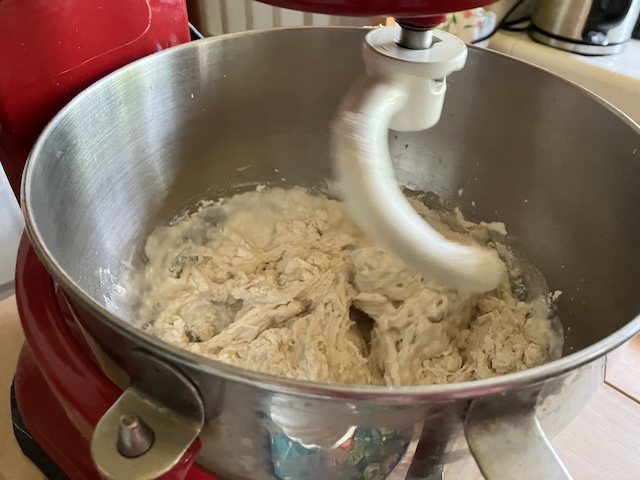
* Add the flour, sea salt, and sugar to the yeast mixture and stir together until it forms a shaggy dough. It’ll be sticky, so you can use a bench scraper or silicone spatula. Although hands work great, too, it’s messy.
* To develop gluten, fold the dough over itself a few times until it’s stretchy and no longer shaggy.
* No kneading necessary!
* Cover the bowl with a kitchen towel or plastic wrap, then set in a warm place to rise for about an hour or until doubled in size.
* In a square 8 inch baking pan or a couple smaller pans for individual servings, drizzle a tablespoon of the olive/avocado oil to cover the bottom.
* When the dough has doubled in size, transfer the dough to the oiled baking pan(s). Gently spread the dough so that it covers the entire bottom of the pan. Push or lightly stretch the dough into the corners a couple of times to get it to stick.
* Lightly cover the dough and let rise for about 30-40 minutes, until visibly puffy.
* During the last few minutes of proofing, preheat the oven to 425°F
* Drizzle 1-2 teaspoons avocado/olive oil over the top of the puffy dough, along with herbs if used.
* Press your fingertips through the dough to the bottom of the pan and back out to form dimples.
* Sprinkle the flaky salt evenly across the top of the loaf. Bake for about 20 minutes or until brown.
* Remove from the oven and allow to cool in the pan for at least 15 minutes before eating. 

Soup + focaccia makes a great first course or dinner. Add a salad for a complete healthy meal.

The Banana Man

That’s what we call him because we don’t know his real name. All we know is that one day there were a whole lot of bananas perched on a picnic table at the beach.

I asked the gentleman who was sitting nearby if he knew who they belonged to and if we could have one. He said he had brought them and he had an organic farm nearby where bananas grew like weeds so he always brought them to share. He also grew cherries and peaches and loads of other yummy things, but we were fascinated by the bananas.

They looked exactly like this photo. They were the BEST bananas we had ever eaten. As we were packing up the car to go home, Banana Man (never got his name) told us to take some with us, so we thanked him and did just that.

Here at Casa de Enchanted Seashells, I have two banana plants that have never borne any fruit since they were planted, so I wish I knew what he was doing right..

I’ve been learning a lot about bananas. They’re an amazing creation by Mother Nature.

Bananas grow in a formation called a “bunch.” Each bunch contains multiple “hands,” and each hand consists of a line of bananas referred to as “fingers.”

The cluster of bananas we buy at the store is technically a “hand”. A full bunch—what grows on a single stem in banana plantations—can weigh more than a hundred pounds and contains several hands.

Most people have a total aversion to the white stringy things on a banana and meticulously pick them off, but not me, mostly because I’m too lazy to remove them.

They’re called phloem bundles, the plant’s internal plumbing system that transports nutrients (sugars, water, minerals) from the leaves to the developing fruit as it grows, acting like tiny veins. They’re completely edible, nutritious, packed with fiber, and safe to eat, often containing more complex fibers than the rest of the fruit, making them a bonus source of goodness, not to be discarded. 

Can you eat banana peels? You shouldn’t eat a raw banana peel because it’s tough, bitter, and often coated in pesticides; however, it’s actually edible and nutritious (high in fiber/potassium) if thoroughly washed, preferably organic, and cooked to be blended in smoothies, baked into breads, or used in curries.

If totally organic, try boiling banana peels to drink as a nutritious tea.

Another use for banana peels is as a fertilizer, which I’ve done. Sometimes I save a bunch of banana peels, soak them in a gallon of water for a few days, strain, and use on the plants in the veggie garden.

Is there anyone who does NOT like bananas? I don’t think so, or at least I’ve never met anyone who doesn’t. It’s one of the universal first foods for babies; mashed and smashed.

Bananas are packed with essential nutrients: potassium, vitamins B6 and C, fiber, and magnesium, providing quick energy from natural sugars, low in fat and protein.

We all know what to do with overly ripe bananas, right? Banana bread never gets old. Check out my Recipes Category for several recipe ideas that incorporate ripe bananas.

🍌

Homemade Soft Pretzels: Vegan, Of Course…

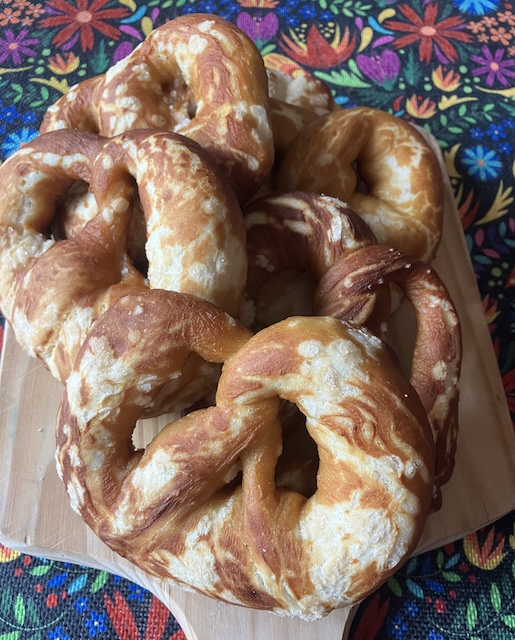
It’s been such a reallyreally long time since I baked pretzels that I almost forgot how to shape them, but it all came back pretty quickly as soon as I started rolling.

Pretzels are so easy to make, it’s something everyone should try, especially now that it’s officially fall. I like them simply salted and plain or served with a vibrantly spicy mustard dipping sauce.

Easy Soft Pretzel Recipe

Ingredients

  • 2 and 1/4 teaspoons instant or active dry yeast (1 packet)
  • 1 Tablespoon brown or white sugar
  • 1 and 1/2 cups warm water, not too hot
  • 2 Tablespoons oil or melted vegan butter
  • 1 teaspoon salt
  • 3 and 3/4–4 cups all-purpose flour plus more as needed
  • coarse salt, for topping

Baking Soda Bath
(Some recipes use lye but I think that’s not healthy, so I never have tried it and wouldn’t recommend.)
In a large pot, add 1/2 cup baking soda to 9 cups water, stir, and bring to a boil.

Instructions

  1. Whisk the yeast and sugar into warm water.
  2. Cover and allow to sit for a few minutes.
  3. Whisk in the oil and/or vegan butter and salt.
  4. Add 3 cups of flour.
  5. Mix with a wooden spoon (or dough hook attachment if using a stand mixer) until combined.
  6. Add 3/4 cup more flour until the dough is slightly tacky and pulls away from the sides of the bowl. If it is still sticky, add up to 1/4 cup more flour, one tablespoon at a time.
  7. Knead the dough. Keep the dough in the mixer and beat for an additional 3 to 5 full minutes, or knead by hand on a lightly floured surface for 3 to 5 minutes. If the dough becomes too sticky during the kneading process, sprinkle 1 teaspoon of flour at a time on the dough or on the work surface/in the bowl to make a soft, slightly tacky dough. Don’t add more flour than you need because you don’t want a dry dough.
  8. Shape the kneaded dough into a ball. Cover lightly with a towel and allow to rest for 10 to 30 minutes or longer.
  9. This is a good time to start the water + baking soda boiling.
  10. Preheat oven to 400° degrees.
  11. Line two baking sheets with parchment paper or silicone baking mats. If using parchment paper, coat with nonstick spray.
  12. With a sharp knife, cut dough into twelve equal balls.
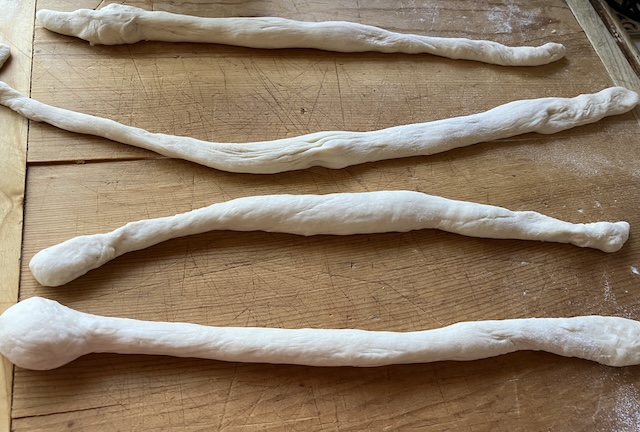
  13. Roll the dough into a 20–22-inch rope.
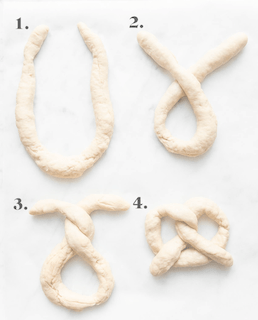
  14. To shape a classic pretzel, roll dough into a long rope, form it into a U-shape with the ends pointing away, then cross the ends over each other twice and bring them down to the bottom of the U, pressing to seal.
  15. There are lots of great YouTube videos that explain in detail how to shape pretzels if you need help.
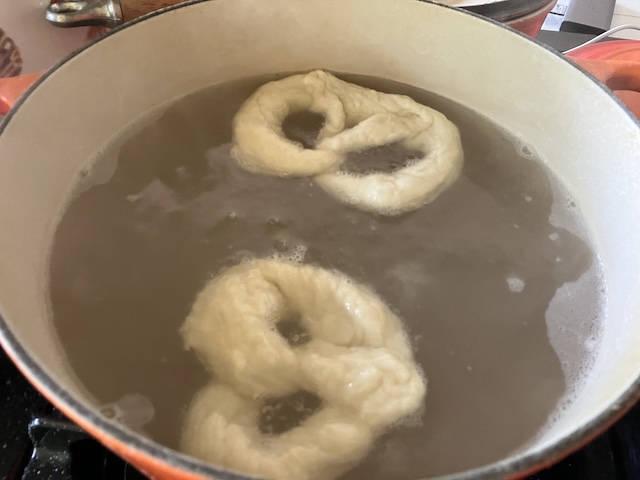
  16. When the baking soda water has come to a rolling boil, drop 1–2 pretzels in for 20–30 seconds. Any longer than that and your pretzels will have a GROSS metallic taste.
  17. Using a slotted spatula, lift the pretzel out of the water and allow as much of the excess water to drip off. Place pretzel onto prepared baking sheet. Sprinkle the top with coarse sea salt. Repeat with remaining pretzels.
  18. If you want, you can cover and refrigerate the boiled/unbaked pretzels for up to 24 hours before baking.
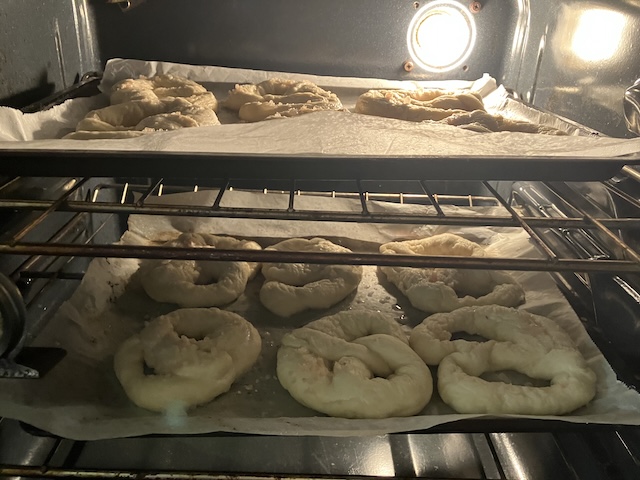
  19. Bake for 12–15 minutes or until dark golden brown.

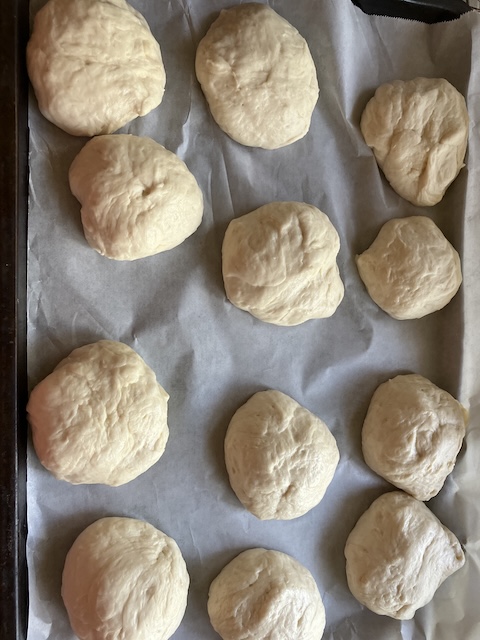
I used my stand mixer to knead, placed in another bowl, let rise for about 30 minutes, and cut into 12 equal balls.

Roll to about 22 inches. This is the fun part.

eatlittlebird.com

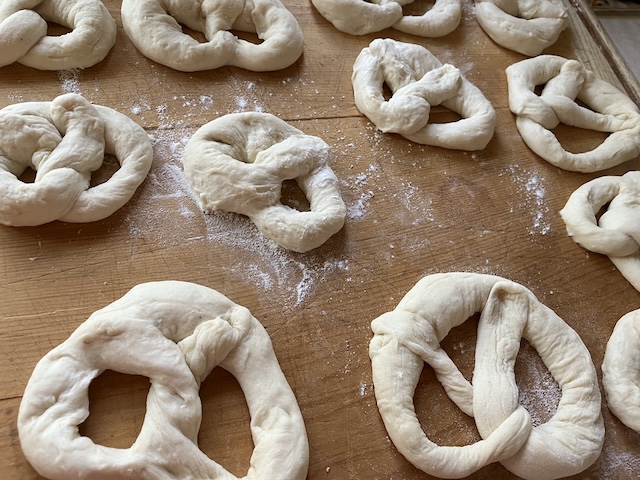
Not perfectly shaped, but it doesn’t really matter as long as they taste good.

Drop into the boiling baking soda water for only 20-30 seconds. The water isn’t dark gray, not sure why the photo shows that color.

Bake 15 minutes or so depending on your stove.

They won’t win any awards for beauty but they were DELICIOUS.

Tip: Don’t forget to put the salt on before you bake or it won’t stick.

Medievil Hummus Recipe

Enough ugly reality; now we’re back to our regularly scheduled programming of avoidant, happy posts

This isn’t the smooth, creamy dip we know today, but a rustic, nutty dish called Himmas Kassa from a recipe preserved in a medieval 14th-century Egyptian cookbook.

The marriage of ingredients elevates the humble chickpea into a dish worthy of royalty. I’ll definitely make it for Thanksgiving this year.

This is my very own, very basic Hummus Recipe. It’s SO easy! https://enchantedseashells.com/2023/06/14/zesty-veggie-hummus-vegan-pinwheels/

Instead of blended until silky smooth, Himmas Kassa was coarse, full of texture, and mixed with walnuts, fresh herbs, and spices like cinnamon, ginger, and caraway. It was served at banquets as one of the opening courses, to showcase the host’s refinement and generosity.

Recipe

  • 1 cup boiled chickpeas
  • 2 tablespoons tahini stirred with 2 tablespoons water and 2 tablespoons wine vinegar
  • ¼ cup finely ground walnuts stirred with 2 tablespoons lemon juice and 1 teaspoon wine vinegar
  • ½ cup chopped parsley
  • ¼ cup chopped mint
  • 3 tablespoons olive oil
  • ¼ teaspoon each of caraway coriander, black pepper, ginger, and cinnamon, all crushed
  • ½ teaspoon salt
  • For garnish: olive oil, olives, chopped pistachios

Instructions 

  • In a mixing bowl, mash the boiled chickpeas until they form a coarse paste.
  • Stir in the tahini mixture and the walnut mixture until combined.
  • Fold in the parsley, mint, olive oil, and spices. Taste and adjust salt as needed.
  • Transfer to a shallow serving dish. Garnish with olive oil, olives, and pistachios.
  • Serve with flatbread, pita, or crackers. Also delicious spread on tortillas.
  • I’d also serve with carrot sticks and cucumbers, sliced apples and jicama.

https://eatshistory.com/medieval-hummus-recipe-one-of-the-first-recorded-recipes-himmas-kassa/

Featured image courtesy of Pinterest

No Return

As a true Taurean, I hold on tightly. I believe, I have faith, I hope, I wish — but sometimes I have to let go, as much as it causes immense pain.

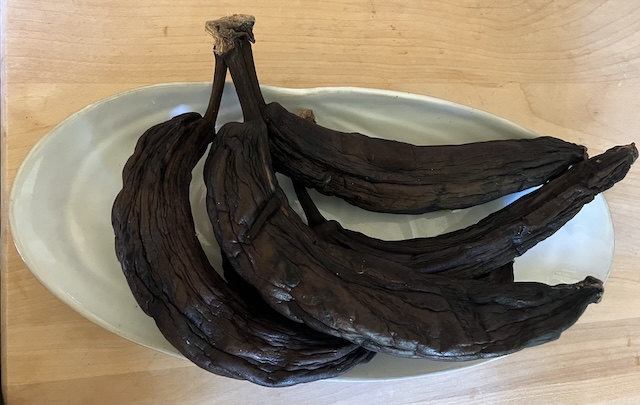
If ever anything was past the point of no return, it’s these black bananas. I held on for so long, I saved them because I figured they’d be perfect for banana bread or muffins, but then I became emotionally attached and couldn’t let go, even when they lost all signs of life.

And I still couldn’t dispose of them.

I cleaned out the refrigerator (Lion’s Gate Portal activity) and put them to one side in a sort of transitional area JUST IN CASE, because you never know when the heart will start to beat once again.

This is the way my brain works. Here’s what I wonder: If I peel them, what will I discover? Have they become toxic and inedible? Can they be resurrected or is it too late? What if I toss them out and they were still good?

What do you think?