Full Moon in Taurus

“Three things cannot be long hidden: the sun, the moon, and the truth.” —Buddha

Photo by Enchanted Seashells

The future of democracy might be uncertain but we can always count on the moon to wax and wane and become full again.

November’s full super moon is in my sign of Taurus and that brings us to a moment of deep release, grounded empowerment, and unexpected transformation.

This Full Moon isn’t a typical Taurean lunation—it’s charged with electrifying energy because of the moon’s conjunction with Uranus, the planet of rebellion and liberation.

In this, we are being shaken from our comfort zones and propelled toward needed change.

Alongside this energetic framework is a potent T-square involving Jupiter, Mercury, and Saturn urging us to re-evaluate our beliefs, thoughts, and the structures we live by.

Adding further intensity, Pluto sits at the critical 29th degree of Capricorn, a karmic placement pushing us to transform old patterns that no longer serve our growth.

This full moon is an invitation to step into our most empowered self while remaining grounded in our values and truth.  risingwoman.com

Easy full moon rituals:
Reflect on what you want to release.
Create a gratitude list for the past year.
Set intentions for personal growth.

Here’s a little reminder about some beneficial crystals :
Black Tourmaline for protection.
Amethyst for spiritual growth.
Moonstone to enhance intuition.
Sodalite for emotional balance.

Happy Full Moon!

Satori: Word of the Day

In Zen Buddhism, satori defines the inner, intuitive experience of enlightenment, perhaps similar to having an epiphany.

Satori is said to be unexplainable, indescribable, and unintelligible by reason and logic.

It is comparable to the experience undergone by Gautama Buddha when he sat under the Bo tree and is the central Zen goal.

It’s a moment of total presence, of no mind and no thought but a flash of insight and awakening of the light of our own consciousness.

I also discovered that in Japanese folklore, Satori are mind-reading monkey-like monsters said to dwell within the mountains of Hida and Mino. That sounds pretty scary to me, so I’ll stick to the other definition of satori as instant enlightenment.

Have you experienced satori?

“Satori is the sudden flashing into consciousness of a new truth hitherto undreamed of. It is a sort of mental catastrophe taking place all at once, after much piling up of matters intellectual and demonstrative. The piling has reached a limit of stability and the whole edifice has come tumbling to the ground, when, behold, a new heaven is open to full survey.”

D.t. Suzuki, An Introduction to zen Buddhism

How to Rewire Our Brain for JOY

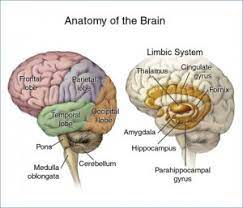
Since my DIL is a neuroscientist, anything that relates to the brain and how it works is a topic of conversation around Casa de Enchanted Seashells.

According to Buddha’s Brain: The Practical Neuroscience of Health, Happiness, and Wisdom, we can change our mind–to change our brain–to change our mind.

The beauty of self-directed neuroplasticity means we really can teach old dogs new tricks.

Author Rick Hanson’s premise is that if we intentionally choose positive thoughts, we can change our life for the better.

Here’s an excerpt about JOY:

Internalizing the Positive

1. Turn positive facts into positive experiences. Good things keep happening all around us, but much of the time we don’t notice them; even when we do, we often hardly feel them. Someone is nice to you, you see an admirable quality in yourself, a flower is blooming, you finish a difficult project — and it all just rolls by. Instead, actively look for good news, particularly the little stuff of daily life: the faces of children, the smell of an orange, a memory from a happy vacation, a minor success at work, and so on. Whatever positive facts you find, bring a mindful awareness to them — open up to them and let them affect you. It’s like sitting down to a banquet: don’t just look at it — dig in!

2. Savor the experience. It’s delicious! Make it last by staying with it for 5, 10, even 20 seconds; don’t let your attention skitter off to something else. The longer that something is held in awareness and the more emotionally stimulating it is, the more neurons that fire and thus wire together, and the stronger the trace in memory.

“Focus on your emotions and body sensations, since these are the essence of implicit memory. Let the experience fill your body and be as intense as possible. For example, if someone is good to you, let the feeling of being cared about bring warmth to your whole chest.

“Pay particular attention to the rewarding aspects of the experience — for example, how good it feels to get a great big hug from someone you love. Focusing on these rewards increases dopamine release, which makes it easier to keep giving the experience your attention, and strengthens its neural associations in implicit memory. You’re not doing this to cling to the rewards — which would eventually make you suffer — but rather to internalize them so that you carry them inside you and don’t need to reach for them in the outer world.

“You can also intensify an experience by deliberately enriching it. For example, if you are savoring a relationship experience, you could call up other feelings of being loved by others, which will help stimulate oxytocin — the ‘bonding hormone’ — and thus deepen your sense of connection. Or you could strengthen your feelings of satisfaction after completing a demanding project by thinking about some of the challenges you had to overcome.

3. Imagine or feel that the experience is entering deeply into your mind and body, like the sun’s warmth into a T-shirt, water into a sponge, or a jewel placed in a treasure chest in your heart. Keep relaxing your body and absorbing the emotions, sensations, and thoughts of the experience.”

The Best Mantra for 2018: Om Mani Padme Hum

I’m pretty new to meditation (dabbled a bit in college but it didn’t stick) and I’m restarting with the basics.

In terms of actually practicing mindfulness and compassion (to self and others) – these are things I’ve sporadically attempted for a few years.

I think it all started during an annual exam when my lady doc suggested something in between my Pap Smear and and the breast exam: every morning, I need to look in the mirror and say “I love you” to myself.

I told her I couldn’t possibly; it was embarrassing, what was the point, and she said in addition to filling my body with healthy foods and wheat grass, turmeric, ginger, and Vitamin D (I was deficient at the time), that loving oneself is another and very important piece of the puzzle needed to attain an optimal level of wellbeing.

When the La Costa Chopra Center used to host one-hour meditations in the afternoon, I attended a few times with friends and it was a good re-introduction, but I’m more of a solitary soul and would rather do my internal discovery not in the company of strangers, no matter how kind…

It’s all about rewiring our brain-using neuroplasticity to change negative thoughts and belief patterns into positive actions and a joyful future.

Meeting the Dalai Lama was a significant experience that opened my eyes (and my heart) and encouraged me to follow an inward searching path.

Om Mani Padme Hum is an ancient mantra related to the bodhisattva of compassion, Avalokiteshvara, and with the Dalai Lama, who is considered to be an incarnation of Avalokiteshvara. It is believed that all the teachings of the Buddha are contained in this mantra.

Tibetan Buddhists believe that by saying Om Mani Padme Hum out loud or silently to oneself invokes the powerful benevolent attention and blessings of Chenrezig, the embodiment of compassion.

From His Holiness the Dalai Lama:

It is very good to recite the mantra Om mani padme hum, but while you are doing it, you should be thinking on its meaning, for the meaning of the six syllables is great and vast …. The first, OM … symbolizes the practitioner’s impure body, speech, and mind; it also symbolizes the pure exalted body, speech, and mind of a Buddha…. The path is indicated by the next four syllables. MANI, meaning jewel, symbolizes the … altruistic intention to become enlightened, compassionate and loving…. The two syllables, PADME, meaning lotus, symbolize wisdom…. Purity must be achieved by an indivisible unity of method and wisdom, symbolized by the final syllable HUM, which indicates indivisibility…. Thus the six syllables, om mani padme hum, mean that in dependence on the practice of a path which is an indivisible union of method and wisdom, you can transform your impure body, speech, and mind into the pure exalted body, speech, and mind of a Buddha….

All I know for sure is that when I say or think Om Mani Padme Hum, no matter how sad or anxious or stressed I feel, even when I wake up at 3AM in a panic, a certain calmness and quiet joy washes over me.

As we leave one year and transition to another, I wanted to share this with you and hope you also find solace and wisdom in this mantra.

Happy New Year!