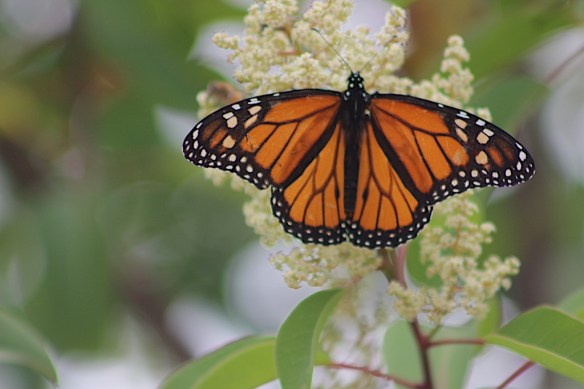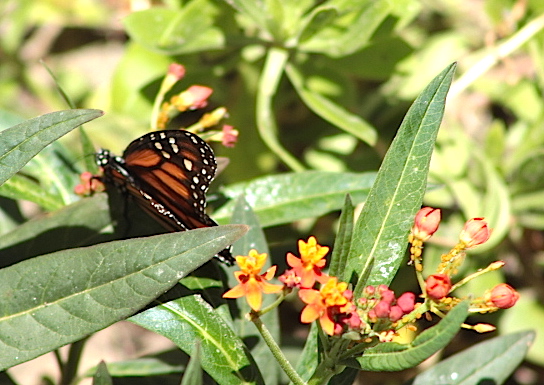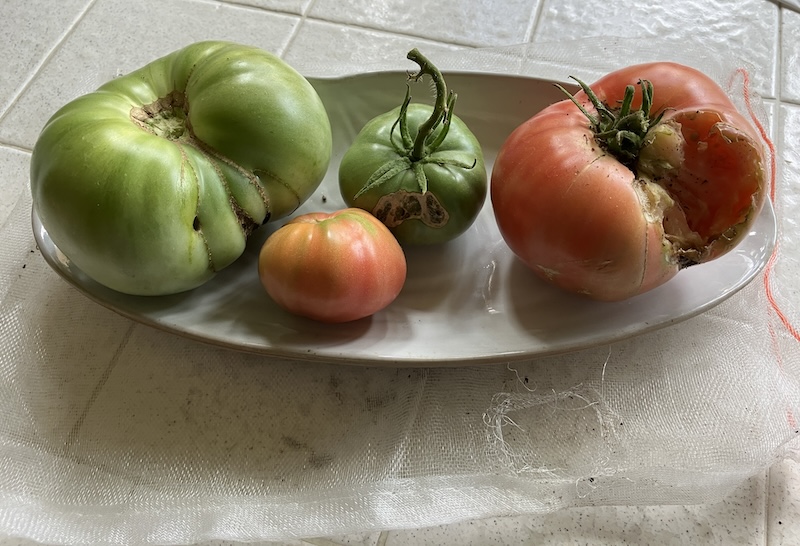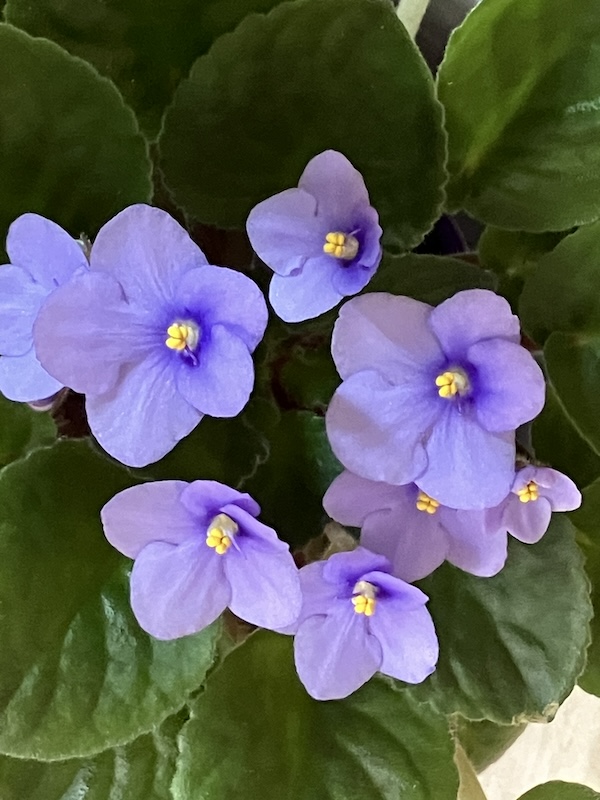
Just picked a cluster of gorgeous grapes; might pour myself a glass of some chilled and fermented ones a bit later. (Of course I’m talking about chardonnay.)
Happy Friday!

Just picked a cluster of gorgeous grapes; might pour myself a glass of some chilled and fermented ones a bit later. (Of course I’m talking about chardonnay.)
Happy Friday!

When plants cry…not at all like Prince’s When Doves Cry…
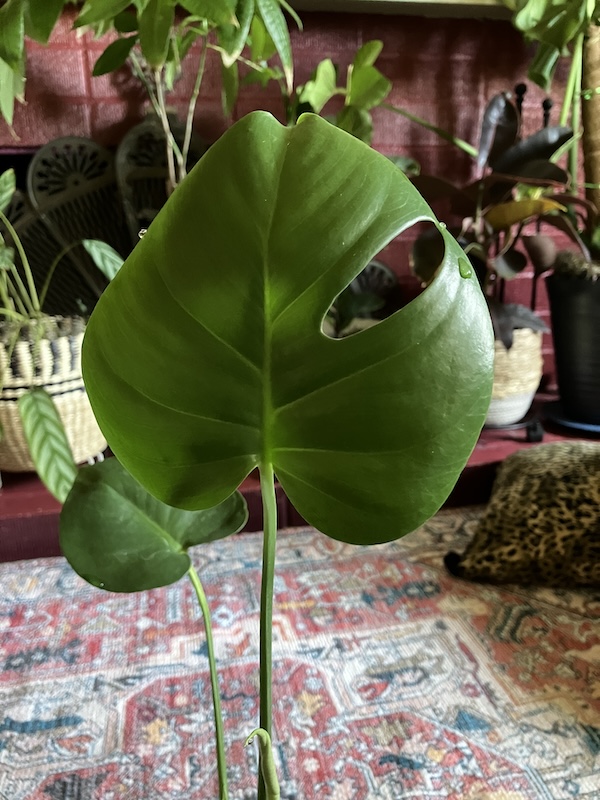
I was beyond ecstatic when my mini-Monstera began to unfurl the first new leaf since I brought her home. When I checked on her progress this morning, I noticed that she appeared to be crying.
Why so sad, baby girl?
I try to do everything to make her happy and healthy; water, fertilizer, the right amount of sun, and I adorned her with a beautiful, thrifted Satsuma pot.

This tear looks like it’s coming from her alien-eye, the classic Monstera fenestration.

They’re not tears of sadness nor joy; they’re actually due to a process called guttation.
Guttation is a mixture of xylem and phloem fluid, which contains sugars and other chemicals produced in the leaves that are exuded overnight by the plant.
Guttation is one way houseplants attempt to regulate their growing conditions. This response can occur when a plant has been overwatered or under stress, or the plant could be perfectly fine and want to balance its nutrients or minerals.
Aren’t plants SO smart?
I confess that sometimes I love my plants too much, as in too much watering, and I hope this isn’t the reason because I adore this new leaf baby and her brothers and sisters love her, too.

Don’t shed any more tears, little one! I promise to try and not love you to death!
I spent a frustrating couple of hours attempting to install new, adhesive shelf liners in the kitchen and bathroom. If you’ve ever done the same, frustrating doesn’t even describe the feeling of trying to smoothly stick the paper without bumps, lumps, or having it fold over and stick to itself. I did a HORRIBLE job, gave up, admitted defeat, and put all the items back under the bathroom and kitchen sinks to cover up the mistakes. I hate to fail at a task, but this was a fight I couldn’t win. That’s two hours of my life I’ll never get back, that’s for sure.
After a much needed break with a mug of lovely ginger tea, I reviewed some of my favorite photos snapped in the last few days:
Another photo I sent to the original Angel Boy to make him miss SoCal surfing and come down for a visit!

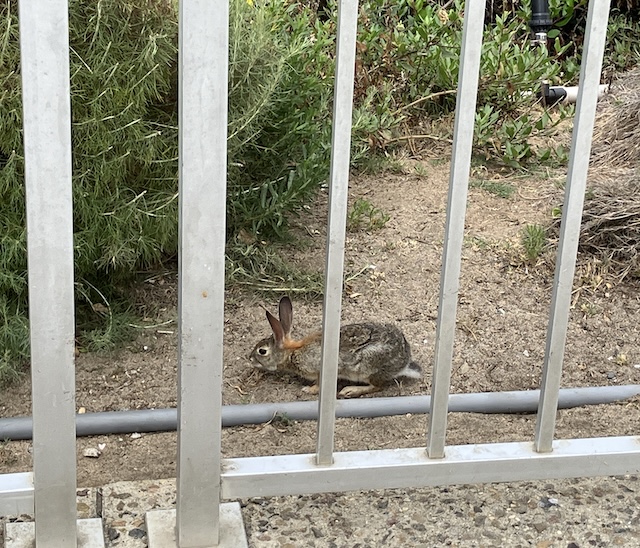
While I was looking at the surf, a bunny behind bars came to visit.

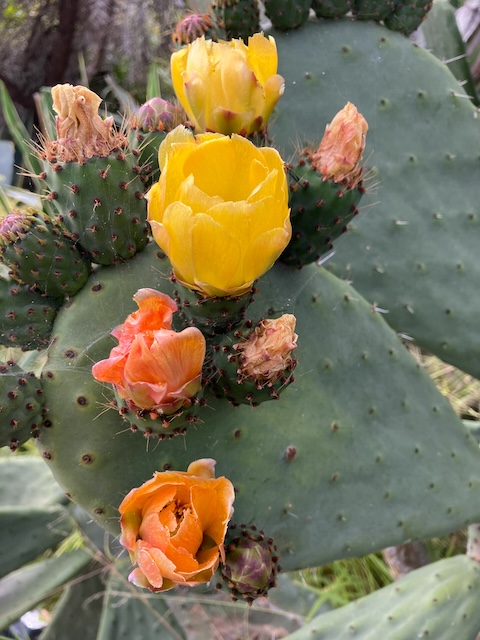
I was enchanted by pretty cactus flowers all in a row.

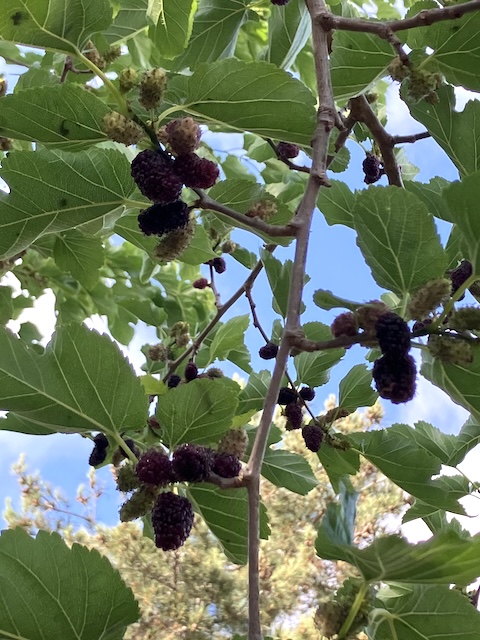
My mulberry tree is going crazy this year. In the past, I’ve harvested and made jam and frozen quarts and quarts of them for cobblers and to sweeten smoothies, but I’m not taking on that burden this year. That leaves more for the birds and the RATS. Eww.

Flowers always make people better, happier, and more helpful; they are sunshine, food, and medicine for the soul.” – Luther Burbank
With no rain in sight, my plants are becoming thirsty and I have to water them so they don’t dry out. I stopped for a minute to contemplate the droplets on a perfectly perfect Shasta daisy.

Nature is amazing. Everything is related to everything. Nothing is simply what it seems.
Many flowers exhibit a petal count that corresponds to Fibonacci numbers. Shasta daisies have twenty-one. This is something I didn’t even know about until recently. If they taught it in school, it’s another one of those days when I wasn’t paying attention.
In the 13th century an Italian mathematician, Leonardo de Pisa, better known today as Fibonacci, published a book called Liber Abaci. He introduced a number sequence that became known as the Fibonacci sequence. Starting with 0 and 1, each new number in the sequence is the sum of the two before it. 0, 1, 1, 2, 3, 5, 8, 13, 21, 34, 55, 89, 144, 233, 377.
The golden mean or the golden ratio is a special number found by dividing a line into two parts.
The golden mean and the Fibonacci spiral are connected to life, even spiritual life. They can be found in nature in the number of petals of flowers, the way the tiniest stem
unfurls, in spirals in seashells, and more.
The golden proportion of 1.618 is found in key proportions of the body in humans, animals, insects, and in DNA. Our perceptions of beauty support that phi is a factor in what we find attractive.https://energeticgeometry.com/
That’s a pretty weighty concept for my brain to absorb or even understand. The possibilities seem endless, one more mystery of the universe.

I’m an uncomplicated person. All I know for sure is that I love the way Shasta daisies spread to fill in the empty spaces like they fill my heart and make me happy.
“Deep in their roots, all flowers keep the light.” – Theodore Roethke.
After being subjected to the real world for a while by the trial and guilty verdict of an ex-President — as I shake my head and wonder how ANYONE could have voted for that narcissistic orange blowhard, it’s time to recover with the simple, joyful, garden beauty of a Stargazer Lily — like a palate cleanser, but instead for my brain.
I’m super allergic to the alluring fragrance of most cut flowers in a vase, but I can enjoy them in the garden without sneezing. Stargazers return every year; this is the first bloom to fully open, but you can see all the others waiting their turn.

The Flower Moon reminds us that the most beautiful blossoms have deep roots — as this lunation is receiving a motivating push from subterranean planet Pluto, which could catalyze some deep emotional excavation.
To honor this beautiful full moon, which the Lakota call “Moon Of The Green Leaves”, here are some of my favorite flower photos…


All photos by Enchanted Seashells
(Some content curated from Bustle)
“Come spring, in the shaded forests near my home
Blooms the elegant and lovely dogwood tree…” — Shakespeare

“In another world and another day.
Moonlight turns the purple lilacs blue...” — Conrad Aiken

These are two of my favorite flowers. I really wish they thrived in Southern California, but sadly, they don’t. I have to see them in photos from the Pacific Northwest and try to recollect the alluring fragrance.

The first Saturday in May is World Naked Gardening Day.

We’re encouraged to wear NOTHING but a sunhat and sunscreen, to pick up a trowel or a rake, and seed and weed au naturale.
Why garden naked? Our culture needs to move toward a healthy sense of both body acceptance and our relation to the natural environment. Gardening naked is not only a simple joy, it reminds us–even if only for those few sunkissed minutes–that we can be honest with who we are as humans and as part of this planet. and that’s also a definitely NOT ME, whether it’s “world wide” or “worldwide”! Curated from https://naturisteducation.org/wngd/
Today, you’ll find me in the garden, fully clothed, planting peas and beans and mixed leafy greens.
However, if YOU choose to celebrate in your birthday suit, DO NOT send pics!
Enjoy!
It’s time to prepare the garden for spring vegetables. Every year I attempt to win the battle with rodents and bugs and lack of sky water; sometimes I win, sometimes they do…
I have a couple new ideas. I purchased coconut coir bricks to rehydrate and mix with the existing soil in my raised bed and I thought I’d try cardboard box planters, too, inside the raised bed.
Maybe one day I’ll be able to build my own Hügelkultur.

“Hügelkultur” (pronounced hyoo-gul-kulture) is a German word that means mound culture or hill culture. A hügelkultur is a sloped and raised planting bed filled with topsoil, wood, and organic materials. Germans and Europeans have practiced it as a gardening method for hundreds of years.
Instead of gathering branches, leaves and grass clippings for yard waste trash pickup or to toss in the compost, build a hugel bed. Mound logs, branches, leaves, grass clippings, straw, cardboard, petroleum-free newspaper, manure, compost, or whatever other biomass you have available, top with soil and plant your veggies.
The advantages of a hugel bed are many, including:
The gradual decay of wood is a consistent source of long-term nutrients for the plants. A large bed might give out a constant supply of nutrients for decades. The composting wood also generates heat which might extend the growing season.
Logs and branches act like a sponge. Rainwater is stored and then released during drier times. Actually you may never need to water your hugel bed again after the first year (except during long term droughts).
We had a bit of rain yesterday which is a perfect opportunity to prep the coconut coir and plant seeds. I’ll start with my favorites: mixed greens, tomatoes, beets, chard and kale, cucumbers, snap peas, beans, peppers, and zucchini (of course).
There’s nothing more adorable than watching the first little sprouts emerge, right? I can’t wait!
Hügelkultur image credit to https://www.hugelkultur.com.au/intro-hugelkultur/
Photo credit to Enchanted Seashells
Up at dawn, the dewy freshness of the hour,
the morning rapture of the birds,
the daily miracle of sunrise, set her heart in tune,
and gave her Nature’s most healing balm.
~ Louisa May Alcott

Because of all the rain we’ve had, spring blossoms in the garden are exceptionally lush. My Cup of Gold vine (Solandra guttata/Solandra maxima) is bursting with flowers and this gigantic dinner-plate sized golden chalice looked right at me as if to say “good morning.”
What a spectacular way to greet the day!