Word of the Day: Nemophilist

This is such a great word!

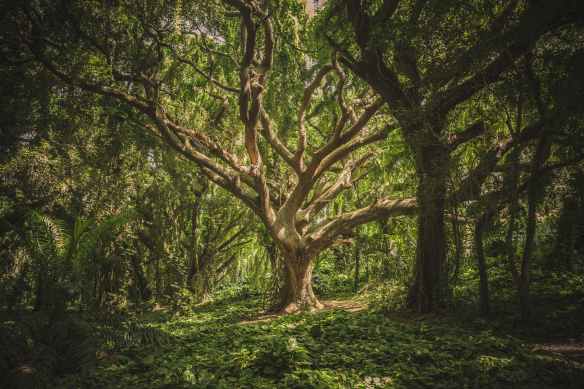
Nemophilist: One who is fond of forest or forest scenery; a haunter of the woods.

Photo by veeterzy on Pexels.com

Oh yes, I’d love to haunt some woods right about now, with the stars above and the full moon to guide a late night hike…

There is a pleasure in the pathless woods,
There is a rapture on the lonely shore,
There is society, where none intrudes,
By the deep sea, and music in its roar:
I love not man the less, but Nature more,
From these our interviews, in which I steal
From all I may be, or have been before,
To mingle with the Universe, and feel
What I can ne'er express, yet cannot all conceal.
George Gordon Byron

(George Gordon was an English romantic poet and peer. He was one of the leading figures of the Romantic movement, and has been regarded as among the greatest of English poets. Wiki)

Word of the Day: Lalochezia

Are you guilty of doing this, too?

The word of the day is lalochezia. It’s a noun formed from the Greek lalia (speech) and chezo (to relieve oneself).

Maybe that’s where the term “potty mouth” came from??

I have been known to unleash a hearty string of f-bombs and other expletives. To be completely honest, it is, usually, quite satisfying.

Lalochezia: The use of foul or abusive language to relieve stress or ease pain, emotional release through swearing.

Lalochezia describes that moment when you’re so stressed out and angry that you start spurting out the foulest language possible to relieve stress and pain.

Yup, been there, done that…

I’m sure that a few deep restorative yoga breaths — some vital prana — is probably way more soul healing, but in some cases the venting of specific profanity MIGHT be nearly as invigorating.

I guess I have a ways to go before I enter the transcendent state of nirvana, or as my dad would say, “that’s not very ladylike, Rosebud, and I’m sure you can think of more appropriate language.”

Not always.

(graphic from pinterest)

Word of the Day: Latibulate

Latibulate is a word we definitely need to bring back into daily circulation!

It’s the the action of hiding oneself in a corner: verb, 17th century English.

To be in our latibule (noun) means a cozy, safe place, special to you, hidden away from everyone, in an attempt to escape reality; also to lie dormant.

A place to meditate? A she-shed? A man cave? A blanket fort?

I always thought it’d be so cool to have one of those hidden rooms, to be accessed only by those who knew which secret panel to press in a bookcase.

Or if you’re mom to a toddler, it could even be the bathroom, where we can hide for a few minutes of privacy and silence. Maybe. Maybe not.

Mom/Grandma, are you in there? Whatcha doing? Can I come in? The door won’t open!”

Angel Boy 2.0 no longer joins me in the bathroom. That was a tradition we agreed to stop when he was four and he kept his word. Now that he’s seven, he likes his own private time and we all respect that, too.

Angel Girl, not yet four, is more fluid in her boundaries. She’s in that in between stage; not quite a big girl but no longer a baby. Sometimes she likes company and a chat, sometimes she likes to brush her teeth with me, mirroring all of my actions. Yes, it’s as adorable as you could picture it.

Especially now, we all need a place to latibulate away from civilization, far away from the madding crowd.

“Far from the madding crowd’s ignoble strife,
Their sober wishes never learned to stray;
Along the cool sequestered vale of life
They kept the noiseless tenor of their way.”

– Thomas Gray

Word of the Day: Cosmogyral

Cosmogyral: whirling around the universe.

I like the thought of whirling around the universe, spiraling through the galaxies in a playful weightless freefall.

It seems to evoke the ultimate surrender and that appeals to me, to belong to the sacred geometry of planetary orbits.

I envision the whirling not so much like a crazy fast dervish, but more like a butterfly ballerina, pirouetting from one flower to another to extract equal amounts of nectar and joy from each stop along the way.

Graphic credit to https://vocal.media/fyi/sacred-geometry-of-planetary-orbits

Word of the Day: Pareidolia

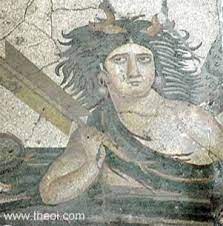
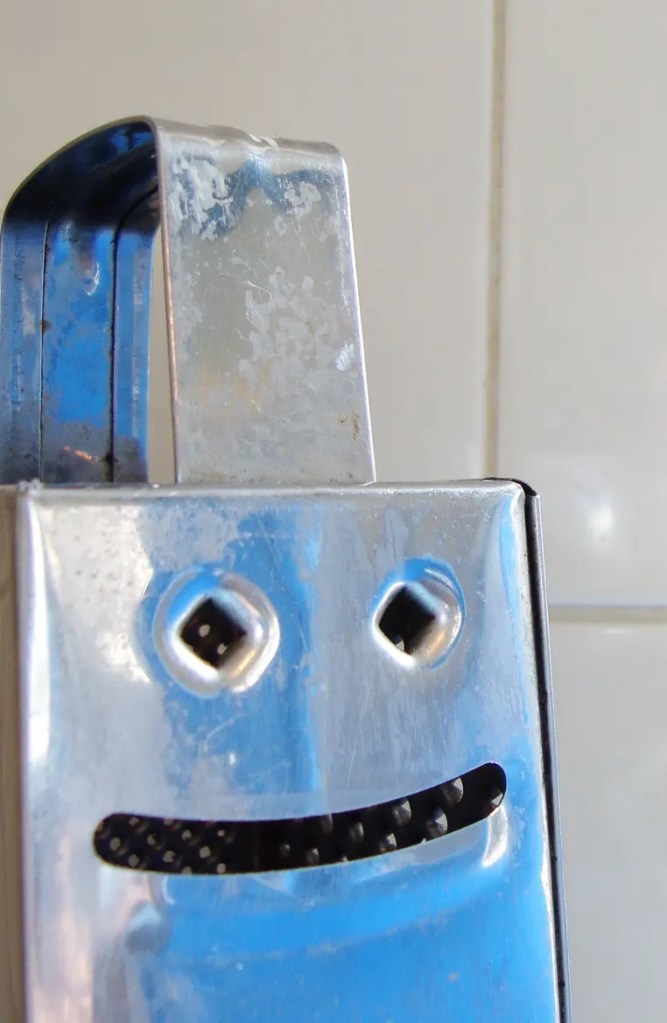
Pareidolia: (n.) the instinct to seek familiar forms in disordered images like clouds or constellations; the perception of random stimulus as significant.

Pareidolia is a type of apophenia, to see patterns in random data.

Pareidolia is the tendency for perception to impose a meaningful interpretation on a nebulous stimulus, usually visual, so that one sees an object, pattern, or meaning where there is none, like the Rorschach inkblot test.

Studies have shown that facial features aren’t the only thing that we see when we come across an illusory face. It was found that we also see age, emotion, and gender – and strangely enough the vast majority of these funny faces are perceived as male faces, like the man in the moon.

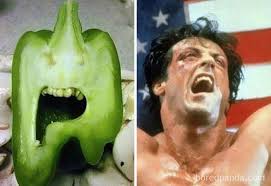
I’m sure my neuroscientist DIL would have a much more scientific and intelligent explanation than I do, but I find it fascinating to discover faces or animals in clouds or common objects.

Check out these examples:

From Bored Panda

Word of the Day: Maitri

Discovering new words is a constant joy.

Maitri: loving kindness and compassion for oneself, to reveal a profound essence that leads to personal growth, the ultimate self care.

Maitri is one of the four virtues of Buddhism, collectively known as Brahmaviharas or ‘the immeasurables’.

The term maitri can be translated from Sanskrit as loving-kindness or benevolence, The concept is central to the Buddhist practice of loving-kindness meditation and is also referenced in ancient Hindu and Jain scriptures.

Maitri was one of the themes of Buddhist teacher and author, Pema Chodron. In her book How to Meditate: A Practical Guide to Making Friends with Your Mind, she describes maitri as “unconditional friendliness,” not only towards others but towards oneself.

For maitri toward oneself, try this affirmation: “May I be happy, healthy, safe, and live with ease.”

Positive affirmations + the practice of infinite gratitude are two concepts I incorporate into my daily life.

How about you?

Boketto: Word of the Day

Boketto is one of those magnificent Japanese words that doesn’t seem to have an exact English translation. 

Boketto is the act of gazing out into the distance with no specific thoughts, to lose oneself in the vast, mindless, horizon. 

I do it a lot, and for me, it’s a sort of trance; a spaced out, zen-like calm and meditative state.

Couldn’t you lose yourself right here above the Salish Sea gazing at the cloud-shrouded Olympic Mountains?

Word of the Day: Psithurism

I love words and this is a good one.

Psithurism: a rustling or whispering sound, such as leaves in the wind; susurration [ sith-yuh-riz-uhm ] 

Example: Standing in the glade I heard a quiet psithurism, just straddling the line between music and noise.

Photo by veeterzy on Pexels.com

Susurrus: Word of the Day

I love words like this, don’t you?

Susurrus is an onomatopoeic word; say it out loud and you’ll hear the sound — so many sibilant ssssssssses.

Susurrus – a low, soft, rustling, whispering; a low murmur or humming sound; think of the wind in trees or grasses, a stream or river, snakes, bees, or large groups of people speaking quietly to one another.

It’s also, apparently, a word used to describe a creature in some kind of fantasy game that I know nothing about.

Happy April!

Photo by Pixabay on Pexels.com

Ma…The Space Between Things

I’m inspired by the spartan aesthetic of Zen Buddhism.

Is less really more?

Ma (pronounced “maah”) is a celebration of not things, but the space between them. It’s negative space, voids, emptiness. The place you get to (if you’re lucky) in meditation. Like the space where that tree used to be.

I’m not exactly sure why this tiny little ceramic vase IS. Like why it even exists.

Only four inches tall, it holds about a tablespoon of water and I continued to replace flower after flower until I got the brilliant idea of searching around the garden for beautifully shaped little twigs.

These are the last remnants of the ficus tree that is no longer there, and I decided it would be a simple way to honor that once living entity by saving a little part of it.

At first I was going to embellish the tiny branches with faux gems, pearls, and seashells–like I usually do–but the more I looked at it, the more I loved the bare simplicity. I didn’t want to detract from the design of the vase.

I should write a haiku about the tree and these twigs. Being a minimalist with words is just as difficult for me as NOT gluing shiny things to those tiny little branches.

So this is zen — ma, the serene space between things.