LISTEN to the Serenade of America’s Songdogs

Last night in the garden around 9pm, I heard this chorus of beautiful songdogs; my beloved coyote family. This lasted nearly a full minute, along with other shorter lyrical melodies.

Turn up the volume, as it was extremely LOUD! I wanted to run up the hill to join them, but I did that once and broke my wrist in the dark, so I merely sent them all my love.

I know what you’re thinking, but there are other reasons for this symphony besides a fresh meal…

“The sound of coyotes howling and yipping at night sometimes causes people concern and alarm. Some mistakenly believe howling indicates that a group of coyotes has made a kill. While coyotes howl for a variety of reasons, it is not likely because they have downed prey. Doing so would draw attention and might attract competing coyotes or other predators to their location, which is not something a hungry coyote would want to do. Coyotes howl and yip primarily to communicate with each other and establish territory. They may bark when they are defending a den or a kill.” https://wildlifehelp.org/solution/district-columbia/coyote/should-i-be-concerned-if-i-hear-coyotes-howling-yipping-or-barking/93

In The Garden: Cape Honeysuckle

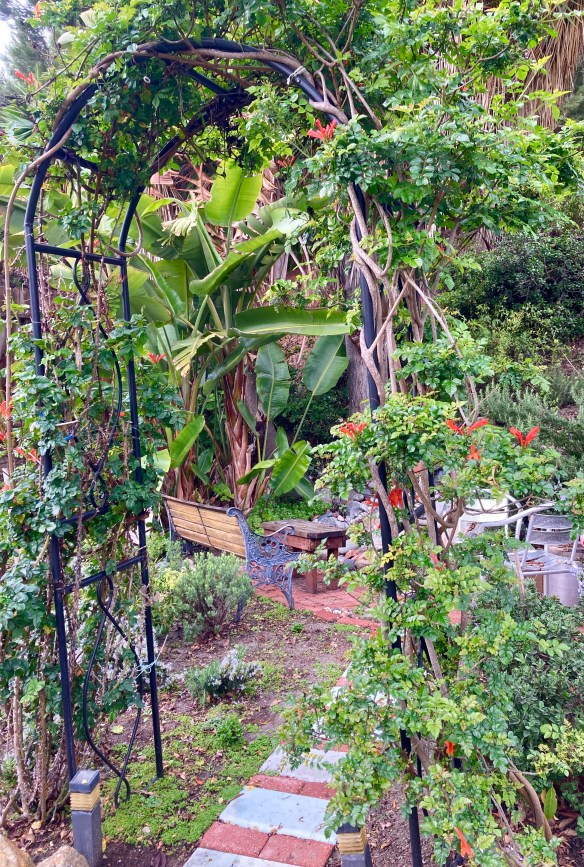
After a few very rainy days, it’s dry for a while until the next storm appears. I see a bit of blue sky as the contrasting backdrop to my Cape Honeysuckle trained to climb over an arbor.

The sweet nectar of its orange-red flowers attracts butterflies and hummingbirds.

The Cape Honeysuckle (Tecoma capensis) produces long, thin elongated fruit capsules that contain numerous seeds easily dispersed by the wind. 

It’s easy to propagate from a cutting, so I have lots of them growing in different parts of the garden.

Yup, there’s a lot going on in this photo; a path leading to a pond, the arbor of Cape Honeysuckle and Peppermint-Striped Climbing Roses, and a giant Bird of Paradise.

Everything needs some major work, but it’s a labor of love.

#WordlessWednesday

Battered, Bruised, and Beautiful

While other parts of the country feel the effects of a brutal winter storm, it’s sunny and relatively warm in SoCal.

Relatively, because I’m freezing even though it was in the mid-sixties today. I’m in a coat, scarf, and beanie. As much as I love to be outside, I HATE to feel cold.

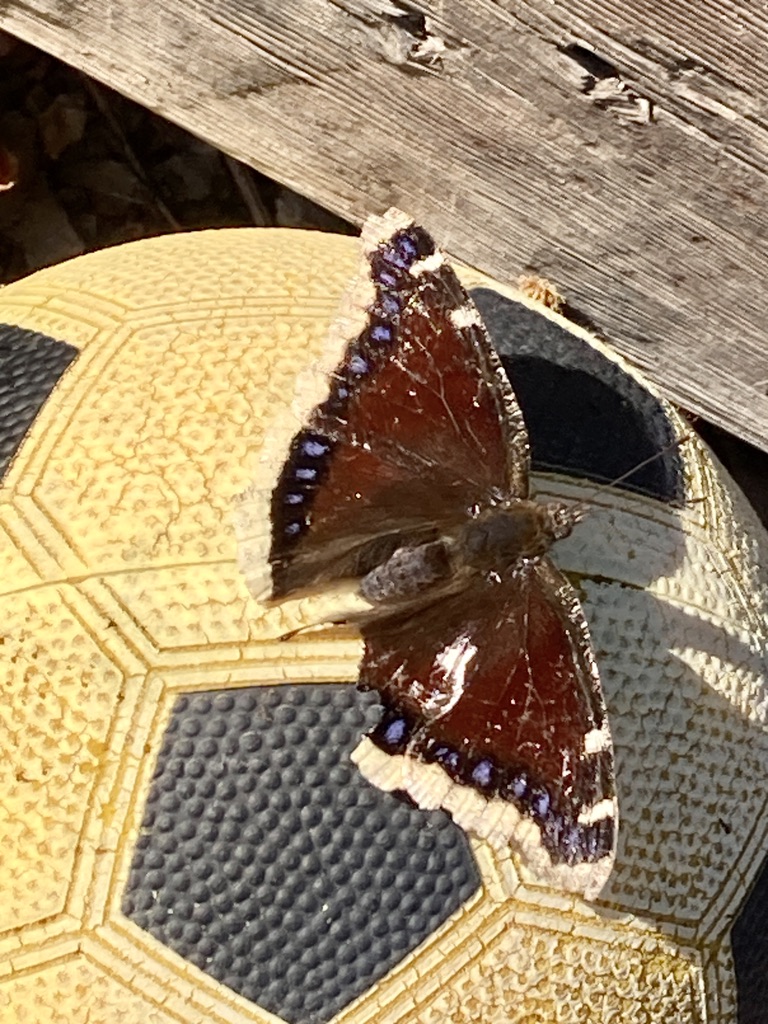
This courageous Mourning Cloak butterfly savors the rays of the afternoon sun on a random soccer ball just before the coastal fog rolled in.

Mourning Cloaks live longer than most butterflies—ten months or more— so I hope this one finds a sheltered spot during next week’s forecasted rainy weather.

Battered, bruised, but still beautiful, and glorious to behold as she warms her wings.

Passionflower

I wish I knew why this passionflower vine stopped growing; it’s one of my favorites.

Did you know that passionflower offers healing properties? I’ve never tried it, but according to Dr. Andrew Weil, passionflower is used for stress reduction, calming without sedation, and overcoming insomnia when combined with other calming herbs such as valerian and lemon balm.

Studies suggest that passionflower may reduce anxiety in patients undergoing surgery. Another study found that passionflower had similar affects as an anti-anxiety medication in reducing general anxiety. The properties in passionflower are thought to promote calming effects by increasing the levels of the chemical gamma-aminobutyric acid (GABA), which reduces the activity of some neurons that cause anxiety.

Disclaimer: DO NOT take passionflower if you are pregnant or breastfeeding. For others, passionflower is generally considered to be safe and nontoxic in recommended doses and for less than two months at a time.

Deception

Don’t let these gently flowing fronds in this photo deceive you.

Pampas grass is invasive and chokes out the growth of beneficial California native plants. This out of control stand of grass invaded all the scorched earth from the big fire in Carlsbad almost two years ago. Visit the link for that post: https://enchantedseashells.com/2021/01/20/fire-in-carlsbad/

Interesting fact: Pampas grass is not illegal in the United States, though it is illegal in Australia and carries a $10,000 fine.

Pampas grass is a quickly growing grass that forms massive clumps along roadsides, steep cliffs, river banks, and open areas that have been disturbed by human activities or natural disturbances. Introduced to Santa Barbara, California in 1848 by nursery operators, pampas grass has spread all over the state, threatening native plants and the animals that rely on them.

An individual pampas grass stand can produce millions of seeds annually that travel several miles, and because these grasses are very tolerant of intense sunlight, drought, and frost, they are very efficient at establishing in many habitat types. Due to the fact that pampas grass can live over a decade, it has become a favorable plant for people to grow in their gardens.

Invasive plants such as pampas grass displace native plants and create habitats that are lower in biodiversity. Furthermore, pampas grass has leaf blades that are highly undesirable as food or shelter to birds and other wildlife, and can actually cause physical harm to those animals, including humans, because the leaves are extremely sharp. Therefore, it is important that we do our part by not planting pampas grass in our gardens, but instead plant native plants that are comparably beautiful and provide the same utility.

Native Alternative: Giant Wildrye (Elymus condensatus)

Giant wildrye is a grass that, like pampas grass, forms dense stands in a variety of different soils. It remains green year-round and is drought tolerant, but will also survive in regularly watered locations, meaning little maintenance is required to keep this grass looking great in your garden throughout the changing seasons. Giant wildrye has beautiful blue-gray or dark green leaves that are topped by clusters of yellow flowers during the summer and although this grass prefers full sunlight, it can also tolerate shady locations.

Unlike pampas grass, Giant wildrye is native to California and does not readily outcompete other native plants for resources such as space, light, and nutrients. It also spreads slowly compared to pampas grass, and therefore, it is much easier to contain within your garden fences. Furthermore, while pampas grass is not desirable to most animal species, Giant wildrye attracts various birds that enjoy their seeds.

Giant wildrye is a great native alternative to invasive pampas grass because it provides the same beauty and utility in your garden, but unlike pampas grass, it contributes to higher biodiversity and does not negatively impact the natural environment or those animal species that rely on it. Try out this native plant alternative in your garden today!

For more information on any of the topics above, please contact the Native Plant Program at nativeplants@wildlife.ca.gov.

From: https://wildlife.ca.gov/Conservation/Plants/Dont-Plant-Me/Pampas-Grass

“Here Kitty, Kitty!”

Besides me, who wants to pet my beautiful bobcat?

It’s the witching hour…the veil is thinning…it’s the time when all my nocturnal creatures visit Casa de Enchanted Seashells. PS Check out the exact time of this video, lol.

‘Tis the Witching Time of Night

by John Keats

‘Tis ” the witching time of night”,
Orbed is the moon and bright,
And the stars they glisten, glisten,
Seeming with bright eyes to listen —
For what listen they?
For a song and for a charm,
See they glisten in alarm,
And the moon is waxing warm
To hear what I shall say.
Moon! keep wide thy golden ears —
Hearken, stars! and hearken, spheres!
Hearken, thou eternal sky!
I sing an infant’s lullaby,
A pretty lullaby.
Listen, listen, listen, listen,
Glisten, glisten, glisten, glisten,
And hear my lullaby!
Though the rushes that will make
Its cradle still are in the lake;
Though the linen then that will be
Its swathe, is on the cotton tree;
Though the woollen that will keep
It warm is on the silly sheep —
Listen, stars’ light, listen, listen,
Glisten, glisten, glisten, glisten,
And hear my lullaby!
Child, I see thee! Child, I’ve found thee
Midst of the quiet all around thee!
Child, I see thee! Child, I spy thee!
And thy mother sweet is nigh thee!
Child, I know thee! Child no more,
But a Poet evermore!
See, see, the lyre, the lyre,
In a flame of fire,
Upon the little cradle’s top
Flaring, flaring, flaring,
Past the eyesight’s bearing.
Awake it from its sleep,
And see if it can keep
Its eyes upon the blaze —
Amaze, amaze!
It stares, it stares, it stares,
It dares what no one dares!
It lifts its little hand into the flame
Unharmed, and on the strings
Paddles a little tune, and sings,
With dumb endeavour sweetly —
Bard art thou completely!
Little child
O’ th’ western wild,
Bard art thou completely!
Sweetly with dumb endeavour,
A Poet now or never,
Little child
O’ the western wild,
A Poet now or never!

Random Chat With a Graceful Soul

Do strangers sometimes strike up random conversations with you in public?

Me, too.

Yesterday, standing outside Trader Joe’s, contemplating their plant display, I wondered if I should bring another one home. I spied a pretty little olive tree. My green thumbed son got one at his Traders and it’s now about fifteen feet tall, but that’s the difference between a drought climate and the Pacific Northwest, I guess.

As I pondered this decision, I noticed an elderly lady next to me seemingly in similar deliberations. She was beautifully attired like my mom would have been to go out for the day in a gorgeous dress with heels, accessorized with a sparkly brooch. Her hair was carefully coiffed.

Such a gorgeous human.

I picked up one olive tree and put it back, not sure if I wanted to potentially kill another living being. It’s difficult to grow a lot of things here with barely any rain and restricted watering. Even if it’s not restricted, the cost to effectively water is prohibiitve.

I pointed to the olive trees and said to her, “Are you thinking of getting one, too?”

She replied, “I would, but I can’t see how big it will get.” She had a bit of an accent.

I read the little informational sticker on the pot and told her, “Ten to fifteen feet unless it’s pruned.”

Then I shared with her my son’s successful experience with the olive tree in his garden and how it already created a few actual olives.

After that, she proceeded to tell me one wonderful story after another about growing up on an olive farm just outside of Rome.

Every fall, “just about this time”, she said, they’d pick tons of olives for eating and pressed olive oil and sold it all.

The olive trees outside of Trader Joe’s brought memories flooding back from her youth and you could tell she was wistfully remembering what were obviously happy times with her family.

I told her it was no wonder she had beautiful skin from all the olive oil and she smiled, reached out a hand to touch my arm, and thanked me for taking the time to talk to her.

Actually, it was MY pleasure.

I could have listened to her talk for hours. The stories about her childhood during and after WW 2 were fascinating. I wonder how and why she came to live in California.

(No, I didn’t get the tree, but it’s still under consideration.)

In a Bit of a Pickle

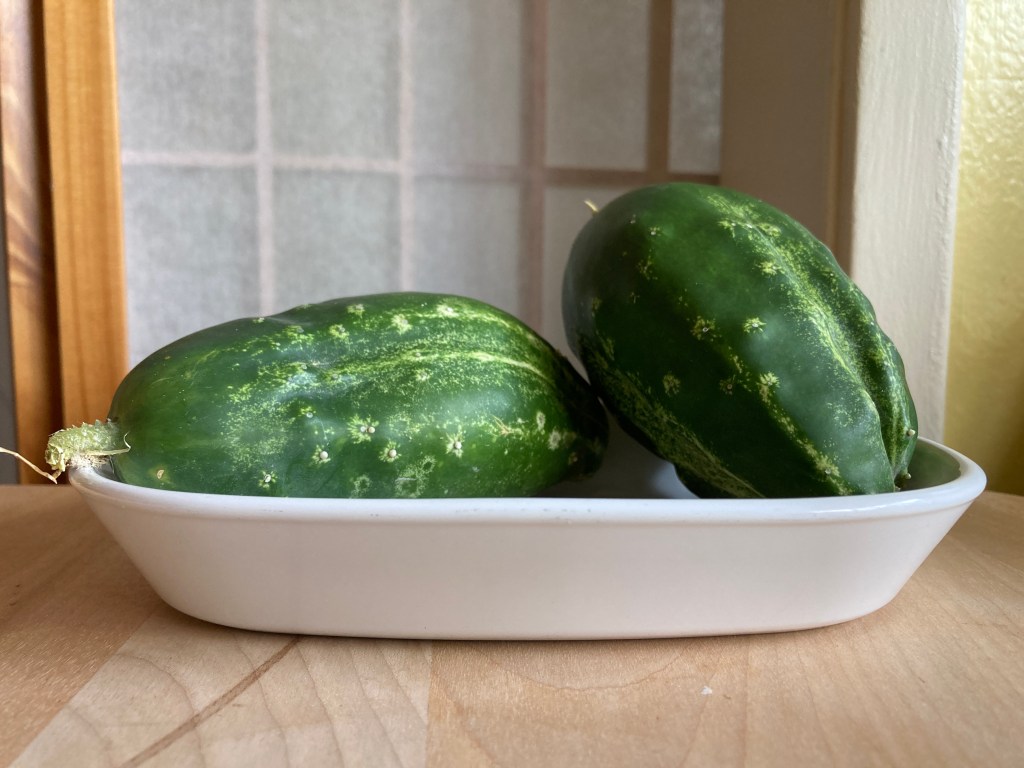
After the winds and rain subsided, I checked on my garden and discovered two previously hidden cucumbers.

I remember planting a few seeds of the pickling variety but everyone was all mixed up and I couldn’t tell which was which until I saw these gigantic specimens.

I haven’t completely decided if I’ll eat them fresh and possibly not pickle them, because I didn’t discover any others that were ready.

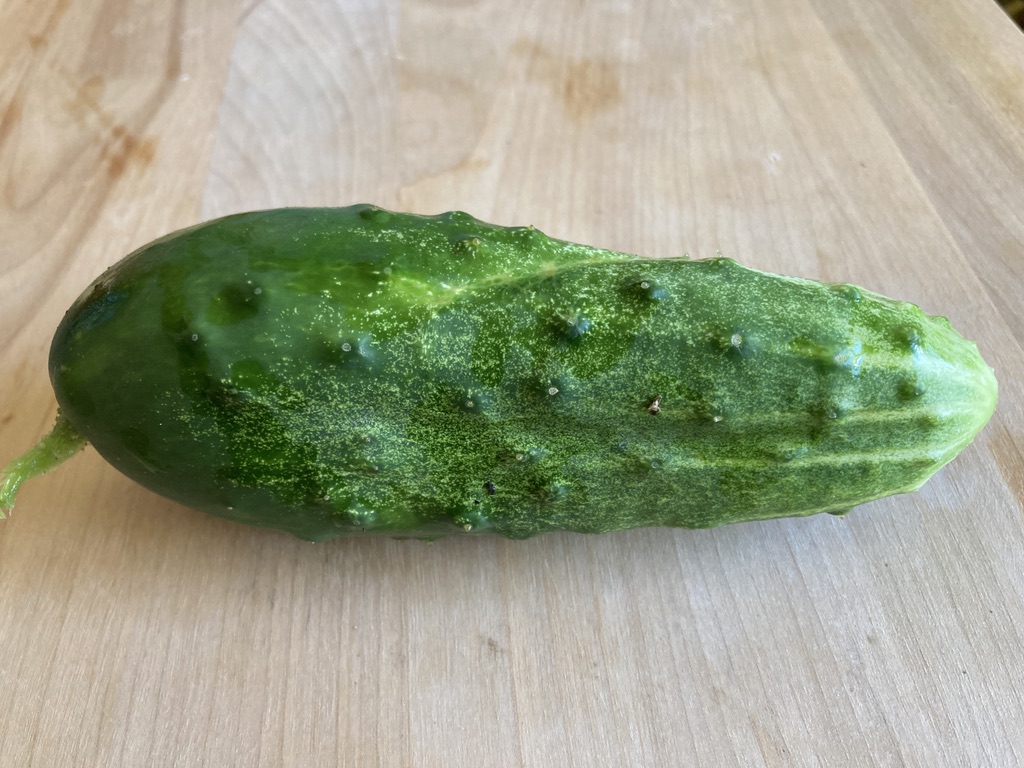
And this one, too, not quite as deformed.

I’ve had success with pickling vegetables, here’s a post about that:
https://enchantedseashells.com/2015/07/06/easy-peasy-refrigerator-pickles-meatlessmonday/

There was an unexpected sprinkle this morning; not forecasted, but welcome nonetheless.

Happy Monday!

All You Need Is…

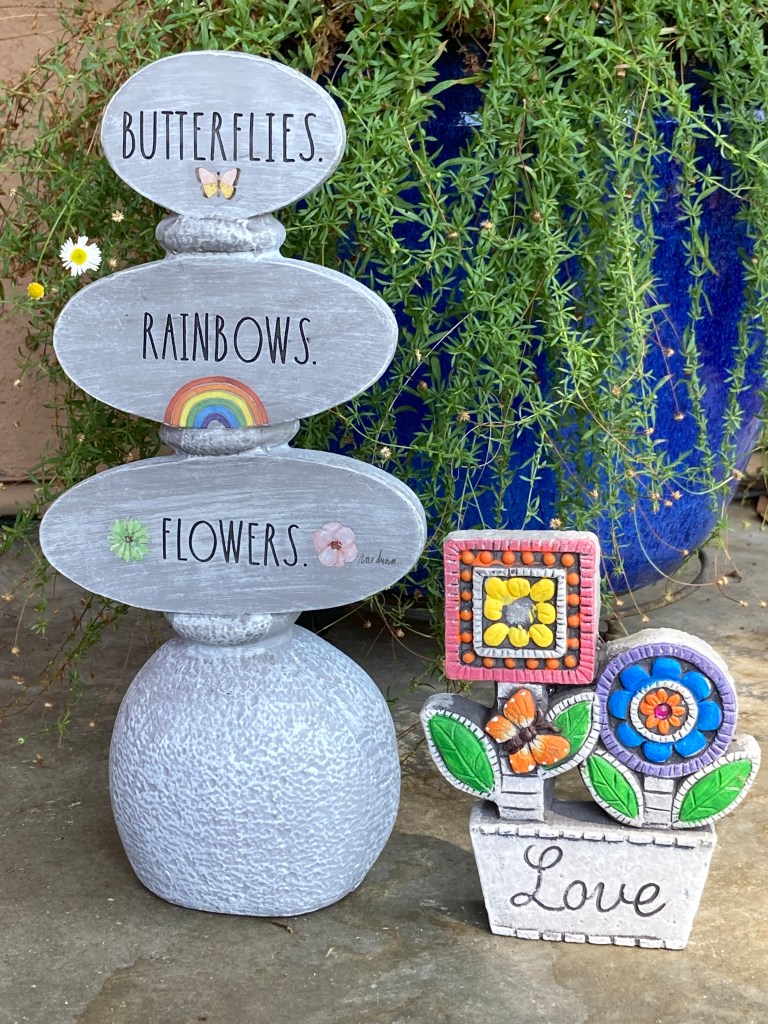
There’s a growing collection of animals at my front door, along with seashells and rocks, of course. Hedgehogs and bunnies along with frogs and turtles and owls welcome everyone to Casa de Enchanted Seashells.

These are brand new additions to the family…and best of all for my thrifty self, they were both on sale.

Through the Window: Red Shouldered Hawk

My kitchen window is an ever-changing movie screen.

Throughout the years, it’s been the best location to view all kinds of memorable events; observing the original Angel Boy in his sandbox, throwing balls for his Border Collie, skating with his friends on the half pipe while they ate the cookies and drank the smoothies I’d bring out to them, to the fresher 2.0 versions enjoying mango-black cherry ice cream cones and playing baseball in the garden or chasing butterflies, to birds and bunnies and coyotes and bobcats, (never forgetting the rats).

Today I saw a beautiful Red Shouldered Hawk perched on a low branch in the ash tree surveying the lawn for a late lunch.

Now I know where the feathery treasures come from. I’ve been finding them where I had first seen the rodents and I had a hunch they might be silent gifts–messages to communicate that my vermin problem is being taken care of, and I think I’m right!

Red Shouldered Hawks are about 17-24 inches tall and can live 15-20 years. So regal, so lovely, so important to the balance of nature. We need to protect them and their habitats, too.

I saw him fly away but wasn’t quick enough to focus the camera to capture the incredible wingspan.