
This is so cool! I love word play like this and it’s also a simply authentic, profound observation.
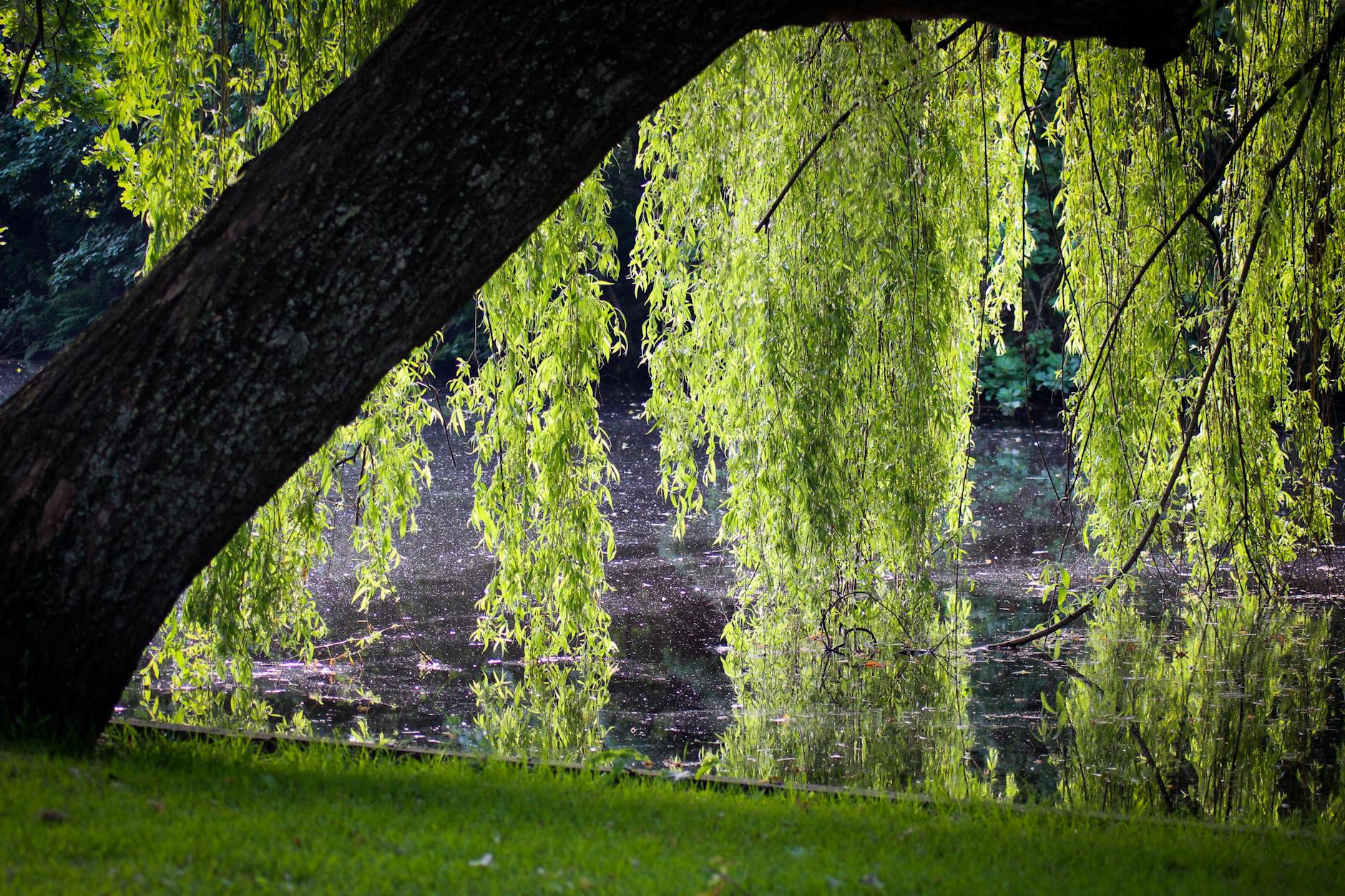
Forest = for rest.

This is so cool! I love word play like this and it’s also a simply authentic, profound observation.
Forest = for rest.
The ultimate mother...
Be my mother, I said to the trees, in the language of trees, which can’t be transcribed, and they shook their hair back, and they bent low with their many arms, and they looked into my eyes as only trees can look into the eyes of a person, they touched me with the rain on their fingers till I was all droplets, till I was a mist, and they said they would. (Emily Berry, Canopy: Stranger, Baby)
Of course!

I’ve become obsessed with observing how often people say “of course” in response to “thank you” or any other expression of appreciation. Have you noticed it, too?
For example, I was at the market and said thank you to the person who bagged my groceries. He said, “Of course.”
Later, a neighbor gave me a cool puzzle for the grandkids. I texted “thank you.” She responded, “of course”.
Someone else helped me find a particular section of rugs in TJ Maxx and when I told her I appreciated the help, she responded, “of course.”
This all happened in the same day because it seems as if no one says “you’re welcome” EVER –just “of course.”
Is it rude? Is it polite?
OF COURSE I did a little research…
Here’s the query: Is it rude to reply “of course”?
‘Of course’ by itself means obvious, expected. So when someone says ‘of course’ instead of ‘you’re welcome’, the feeling is “it’s obvious that I would do that because I want to do that’. It seems to be a friendly communication, BUT IS IT?
In fact, it’s a big search on Quora…
Why do millennials often say “of course” instead of saying “you’re welcome” when you thank them?
You can respond to someone who says “of course!” after you thank them by expressing your gratitude again or by acknowledging their kindness. For example, you could say “Thank you again, I really appreciate it” or “You’re so kind, thank you.” This shows that you value their response and appreciate their willingness to help.
What about people who respond “no problem” in response to “thank you”?
I like this following points of view:
“You’re welcome,” is the correct short answer. “Of course” implies entitlement. Even the currently popular, “No problem,” implies imposition.
Both of those answers imply “It’s all about me, not you.” I think it’s another sign, indicative of more and more egregious narcissistic behavior creeping into our society on a daily basis.
Regardless of the following ways to respond to “thank you” and you can call me old-fashioned, but I’m going to stick with “you’re welcome.” That’s the only one that feels right to me.
Do you say “no problem” or “of course” or are you like me and reply with a simple “you’re welcome”?

rachelsenglish.comhttps://rachelsenglish.com › youre-welcome
“If everything around seems dark,
look again, you may be the light.”
Rumi

Sometimes all we need is the perfectly petite flower of a fragrant geranium to change darkness to light; sadness to joy — and sometimes WE are the light.
The soul becomes dyed with the color of its thoughts.
Marcus Aurelíus
It seems like a good day for a mindful reminder that when we THINK love, we BECOME love.
Our inner world—our thoughts, beliefs, and attitudes—shapes our outer reality.

As within, so without.
Gather all the little children
May Day blessings to all – A little May Day poem by Athey Thompson
With May flowers in their hair
For they shall dance
Around the maypole
For they shall dance
The day away
For me, the month of May is the BEST not only because of Mother’s Day but it’s also my birthday month.
Last year Mother’s Day and my birthday fell on the same day. It’s an extra special treat for my two favorite days to be combined into one celebration.
The best known modern May Day traditions include dancing around the maypole and crowning the May Queen. Fading in popularity is the tradition of giving of “May baskets”, small baskets of candy or flowers. I think we should revive that adorable custom, don’t you?
Just in time for May Day, I found an adorable porcelain flower basket at Goodwill for about three dollars and I HAD to bring it home with me.

So far, this month started off in an ah-MAY-zing way.
Since it wasn’t a great video, I won’t post it, but THREE coyotes came to visit last night– THREE! — all together, and early this morning at first light, another coyote visit was captured on my wildlife camera. That’s NEVER happened before and I am soso excited.
The weather is warming up; all the fruit trees are flowering, the roses and ceanothus and lavender are in bloom, and baby birds are hatching.
Beltane, which takes also takes place on May 1st, is a celebration of the abundance of Earth and the forces of Nature. Bonfires are traditionally set to engender a sense of connection with ourselves and all living beings, but that wouldn’t be a smart thing to do in our wildfire ravaged state, so the flame from a safe candle must suffice.
Happy May Day and Happy Beltane!
My son spent his junior year abroad at the University of Göttingen but never knew about some of its important historical connections.
Randomly, I found out about an interesting educator, Emmy Noether, from the early 1900s.
“What will our soldiers think when they return to the university and find that they are required to learn at the feet of a woman?”
That was the response of more than one (male) faculty member at the idea of Emmy Noether joining the University of Göttingen to teach mathematics in 1915.
Instead of receiving the title she deserved, Emmy spent years teaching courses, often under the name of a male faculty member.
The official hierarchy dictated that it was HIS course and she was an assistant. More egregiously, she wasn’t paid for her work; she relied on the support of her family to survive.
In 1919 she was permitted to officially teach and began receiving a small salary in 1922.
As a teacher, Emmy was known to speak loud and fast, for being generous and thoughtful, and genuinely cared about her students.
In addition to being an excellent teacher, she also made numerous significant contributions to research in mathematics and physics.
The other interesting fact about Göttingen is something I wasn’t aware of until I watched the Academy Award winning film Oppenheimer.
In 1926, the physicist J. Robert Oppenheimer left Cambridge for the University of Göttingen to study under Max Born. Göttingen was one of the world’s leading centers for theoretical physics. (I didn’t know that fact, either!)
World War II interrupted the work and lives of most American physicists. In 1942, Oppenheimer was appointed to the Manhattan Project, code name for the project formed to develop an atomic bomb.
My son attended UofG to further his advanced degrees in Germanic languages and literatures, not the world of science.
Because I am THAT KIND OF MOM, I visited him while he was in Germany and spent a week there. I actually stayed in a visitors room in his dorm. This structure was built sometime during the cold war era, at least I think it was, because it was DISMAL and gray and cold and unwelcoming and the bathrooms were hardly luxurious – but it was fun to see the original Angel Boy in action and meet his classmates and friends.
Best of all, I got to be the obnoxiously proud mom as we did a lot of sight seeing and he was able to use his fluent German language skills all over the country.
Except for (and because of) the snowy blizzard debacle, it was a memorable Germany adventure.
A big thank you to Herr Professor Angel Boy for helping me properly translate my words.
Ein großes Dankeschön an Herrn Professor Angel Boy, der mir geholfen hat, meine Worte richtig zu übersetzen.
________________________________________________________________
Mein Sohn verbrachte sein erstes Studienjahr im Ausland an der Universität Göttingen, wusste aber nichts über einige der wichtigen historischen Zusammenhänge.
Zufällig erfuhr ich von einer interessanten Pädagogin, Emmy Noether, aus dem frühen 20. Jahrhundert.
„Was werden unsere Soldaten denken, wenn sie an die Universität zurückkehren und feststellen, dass sie zu Füßen einer Frau lernen müssen?“
Das war die Reaktion mehrerer (männlicher) Fakultätsmitglieder auf die Idee, dass Emmy Noether 1915 an die Universität Göttingen kam, um dort Mathematik zu lehren.
Anstatt den Titel zu erhalten, den sie verdiente, unterrichtete Emmy jahrelang Kurse, oft unter dem Namen eines männlichen Fakultätsmitglieds.
Die offizielle Hierarchie schrieb vor, dass es SEIN Kurs war und sie eine Assistentin war. Noch schlimmer war, dass sie für ihre Arbeit nicht bezahlt wurde; Sie war auf die Unterstützung ihrer Familie angewiesen, um zu überleben.
1919 erhielt sie offiziell die Erlaubnis zu unterrichten und ab 1922 erhielt sie ein kleines Gehalt.
Als Lehrerin war Emmy dafür bekannt, laut und schnell zu sprechen, großzügig und rücksichtsvoll zu sein und sich aufrichtig um ihre Schüler zu kümmern.
Sie war nicht nur eine hervorragende Lehrerin, sondern leistete auch zahlreiche bedeutende Beiträge zur Forschung in Mathematik und Physik.
Die andere interessante Tatsache über Göttingen war mir erst bewusst, als ich den Oscar-prämierten Film Oppenheimer sah.
1926 verließ der Physiker J. Robert Oppenheimer Cambridge und ging an die Universität Göttingen, um bei Max Born zu studieren. Göttingen war eines der weltweit führenden Zentren für theoretische Physik. (Das wusste ich auch nicht!)
Der Zweite Weltkrieg unterbrach die Arbeit und das Leben der meisten amerikanischen Physiker. Im Jahr 1942 wurde Oppenheimer in das Manhattan-Projekt berufen, Codename für das Projekt zur Entwicklung einer Atombombe.
Mein Sohn besuchte die UofG, um seine weiterführenden Abschlüsse in Germanistik zu machen, nicht in der Welt der Naturwissenschaften.
Weil ich so eine Art Mutter bin, habe ich ihn besucht, als er in Deutschland war, und eine Woche dort verbracht. Ich wohnte tatsächlich in einem Besucherzimmer in seinem Wohnheim. Dieses Gebäude wurde irgendwann in der Zeit des Kalten Krieges erbaut, zumindest glaube ich, dass es so war, weil es trostlos und grau und kalt und abweisend war und die Badezimmer kaum luxuriös waren – aber es hat Spaß gemacht, seine Freunde zu treffen und den ursprünglichen Angel Boy in Aktion zu sehen.
Das Beste von allem war, dass ich die unglaublich stolze Mutter sein durfte, da wir viel Sightseeing machten und er seine fließenden Deutschkenntnisse im ganzen Land anwenden konnte.
Abgesehen (und wegen) des Schneesturm-Debakels war es ein unvergessliches Deutschland-Abenteuer.

More magic!
I can’t post video any other way on WordPress so I hope you’ll be able to view this spectacular bobcat that came to my garden DURING THE DAY with a RAT in his mouth!
Here’s how the story unfolds: Yesterday morning around 6:30 a.m., I saw something on the lawn. I went out to look and it was a mangled rat. Hmmm, I said to myself, that’s gross, but I bet a hawk or owl dropped it. A little later, I walked up the stairs and took the SD card out of my wildlife camera that’s situated on the lower half of the hill and brought it inside to check, like I do on a weekly basis.
I was absolutely blown away by this video!
Bobcats (and coyotes) visit most nights, but this is the very first time I’ve captured video of a daytime stroll through here — with the added bonus of a meal.
It might look as if he walks away, but keep watching for his return along with an early dinner. As he makes his way down the steps, I realize the bobcat is the reason for the rodent remains I found on the lawn. This bobkitty is so jawdroppingly beautiful, I’ve watched the video at least a dozen times.
Bobcats are incredibly elusive animals and a bobcat sighting is a rare occurrence. Although bobcats are primarily nocturnal, they may be seen during the day while hunting/foraging for food, especially between April and July when they are most likely to have dependent young.
The only part of this momentous event that makes me a little sad is that I was HERE at that exact time and didn’t have a clue that I should have looked out the window that faces the garden as it would have been the greatest day in my life, right up there with seeing wolves in the Lamar Valley at Yellowstone, (although the temptation to want to run outside and say “here kitty, kitty” and pet him is strong.)
I am beyond grateful that these creatures feel that my garden (and me) are a safe haven to explore.
What might it mean? Seeing a bobcat carries a powerful spiritual message. It could be a sign that we need to tap into our inner strength and independence. The bobcat embodies resilience, encouraging us to stand our ground in the face of challenges.
Additionally, the presence of a bobcat might be a call to explore the mysteries of our life. It’s an invitation to delve deeper into our personal spirituality and uncover truths that may be hidden or suppressed. A bobcat can indeed be seen as a good luck spiritual symbol. https://lifeadventurously.com/spiritual-meaning-of-bob-cat/
This is a good time to remind us all about the horrors of using poison to control rodents:
Rat poisons don’t just kill rats; they kill wildlife too. Wildlife species are exposed to anticoagulant rat poisons when the poisons are used in urban and agricultural areas to target species such as rodents. But those who consume the poisons do not die immediately of the internal bleeding they are intended to cause. It can take more than a week for a poisoned rodent to die. In the meantime, the poisoned animal may be vulnerable to predators, and if a predator such as a bobcat preys on the poisoned rodent, the bobcat becomes poisoned too. Thus, poisons enter local food webs and become especially harmful to animals at the top of the food chain. Through a process called bioaccumulation, animals at the top of the food chain absorb toxins from eating lots of different prey animals, but their organs cannot filter out the toxins, causing the poisons to accumulate in their systems. As a result, some of the most iconic species in California – bobcats, coyotes, foxes, mountain lions, owls – are the most vulnerable to this indirect poisoning. https://panthera.org/blog-post/surprising-effects-rat-poison-bobcats

 Enchanted Seashells | Princess Rosebud