I was going to dip my toe into the world of writing from my gut, shining a light into my tortured personal journey as I stumble through the dark–I was GOING TO DO THAT.
But instead of spiraling down into that sad place, I grabbed my keys and drove into the village, deciding what I really needed was some therapy; retail therapy. Always the joker, the self deprecator; that’s me!
After a very rainy day yesterday, today was warm and fresh and shiny.
As soon as I walked into one of my favorite consignment shops, I spied a box of scarves and hats thrown haphazardly on each other like a pile of puppies. My eyes were drawn to a familiar brown and tan monogram on a scarf. I thought to myself, “it can’t possibly be authentic, but let’s take a closer look.” I picked it up. Hmmm, it sort of felt like silk. I checked the price tag. $12.00. TWELVE DOLLARS? It can’t be a real Louis Vuitton. Or could it?
I asked the salesperson, “Has this been authenticated?” She told me the owner didn’t think it was real so it wasn’t priced as a genuine designer. YES I WILL HAVE THIS, I told myself. Just then, my bad mood cleared up. I was firing on all cylinders.
One of my hidden talents is the ability to sniff out authenticity. Too bad that talent doesn’t extend to people, but that’s another story.
When I got home, I examined it more closely. The monogram was accurate, it was beautifully sewn, and I found a hidden tag that confirmed my suspicions- 100% soie Made in France. Yup, deffo genuine LV. SCORE!!!!!!
I also tried on an amazing St. John’s knit dress that I really really wanted, but even at resale prices, it was a bit too expensive, so I reluctantly put it back.
As I was meandering through the aisles, I spied a wall display. Draped over the shoulder of a red sweater was an oversized black and white houndstooth scarf. My eagle eye spied the logo in the corner: DIOR. Hold on, girl. Acting like it’s not a big deal so that no one else would want it…I grabbed it off the hanger–the original sales tag was still attached. It was 100% cashmere Christian Dior!!! And it was $20.00. TWENTY DOLLARS! How could I say no? This beautiful shawl-like wrap needed to be rescued. By me.
Instead of continuing to dwell on the things that weigh down my heart, these little treasures helped to cheer me up–perhaps merely a superficial bandage, but sometimes that’s all it takes to shake me out of a despondent mood. At least for a little while. Until next time.
I’ve seen most of the greats: Margot Fonteyn, Maria Tallchief, Rudolf Nureyuv, Galina Ulanova, and Mikhail Baryshnikov with Natalia Makarova.
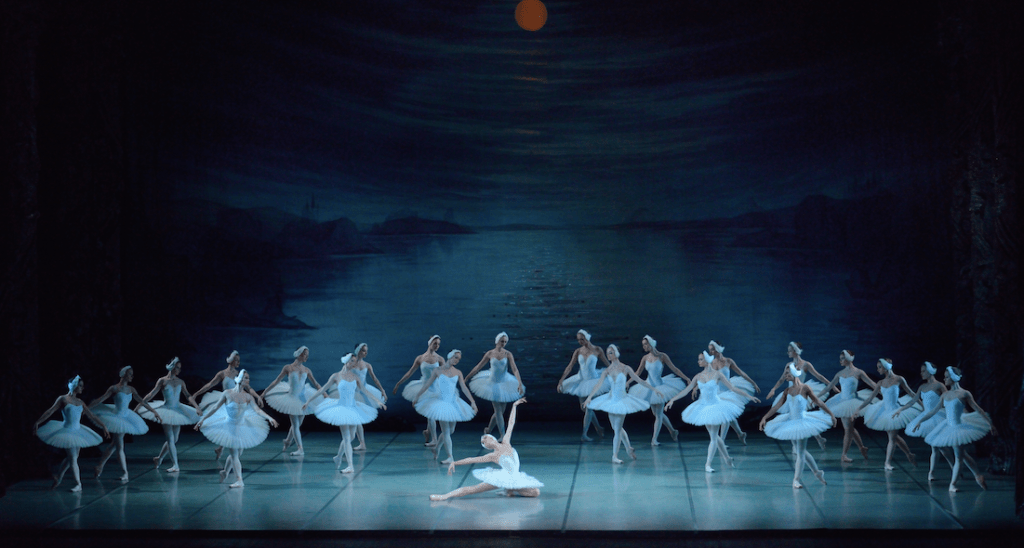
THIS version of Swan Lake with the Russian Ballet Theatre did not disappoint!
The RBT production captivated us with Russian traditions while adding new choreography, hand painted sets, and beyond beautiful hand sewn costumes.
Getting ready! Lots of excitement in the air. I love to sit close enough to hear the sound of toe shoes on the stage.
The California Center for the Arts in Escondido was packed; it’s lovely to see a great response to ballet. This was the opening night of their US tour.
Olga Kifyak as Odettel/Odile accomplished the Holy Grail–I believe we counted 32 successful fouettes, which is every ballerina’s fantasy to attain. Olga owned the stage with her powerful and ethereal dance and the most amazing extension.
Head Jester Mikhail Ovcharov seemed to fly through the air with his cabrioles and grand jetes–a definite audience favorite.
PLEASE check out the tour schedule below and don’t miss it!!!
For those of you who need a refresher about Swan Lake, it’s based on a German fairy tale. Tchaikovsky’s score tells the tragic but timeless love story of Prince Siegfried and a lovely swan princess named Odette. Under the spell of a sorcerer, Odette spends her days as a swan swimming on a lake of tears and her nights in her beautiful human form. Odile is the black swan, and of course there’s a happily-ever-after ending.
Since the original Angel Boy and DIL named the newest member of their family Charlotte in honor of my mom, I started thinking about mommy and how much I miss her.
We had so much fun together, whether it was shopping (OBVIOUSLY) or cleaning house together (she made it into a game which is why I’m the crazy person who loves to wash windows), or when we went to the symphony or ballet.
I started ballet when I was eight at the Detroit School of Ballet and continued taking lessons for pretty much my entire life. Oh, I was never as good as Anna Pavlova or Prima Ballerina Margot Fonteyn or Maria Tallchief or any of the primas that I worshiped, but I’m pretty good even though I wasn’t a phenom and I had a less than insane turnout. Here in SoCal I studied with Madame Kaliskis and took a few classes with the California Ballet Company and at USIU. I actually danced until I was seven months pregnant and could no longer move, haha.
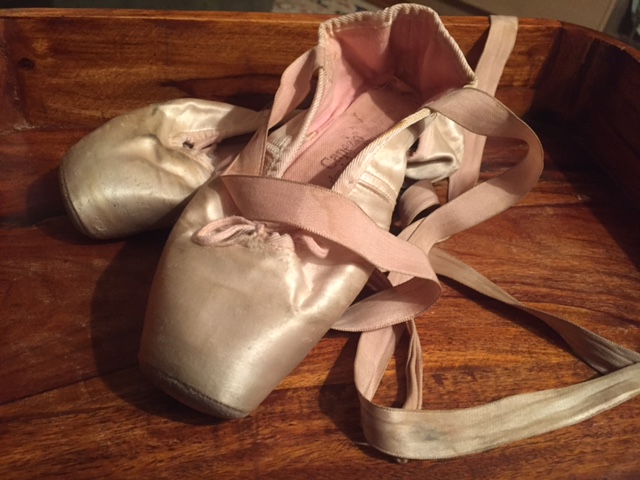
My love for ballet never waned. Who doesn’t love tulle and toe shoes? Duh.
My mom and I attended many performances. We saw Margot Fonteyn and Maria Tallchief and Rudolf Nureyuv and Galina Ulanova My mom had actually seen Anna Pavlova andthe great Nijinsky. As she remembered that magical experience, she said it was as if he defied gravity.
The last famous dancers we saw together were Mikhail Baryshnikov with Natalia Makarova.
One of the final experiences she wanted to share with Angel Boy before she died was front row seats to a local performance of the Nutcracker. Somewhere in a old cardboard box there’s a photo of us. It’s beautiful and so sad at the same time.
Other countries have brought us amazing dancers but no one has done it more consistently than Russia. When I heard that the Russian Ballet Theatre would be in town on September 19 for one performance of Swan Lake, I was so excited. It’s absolutely my favorite ballet and I can’t wait to go! It’s too bad Angel Boy 2.0 isn’t visiting, or I’d continue the lovely tradition that my mom started and introduce him to the world of dance so he could be transported by music, the art of choreographic perfection, and the human body in its purest form.
About the Russian Ballet Theatre:
Russian Ballet Theatre is passionate
about producing shows that adorn Russian Ballet traditions in dance, sets and
costume making. The new production of Swan Lake, is choreographed by
Nadezhda Kalinina (Mariinsky Theatre, Teatro Lirico, Omsk State Music Theatre)
who lovingly retouched the oldest St. Petersburg version of the ballet.
Hand-painted sets and over 150 hand-sewn costumes were created by young, accomplished designer Sergei Novikov (Mariinksy Theatre, Omsk State Music Theatre, St. Petersburg State Music Hall) in the tradition of the great masters. SFX makeup by Award-winning Irina Strukova (Crazy Rich Asians,Netflix, HBO) will make ballet devotees feel as though they have seen the beautiful Swan Lakefor the first time!
The Russian Ballet Theatre will donate a portion of ticket sales from its 2019 tour to local public schools through a collaboration with the Plus1 initiative. The ballet is partnering with DonorsChoose.org, an online platform where organizations can choose the school they’re donating to, and $1 per ticket sold will go local teachers in or around each city of the tour. For more information, please visit, www.DonorsChoose.org.
Who wants to join me? This will most definitely be an unforgettable evening. How many fouettes will we see??? (Insider comment.)
Do you ever take a moment or two out of your busy day or before you close your eyes at night and wonder who in the hell Princess Rosebud really is?
So do I, my friend, so do I.
Toward that goal, ponder upon this for a while. The following might give you (and me) some valuable insights into my intimate gray matter. (Not Fifty Shades of Gray, maybe only about three or four.) Or not. You decide.
I bought two dresses. I love them equally. I hung them side by side to admire them and I’m looking at them right now and I’m loving so much about each of them for their individual intrinsic qualities.
One is a Lilly Pulitzer. a tried and true real designer brand that I could wear anywhere and be appropriately attired. I love the sleeves and the sassy outrageous bright colors and the dynamic print. It speaks of shiny happiness to me. I also love that it’s XXS, which soothes my poor body image issues. In my convoluted and distorted mind, I feel that IF I fit into an extra extra small size and it’s loose on me, then no matter what or how I feel on the inside, I can’t be ginormous, right? (Not that I’m body shaming anyone as this is my own personal issue.) With a spiky highhigh heel or summer-y espadrille, this is a sexysexy dress cos it’s super short, too.
The other dress is a treasure I picked up at the Buffalo Exchange in Ballard when I visited Angel Boy 2.0. It’s Forever 21 (which is EXACTLY how I feel on the inside. Arrested development and all that…) I love everything about this dress too: the muted burgundy and black/tan colors, the print, the little buttons, the tassels, and the vaguely Elizabethan/hippie empire cut with the billowy long sleeves. With leggings and adorable boots, I can’t WAIT for autumn.
One dress cost ten dollars; the other was on sale and cost less than one hundred dollars. Equal love. Money didn’t factor into the love.
Two shades of Princess Rosebud. There are a few more shades to my personality, but none of them are too extreme unless you start counting the number of seashells adorning the walls and shelves of each and every surface. Hence the title of my blog…
On another totally unrelated subject, many thanks to whomever sent me the package of thongs! I don’t normally wear Calvin Klein underwear cos I love silky things next to my skin, but they are super cute. A mystery gift giver, how awesome! Or…stalky. Hmm…
It was around noon. I was in the garden, watering because it’s uncomfortably hot here in SoCal. Not as bad as Paris, cos there’s still a bit of an ocean breeze, but HOT.
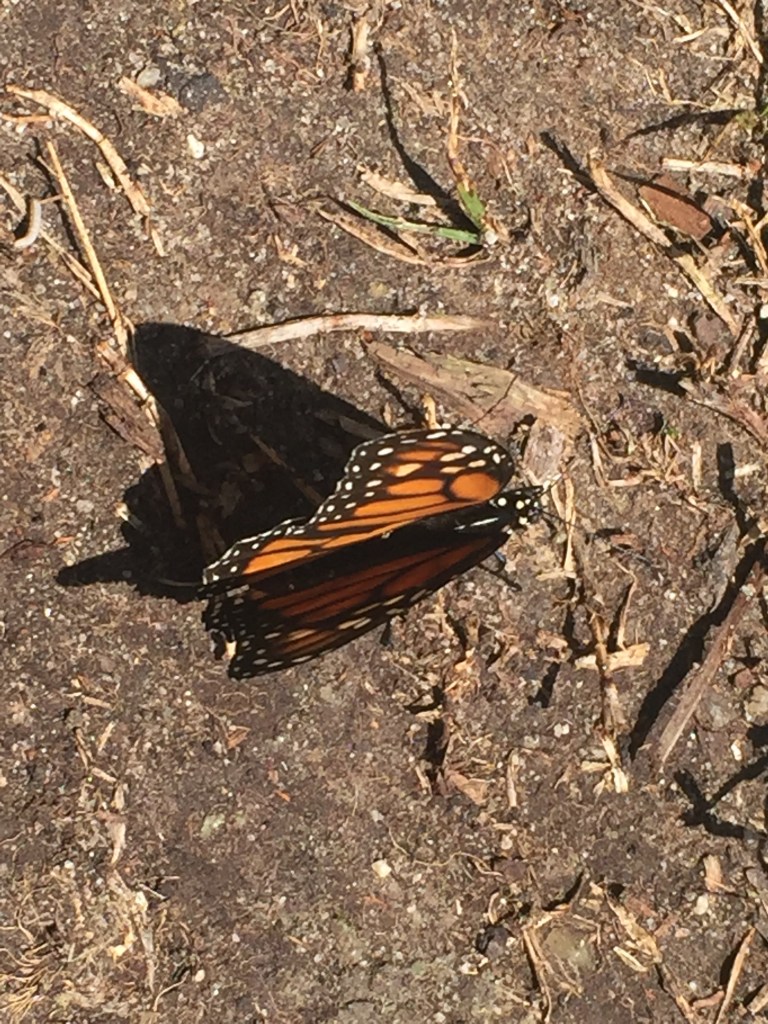
A pretty orange and black spotted Monarch butterfly began to follow the spray of water from the hose, and she and I had a little chat.
Well, she listened while I talked to her.
“Hey, pretty girl, are you thirsty?”
By way of response, she floated to the ground and folded up her wings like a beautiful fan. Or like pressed together hands in namaste.
“Are you OK?”“Are you injured anywhere?” At the same time I wondered how in the world I could take a butterfly to the emergency vet.
I turned off the water and crouched down to get a closer look.
“What do you need? Are you having a little rest?”
Again, no response, but I inched closer and slowly sat down, hardly daring to breathe.
We stayed that way for a moment or two, each of us motionless.
“Can I touch you?” I asked. “I won’t hurt your wings, I promise.”
(By the way, the powder on the wings of a butterfly or moth is actually tiny scales made from modified hairs, and it doesn’t actually damage them if they’re touched.)
Ever so tentatively I reached out my right hand and ever so gently touched the charcoal gray folded up underside of her fan wings, and then I simply sat still as a statue.
After a few seconds in which time stopped, she opened her wings once, twice, three times, and then lifted off the ground and fluttered away.
Thank you” I whispered, and held my heart to keep the love from spilling out.
It was nothing short of an amazing encounter, don’t you agree? One of my most enchanting and enchanted days.
While watching Mueller testify and now during a break in the proceedings, I think I’ll finish a post I started last week about a TV show I am SO beyond excited to recommend to you!
And BTW, I think Jimmy Stewart could have portrayed Robert Mueller to perfection, but prolly lots of you don’t even know who the great actor, James Stewart, even is, so my suggestion is to Google him.
I’m not much of a binge watcher; in fact, I don’t watch a lot of TV at all, but I loved The Marvelous Mrs. Maisel and that’s about the extent of it. Oh, and Gossip Girl has a special place in my heart. Blair and Chuck forever!
A long time ago, I caught an episode of Scott & Bailey on our local PBS station and it piqued my interest. When I was bored and searching for something to watch on Amazon Prime besides my crush Paul Hollywood on the Great British Bake Off, S&B popped up, and I thought I’d start from the beginning.
I confess that I couldn’t get enough! It’s gritty, it’s real, and I was absolutely HOOKED.
I thought I’d ration myself to one episode a day to make it last longer, but that self control flew out the window almost immediately. Then I said to myself, “Self, you can watch two in a row, but that’s IT, I mean it.”
Well, that didn’t work either. I kept bargaining with myself until I lost all rational thought and binged the entire five seasons, knowing that when it eventually ended, I would suffer REAL pain and feel abandoned by these characters I’d come to identify with and LOVE. Yes, I mean that. I don’t use that word lightly, nor do I take those feelings lightly. I LOVE Rachel and Janet.
They’re two strong women whose lives tended to be screwed up and messy at times, but they PERSEVERED. They ENDURED. They never gave up. You haven’t lived until you study Detective Constable Janet Scott (brilliantly acted by Lesley Sharp) as she interrogates each and every criminal. From her Madonna-like smile to her soft and measured voice, she asks every question with pristine diction and straightforward dedication to solving a crime, often with a full confession. She’s the embodiment of speaking authentically with truth and conviction.(Ha ha, a double entendre.)
Both Rachel (Suranne Jones) and Janet are Detective Constables in the Major Incident Team of the Manchester Metropolitan Police Service, with the team headed by DCI Gill Murray (Amelia Bullmore), whose character is loosely based on Diane Taylor, a former Detective Inspector from Greater Manchester Police. Yes, it’s a Briit show.
Scott & Bailey was an original idea by Suranne Jones and Sally Lindsay. Jones felt that there needed to be more roles for women “that weren’t wife-of, sidekick-to, mother-of, mistress-to, etc.”[4] Jones remarked, “We were just chatting away over a bottle of wine in a pub” when the idea came to fruition. [Sidebar: see how much can be accomplished with enough vino??]
The creators paired up with Diane Taylor to create the program. The involvement of Diane Taylor as a consultant producer is credited with maintaining Scott & Bailey‘s “rigorous authenticity”. From Taylor’s perspective, television police procedures were often filled with not only technical inaccuracies, but what she felt were inaccuracies of how officers behaved, saying: “that’s what really irritates me in other dramas – detectives crying over dead bodies and getting drunk senseless. You’d last about two weeks”.She said, of her time as a police officer in comparison to portrayals on television, that “reality is much more interesting. I could pull a thousand cases out of my head people would say would never happen. People need drama because they would not believe the reality”. (Background curated from Wiki)
I’ve shared my obsesh with all my friends and a few are as captivated as I was and totally binged. But now it’s over and I went through cold turkey withdrawals, I need something else, cos I’m jonesin’ for a fix.
For me, the only downside of this amazing show was the outrageous number of smokers. At times, the smoke was so heavy, it almost gave me a virtual asthma attack. I only hope for their health’s sake that there’s a lot less lung damage in the real Manchester Police Department.
Watch it and let me know if you love Scott & Bailey as much as I do! And also share some of your fave binge-worthy TV shows.
I went to THE MOST AMAZING spin class this morning.
Upon waking at 6ish, I wasn’t all that keen to go to my regular weight lifting class ‘cos it’s sorta boring and not nearly enough cardio to burn off wine calories, so I checked the schedule, saw that one of my faves was the spin instructor, packed my shiny pink and black bike shoes, and off I went.
For this class, she had compiled a song list of 60s hits for the hour.
I’m talking classic Beatles, Hendrix and the Beach Boys, Rolling Stones, the Supremes, the Who, Sam and Dave, Dylan. The ride started off with Dion and Runaround Sue.
There was so much high energy in the room that it was contagious. Beyond vibrational! No one wanted the hour to end.
Changed the tone of my whole day into joy and I’m exhausted. So good.
If I took a poll, I surmise that most females will agree that there’s trial and error in learning how to walk in high heels. A learning curve. I realize that not everyone likes to wear stilettos; some may even feel that it’s another indication of how we women are oppressed and repressed, and I can certainly understand that point of view.
But not for me.
I swear, and my mom would agree if she were still alive, that I begged and begged for my first set of heels when I was three years old.
Santa Claus brought them for me (we celebrate Christmas AND Hannukah lol) The little high heels arrived as a set with a faux mink stole and tiara, but it was the shoes(OK, I admit it, and the tiara) that became as natural to my persona as my curly hair and snarky repartee.
Yes, I was an extreme girly girl. I mean, did you ever stop to think of why I refer to myself as Princess Rosebud? My dad first started calling me Rosebud cos it’s similar to my IRL name, and after the tiara became part of my daily fashion accessories, it was only a matter of time before I became royalty. I’d always felt that I was born into the wrong family and this was all the proof I needed.
I really wish I hadn’t lost the tiara…I could still rock a sparkly rhinestone tiara, I know I could.
But here’s my dilemma.
I can walk for hours in heels and I don’t care if they hurt my feet, either.
But I can’t for the life of me, walk in flats. I’ve tried, I really have, but I don’t know what to do! It’s such a quandry.
I’ve practiced…but HOW? Do you shuffle? Kind of like shuffling bare feet through sand at the beach to avoid a jellyfish sting? Is it a heel/toe movement? Do you bend your knees? When? I just don’t get it at all. I feel very awkward in flats.
Even cute ones like the vegan Tory Burch’s. The Jimmy Choos are the worst. I mean, they’re super cute, but it’s impossible to figure out how to walk gracefully. It’s not a pretty sight, trust me. Even the less expensive ones don’t work right. They’re comfortable, that’s for sure, but I am definitely challenged. I keep buying more and more shoes in case I find the magic formula, but I haven’t found them yet.
There are many YouTube instructional videos–“How to Watch in Heels and Stilettos” –but nothing for flats. I guess I’ll have to only wear heels or suffer the embarrassment of lumbering and shambling down the street.
This is the first color video of my nightly visitor. It was about 6:00 a.m. Isn’t he absolutely gorgeous?
In this black and white video, there are now two coyotes and since we know they mate for life, I have my fingers crossed waiting to see if they bring me any grandchildren! Wouldn’t that be amazing?
Some coyote facts:
Urban coyotes can create territories out of a patchwork of parks and green spaces.
While many urban coyotes make their homes in large parks or forest
preserves, this isn’t the case in all situations. Urban coyotes don’t need one
cohesive piece of green space like a single park or a single golf course to
call home. They manage to make do with surprisingly small patches of hunt-able
land woven together as a whole territory.
Coyotes can thrive in a small territory if there is enough food
and shelter, but if there isn’t — such as in sections of a city with only a
handful of small parks, soccer fields, green spaces and the like — then they
will expand the size of their territory to include enough places to hunt for
food to sustain themselves. The size of an urban coyote’s range is dependent on
the abundance of food and can be anywhere from two square miles to ten square
miles or more. Urban coyotes tend to have smaller territory sizes than rural
coyotes because there is so much more food packed into smaller areas, even if
that area has only a few scattered parks.
Studies have shown that coyotes much prefer forested areas and large parks where they can steer clear of humans, and they try to avoid residential areas. But when that’s not available, they still figure out how to make do. In a large-scale study of urban coyotes by the Urban Coyote Research Program, it was discovered that “29 percent of collared coyotes have home ranges composed of less than 10 percent of natural land and 8 percent having no measurable patches of natural land within their home ranges.”
Urban coyotes may live in family packs or on their own at
different points in their lives.
It’s common to see a single coyote hunting or traveling on its
own, but that doesn’t necessarily mean it is alone. Coyotes are highly social
animals and this didn’t change when they entered the urban ecosystem. Coyotes
may live as part of a pack, which usually consists of an alpha male and female,
perhaps one or two of their offspring from previous seasons (known as a
“helper”) and their current litter of pups. The pack may also welcome in a
solitary traveler if their territory can support another member. Packs living
in sizable protected areas can have as many as five or six adults in addition
to that season’s pups.
However, a coyote may also spend part of its life on its own,
known as a solitary coyote. This is common when young coyotes disperse from
their pack and go in search of their own territory, a new pack to join, or a
mate with whom to start their own pack. A coyote may also spend a stretch of
time as a loner if it was an alpha in a pack but lost its mate. According to
Urban Coyote Research Program, between a third and half of coyotes under study
are solitary coyotes, and they are usually youngsters between six months and
two years old.
Because coyotes hunt and
travel alone or in pairs, it is often thought that they don’t form packs. The
study of urban coyotes has helped to correct this misconception and has
revealed much about the social lives of coyotes.
Urban coyotes mate for life and are monogamous.
Speaking of mates, coyotes mate for life and are 100 percent
faithful to that mate. A 2012 study published in the Journal of Mammalogy found
that “among 18 litters comprising 96 offspring, [researchers] found no evidence
of polygamy, and detected a single instance of a double litter (pups from
different parents sharing the same den).”
This loyalty holds even when there are other coyotes in adjacent
territories and plenty of opportunity for cheating. But coyote pairs stay
faithful and faithful for life. Some of the pairs followed by the research team
were together for as long as 10 years, only moving on when one mate died.
The researchers believe that this monogamy plays an important role
in the success of urban coyotes. Because a female can adjust her litter size
based on the availability of food and other factors, she can have larger
litters of pups in a city where there is a buffet of rodents, reptiles, fruits,
vegetables and so much else in a relatively small area. She also has a
dedicated mate to help her feed and raise the pups, so these large litters have
a higher survival rate, resulting in more coyotes reaching an age to disperse
to other areas of a city.
Even when food is less
abundant or there is territory pressure from other coyotes, the couple stays
together year after year. Coyotes may be opportunistic about matters of food
and shelter, but not when it comes to love.
Urban coyotes do not feast on pets and garbage; they typically stick to a natural diet.
Due to sensationalistic reporting, many urban residents think all
coyotes are out to eat their dog or cat at the first opportunity, or that
they’re dumpster divers of the first degree. On the contrary, studies have
shown that urban coyotes stick mainly to a natural diet.
Coyotes are opportunistic omnivores and will eat fruits and
vegetables along with animal prey. A study by Urban Coyote Research
Program analyzed over 1,400 scats and found that “the most common food items
were small rodents (42%), fruit (23%), deer (22%), and rabbit (18%).” Only
about 2 percent of the scats had human garbage and just 1.3 percent showed
evidence of cats. “Apparently, the majority of coyotes in our study area do
not, in fact, rely on pets or garbage for their diets,” say the researchers.
This aligns logically with urban coyotes’ preference of sticking
to parks, preserves, cemeteries, and other out-of-the-way areas as much as
possible. The food available in these locations is rodents, reptiles, fallen
fruit and other food items that are part of a natural diet.
Coyotes of course take feral cats or the occasional domestic cat
that has been left outdoors, and there is certainly evidence that coyotes that
have become habituated and overly bold will go after small dogs. However pets
are not primary prey for them, not by a long shot.
Urban coyotes often switch from naturally diurnal and
crepuscular activity to nocturnal activity.
When urban residents see coyotes “in broad daylight” it is often
assumed that the coyote has grown overly bold or is ill in some way. Actually,
it is perfectly normal for a coyote to be out during the day, as this is their
natural time for hunting.
Urban coyotes have made a behavior change to avoid humans,
switching from being active at dawn and dusk or during daylight hours, to being
mostly active at night. This strategy lowers their risk of encountering a
species of which they are naturally afraid while still hunting in an urban
territory.
However, if a coyote needs
to be out during the day to hunt or to get from one place to another, there
isn’t necessarily anything wrong or odd about the coyote’s behavior. In fact,
in the spring and summer when raising their pups, coyotes need to find more
food and so may be more active during the day and thus spotted more often.
Urban residents frequently misinterpret daytime sightings as a rise in the
urban coyote population or that the coyote could be rabid, neither of which are
usually true.
Urban coyotes help control the populations of other problematic urban wildlife like rodents.
It’s so easy to think of urban places as home to humans, pigeons,
crows and raccoons, and that’s about it. But our cities are increasingly home
to an ever more diverse array of wildlife species rats have been an issue in
cities ever since cities were invented. Coyotes play a role in limiting the
populations of these species and more, helping to keep a balance and increase
biodiversity in urban ecosystems.
Rodents are the primary food source for coyotes in rural and urban
areas alike, and studies have shown an increase in the rodent population in
areas where coyotes are removed.
The easiest way for city residents to avoid
negative interactions with coyotes is to avoid feeding them, either
accidentally or on purpose, and otherwise habituating them to humans.
When coyotes become overly bold or aggressive, and in the rare
instances when coyotes have bitten humans, it usually is discovered that they were
being fed.
Coyotes have a natural fear of humans, and like most wildlife,
will start to lose that fear and even become aggressive if they are being fed.
This is the reason wildlife managers warn people to never feed wildlife, and
there is the saying, “A fed coyote is a dead coyote.”
Once a coyote loses its fear, it is likely to become a problem
animal and that means animal control will have little choice but to lethally
remove it.
Feeding coyotes sometimes happens on purpose, but it can also be
done accidentally when people leave pet food on their porches intending it for
cats or dogs, when they leave scattered seeds under the bird feeder, or even
when they leave fallen fruit or compost in their yards.
Educating the public on the
importance of not feeding wildlife and removing any food sources, as well as
educating them on safe and humane coyote hazing strategies to maintain coyotes’
fear of humans, is the best way a city can avoid negative interactions and
instead enjoy quiet coexistence.
Trapping and killing or relocating urban coyotes does not
reduce the overall population of coyotes.
A common reaction from urban and suburban residents when they
learn coyotes are living in their area is to ask for the removal of the
coyotes, either through lethal means or by trapping and relocating them.
However, animal control officers have learned through a lot of experience that
this is not only a lot harder to do than it sounds, but it does nothing to
reduce the number of coyotes living in an area. In fact, it has the opposite
effect.
Coyotes are territorial and keep other coyotes out of their home range.
The larger the territory of a coyote pack, the fewer coyotes are present
overall. Removing coyotes from an area opens that location up for new coyotes
to come in and claim it as their own (and there will always be more coyotes
coming in to fill a void), often resulting in a short-term increase in coyotes
as the territory lines are redrawn by the newcomers. Additionally, when there
is less pressure from neighboring coyotes and more food available, female
coyotes will have larger litters of pups, again creating a short-term increase
in the number of coyotes in that area.
There are other problems with trapping coyotes. As the Humane
Society points out, “The most common devices used to capture coyotes are
leg-hold traps and neck snares. Both can cause severe injuries, pain, and
suffering. Leg-hold traps are not only cruel and inhumane for coyotes, but may
also injure other wildlife, pets, or even children. Non-target wild
animals are also caught in traps, and many sustain injuries so severe that
they die or must be killed.”
If a city wants to limit or reduce the number of urban coyotes
living there, the easiest thing to do is allow existing coyotes to work out
their own territories, naturally stabilizing the coyote population. There will
never be more coyotes in an ecosystem than that ecosystem can support, so
(despite what some may think) a city can never become “overpopulated” or
“infested” with coyotes.
We can take extra steps to make an area less appealing to coyotes by removing all extra food sources – from fallen fruit or ripe vegetables from backyard gardens to pet food left on back porches – and removing sources of water. The fewer resources available, the larger the territories need to be to support the resident coyotes, and the fewer coyotes there are overall.
Coyotes are here to stay and removing them is not and will never be an option. Our one and only path forward is coexistence.https://urbancoyoteinitiative.com
Learn more about coyotes and support the great work of Projectcoyote.com
Sorry, no pics to share ‘cos the video is grainy and black and white, but these were my three visitors last night at Casa de Enchanted Seashells.
In that order. The first video shows a cat sitting on the steps, looks to be dark gray and I’ve seen him before. The next is of a very large rat running down the steps, and the third one is a bat flying directly across the camera lens.
It sounds like it could be the start of a joke…”A cat, a rat, and a bat walked into a bar…” (Although I have no idea what kind of a punchline to write. Maybe Mrs. Maisel or Suzie could help.)
Or a children’s book, “The Tall Tale (Tail) of the Cat, the Rat, and the Bat”,
Or as Theo would say, “Grandma, that rhymes!”
Since I don’t have any decent pics of last night’s guests, here’s our beloved Bandit who ruled us all for thirteen years before she died of chronic renal failure.
The bat is from one of my favorite books, Stellaluna, by (my friend) Janell Cannon.
And the rat, well, this gif says it all…
(There were no coyotes this time, but I’m happy to report that I’ve been seeing TWO beautiful creatures in the garden, which is awesome as coyotes mate for life. I would be even happier if one day they brought some little ones to visit. It would be a dream come true. I could be their grandma, too!)










 Enchanted Seashells | Princess Rosebud