Time As a Construct

Lately, I’ve been thinking about T-I-M-E. Time flies. I hate to be late; I like to be ON TIME. Does time really exist at all or have we been brainwashed to think iit does?

Too much thinking about time as ephemeral makes me anxious. Too much thinking about anything does the same thing. My non-logical mind has determined that TIME itself isn’t the issue; THINKING about it IS and it makes my brain melt, just like Dali’s clocks.

Salvador Dalí

 “Time doesn’t exist, clocks exist. Time is just an agreed upon construct.”
— David Foster Wallace

“It takes just one unattended moment for an hour to pass.”
― Sherod Santos, Square Inch Hours: Poems

Santos was born in South Carolina, graduated from San Diego State University, and studied at the University of California, Irvine. I never met him when I attended SDSU, but I knew ABOUT him; all of us who studied creative writing and poetry knew about “Rod” Santos and W.S. Merwin and Glover Davis, who was actually my professor.

David Foster Wallace was an acclaimed American writer known for his fiction, nonfiction, and critical essays that explored the complexities of consciousness, irony, and the human condition. Wallace wrote the novel Infinite Jest.

“The Persistence of Memory” is an iconic 1931 surrealist oil painting by Salvador Dalí, famous for its “melting” clocks draped over a desolate, dream-like landscape inspired by his Catalonian home. The painting uses a paranoiac-critical method to explore the subconscious, with the distorted clocks symbolizing the fluidity and subjectivity of time, influenced by Freudian psychology and potentially Einstein’s theory of relativity. From Google.

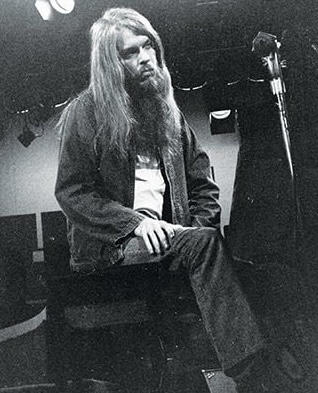
Could Leon Russell’s version of As Time Goes By be the best ever? I think so…mature Leon was awesome, too.

A Grandma’s Mantra: “Read a book…” 📚

Back when the original Angel Boy began to walk and talk, my default response when the “I’m bored, I have nothing to do” complaints started, has always been, “Go read a book.”

Now I do the same thing to the grandkids, especially Angel Boy 2.0 who has become a wonderful reader.

Recently we were in a baseball card shop and he was TAKING LITERALLY FOREVER to look at cards and decide which ones he wanted to buy and figure out how much of HIS money he was willing to spend and how much he could get from me. That scenario brought up happy deja vu memories of his parsimonious dad at the same age. The thrifty apple didn’t fall too far from THAT tree, haha.

I walked outside, I walked back in, I pulled on his shirt and whined, “Are you almost done? I’M SO BORED!!”

Without skipping a beat, he said, “Hey Grandma, why don’t you go read a book!

And then he laughed and I laughed but I got the last laugh because that proved that he had really listened to me. A total win for Grandma!

I gotta confess though, I was SO BORED in that card shop, every minute seemed like an hour. Memories.

It’s really funny, because the original AB is NEVER without a book and leveraged that love of reading into a Yale PhD, writing his own book (published by a prestigious house), and tenure at a major uni, so I guess my annoying mantra helped guide his path to success.

Grandma’s Mantra:
📚 If you’re bored, read a book!
📚 If you have a minute before school starts, read a book!
📚 If you’re waiting for a doctor’s appointment, read a book!
📚 If you can’t think of anything productive to do, read a book!

Try my method; it really works!

📚

Book Review | Leon Russell: The Master of Space and Time’s Journey Through Rock & Roll History

Written by Bill Janovitz, this nearly 600 page New York Times bestselling biography of Leon Russell, Leon Russell: The Master of Space and Time’s Journey Through Rock & Roll History was a gift from the original Angel Boy.

I don’t think he (or the Angel Kids) quite understand my passionate interest (read obsession) with the one and only Claude Russell Bridges (Leon Russell), but he’s supportive in his own way, although he wouldn’t play “A Song For You” on our piano because he said it had been too long since he tickled the ivories and it might have looked simple to play, but it was a very complex piece of music and he didn’t feel he could do it justice. Or at least that’s the excuse he gave me.

So…this BOOK. It’s comprehensive, it’s respectful, and it delves into areas of Leon’s life that even I didn’t know. Yes, there’s some sex, drugs, and rock and roll, but the overarching theme of Leon’s life and music is LOVE.

The life path that took a child born with cerebral palsy during the Second World War, who overcame his physical challenges to become a classically trained pianist — and was catapulted to the top of the music scene–is inspirational. He was and always will be the Master of Space and Time — a visionary.

One of my favorite quotes from the book is from his friend and fellow musician, Ann Bell:

“One night everybody had gone to bed, and it was about four o’clock in the morning. All of a sudden, I woke up; I could hear him playing. It was a classical piece; he’s in the living room, where he had a piano, and he’s playing this piece that’s forty minutes long, from memory. There was no sheet music. I sat down on the bench, and I didn’t say a word. I just thought, ‘They didn’t understand the depth of his well.’ And when he was done, I was crying. He goes, ‘Girl, what’s wrong witchoo?'”

From the Rock & Roll Hall of Fame:
The definitive New York Times bestselling biography of legendary musician, composer, and performer Leon Russell, who profoudly influenced George Harrison, the Rolling Stones, Eric Clapton, Elton John, Willie Nelson, Tom Petty, and the world of music as a whole. 

Leon Russell is an icon, but somehow is still an underappreciated artist. He is spoken of in tones reserved not just for the most talented musicians, but also for the most complex and fascinating. His career is like a roadmap of music history, often intersecting with rock royalty like Bob Dylan, the Stones, and the Beatles. He started in the Fifties as a teenager touring with Jerry Lee Lewis, going on to play piano on records by such giants as Frank Sinatra, The Beach Boys, and Phil Spector, and on hundreds of classic songs with major recording artists. Leon was Elton John’s idol, and Elton inducted him into the Rock and Roll Hall of Fame in 2011. Leon also gets credit for altering Willie Nelson’s career, giving us the long-haired, pot-friendly Willie we all know and love today.

In his prime, Leon filled stadiums on solo tours, and was an organizer/performer on both Joe Cocker’s revolutionary Mad Dogs and Englishmen tour and George Harrison’s Concert for Bangladesh. Leon also founded Shelter Records in 1969 with producer Denny Cordell, discovering and releasing the debut albums of Tom Petty, the Gap Band, Phoebe Snow, and J.J. Cale. Leon always assembled wildly diverse bands and performances, fostering creative and free atmospheres for musicians to live and work together. He brazenly challenged musical and social barriers. However, Russell also struggled with his demons, including substance abuse, severe depression, and a crippling stage fright that wreaked havoc on his psyche over the long haul and at times seemed to will himself into obscurity. Now, acclaimed author and founding member of Buffalo Tom, Bill Janovitz shines the spotlight on one of the most important music makers of the twentieth century.

I give this book all the stars ⭐⭐⭐⭐⭐⭐ and tophats 🎩🎩🎩🎩🎩🎩🎩🎩

In my opinion, if you don’t know who Leon Russell was, you should, and reading Janovitz’s biography is a good way to learn about him and to be amazed at his musical genius. You’ll understand why he’s referred to as the Master of Space and Time.

Leon Russell and the GAP band on The Midnight Special with Wolfman Jack:

What I’m Reading: The Bowl of Light

Aloha and mahalo…

Year’s end often brings reflection and this book about light is a gratifying metaphor for ending 2022 and starting fresh with a full bowl of love and light in 2023.

The symbol of a bowl of light holds a relevant message to help us explore our limitations, how we can commit to releasing them, and learn to live in harmony.

I wrote about this book in Giving Thanks and since then, I received it as a thoughtful gift and I’m enjoying it so much that I wanted to share it with everyone.

In 1996, a revered Hawaiian elder befriended an American anthropologist, and from their rare and intimate rapport, something miraculous emerged. Through the words and teachings of the kahuna wisdom-keeper Hale Makua, Dr. Wesselman was gifted with an enhanced perspective into the sacred knowledge of ancient Hawaii.

Author Hank Wesselman, PhD, is a paleoanthropologist and shamanic teacher who has worked with noted anthropologists investigating the mysteries of human origins in Africa.

Before his passing, elder Makua encouraged Dr. Wesselman to convey much of what had passed between them to the wider world, giving him permission to share his spiritual knowledge, including:

The Bowl of Light—how we can restore our natural divine radiance
• The three directives of the spiritual warrior—love with humility, live with reverence, and know with self-discipline
• Rituals for communing with nature, receiving wisdom from the spirit world, purifying our consciousness, and more
• The Ancestral Grand Plan—exploring the path our ancestors set in motion millennia ago, and how the Plan is playing out across the world today

***

Along with the the ancient Hawaiian practice of Ho’oponopono about forgiveness, there’s a lot of wisdom we can gain from native Hawaiian culture.

“I’m sorry, Please forgive me, Thank you, I love you.”

***

I started to research more of the island’s ancestral traditions and discovered the Huna Principles from Kauai, one of the most beautiful places on this planet.

Ho’ihi . . . Respect

The seven principles of Huna were passed down as part of another Hawaiian family’s oral tradition – the Kahili family of Kauai and these have been presented in a contemporary form by Serge Kahili King. The story of the Bowl of Light provides an illustration of these Huna principles in action as follows:

Ike: Awareness

The story teaches us to become aware of how the choices we make can affect us for better or worse. It is valuable to become aware of the extent that your own bowl is comprised of stones or light. Awareness provides the starting point for change.

Kala: Freedom

We can limit and constrain ourselves to such a point that it is as though we stop growing, we get stuck. When we experience, and hang onto, emotions such as fear, anger and jealousy, it is like we are dropping another stone into our bowl which means we experience less light. We can also free ourselves from such limitations and flourish. We have the ability to release limitations.

Makia: Focus

We choose where to focus- either towards empowering feelings and behaviours or away from feelings and behaviours that disempower us. The choice is ours in any given moment.

Manawa: Presence

The light is always there, even if at times it seems to be fully obscured by stones. If we so choose, change can be quick and it is never too late to change. We can simply turn the bowl upside down and let go of the all the stones and make room for the light.

Aloha: Love

Love and heart-centered practices increase our strength and well-being. To love is to be happy with – we experience light to the extent that we focus on aloha – light and stone cannot occupy the same space. To the extent that we have light in our bowl, we are connected to our true nature and spirit. We are all connected and our own individual light contributes to lighting the world for everyone.

Mana: Power

We have the power to make changes in our life for the better. It is up to us to take responsibility and be the authority in our own life.

Pono: Effectiveness

The tale is a metaphor for living effectively. It reminds us how we can be pono – in a state of harmony with oneself, others, nature and life itself.

Pete Dalton ©2020.  This article first appeared on Aloha International.
Looking For a Great Read? Here’s One: The Lost Girls of Paris

If you’re searching for something to read, here’s a suggestion…

From Pam Jenoff, author of The Orphan’s Tale, The Lost Girls of Paris is a remarkable yet tragic story of friendship and resolute spirit by a ring of female spies trained in Britain during World War II.

Way more brave than I could ever hope to become, this book is vividly rendered and inspired by true events. Jenoff shines a light on the incredible heroics of these spies and weaves a mesmerizing tale of courage, sisterhood, and the great strength of women to survive almost anything in the face of danger.

But really, who knows how we might answer the call to save our children from another Nazi-like regime, right? As we all aware, mama bears are tenacious and fierce!

The Best Books to Read This Summer

If you’re fascinated (like I am) about the what goes on behind the scenes in Hollywood with BIG DEALS and BIG MONEY, you will love these books.

I’m talking about the kind of book you can’t put down; the kind where you’re in limbo-time, in a trancelike state — and where you are so invested in the characters that you hope the book never ends — but you can’t wait to get to the last page to see how the author ties everything up — only to discover that there’s a sequel to the first book.

And it’s just as awesome.

If you’ve been following my blog for a while, you know that I live an Enchanted Life on the edge of fantasy. Reality for me is, at best, a road not taken.

Although reality can and does rear its ugly head at odd and unexpected moments, that’s the best time for a well-written chick lit novel or two to transport me on a magic carpet ride back to the Land of Princess Rosebud and all that is sparkly.

According to Wikipedia, Chick lit is genre fiction which addresses issues of modern womanhood, often humorously and lightheartedly.

Although this is definitely chick lit, it’s so well written and the characters are so well fleshed out and alive, you’ll be as pleasantly surprised as I was.

(My Ph.D. DIL was as obsessed as I was, so it’s not just me.)

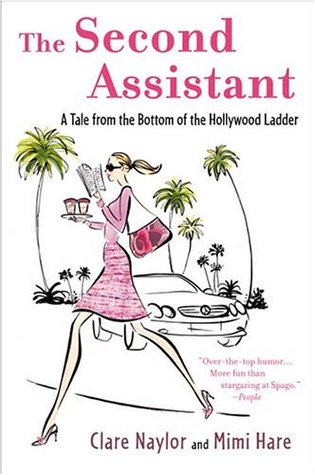
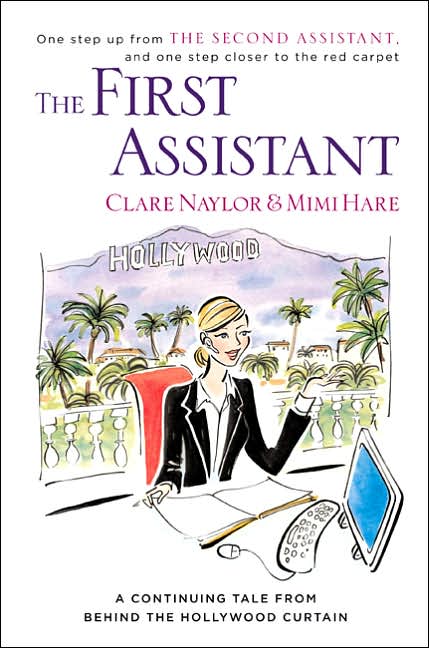
Clare Naylor and Mimi Hare met and became a fantastic writing team. Clare is the author of Love: A User’s Guide and Catching Alice.

Mimi was the director of development at Gracie Films, the company responsible for Jerry Maguire and As Good As It Gets.

They draw upon their own real life experiences for a riveting behind-the-scenes look at what goes on in Hollywood.

I loved reading these novels and I hope you will enjoy them too. Even though they came out a few years ago, it’s still fresh and relevant.

Read The Second Assistant FIRST:

thesecondassistant

Read The First Assistant NEXT:

First Assstant