Meine Wanderungen (My Wandering in Germany)

Before there were the Angels 2.0, there was the brilliant original version. As I’ve often said, I wasn’t a helicopter mom, I was a drone mom, hovering ever so near…

During his junior year at university, my son signed up for a three-month program in Germany to perfect his language skills.

We discussed it and agreed the better idea would be to take the full year abroad to completely immerse himself in the language and culture. (And that’s totally NOT what a drone mom would do, by the way…)

He stayed in a dorm and went to the UCSD program partner at University of Goettingen.

I visited him for about a week in February of that year. We spent a lot of time walking and and took a couple train rides to the Harz region, including Goslar, a historic town in Lower Saxony, Germany,  known for its medieval old town and half-timbered houses. We took the Harzer Schmalspurbahnen, Germany’s famous narrow-gauge steam railway. (That’s another story.)

I brought back some of what that area is known for, a bewitching elixer called Harzgeist. It’s similar to Jagermeister, but more herby and spicy and incredibly delicious. I wish I had some now!

One day, my son said it would be fun to take a hike to visit a nearby castle. He assured me that it was about four hours round-trip, and I believed him because we could see the castle off in the distance.

Somehow we ended up walking through what looked to be a dense forest of mature pine trees. Were we lost? I’m still not sure. When we finally found our way back to the road, I looked up and saw, off in the distance, a sky full of ominous looking clouds.

“Hey, those look like snow clouds to me. How far are we from the castle?”

I asked the question because we had been walking non stop for a couple hours and we seemed to be no closer to the castle then when we first started out.

“It’s not far, let’s keep going.”

“Are you sure?”

With a sense of unease and foreboding, I had no choice but to follow his lead. Not only did I not know where I was, I couldn’t speak German at all, and my son was fluent.

A few minutes later, I insisted we stop and eat the lunch I had packed. I spotted a bench and we sat down.

I looked up and said, “I told you so” as the first giant snowflakes came down. It didn’t take long before the wind picked up and the fluffy snowflakes turned from a gentle dusting to a full on, blinding blizzard.

In just a few minutes, we were covered in snow. The bench was covered in snow, inches of the white stuff. I refused to walk any further to this non-existent mirage of a castle, and we headed back to Goettingen. We could barely see the road and I hesitatingly trusted my son that he knew where we were going.

I took a picture of us so we’d never forget, and every once in a while I’ll remind him of the time he should have listened to me when I told him there was an approaching storm.

By the way, that castle (can’t remember the name) was actually more than TWENTY MILES away, and there’s no way in the world we could have day hiked there. Later, my son laughingly told me he biked there and it was awesome…uh, thanks a LOT, Angel Boy!

the little moments

I captured the final glimpse of the sunset with my son still out there surfing. Can life get any better? I think not. #grateful

And, one day
We shall look back and see
It was always those little moments
That mattered the most

(A little poem written by Athey Thompson)

Nature’s Fractal Beauty

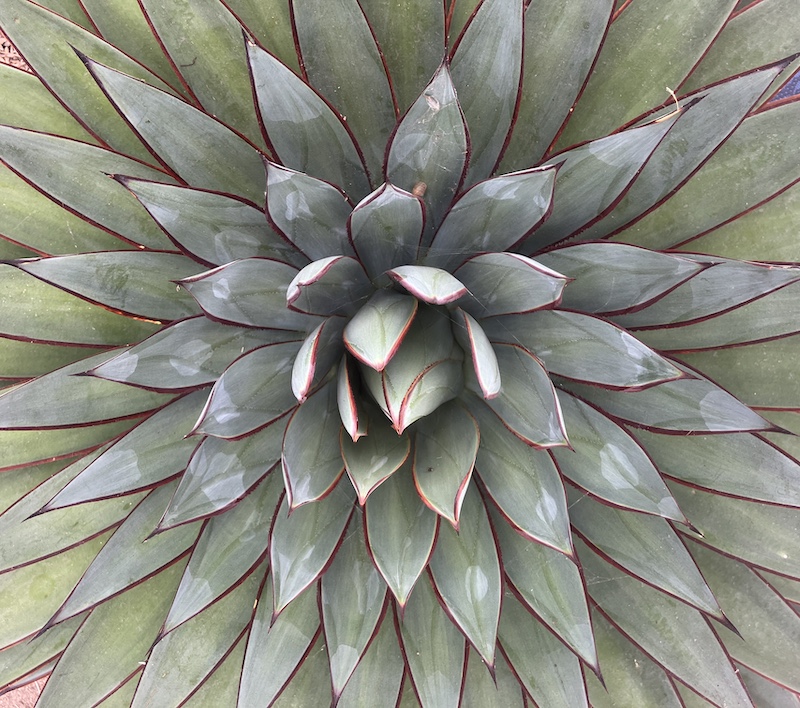
As I walked around the neighborhood I had to snap a pic of this mndblowing geometric perfection.

Agave

Bright Star in Dark Times | A Lesson in Quiet Heroism

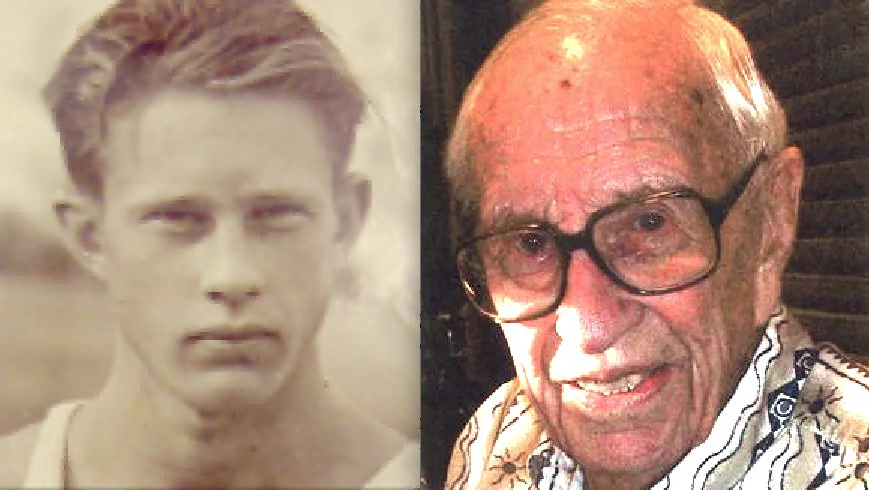
I think this should be taught in schools because I can’t believe I never heard about Robert Emmett Fletcher Jr. Have you?

Robert Emmett Fletcher Jr. was an American agricultural inspector who quit his job to manage fruit farms of Japanese families sent to internment camps during WW2.

Fletcher was born in San Francisco and grew up on a farm in Contra Costa County east of San Francisco. He attended the what would become the University of California at Davis, graduating with an agriculture degree in 1933. He managed a peach orchard and subsequently worked as a state and county agricultural inspector, in which capacity he got to know Japanese American farmers throughout the state.

Upon learning about the looming relocation of Japanese farmers in his area, Fletcher grew concerned. This led to the Tsukamoto family, who owned a grape ranch in Florin near Sacramento, proposing that he take care of their farm while they were away.

They offered him their home and all net profits from the crops (though Fletcher would only take half) after covering farming costs, mortgages, and taxes.

Two other families, the Okamotos and Nittas, also proposed similar arrangements.

Despite deep anti-Japanese sentiment — including a bullet fired into the Tsukamoto barn, Fletcher continued to work. When the families returned home in the fall of 1945, their farms and homes were intact—the Tsukamotos’ home had even been cleaned by Fletcher’s wife Teresa—and half of the profits were waiting for them.

His inspirational story is recounted in history books, including “We the People: A Story of Internment in America” by Elizabeth Pinkerton and Mary Tsukamoto, whose farm he saved.

Fletcher died at the age of 101 in 2013.

Image

This is the face of a quiet hero.

Word of the Day: Nemophilist

This is such a great word!

Nemophilist: One who is fond of forest or forest scenery; a haunter of the woods.

Photo by veeterzy on Pexels.com

Oh yes, I’d love to haunt some woods right about now, with the stars above and the full moon to guide a late night hike…

There is a pleasure in the pathless woods,
There is a rapture on the lonely shore,
There is society, where none intrudes,
By the deep sea, and music in its roar:
I love not man the less, but Nature more,
From these our interviews, in which I steal
From all I may be, or have been before,
To mingle with the Universe, and feel
What I can ne'er express, yet cannot all conceal.
George Gordon Byron

(George Gordon was an English romantic poet and peer. He was one of the leading figures of the Romantic movement, and has been regarded as among the greatest of English poets. Wiki)

Sky Gazing

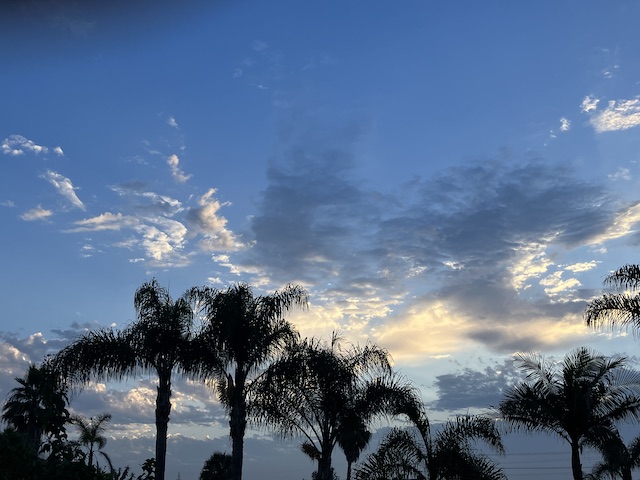
This is what I saw when I looked up early this morning, an unfiltered tropical sky. There’s a 40% chance of rain tomorrow, but I don’t really think it’ll happen.

Peaceful, serene, reminiscent of Hawaii.

The sunrise lights up the clouds like a painting.

Grateful…

Alpenglow

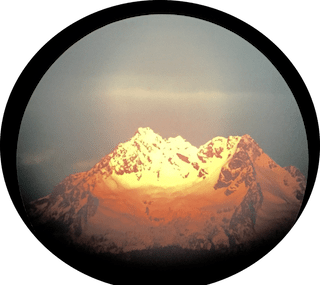
If we’re lucky enough to see it, alpenglow is the rosy light of the setting or rising sun on high mountains.

I don’t know how in the world my son was able to take this creative photo of alpenglow on the Olympic Mountains in Washington state, but it’s one of my favorite pics of his from a couple years ago.

Since we all seem to be stuck in a neverending heat wave, I thought this photo might help to cool us off; to evoke memories of crisp, snowy days.

How do YOU stay cool?

August is Full of Full Moons

A tale of two moons.

There’s a ball of light
close to the sea
on a calm clear night
the waves move free
what comes to mind
is a lovely dream
there’s joy to find
in this timeless scene… Richie Cho

There are two full moons in August!

The Sturgeon Moon is August 1 and the second full super moon, also called a Blue Moon — will be August 30.

A Blue Moon is not actually blue but referred to as a second full moon in a calendar month, an occurrence that happens every two to three years.

This full moon is associated with the goddess Hecate, who is connected with the elements of the moon; waxing and waning, cycles, and transformation. It’s a time to contemplate our inner transformation and to embrace the power of the moon.

The second full moon presents a time to practice gratitude for what you have, where you’ve come from, and the nature all around you.

I hope we have clear skies so I can see at least one of these beauties!

Unforgettable

As I was writing this post, I learned that we lost Sinead O'Connor, another one-of-a-kind talent. "Nothing Compares to You" can't be surpassed, whether she sang it or Prince did. There's so much that could be said about Sinead's tragic life, but I'll just honor her music and not dwell on the other stuff. 

Since Tony Bennett died last week, I’ve been listening to a lot of the old standards by the great ones: Sinatra and Fitzgerald and Nat King Cole.

I don’t know how I missed the news, but I didn’t realize that Natalie Cole died several years ago.

Her voice was magical.

Natalie carried on her dad’s incredible legacy with an enormous gift of her own. She died at the age of sixty-five from idiopathic pulmonary arterial hypertension which led to heart failure after she received a kidney transplant in 2009.

I always loved this bittersweet duet. They’re both unforgettable.

One of Natalie’s top ten hits:

Unearthed Primitive Artifact Or…

Before I even begin my strange tale, I want to be sensitive to negative colloquialisms such as “‘Burying the hatchet’.

The use of this term trivializes the ancient peace-making ceremony in which two fighting nations symbolically buried or cached their weapons of war.

Offensive language like this is a result of centuries of violence and continues to perpetuate stereotypes that have real-life impacts on Native communities.

Indigenous Peoples and their cultural traditions are real and deserve respect. They are not historical artifacts, caricatures, or mascots. (radicalcopyeditor.com)

But I don’t know how else to describe what I just found in my garden…an actual buried hatchet.

Look at it!

It’s a joke from the Universe, right?

I have no idea how long it’s been there or how it became buried near a path that leads to some steps to the second level.

I can’t even figure out how, after all this time, it became UNburied enough for me to notice that bright blue handle.

So with deepest respect, I brushed away the dirt around the buried hatchet.

I’m not sure what to do next. Dig it up? Leave it there? Anyone care to hazard a guess about what it means?