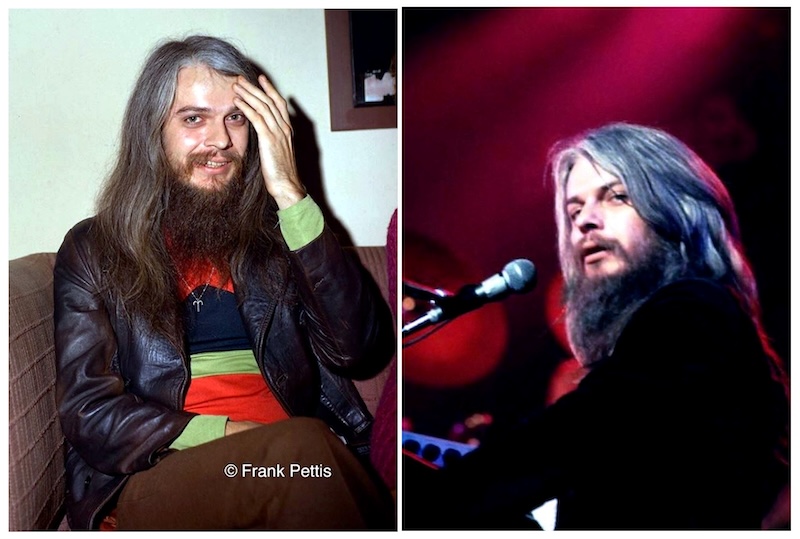
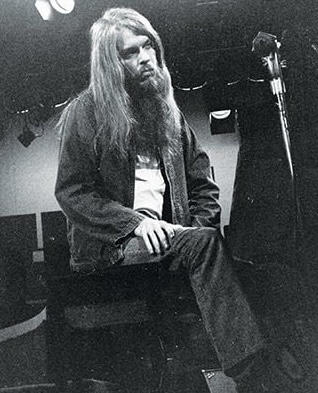
I love it when someone sends pictures of Leon that I hadn’t previously seen. These photos were taken in Detroit; the one on the left was at the Eastown Theater (1970) and on the right, Cobo Arena in 1972.
Ron Domilici Cobo Arena photo by Charlie Auringer.·Magic bag
One of the most truly amazing live performances took place at Leon’s Paradise Studios in 1979. All the musicians are incredible, but it features Leon’s long-time friend and colleague, JJ Cale. The sole female guitarist is Christine Lakeland Cale, JJ’s wife.
Grammy winner, legendary singer, songwriter, and musician J.J. Cale (born John Weldon Cale,1938–2013) was one of the originators of the distinctive Tulsa Sound. He is most famous for writing songs popularized by others, including Eric Clapton’s hits “Cocaine” and “After Midnight” and Lynyrd Skynyrd’s “Call Me the Breeze”. Known for his laid-back, blues-rock style, Cale also pioneered the use of drum machines and produced his own records, engineering his own distinctive sound. He was also one of Leon Russell’s engineers in the 1960s.
Check out Leon on the drums!
PS There’s an album/dvd of that session but I haven’t found it available for purchase. JJ. Cale featuring Leon Russell – In Session at the Paradise Studios, L.A. 1979 [DVD] If anybody has one, please let me know! I’d love to own it.
“Yeah, I know with the help of the good God, and an artificially induced religious experience, I think it’s gonna be all right.”
Photo credit, found on Pinterest
The Master of Space and Time’s churchy, rolling piano and drawling vocals, his zealous evangelical outpouring of energy from the stage made his concerts, as Russell put it, “an artificially induced religious experience.”
Leon was offered an off-camera role in the film, “When You Comin’ Back, Red Ryder”, as Reverend Duane Hindley, a radio preacher broadcasting from Del Rio, Texas.
He’s heard in the scene with Peter Firth as Stephen “Red” Ryder and Audra Lindley (remember Three’s Company?) as Ceil Ryder, Red’s mother.
Leon later revealed he read that religious rant, (he wrote it), in the style of Asa A. (A.A.) Allen, a 1960s American Pentacostal evangelist known for his “Voice of Healing.”
Listen closely to hear Leon say, “Feel the power,” “count your blessings,” and “encounters with the Devil.”
I thought this was a pretty cool discovery about Leon Russell. He could have had another career as a fire and brimstone preacher.
I’d definitely attend the Church of Leon. I believe!
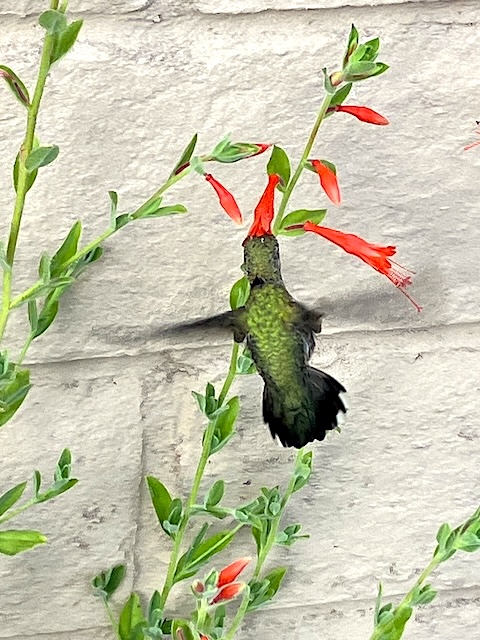
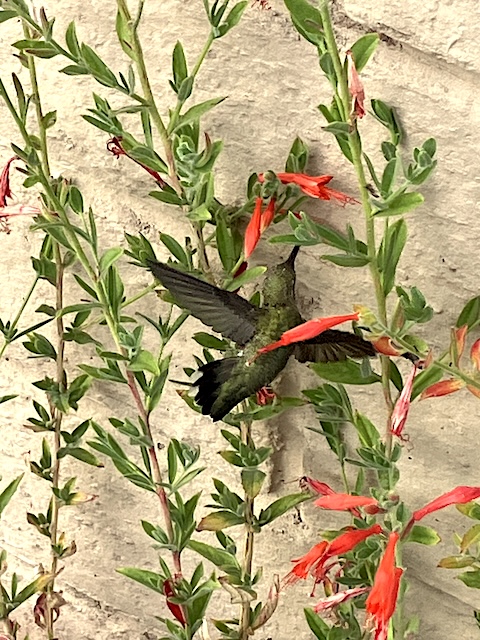
It’s not often that a hummingbird will be able to stop moving long enough to take a picture that’s not blurry, but yesterday I got lucky. This little one darted from one monkey flower to another and my phone did a pretty good job of capturing her colorful exuberance. The nectar must have been sweet and delicious.
Photo by Enchanted Seashells
“She’s little and I love her too much for words to say.” –Leon Russell
Photo by Enchanted Seashells
The lyrics to Hummingbird, another Leon Russell masterpiece, were swirling around in my head while I was snapping these pics. (This is Set 2 / Live At The Fillmore East/3/27/70 · Leon Russell Mad Dogs & Englishmen)
Not exactly a river, but a little rivulet next to the lagoon that seems to have no beginning, goes nowhere, and abruptly ends without a trickle. We haven’t had rain for weeks, months even, so there’s no real explanation for the existence of this body of water.
I can relate to the meandering path of aimless inertia; of stagnant apathy. I guess that’s the feeling for today, likely generated by last night’s powerful full moon energy.
Photo by Enchanted Seashells
And of course because I’m obsessed, I searched for a Leon Russell musical connection. “Watching the River Flow” is a song by Bob Dylan; masterfully produced by Leon Russell. it was written and recorded in March 1971.
If I could, I’d wish everyone a happy 4th of July, but in our current USA climate of ICE kidnappings, lack of due process, total annihilation of our Bill of Rights and Constitution, it’s more of a sad, funereal, and tragic day than a celebration.
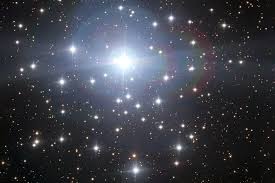
Instead, I’m looking to the skies for inspiration, hopefully some “as above, so below” joy, the kind you get from wishing upon a star…
Star light, star bright, First star I see tonight. I wish I may, I wish I might, Have the wish I wish tonight. ⭐
It’s time for Sirius to shine as the brightest most twinkliest star in the night sky. Also known as the Dog Star, it’s a binary star system consisting of Sirius A and Sirius B. Sirius is located 8.6 light-years from Earth in the constellation Canis Major.
Each year from July 3 to July 7, the Earth experiences a powerful energetic alignment known as the Sirius Portal. This five-day window marks a period of increased cosmic energy, spiritual awakening, and inner transformation.
During this time, the Sun aligns with the star Sirius, the brightest star visible from Earth, often referred to as our Spiritual Sun. Sirius has been revered by ancient cultures for thousands of years for its connection to divine intelligence, spiritual activation, and higher consciousness.
In astrology and energy work, this alignment is known to open a cosmic gateway or energy portal, allowing a flow of high-frequency light codes to reach Earth. These light codes are energetic patterns that support soul remembrance, intuition activation, emotional release, and vibrational upgrades on both a personal and collective level.
While this energy is available to everyone, those who are more energy sensitive or actively working on growth may feel it more strongly.
During the Sirius Portal, many people feel a mix of emotional, mental, and physical shifts. These are signs that your energy body is adjusting and upgrading in response to the alignment.
The energy coming through this gateway often reveals what needs healing, highlights what is ready to shift, and strengthens your connection to your higher self. It can be a time of deep insight, emotional clarity, and powerful intention-setting.
The Sirius Portal represents a connection between the Earth and higher realms of consciousness. While our physical Sun sustains life in the material world, Sirius is seen as a source of spiritual light, providing insight, healing, and guidance from the soul level.
This alignment is considered sacred as it opens a brief period where access to wisdom, clarity, and transformation becomes easier, faster, and more direct.
It is believed that spiritual downloads, energetic healing, and intuitive insights are more accessible during this time. People who actively work with this energy may experience a breakthrough, make an important decision, or feel deeply inspired to move forward with something they had been holding back.
To make the most of the Sirius Gateway, it helps to take time out to pause and reflect. This is a perfect time for journaling, meditation, or stillness. By asking focused questions, you open a dialogue with your higher self and invite answers that may come through thoughts, dreams, feelings, or synchronicities.
Here are some powerful questions to ask during this portal:
⭐ What parts of my life feel out of alignment with who I am becoming? ⭐ What am I ready to release so that I can grow emotionally or spiritually? ⭐ What would it feel like to fully trust my inner guidance right now?
Asking these questions from a place of curiosity, without pressure, allows answers to flow naturally. Sometimes they come right away. Other times, the answers appear gradually through signs, intuitive nudges, or conversations that confirm what you already feel inside.
While the Sirius Portal is deeply energetic, the way you respond to it physically and mentally will shape what you get from the experience. Choosing to be intentional during these five days helps direct the energy toward your goals.
You might take time out each day between July 3 and July 7 to do one or more of the following:
⭐ Write down one intention that you want to manifest before the end of the year. ⭐ Meditate on your highest self and visualize living your next-level life. ⭐ Clear out old clutter, thoughts, or habits that no longer match your direction. ⭐ Pay close attention to your dreams or signs and write them down immediately.
What we do, say, think, and feel during these days carries extra weight. Approach the portal with clear intentions, openness, and trust. Curated from Alex Myles
I guess all we can do is manifest and set intentions for a positive future with decent humans making better choices for us and our planet. Fingers crossed!
⭐ Best of all, I discovered a Leon Russell (as Hank Wilson) song about stars!
I don’t talk much about the part of Southern California where I live; other than my beach, lagoon, and the stupid local government. I’m about thirty or forty miles or so from the city, and while I don’t often get down there, I do love old pictures that chronicle the history of San Diego far more accurately than words.
Here’s a photo of San Diego Bay taken in 1892 from the vantage point of State Street and Broadway. It all looks calm and free of tourists, exactly how we locals like our life here in SoCal.
San Diego Bay / Photo from Reddit
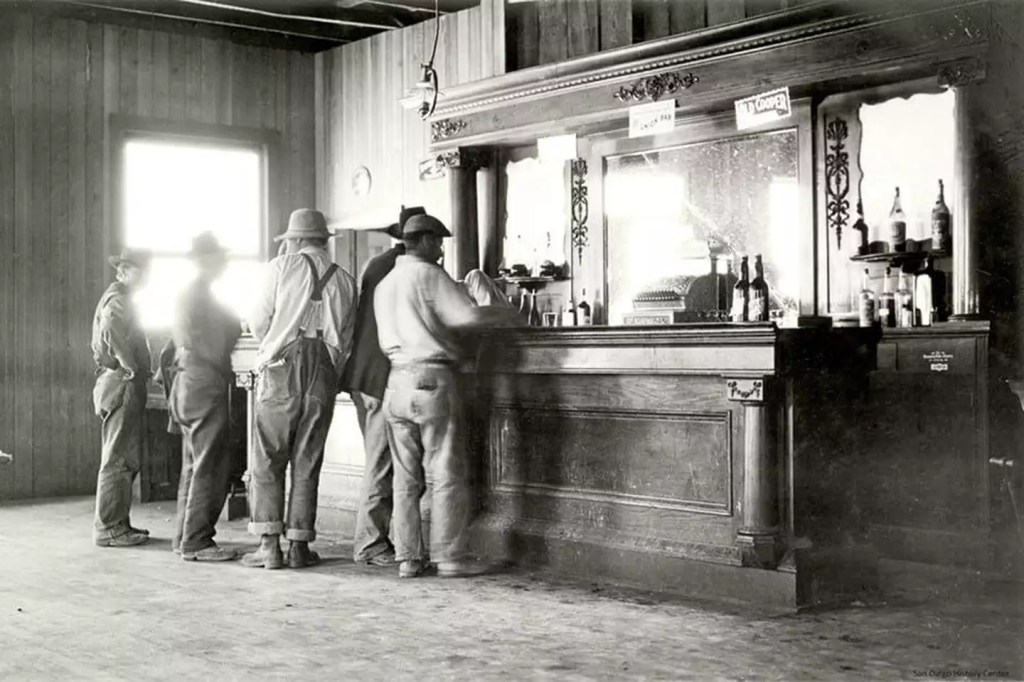
I always thought the oldest bar in San Diego was the Waterfront, but it’s not, because the Waterfront opened in 1933 when prohibition was repealed,
The oldest bar in San Diego is the Tivoli Bar, opened as a saloon in 1885. It’s located on a lot originally owned by Alonzo Horton who helped develop most of downtown San Diego.
Tivoli Bar/Curated from SFGate
Built in 1864, the building was first called the Walker House and functioned as a boarding house, feed store, and blacksmith shop. The Walker House was converted into a saloon and kitchen in 1885. The original bar (still there) was built in Boston and brought to San Diego by ship around Cape Horn at the southern tip of South America, a journey which took three to four months.
The original cash register from the turn of the 20th century and the old safe are still displayed in the bar.
The Tivoli Bar has hosted many famous characters including Wyatt Earp and his wife Josephine, whose photos are prominently displayed over the entrance to the bar, along with Frank Sinatra and Sophia Loren.
The bar flourished during a time when San Diego was a boomtown and the Gaslamp was the city’s red light district, an area then known as the Stingaree. A warning sign from the time reads: “This area is known to be populated by anarchists, confidence men, cut throats, shady ladies, hop heads, perverts and thieves.”
Here’s an 1882 crime report from a local newspaper: “About 8 o’clock on Friday evening, a fracas occurred in the Tivoli Saloon between Gus Young and one Ballantine, in which the former was struck over the head with a chair in such a forcible manner that the latter is of no further service, and will have to be sent to a furniture store for repairs.”
I bet there were some wild times inside the Tivoli–if only the walls could talk! It’s a certified dive bar and I can’t believe I’ve never been there. I think it’d be fun to take the train downtown and check it out.
Have you heard of reporter and author Max Miller?
Max Miller was a reporter for the San Diego Sun and author of twenty eight books. In 1932, he wrote I Cover the Waterfront, an interesting account of San Diego’s port community that inspired Hollywood movies and became the title of a jazz standard sung by Billie Holliday, Frank Sinatra, and Sarah Vaughan, but sadly, NOT Leon Russell.
The book’s characters include true-life sea captains, Portuguese fishermen, flying squid, sparkling Garibaldi fish, movie stars, Charles Lindbergh, Babe Ruth, and a beautiful young woman who got away.
Miller also drew from his experiences living in Everett, Washington and when he attended the University of Washington. He also wrote Harbor of the Sun: The Story of the Port of San Diego, which is a fairly difficult book to locate. He died in La Jolla.
Here’s Sarah Vaughan with her 1946 version of I Cover The Waterfront (I couldn’t find a Leon Russell connection this time at all…LOL).
FYI: This is not a post written with the intention to extol any vacation virtues of San Diego. We REALLY have far too many visitors here but I’m sure there are other lovely places to choose for a holiday…
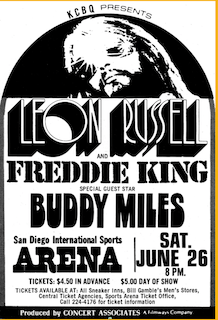
International Leon Russell Day is celebrated on June 25th, coinciding with National Leon Day.
It’s a day to honor the visionary, legendary musician Leon Russell with events like special performances and tribute album release parties.
I had another one of my accidental mishaps and was totally incapacitated for a brief period of time. No surgery necessary, but I was in recovery mode yet again…that’s the only reason I can think of to explain how I missed a day to honor the Master of Space and Time.
I was there on June 26,1971…
Early Leon performing Hi-Heel Sneakers from the Shindig TV show. He was only 22 years old. S1E7, October 28, 1964. Leon starts at 2:25.
And a decade later, Strangers in a Strange Land:
And many, many years later, he’s still the Master of Space and Time. All you need is Leon and his piano…his version is so nuanced and poignant, it brings tears.
I updated this post to honor the life and genius of the Beach Boys Brian Wilson. You can’t write about a surfer girl without that song in your head, right?Listen to Surfer Girl at the end ⬇️
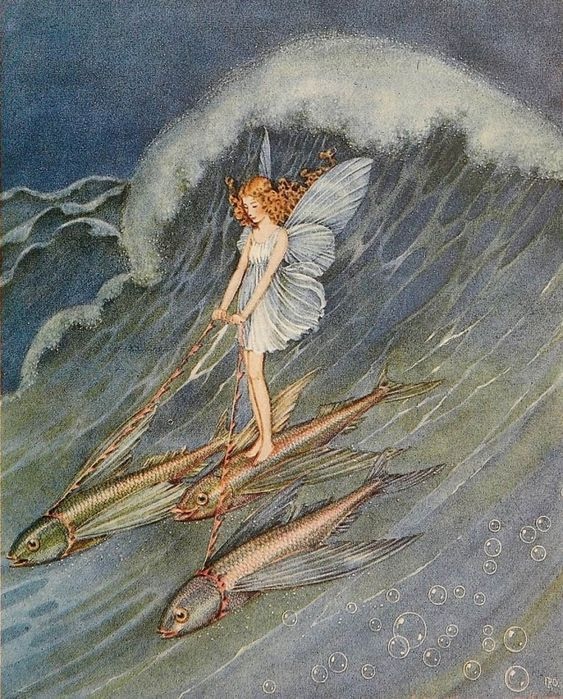
Riding the waves, enchanted fairy-girl style…
A girl adrift, where sunlight streams, Through liquid glass, a world of dreams. She dances free, a silver thread, In currents soft, where fishes fed. The water whispers, soft and low, As gentle eddies gently flow. A world of wonder, cool and deep, Where secrets sleep and shadows creep.
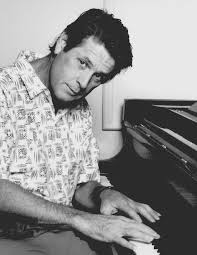
Brian Wilson of the Beach Boys, another musical, magical visionary — gone too soon.
Photo by Wiki
As much as we (I mean ME) believe that Leon Russell was a musical genius, he once said the same of Brian Wilson. He certainly would know as he was his keyboardist on many Beach Boys songs. Leon also praised Wilson’s courage to take risks and find new avenues as an artist. He compared Wilson to Beethoven and other composers, highlighting Wilson’s exceptional musical talent.
From Leon about Brian: “Brian, on the other hand, was a musical genius. I’ve played with him on records where there’d be 20 musicians in the room sitting around in a huge circle. He’d start at one end and sing the first musician their part, and then go to the second one and sing their part, all the way around the circle, and by the time he got around to the first one they had forgotten their part and he’d do it all again. That’s the way he taught those parts. Amazing.”https://bestclassicbands.com/leon-russell-interview-11-13-16/#google_vignette
Here are some of my favorite Beach Boys songs with contributions by Leon Russell:
Russell Bridges (Leon) on organ
Here is the rare version of “Endless Sleep”, Brian Wilson produced it at Gold Star Studios on February 18, 1964, using his usual Wrecking Crew members for the backing tracks. Included on piano was Leon Russell, who played on at least twenty Beach Boys songs and as many other songs that Brian produced for others, like The Honeys, Paul Peterson, Sharon Marie, Gary Usher and Glen Campbell.
California Girls studio, with Leon (of course)
This is a relatively long and rambling full session of Help Me Rhonda with the Beach Boys (Leon on piano) and their dad, Murray Wilson. Apparently he wasn’t a great dad and the reason Brian was deaf in one ear is because Murray hit him on the side of the head with a piece of wood when he was a boy. It’s even more remarkable that Brian could create such amazing music without stereo hearing.
Written by Bill Janovitz, this nearly 600 page New York Times bestselling biography of Leon Russell, Leon Russell: The Master of Space and Time’s Journey Through Rock & Roll History was a gift from the original Angel Boy.
I don’t think he (or the Angel Kids) quite understand my passionate interest (read obsession) with the one and only Claude Russell Bridges (Leon Russell), but he’s supportive in his own way, although he wouldn’t play “A Song For You” on our piano because he said it had been too long since he tickled the ivories and it might have looked simple to play, but it was a very complex piece of music and he didn’t feel he could do it justice. Or at least that’s the excuse he gave me.
So…this BOOK. It’s comprehensive, it’s respectful, and it delves into areas of Leon’s life that even I didn’t know. Yes, there’s some sex, drugs, and rock and roll, but the overarching theme of Leon’s life and music is LOVE.
The life path that took a child born with cerebral palsy during the Second World War, who overcame his physical challenges to become a classically trained pianist — and was catapulted to the top of the music scene–is inspirational. He was and always will be the Master of Space and Time — a visionary.
One of my favorite quotes from the book is from his friend and fellow musician, Ann Bell:
“One night everybody had gone to bed, and it was about four o’clock in the morning. All of a sudden, I woke up; I could hear him playing. It was a classical piece; he’s in the living room, where he had a piano, and he’s playing this piece that’s forty minutes long, from memory. There was no sheet music. I sat down on the bench, and I didn’t say a word. I just thought, ‘They didn’t understand the depth of his well.’ And when he was done, I was crying. He goes, ‘Girl, what’s wrong witchoo?'”
From the Rock & Roll Hall of Fame: The definitive New York Times bestselling biography of legendary musician, composer, and performer Leon Russell, who profoudly influenced George Harrison, the Rolling Stones, Eric Clapton, Elton John, Willie Nelson, Tom Petty, and the world of music as a whole.
Leon Russell is an icon, but somehow is still an underappreciated artist. He is spoken of in tones reserved not just for the most talented musicians, but also for the most complex and fascinating. His career is like a roadmap of music history, often intersecting with rock royalty like Bob Dylan, the Stones, and the Beatles. He started in the Fifties as a teenager touring with Jerry Lee Lewis, going on to play piano on records by such giants as Frank Sinatra, The Beach Boys, and Phil Spector, and on hundreds of classic songs with major recording artists. Leon was Elton John’s idol, and Elton inducted him into the Rock and Roll Hall of Fame in 2011. Leon also gets credit for altering Willie Nelson’s career, giving us the long-haired, pot-friendly Willie we all know and love today.
In his prime, Leon filled stadiums on solo tours, and was an organizer/performer on both Joe Cocker’s revolutionary Mad Dogs and Englishmen tour and George Harrison’s Concert for Bangladesh. Leon also founded Shelter Records in 1969 with producer Denny Cordell, discovering and releasing the debut albums of Tom Petty, the Gap Band, Phoebe Snow, and J.J. Cale. Leon always assembled wildly diverse bands and performances, fostering creative and free atmospheres for musicians to live and work together. He brazenly challenged musical and social barriers. However, Russell also struggled with his demons, including substance abuse, severe depression, and a crippling stage fright that wreaked havoc on his psyche over the long haul and at times seemed to will himself into obscurity. Now, acclaimed author and founding member of Buffalo Tom, Bill Janovitz shines the spotlight on one of the most important music makers of the twentieth century.
I give this book all the stars ⭐⭐⭐⭐⭐⭐ and tophats 🎩🎩🎩🎩🎩🎩🎩🎩
In my opinion, if you don’t know who Leon Russell was, you should, and reading Janovitz’s biography is a good way to learn about him and to be amazed at his musical genius. You’ll understand why he’s referred to as the Master of Space and Time.
Leon Russell and the GAP band on The Midnight Special with Wolfman Jack:



 Enchanted Seashells | Princess Rosebud